
Is Chicken Breast Dark Meat? Quick Cut-by-Cut Answer
If you are asking is chicken breast dark meat, the direct answer is no. Chicken breast is white meat, while the darker cuts come from the legs and thighs.
You can treat chicken breast as a lean white-meat cut. Chicken thighs, drumsticks, and most leg meat are the darker, richer parts of the bird.

That difference matters for cooking, nutrition, and taste. Chicken breast cooks fast and stays mild, while dark meat brings more flavor and a juicier texture.
The Direct Answer and Cut Classification
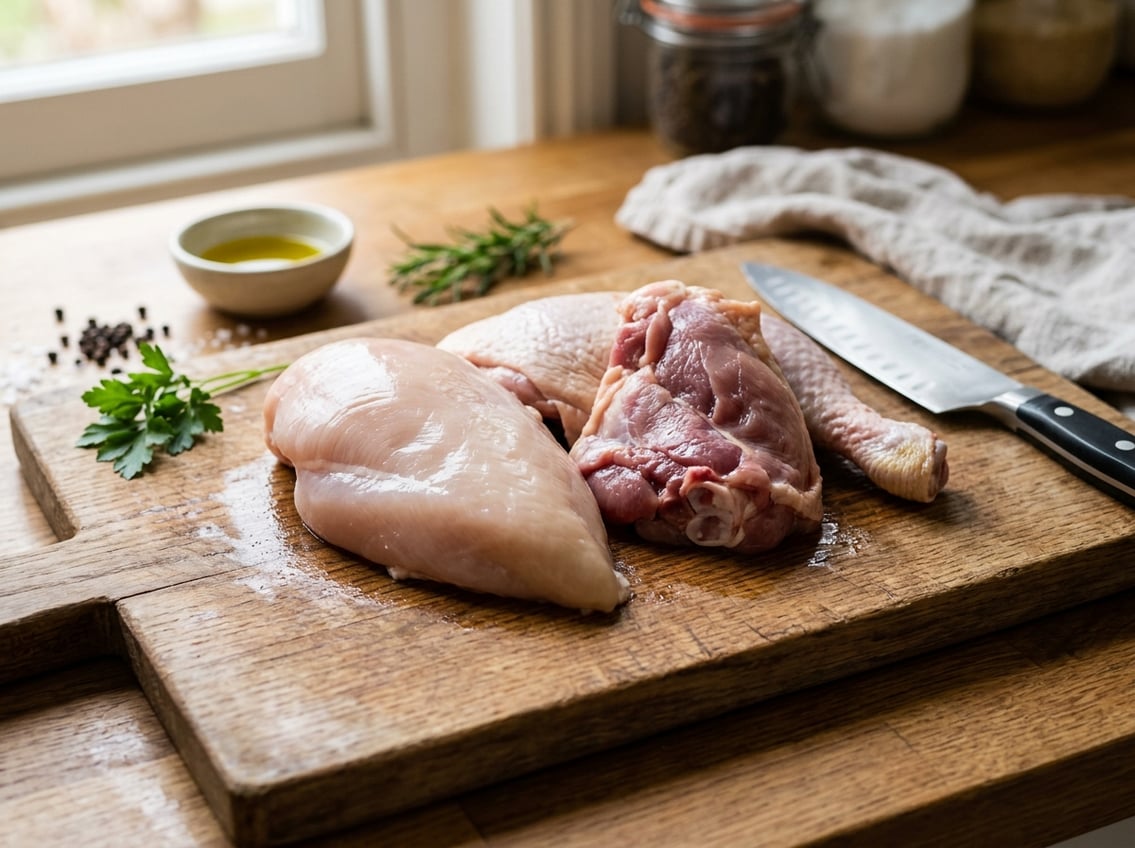
Chicken breast is white meat, not dark meat. Most boneless breast cuts sold in US grocery stores also count as white meat.
The basic rule is simple. Breast meat is white meat, and the main dark chicken meat cuts are the legs and thighs.
As noted in this dark meat chicken guide, thighs and drumsticks make up the classic dark cuts.
Why Chicken Breast Counts as White Meat
Chicken breast comes from the chest muscle, which gets less constant use than the leg muscles. That lower activity keeps it lighter in color and gives it a leaner texture.
The breast also has less fat than dark meat. This is another reason it fits the white meat category.
In simple terms, chicken breast is the mild, lean cut you usually reach for when you want a lighter meal.
Which Chicken Parts Are Dark Meat
The main dark meat cuts are chicken thighs and drumsticks. A chicken thigh is darker because it works harder during movement and contains more of the pigment that affects color.
Dark chicken meat usually includes:
- Thighs
- Drumsticks
- Leg meat
- Leg quarters
Where Wings, Legs, Thighs, and Drumsticks Fit
Chicken wings are usually classified as white meat, even though they can look a little darker than breast meat. Legs, thighs, and drumsticks are dark meat.
A good shortcut is this. Breast and wings are white meat, while thighs and drumsticks are dark meat.
That rule covers most common chicken cuts you buy at the store.
Why the Color Is Different
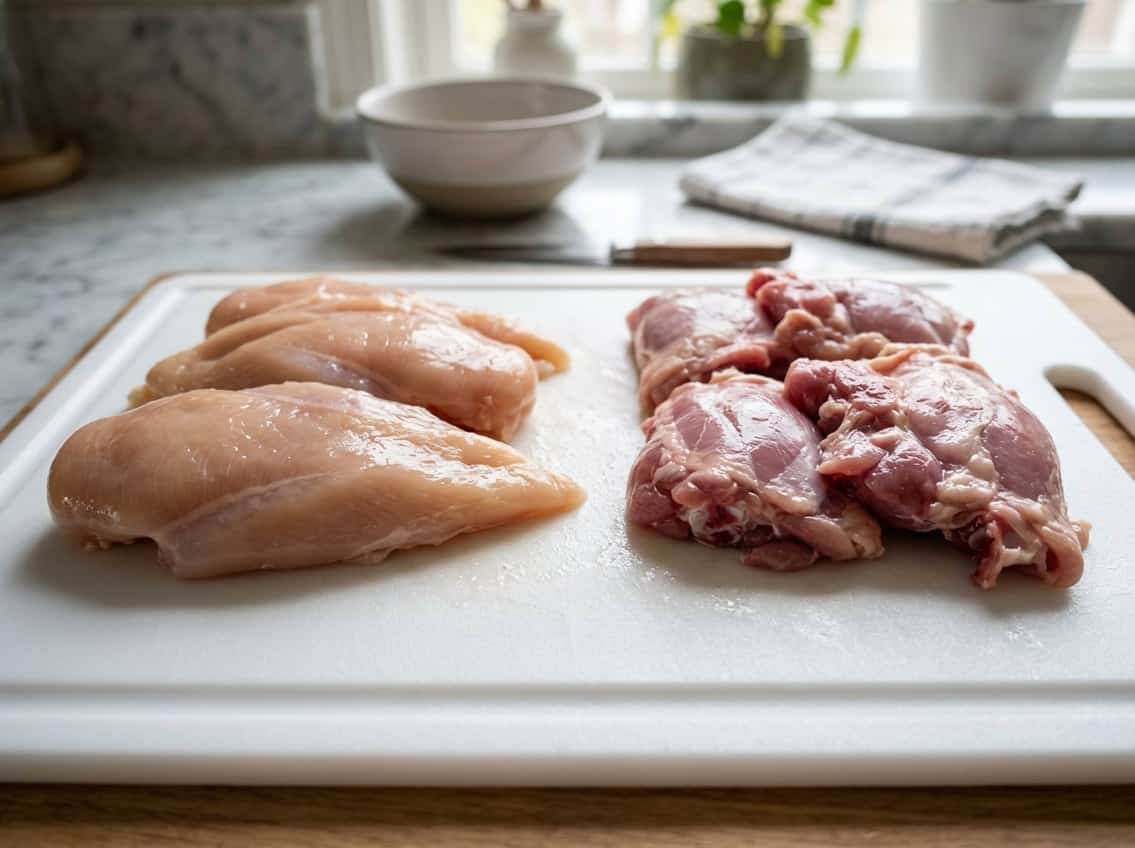
Muscle chemistry, not freshness, causes the color difference. The main factor is myoglobin, which affects color, oxygen storage, and how the meat feels when cooked.
Muscles that work more often hold more myoglobin. That extra pigment gives thighs and legs their deeper red color and fuller flavor.
Myoglobin and Oxygen Storage in Chicken Muscles
Myoglobin stores oxygen inside muscle tissue. Muscles that need more steady activity need more oxygen storage, so they contain more myoglobin.
That is why chicken thighs and legs look darker than chicken breast. White meat has less myoglobin, so it looks pale before and after cooking.
How Activity Changes Myoglobin Content
Chicken legs and thighs do more daily work than the breast, so they develop more myoglobin content. The breast is used for movement, but not in the same sustained way as the legs.
A recent overview from CyChicken on chicken meat color links the color difference to myoglobin and muscle fiber type.
How Color Affects Texture and Flavor
Color usually goes with texture and flavor. White meat tends to be firmer, leaner, and milder, while dark meat is often softer, juicier, and more savory.
Connective tissue also plays a role. Dark cuts from thighs and legs have more of it, which helps them stay tender during longer cooking.
Nutrition Differences That Matter
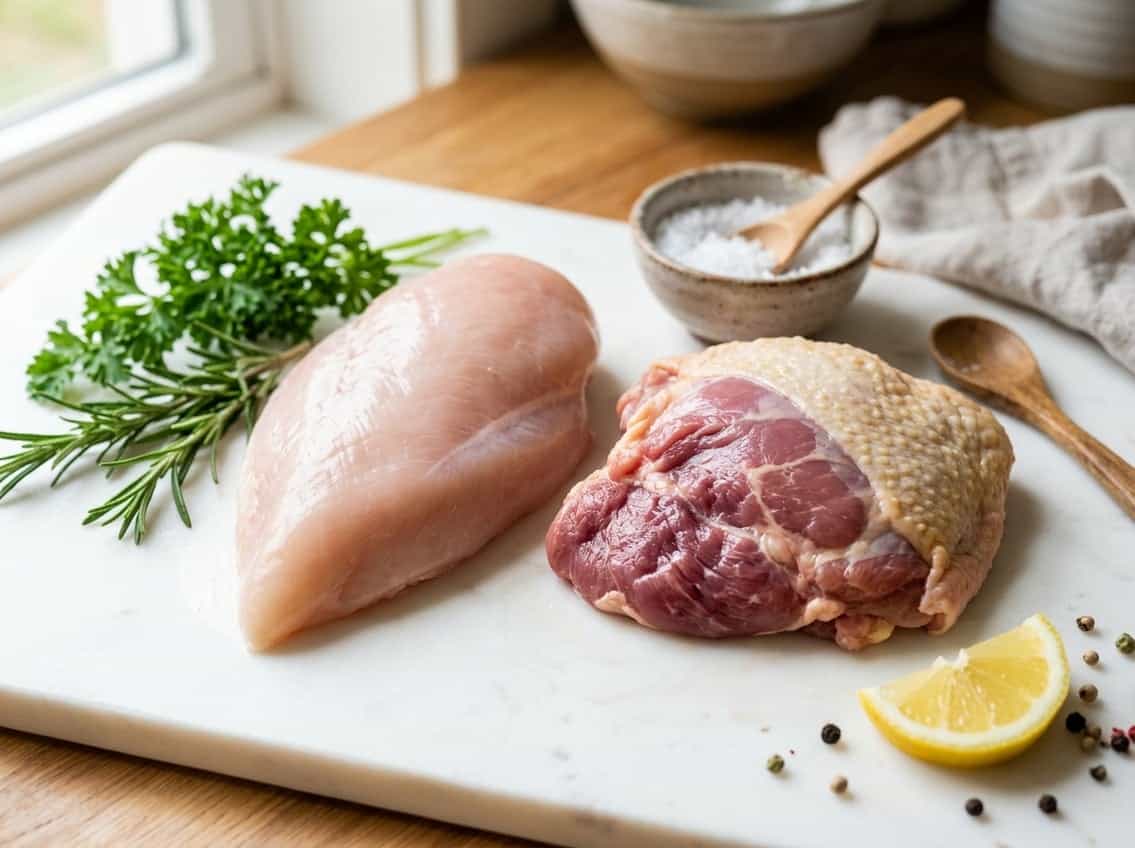
Chicken breast and dark meat both bring useful nutrition, but they are not identical. The main differences are in calories, fat content, and some minerals.
If you choose between them based on diet goals, chicken breast is usually the leaner option. Dark meat gives you more flavor and a bit more fat, which can matter depending on how you cook it.
Protein, Calories, and Lean Protein Trade-Offs
Both white meat and dark meat provide protein, which supports muscle repair and daily body function. Chicken breast is the classic lean protein choice because it gives you a lot of protein with fewer calories.
If you want a lower-fat cut for meal prep, chicken breast is usually the easier pick.
Iron, Zinc, and Other Nutritional Value Differences
Dark chicken meat is often noted for having more iron and zinc than white meat. Those minerals support oxygen use, immune function, and many other body processes.
That means dark meat can offer a slight edge if you are looking for more mineral density. Chicken breast still provides useful nutrients, just with a leaner profile.
Fat Content, Saturated Fat, and Cholesterol
Dark meat has more fat than chicken breast, including more saturated fat and cholesterol in many cases. That higher fat content is one reason it tastes richer and stays juicy.
White meat is lower in fat, so it usually fits better when you want a lighter option. A practical comparison of chicken thigh vs breast nutrition shows the same basic split, with breast meat staying leaner.
Best Cooking Uses for Each Type

The best cooking method depends on the cut. Chicken breast does well with fast, careful cooking, while dark meat rewards slower heat and more seasoning.
A meat thermometer helps with both. It gives you a safe final temperature without guessing, which matters because chicken dries out fast when overcooked.
Best Cooking Methods for Chicken Breast
Chicken breast works well for baking, roasting, grilling, and stir-frying. These cooking methods fit because breast meat cooks quickly and can dry out if you push it too far.
For better texture, try:
- Light seasoning
- Short cook times
- Medium heat
- Resting after cooking
A chicken cuts guide notes that boneless chicken breasts are a versatile white-meat cut with a mild taste and quick cooking time.
Cooking Dark Meat for Juiciness and Flavor
Cooking dark meat is easier to keep moist because thighs and legs have more fat and connective tissue. Braising, stewing, roasting, and grilling all work well for chicken thigh and chicken legs.
Dark meat also fits well in roasted chicken meals because it stays juicy during longer cooking. If you want stronger flavor and a softer bite, dark meat is often the better choice.
Using a Meat Thermometer for Safe Doneness
A meat thermometer gives you the most reliable way to check doneness.
Chicken needs to reach 165°F in the thickest part.
This is especially important for chicken breast, since it can go from juicy to dry very fast.
For dark cuts, use the same safe temperature, even though they can stay tender with longer cooking.


