
What Is Chicken Breast in Spanish? Quick Translation
If you ask what is chicken breast in Spanish, the quick translation is pechuga de pollo. You can use this phrase in a restaurant, a grocery store, or a recipe.
In everyday Spanish, pechuga de pollo is the clearest and most common way to say chicken breast. It refers to the white meat cut from a chicken, not the whole bird.
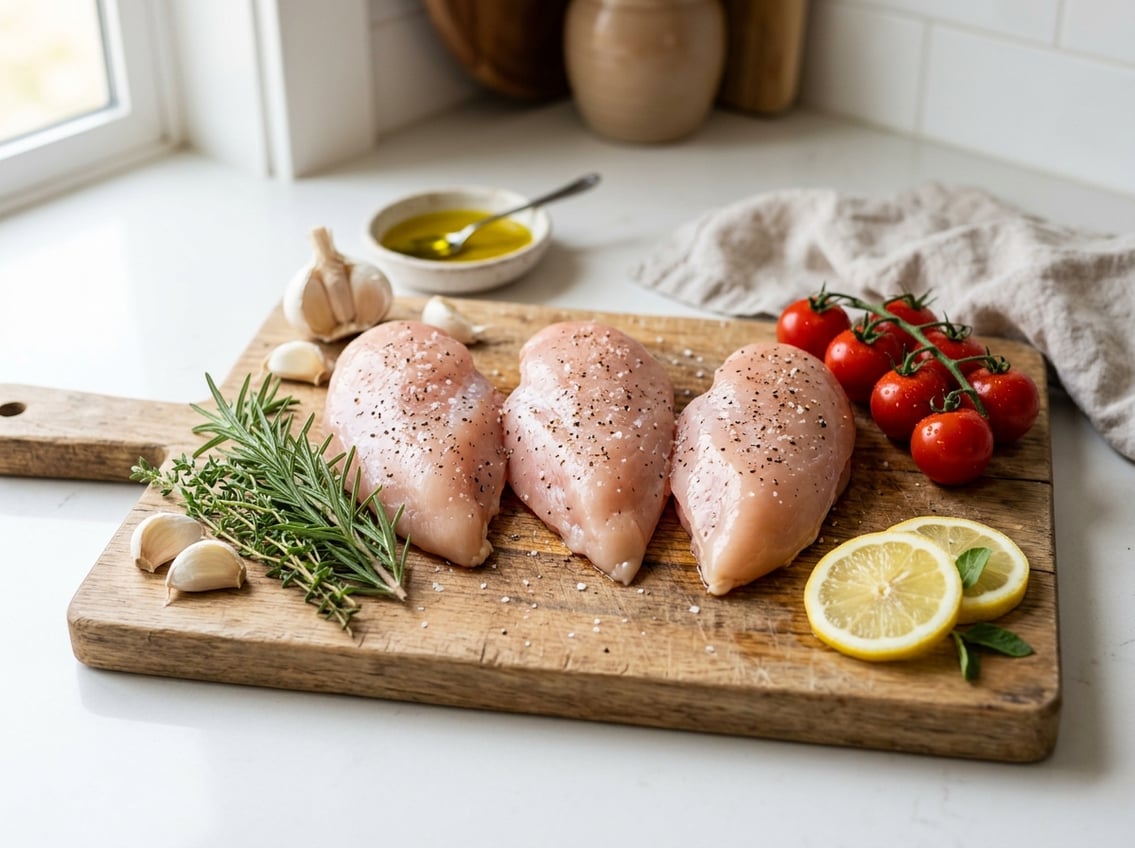
If you are learning Spanish, this phrase is one of the most useful food terms to remember. It helps you translate menus, shop for ingredients, and talk about cooking with confidence.
The Correct Translation
The standard Spanish translation of chicken breast is pechuga de pollo. You may also see la pechuga de pollo, which is the same phrase with the article added.
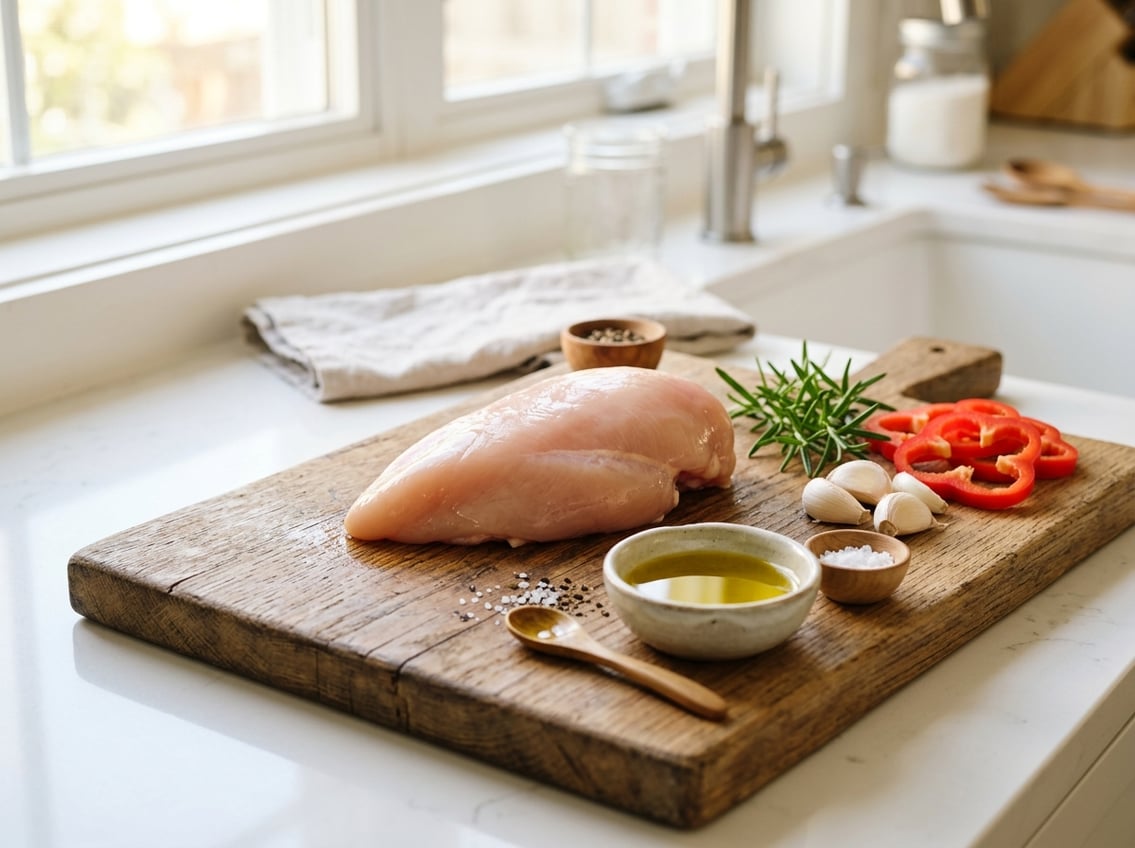
In a food context, pechuga means breast, and pollo means chicken. That makes the full phrase easy to remember if you translate it word by word.
References such as the Collins English-Spanish Dictionary entry for chicken breast and WordHippo’s Spanish translation for chicken breast both list pechuga de pollo as the direct translation.
Pechuga De Pollo as the Standard Term
Use pechuga de pollo when you mean the meat cut. This is the most natural and widely understood term across Spanish-speaking regions.
You can use it when buying raw chicken, reading a recipe, or ordering a meal.
When to Use La Pechuga De Pollo
You may hear la pechuga de pollo in full sentences because Spanish often uses articles with nouns. For example, la pechuga de pollo está en oferta means “the chicken breast is on sale.”
The article la does not change the meaning. It just makes the phrase sound natural in Spanish grammar.
Pollo, Gallina, and Chick: Key Word Differences
Pollo usually means chicken as food, and people use it most often in meals. Gallina means hen, or an adult female chicken, and it can also appear in some idioms.
Chick is not the same as chicken breast, since it means a young chicken.
A simple rule helps: pollo is the broad food word, and pechuga de pollo is the specific cut.
The general English word chicken can change based on context, so a good translation depends on whether you mean the animal or the meal.
How to Use It in Real Situations
You can use pechuga de pollo in stores, restaurants, and home cooking. The phrase works well when you need to translate a menu item or explain a recipe clearly.
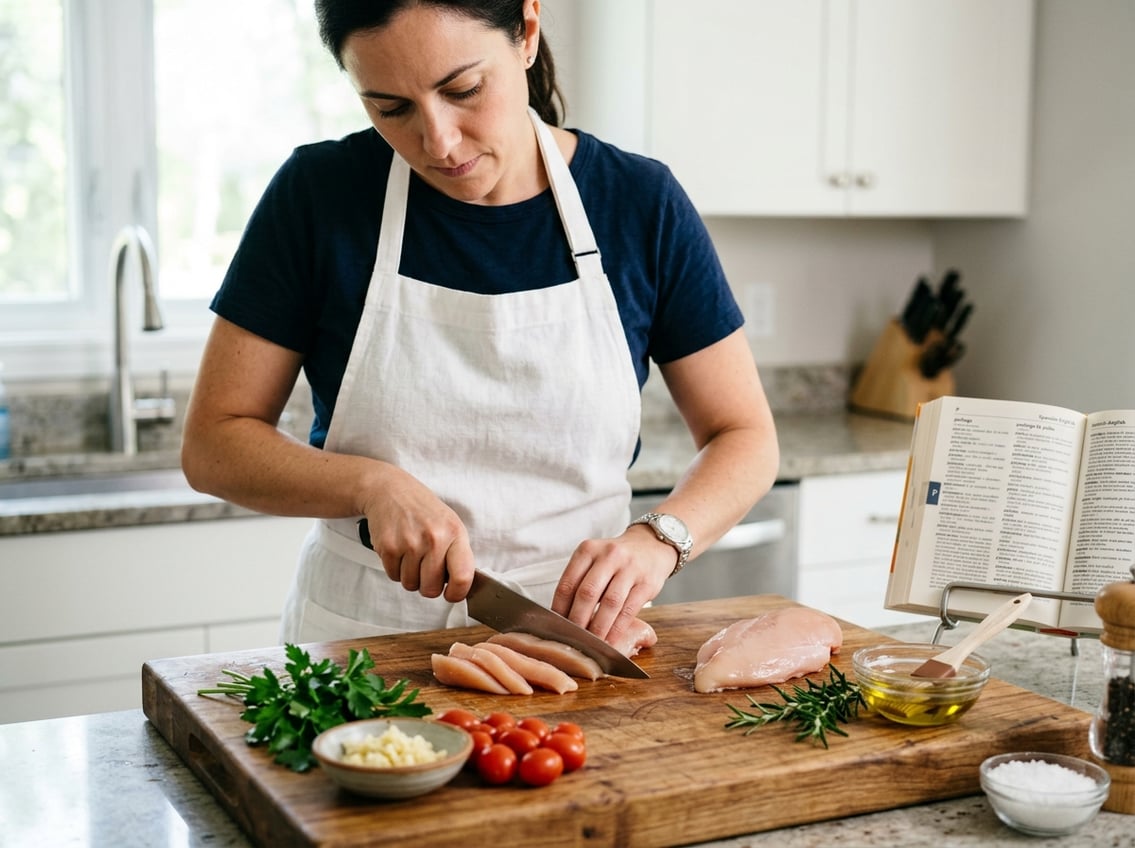
Ordering at a Restaurant or Market
If you order food, you can ask for pechuga de pollo directly. A market clerk or server will usually understand it right away.
Examples:
- Quisiera pechuga de pollo, por favor.
- ¿Tienen pechuga de pollo fresca?
If you are talking about a specific dish, you can add the cooking style. Grilled chicken breast becomes pechuga de pollo a la parrilla. Roast chicken is usually pollo asado.
Talking About Recipes and Cooking Methods
Recipes often use pollo for chicken in general, then add details for the cut and cooking method. If the recipe calls for chicken breast, pechuga de pollo is the correct translation.
A phrase like grilled chicken breast is more specific than pollo alone. In Spanish, you can say pechuga de pollo a la parrilla or pechuga de pollo asada depending on how it is cooked.
Common Example Sentences in English and Spanish
-
I bought chicken breast.
Compré pechuga de pollo. -
Do you want grilled chicken breast?
¿Quieres pechuga de pollo a la parrilla? -
This recipe uses chicken breast.
Esta receta usa pechuga de pollo. -
The chicken breast is ready.
La pechuga de pollo está lista.
Related Chicken Words and Expressions
The word chicken does not always mean food. It can also describe a person, an action, or an idiom, so the Spanish translation changes with context.
Chicken as Food vs Chicken as a Person
When you mean food, pollo is the usual translation. When you mean a person who is afraid, English uses chicken in an informal way, and Spanish often uses gallina.
For example, “He is a chicken” can become es una gallina in some contexts. The exact choice depends on tone and region.
Idioms Like To Be Chicken and To Play Chicken
English idioms do not translate word for word. To be chicken means to be afraid, and Spanish may use phrases like ser una gallina or tener miedo, depending on the sentence.
To play chicken means to act in a risky way and wait for the other person to back down. Spanish often needs a full explanation rather than a direct literal match.
Phrases Such as Chicken Out and Chicken and Egg
Chicken out means to back out because of fear. A common Spanish equivalent is rajarse in some regions, and echarse para atrás is also common.
For chicken and egg, the literal food words are pollo y huevo or gallina y huevo, depending on context. If you mean the classic problem about which came first, Spanish usually keeps the same idea as el dilema del huevo y la gallina.
Useful Vocabulary Around the Topic
If you want to learn Spanish around food and farming, a few related words help a lot. These terms appear often in recipes, grocery shopping, and everyday conversation.
Chicken Farmer, Feed, and Liver
A chicken farmer is an avicultor in Spanish, especially in formal or agricultural contexts. Chicken feed can be translated as alimento para pollos or pienso para pollos.
Chicken liver is hígado de pollo. If you see it on a menu or in a recipe, the word pollo still gives you the food context you need.
Regional or Contextual Variations to Recognize
Spanish changes by country. Some food terms may sound more natural in one place than another.
Most people use pechuga de pollo as the main translation for chicken breast.
If you want to learn Spanish for travel or cooking, focus on the core words first. Start with pollo, pechuga, gallina, and common cooking verbs.
This vocabulary gives you a strong base for reading menus and translating recipes.


