
Do You Wash Chicken Breast Before Cooking? Food Safety
Do you wash chicken breast before cooking? In the United States, the safest answer is no.
Washing raw chicken breast does not make it safer, and it can spread germs around your sink, counter, and nearby tools.
Skip washing, handle the chicken carefully, and cook it to a safe internal temperature. That protects your food and lowers the chance of cross-contamination in your kitchen.
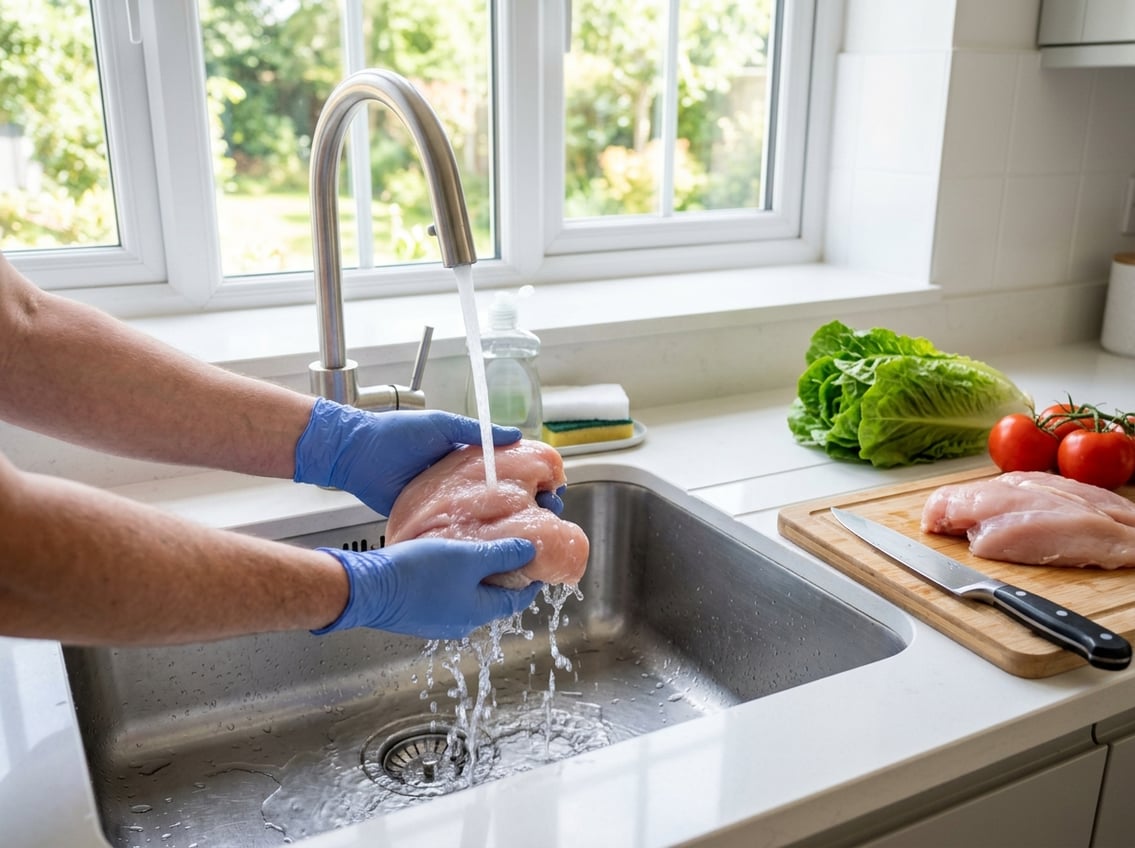
Many people ask about washing chicken because it looks cleaner after rinsing, and because the habit has been passed down for years.
Food safety guidance says washing raw chicken, including chicken breast, is not needed and can increase the risk of foodborne illness.
According to Martha Stewart’s explanation of why you should never wash raw chicken, safe handling and proper cooking matter most.
Why Washing Raw Chicken Breast Is Not Recommended
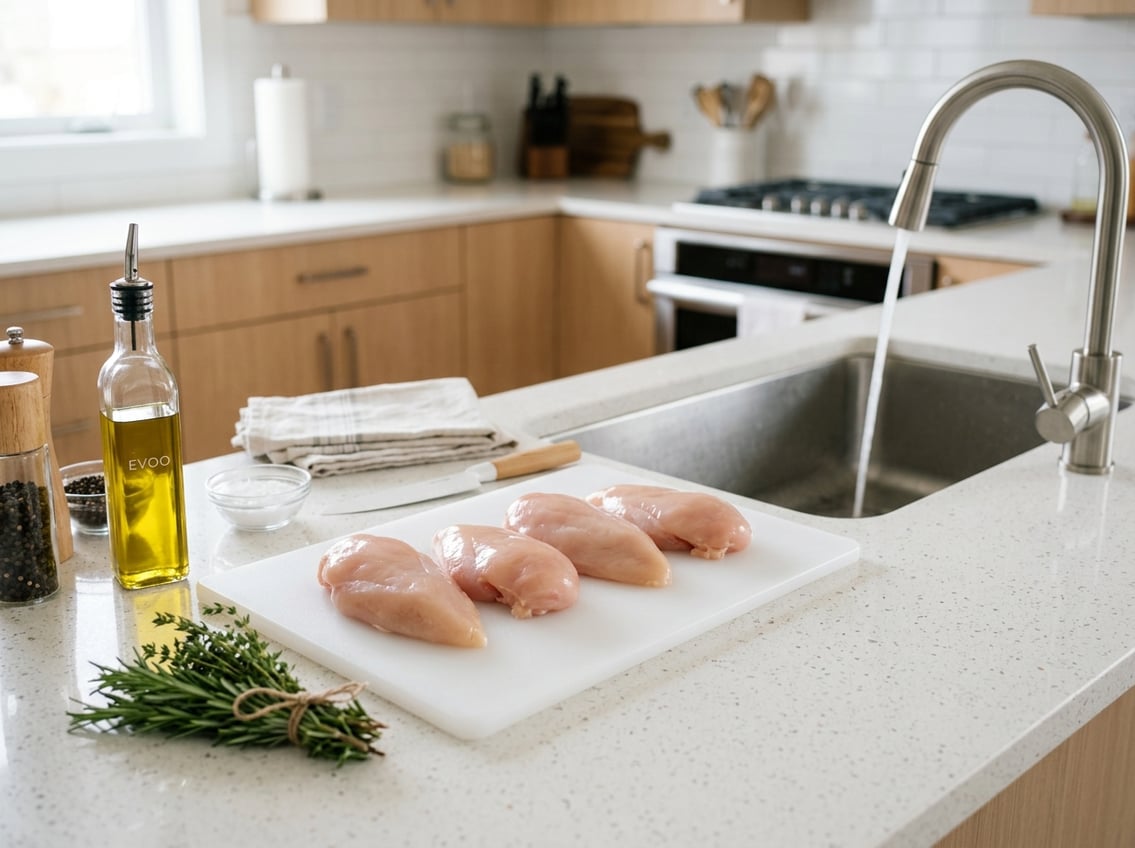
Washing raw chicken does not remove the bacteria that matter most for food safety.
It can also spread those bacteria to surfaces you use for prep, which raises the risk of getting sick.
How Rinsing Chicken Spreads Bacteria
When you rinse chicken, water splashes bacteria from the meat onto your sink, faucet, counter, dish towel, and even other foods nearby.
Rinsing chicken creates cross-contamination instead of preventing it.
A clean-looking sink does not make the process safe.
The splash zones around your sink can spread contamination farther than you expect.
Salmonella And Campylobacter Risks
Raw chicken can carry salmonella and campylobacter, two major causes of foodborne illness.
These bacteria do not need to be visible to cause problems.
As Martha Stewart notes, rinsing raw chicken can spread these bacteria around your kitchen.
The risk can move to the rest of your prep area, not just the chicken itself.
Why Cooking Works Better Than Washing
Cooking kills harmful bacteria, not washing.
Proper heat destroys pathogens in chicken breast when you cook it to a safe internal temperature.
Food safety experts focus on cooking as the step that protects you.
Washing can make the kitchen messier, while cooking makes the food safe.
What To Do Instead Before Cooking
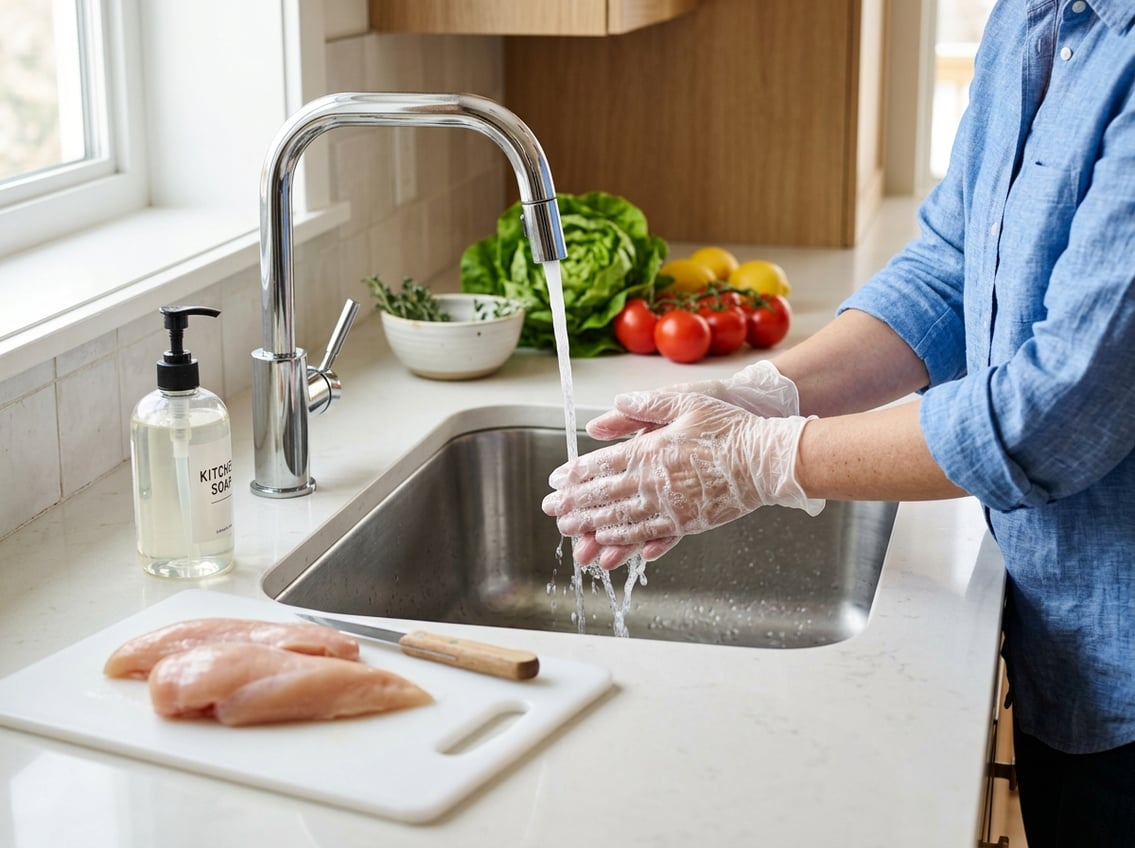
If you want clean chicken, focus on safe prep instead of water rinsing.
Keep your workspace controlled, dry the surface if needed, and prevent raw juices from spreading.
Pat Chicken Breast Dry Safely
If your recipe needs a dry surface for browning, pat the chicken breast with paper towels.
Do this after opening the package and before seasoning.
Throw the paper towels away right away, then wash your hands.
This helps you avoid spreading raw juices to other surfaces.
How To Handle Packaging And Raw Juices
Open the package carefully over a sink or a tray so juices do not drip across the counter.
Put the chicken on a clean plate, tray, or cutting board that you use only for raw meat.
Discard the packaging and any pooled liquid promptly.
Keep those materials away from produce, ready-to-eat food, and clean utensils.
When People Mean Clean Chicken
When people say they want to wash chicken before cooking, they often mean they want it to look tidy or feel less slimy.
That feeling is understandable, yet rinsing does not improve food safety.
Instead, use clean prep habits, dry the surface if needed, and cook it correctly.
Safe Handling From Prep To Plate
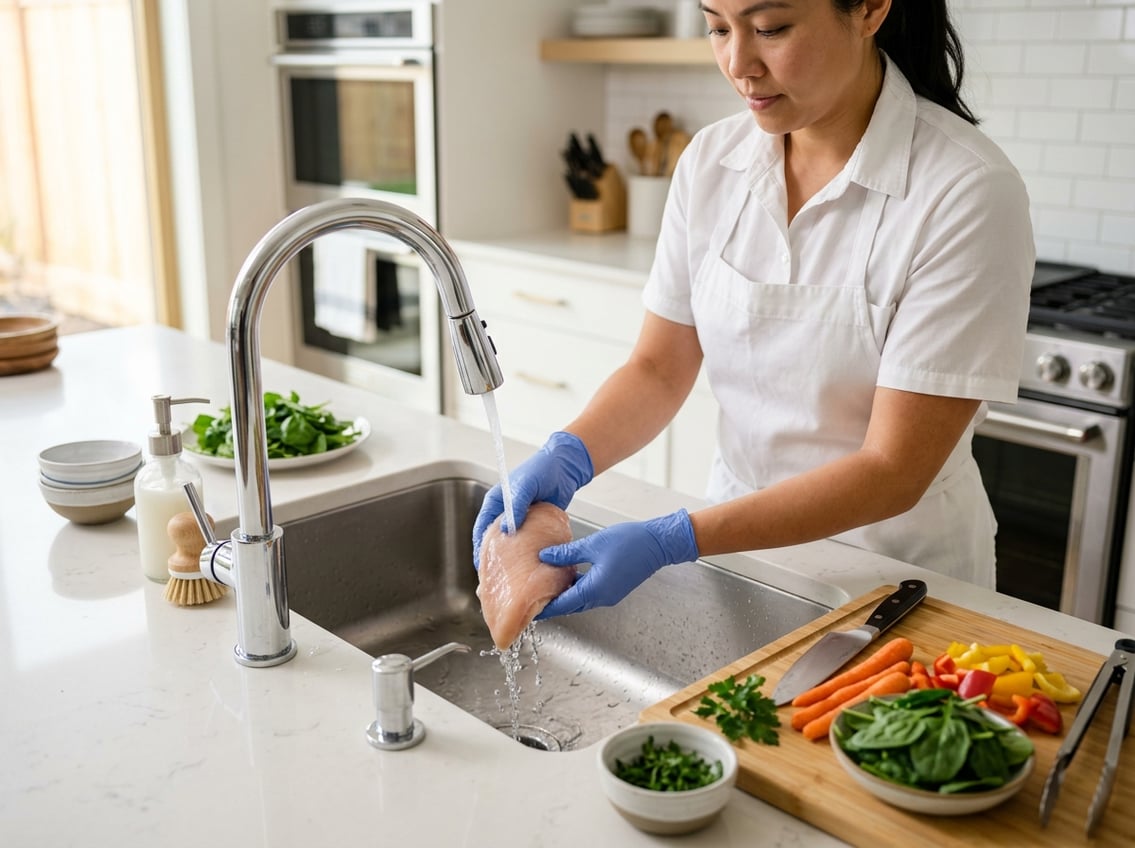
Good food safety depends on every step, from unpacking the chicken to serving it.
Separate tools, clean hands, and the right cooking temperature all matter.
Use Separate Tools And Surfaces
Keep a cutting board, knife, plate, and utensils just for raw chicken.
Do not use the same items for vegetables, bread, or cooked foods until you have washed them well.
This simple habit lowers the chance of cross-contamination.
It is one of the easiest ways to protect your kitchen.
Clean Hands Sink And Counters Thoroughly
Wash your hands with soap and warm water after touching raw chicken or its packaging.
Clean the sink, faucet handles, counters, and any tools that touched raw juices.
Use hot, soapy water on washable items.
Raw chicken can leave bacteria behind even when the meat itself never touches other food.
Cook Chicken Breast To 165°F
Use a food thermometer and cook chicken breast to 165°F. This temperature kills salmonella and campylobacter.
Do not rely on color alone. Chicken can still be unsafe even when it looks done.
A thermometer gives you a clear reading and better food safety.


