
Chicken Breast or Thigh for Butter Chicken: Best Cut Guide
When you choose chicken breast or thigh for butter chicken, you decide how juicy the dish feels, how much flavor the chicken holds, and how forgiving the cooking process is.
For most homemade butter chicken, chicken thighs give you the best mix of tenderness, flavor, and ease. Chicken breast works well when you want a leaner result and careful cooking.
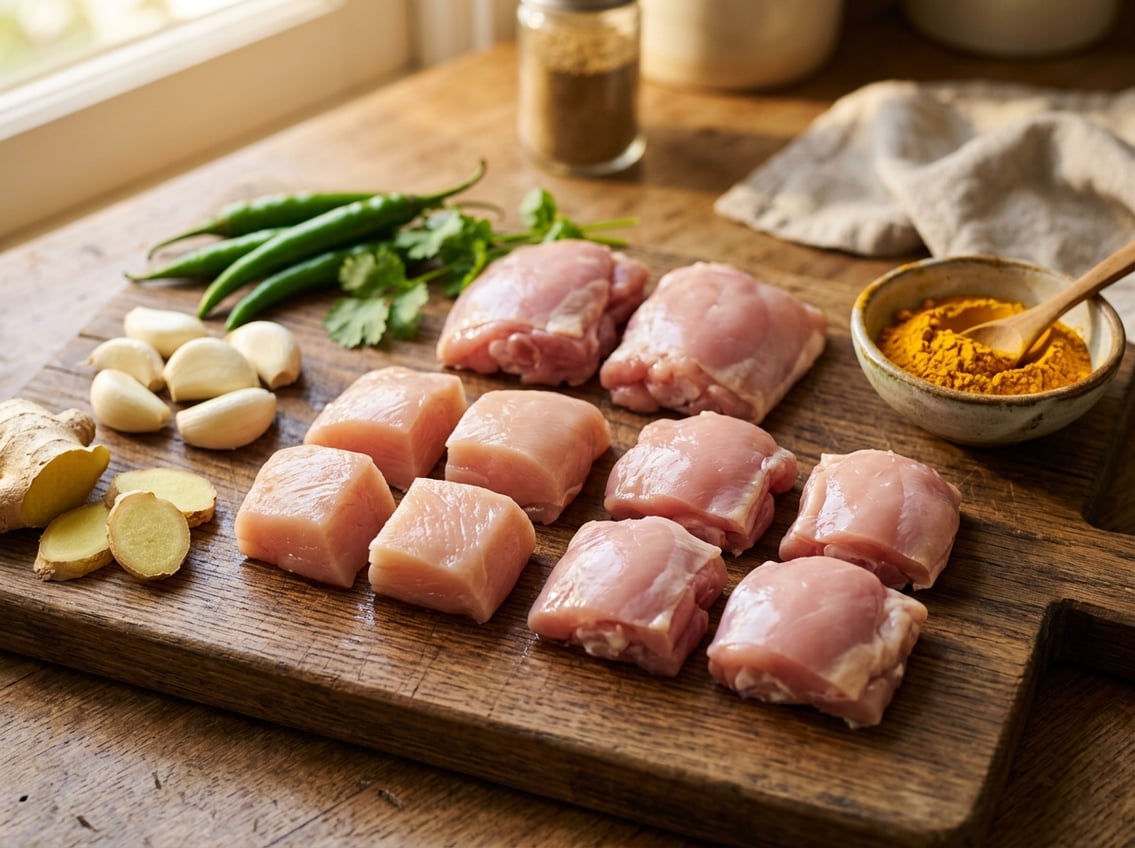
That choice matters in butter chicken, also called murgh makhani, because the chicken needs to stand up to a rich sauce without turning dry.
In a good butter chicken recipe, the meat and sauce should taste balanced, whether you make it for a weeknight dinner or aim for the best style from Indian cuisine.
Which Cut Performs Best in the Pan

The cut you use changes how the chicken cooks in a hot pan and how much moisture stays in the meat.
Chicken thighs usually stay juicier. Chicken breasts can work well if you watch the heat closely and avoid overcooking.
Why Chicken Thighs Usually Win on Flavor and Juiciness
Chicken thighs have more fat, so they stay moist and taste richer in butter chicken.
That extra fat helps carry spice and sauce, which is why many cooks prefer boneless chicken thighs for this dish.
Bone-in chicken thighs can add a little more flavor during cooking. Skin-on chicken thighs are less common in butter chicken because most people remove the skin before serving.
For a classic butter chicken texture, thigh meat gives you a soft bite that fits the creamy sauce well.
When Chicken Breasts Are the Better Choice
Chicken breasts make sense when you want a leaner meal, a firmer texture, or a lighter sauce-to-meat balance.
They also work well when you cut them evenly and cook them only until done.
If you like a cleaner chicken flavor that lets the sauce lead, breasts are a practical option.
They need more care since they dry out faster than thighs in hot butter chicken sauce.
Boneless Vs Bone-In Options for Texture and Ease
Boneless chicken cuts are easier for butter chicken because they cook fast and cube neatly.
Boneless chicken thighs are the easiest dark-meat option for a smooth, tender result.
Bone-in chicken thighs can add depth, yet they take longer and are less convenient when you want bite-size pieces.
For weeknight cooking, boneless pieces are usually the simplest choice.
How Marinade and Cooking Method Change the Result
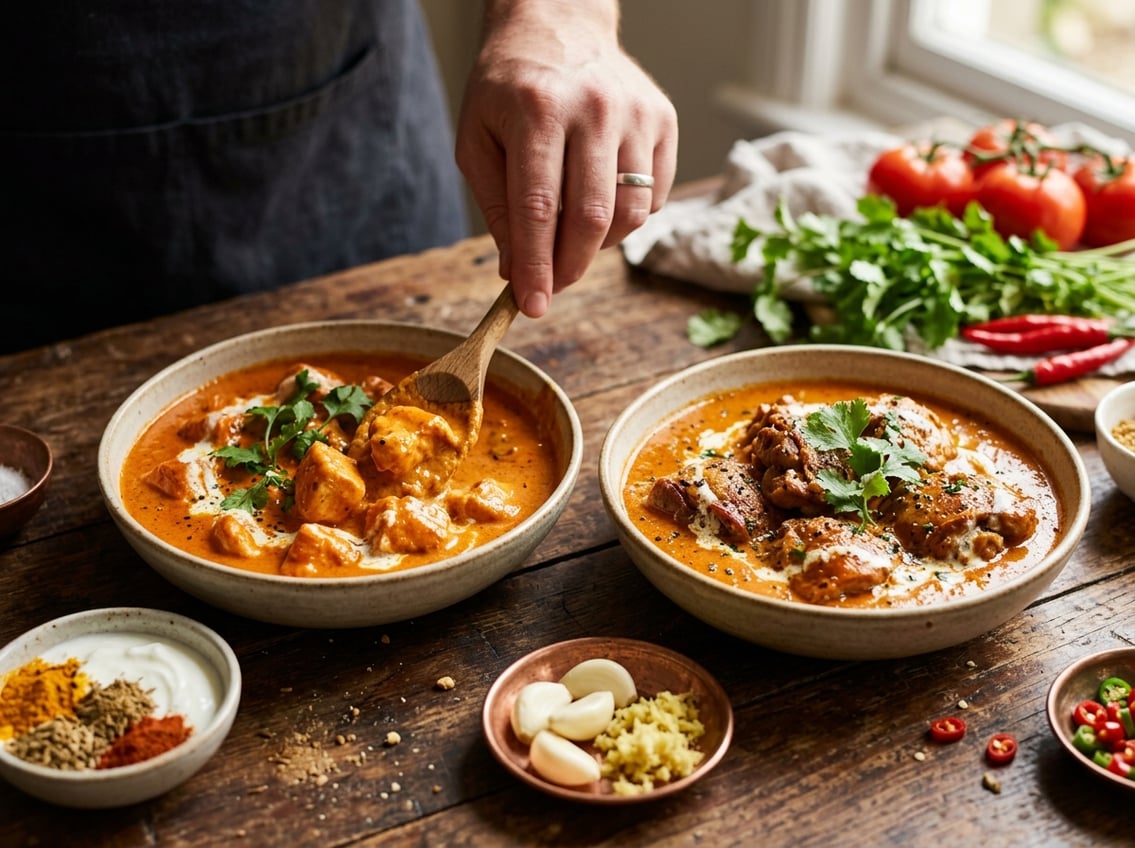
Marinating chicken changes both the flavor and the texture before the pan heats up.
A good chicken marinade helps both cuts. Breast meat needs more help with moisture, while thighs need less time to become tender.
Building a Yogurt Marinade That Suits Each Cut
A yogurt marinade works because it coats the meat and softens it during marinating.
Add garlic and ginger, ginger paste, garam masala, ground coriander, ground cumin, ground turmeric, tandoori masala, and kashmiri chili powder for a balanced flavor base.
For chicken breast, keep the marinade a little richer and let it sit long enough to protect the lean meat.
For chicken thighs, the same mixture gives deep flavor without needing as much effort to keep the meat moist.
Marinating Time for Breast and Thigh Meat
Chicken breast benefits from a longer marinade, usually several hours or overnight if you have time.
That gives the spices time to soak in and helps guard against dryness.
Chicken thighs can take the same marinade, though they do not need as much time to stay tender.
A shorter rest still gives strong flavor because the meat already has more fat and natural juiciness.
How Seared Chicken Mimics Tandoori Flavor
A hot pan gives you seared chicken with browned edges that echo the flavor you expect from tandoori-style cooking.
That browning adds depth before the meat goes into the sauce.
If you want a more authentic feel in homemade butter chicken, sear the marinated chicken first, then finish it in the sauce.
That method gives you a flavor profile close to restaurant-style murgh makhani.
Choosing the Right Sauce Pairing for Each Cut
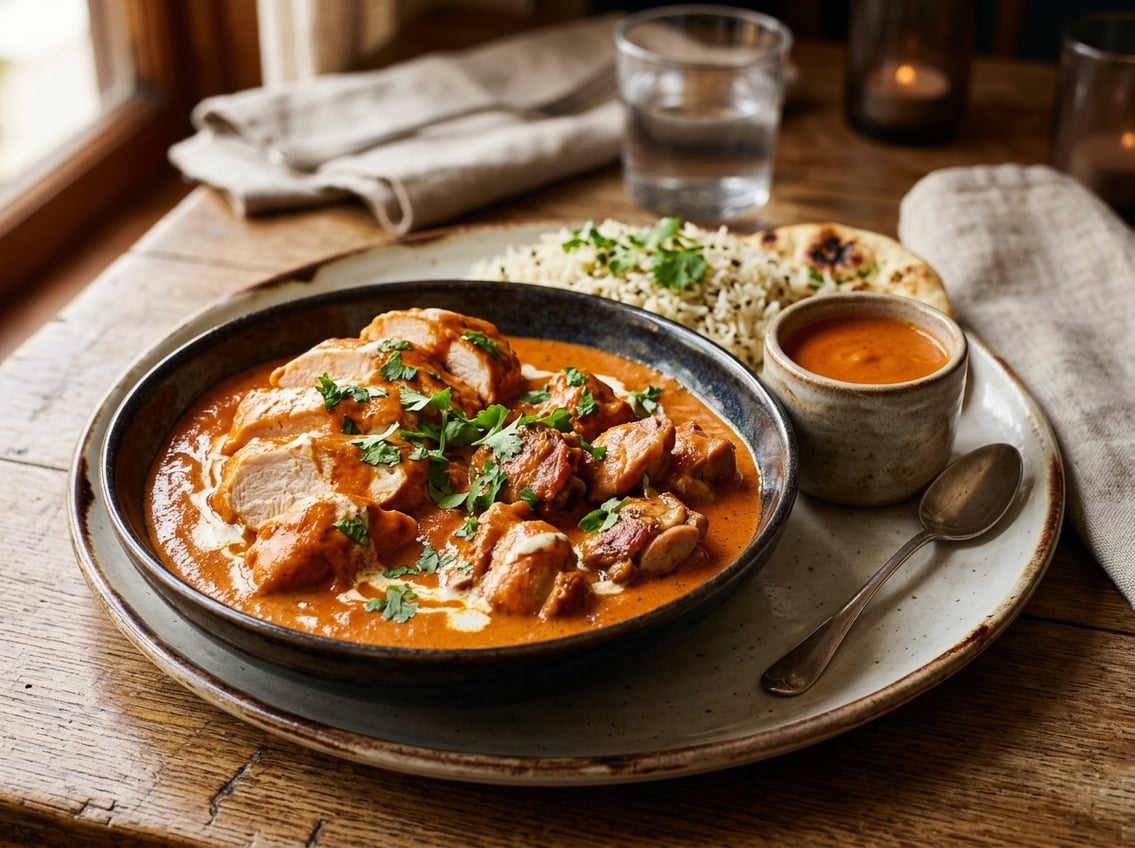
Butter chicken sauce should support the chicken, not bury it.
Lean meat needs a sauce that adds richness. Richer meat tastes best with a sauce that stays smooth and well balanced.
How Tomato and Cream Balance Lean and Rich Meat
Chicken breast does well with a fuller butter chicken sauce because the cream and tomato keep it from tasting too plain.
Chicken thighs can handle a slightly lighter hand with cream because the meat already brings richness.
Crushed tomatoes, tomato paste, and passata all work as the tomato base.
Heavy cream gives the classic finish, while coconut milk or coconut cream can soften the sauce in a more flexible home version.
Key Ingredients That Make Butter Chicken Sauce Taste Complete
Ghee gives the sauce a round, buttery taste.
Fenugreek leaves, kasuri methi, and dried fenugreek leaves add the finish that many people expect in butter chicken.
Black cardamom and green cardamom add warm depth.
A smooth sauce often benefits from an immersion blender. These ingredients help the dish taste complete, whether you use breast or thigh meat.
Simple Swaps for Richness, Smoothness, and Pantry Flexibility
If you want more richness, use a little extra ghee or heavy cream.
If you want a lighter version, use more tomato and less cream, or swap in coconut milk.
Passata works well when you want a smoother texture right away.
Crushed tomatoes give more body. Tomato paste adds depth in a small amount.
A blender or immersion blender helps if you want a silkier sauce without chunks.
Best Pick for Your Cooking Goal
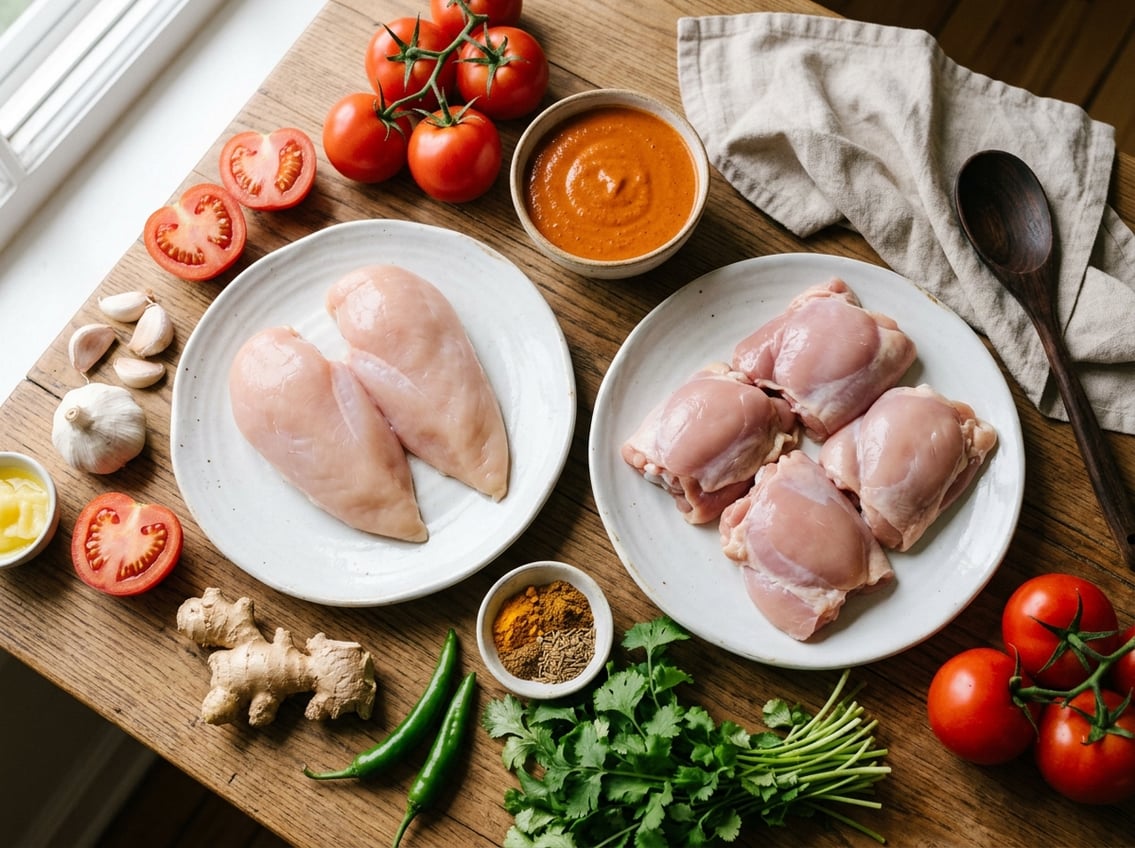
Your best choice depends on what you want from the meal.
If you care most about flavor and easy tenderness, thighs win.
If you want leaner meat and careful control, breasts can still make a good butter chicken recipe.
Best Option for Weeknight Butter Chicken
For a fast homemade butter chicken, boneless chicken thighs are the easiest pick.
They cook quickly, stay juicy, and tolerate a little extra time in the pan.
This is the safest choice if you want less stress and fewer dry spots.
You get a more forgiving result, especially on busy nights.
Best Option for Restaurant-Style Results
For a classic restaurant feel, many cooks use thighs because they match the rich style linked to Moti Mahal-inspired butter chicken.
The meat stays tender in the sauce and gives a fuller bite.
If you want a lighter version, chicken breast can still work when marinated well and cooked carefully.
Using both cuts together is a smart option if you want balance.
What to Serve Alongside for the Full Meal
Butter chicken pairs well with naan or garlic naan. Basmati rice gives you a simple base that soaks up the sauce.
If you want to stretch leftovers, try making butter chicken pizza. This option turns extra homemade butter chicken into a different meal the next day.


