
Why Does My Chicken Breast Taste Rubbery? Causes and Fixes
Chicken breast often tastes rubbery when it loses too much moisture, cooks unevenly, or starts with a tougher cut.
Usually, this is a cooking issue you can correct.
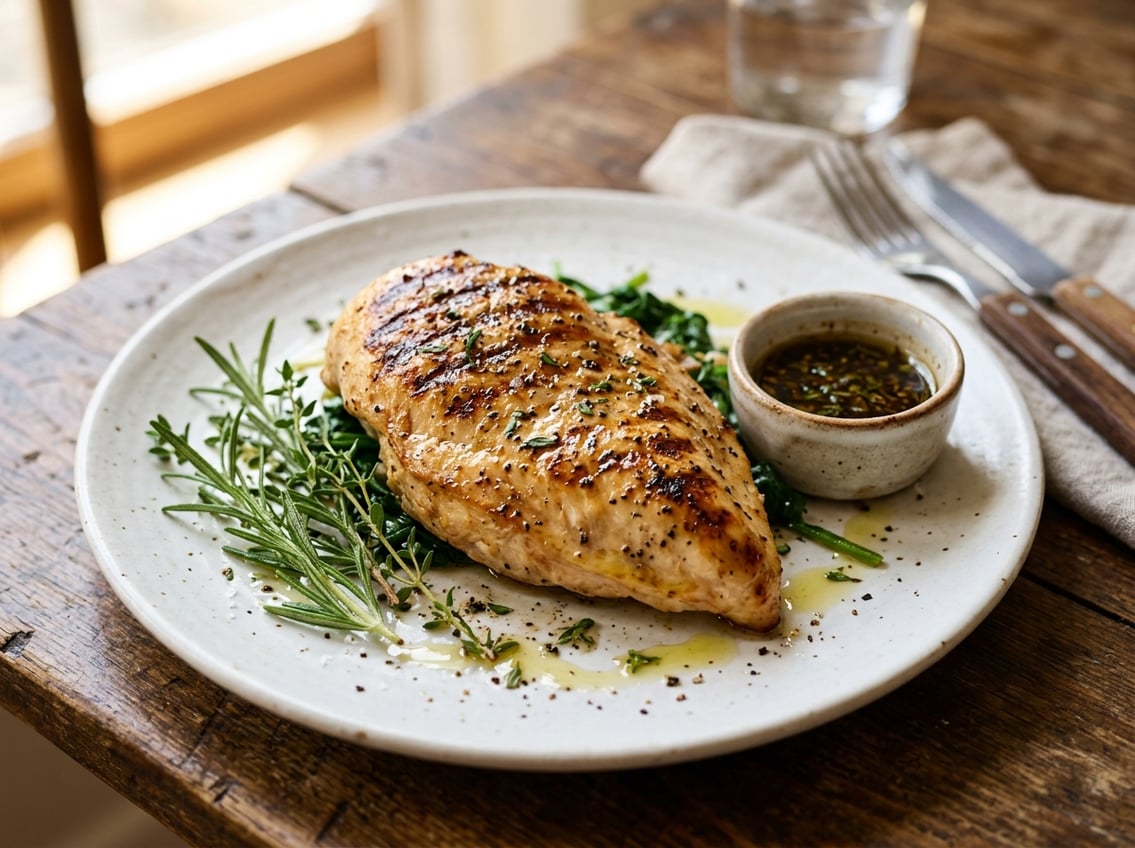
Overcooking, undercooking, or starting with a tough breast are the most common reasons for rubbery chicken.
Chicken breast is especially easy to overdo because it is lean.
Once it goes past the right doneness, it can turn dry and chewy instead of tender.
What Usually Causes a Rubbery Texture
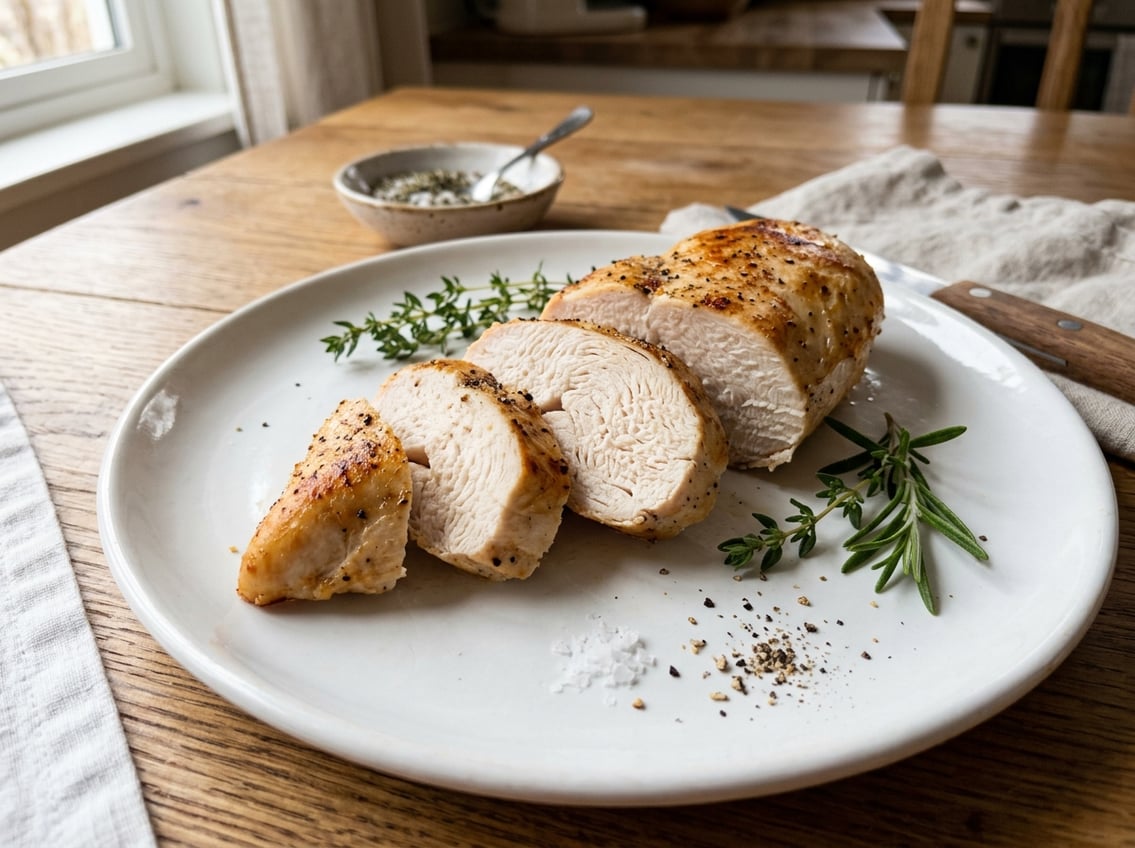
Heat and timing usually cause rubbery chicken.
The meat can also feel tough if it did not retain enough moisture during cooking, which happens often with chicken breast.
The safest target for cooked chicken is 165 degrees Fahrenheit.
Reaching that temperature too fast or holding it there too long can still hurt texture.
The goal is proper doneness with enough moisture left in the meat.
Overcooking and Moisture Loss
When you overcook chicken, it often feels rubbery.
As the protein tightens, it pushes out moisture and leaves the meat dry, firm, and chewy.
High heat can make this worse because the outside cooks faster than the center.
That creates a tough bite before the inside is done, which can tempt you to keep cooking and dry it out more.
A meat thermometer helps you stop at the right moment.
If you pull chicken breast as soon as it reaches 165 degrees Fahrenheit, or a little before if you plan to rest it, you are less likely to lose moisture.
Undercooking and Gelatinous Texture
Undercooked chicken can also feel wrong in your mouth.
Instead of being tender, it may seem slippery, soft, or slightly gelatinous, which many people read as rubbery.
That texture is a safety issue as well as a quality issue.
If the center is not fully done, keep cooking until the thickest part reaches the safe temperature.
Why Lean Breast Meat Is Easy to Toughen
Chicken breast has little fat, so it dries out faster than darker cuts.
That makes it easy to go from tender to chewy chicken in a short time.
Gentler heat, careful timing, and adding moisture with brining or resting help keep it from tightening too much.
Chicken breast needs more attention than thighs or drumsticks.
When the Meat Itself Is the Problem
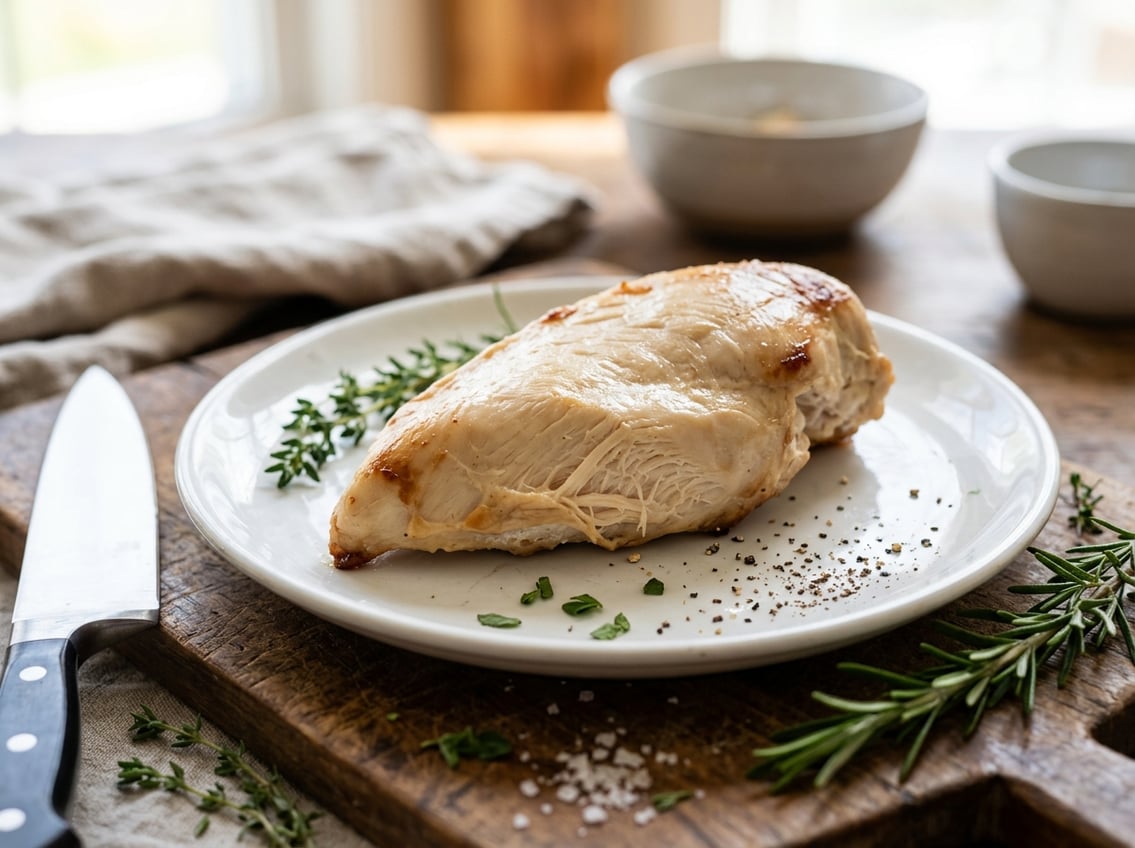
Sometimes, the meat itself is tougher than usual because of a condition like woody breast or white striping.
Both of these affect texture before you even start cooking.
These problems can show up in different types of chicken, including some labeled as organic or high-quality.
The label matters less than the actual muscle quality, so it helps to know what to look for when you buy chicken.
Woody Breast and Woody Chicken Breasts
Woody chicken breast, also called woody breast, is a texture problem where the muscle feels unusually hard, dense, or fibrous.
In woody chicken breasts, the meat can stay chewy even when cooked correctly.
This does not happen because of your seasoning or pan method.
The breast simply starts out with a tougher structure, so it can stay unpleasantly firm after cooking.
White Striping and White Striped Chicken
White striped chicken has visible white lines or bands of fat running through the breast.
It often goes along with a poorer texture and less tenderness.
That does not always mean the chicken is unsafe, but it can explain why the breast feels rubbery or stringy after cooking.
If the raw meat already looks unusual, the final texture may disappoint you no matter how carefully you cook it.
How to Buy Better Poultry at the Store
When you shop, look for breasts that are evenly shaped, plump, and free of obvious white striping or very hard spots.
If one side is much thicker, it may cook unevenly and turn tough before the center is done.
You can compare packs and choose the most uniform pieces.
Buying from brands with consistent quality matters more than chasing a label, because not all organic or premium cuts perform the same way in the pan.
How to Fix Tough Chicken You Already Cooked
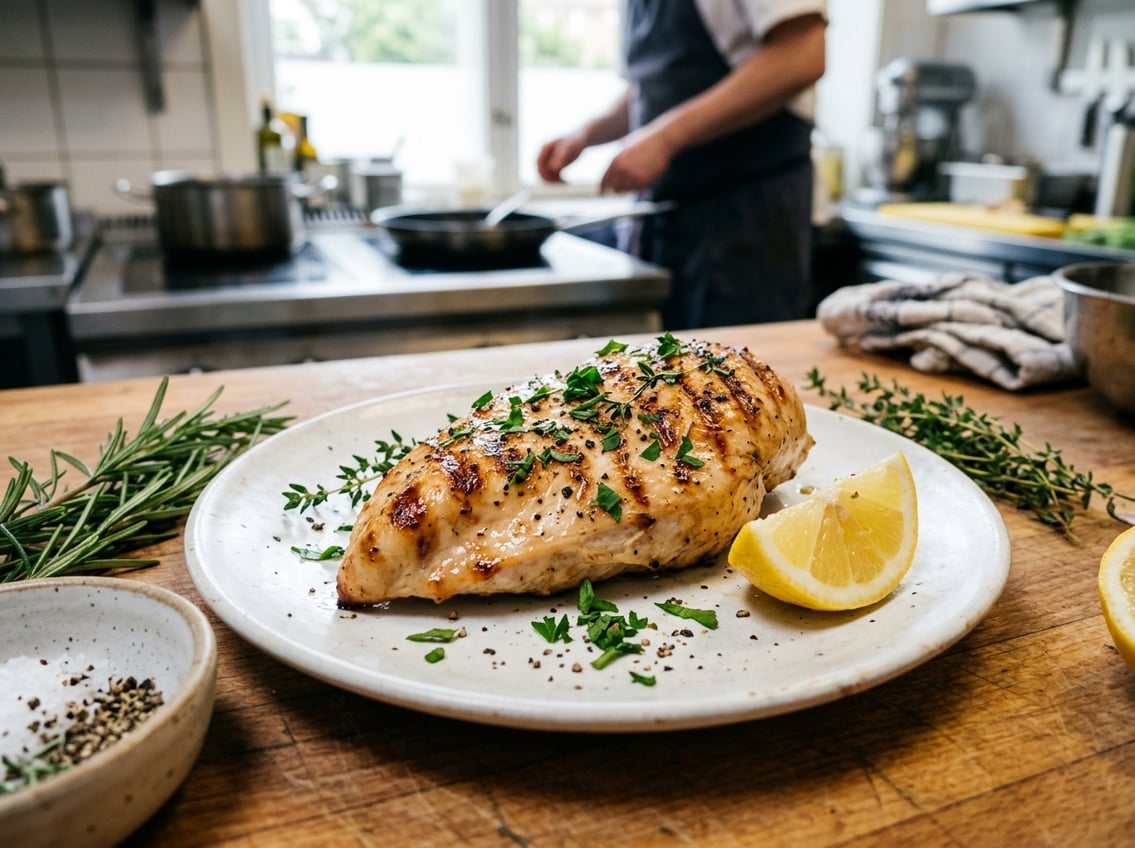
You can still make dry or tough chicken more usable.
The best approach is to add moisture, slice it properly, and use it in dishes where texture matters less.
When It Is Safe to Keep Eating It
Check if the chicken reached a safe internal temperature of 165 degrees Fahrenheit and was stored properly.
Rubbery chicken is usually safe to eat if it meets these conditions, even if the texture is poor.
If the center was undercooked, keep cooking it before serving.
If it sat out too long or smells off, discard it.
Ways to Add Moisture and Improve Texture
A sauce can help soften the dry bite and make the meat easier to chew.
Warm broth, gravy, salsa, or a creamy sauce are good options.
You can also chop or shred the chicken and mix it with moisture-rich ingredients.
A little olive oil, yogurt, mayo, broth, or dressing can help.
Best Uses for Shredded Leftovers
Shredded chicken is easier to rescue than whole slices.
Once the meat is pulled apart, it blends better into saucy dishes like chicken salad, soup, chicken enchiladas, and salsa-based recipes.
If the texture is still firm, small pieces work better than large slices.
The more the meat is coated, the less the rubbery feel stands out.
How to Keep Chicken Tender Next Time
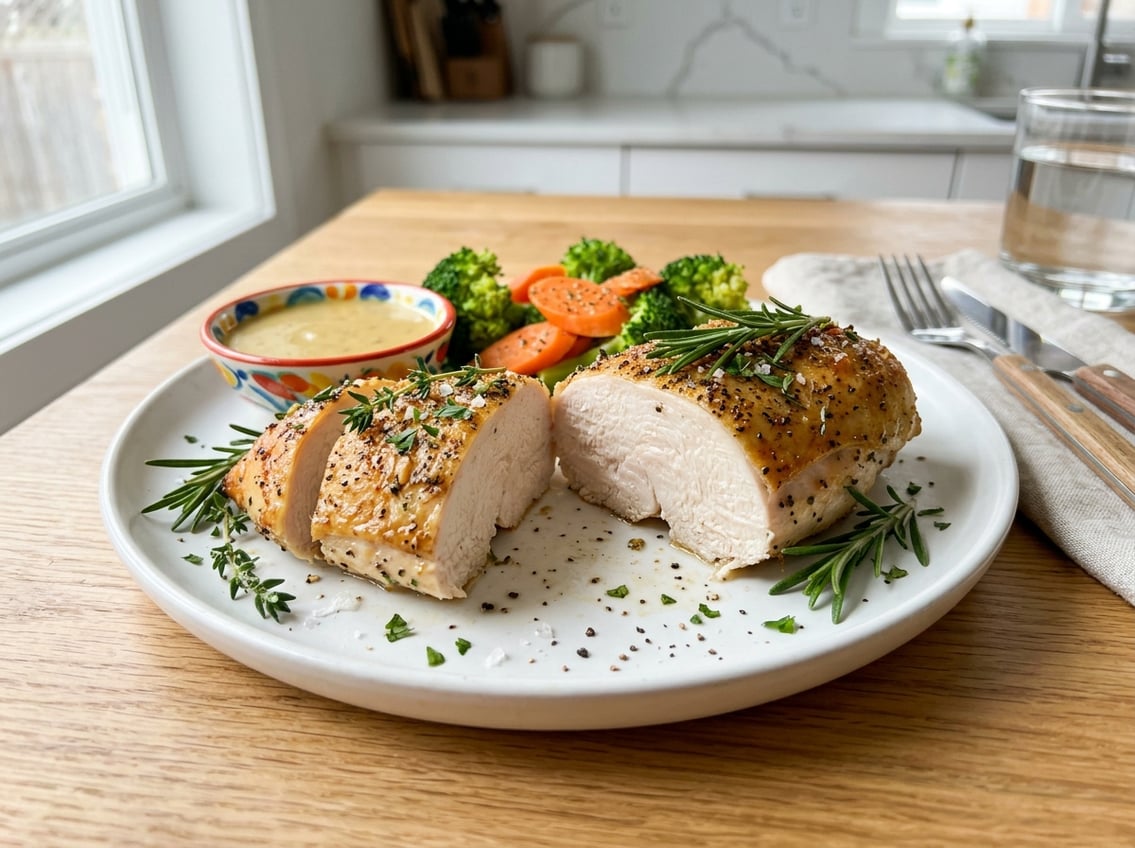
You can prevent rubbery chicken with better temperature control and a few simple prep steps.
A meat thermometer does most of the work, and the rest comes from even thickness, a resting period, and choosing a cooking method that suits lean meat.
Use a Meat Thermometer and Pull at the Right Time
If you want to avoid rubbery chicken, use a meat thermometer every time.
Guessing is the fastest way to overcook lean breast meat.
Check the thickest part and pull the chicken as soon as it reaches 165 degrees Fahrenheit.
Letting it sit too long on the heat keeps tightening the proteins and dries it out.
Prep Thicker Pieces for Even Cooking
Uneven thickness makes one end overcook while the other end catches up.
Pounding thick spots to a more even size helps the whole breast cook at the same rate.
You can also use a light meat tenderizer approach, like a short brine or a gentle marinade.
That helps add moisture and can improve the final bite.
Brine, Rest, and Choose Better Cooking Methods
A simple brine helps the meat hold onto moisture during cooking. Even a short saltwater soak improves lean chicken breast.
Resting matters too. Let the chicken sit for a few minutes after cooking so the juices settle before you slice it.
Gentler methods like baking or pan-searing with control usually give better results than using very high heat. Roasting at moderate heat also works well.
To prevent rubbery chicken, focus on even cooking, careful timing, and enough moisture from start to finish.


