
Should You Wash Chicken Breast Before Cooking? Safety First
Should you wash chicken breast before cooking? The safest answer is no.
Washing raw chicken does not make it safer, and it can spread bacteria around your kitchen.
You protect your food more by handling chicken carefully and cooking it to a safe internal temperature than by rinsing it in the sink.
Raw poultry can carry bacteria such as salmonella and campylobacter, and those germs can move onto sinks, counters, utensils, and your hands.
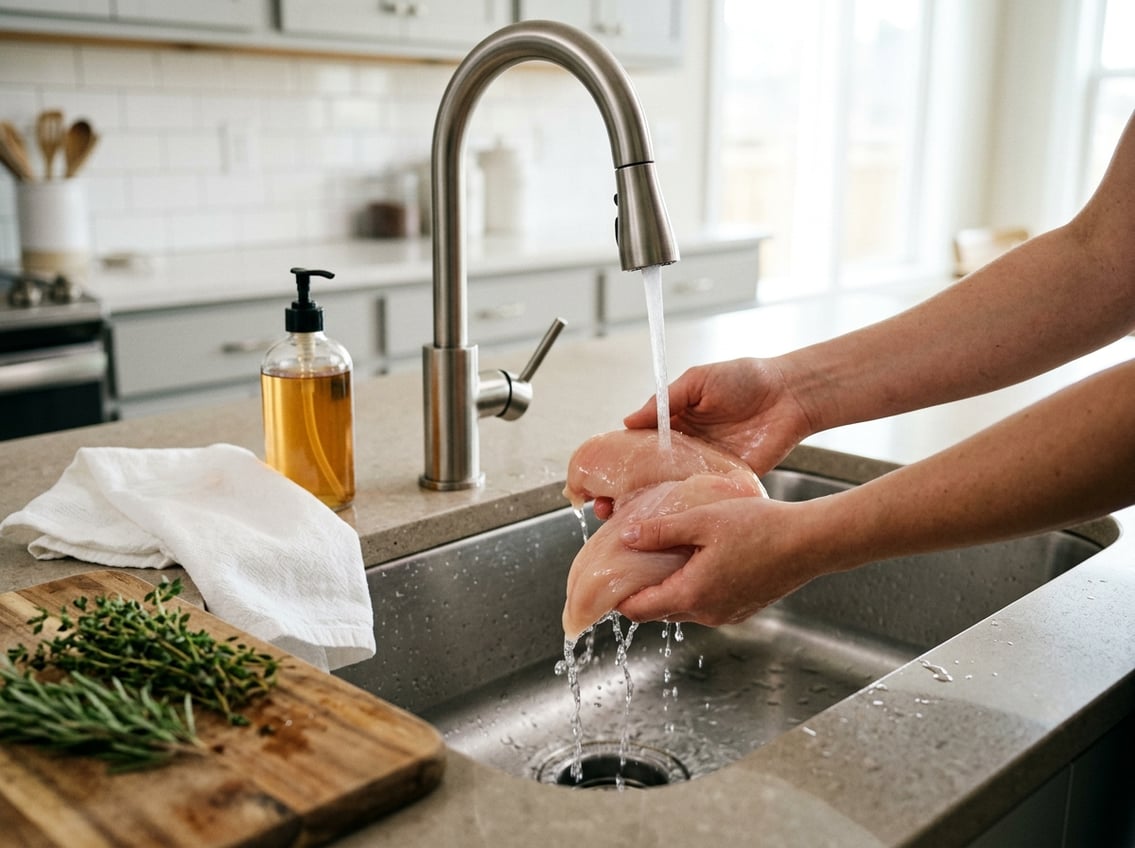
The Short Answer and Why It Matters
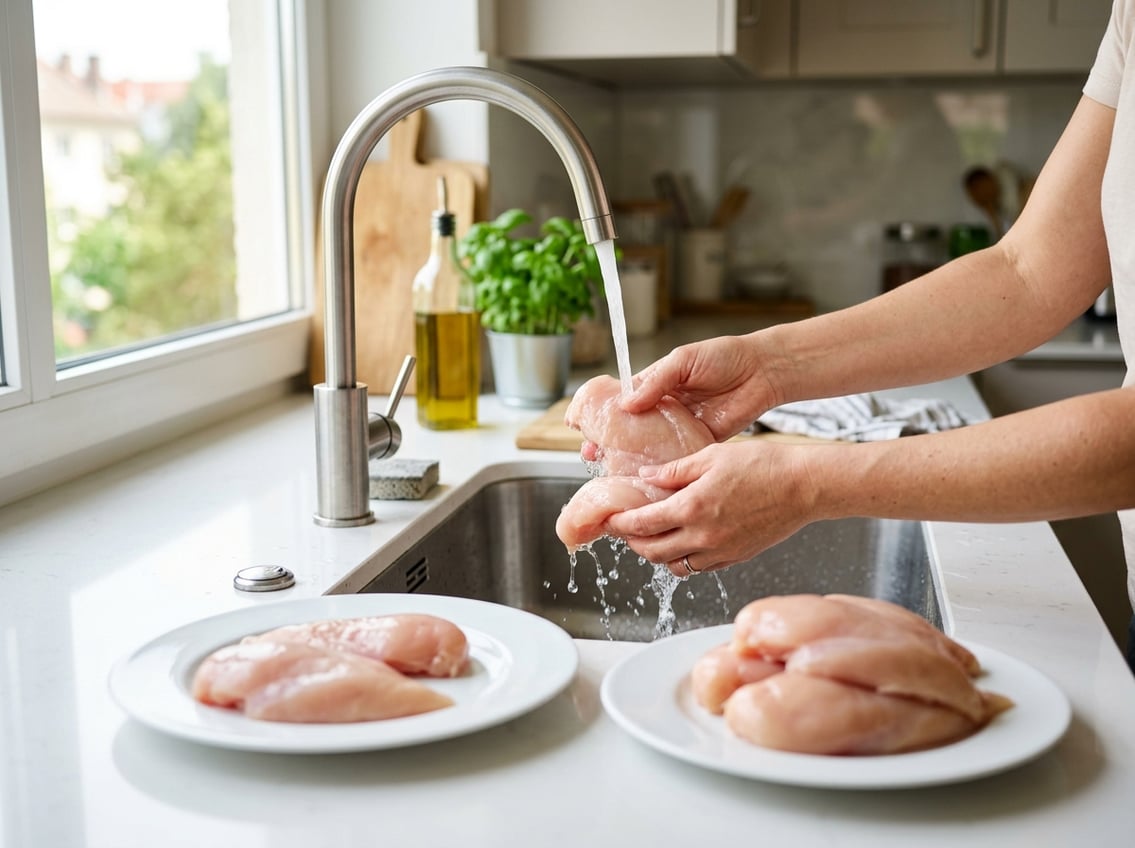
You should not wash chicken breast before cooking.
Food safety experts warn that washing raw chicken can spread germs instead of removing them, and those germs can cause foodborne illness.
The main concern is not the water itself, it is the splash.
Once bacteria leave the chicken surface, they can land on nearby surfaces and create a wider contamination problem.
Why Food Safety Experts Say No
Food safety experts say to skip washing because raw chicken can already carry harmful bacteria.
Rinsing it does not make the meat safer, and it can spread contamination to your kitchen tools and work area, as explained by Martha Stewart’s food safety guidance.
This advice has been part of USDA guidance for years.
The goal is to reduce the chance that salmonella or campylobacter moves from raw poultry to the rest of your kitchen.
Why Rinsing Does Not Remove Bacteria
Rinse water does not reliably remove bacteria from chicken.
Any germs left on the surface can still be present after a quick wash, and some can spread farther than you expect.
You may also spread bacteria through splashes from the faucet stream, the sink basin, and nearby surfaces.
That adds risk without cleaning the meat in a useful way.
How Cooking Makes Chicken Safe
Proper cooking kills harmful bacteria on chicken.
No rinse step can replace that.
Your focus should be on cooking chicken to a safe internal temperature, not on washing it first.
When the meat reaches the right temperature, the bacteria are destroyed.
How Bacteria Spread Around the Kitchen
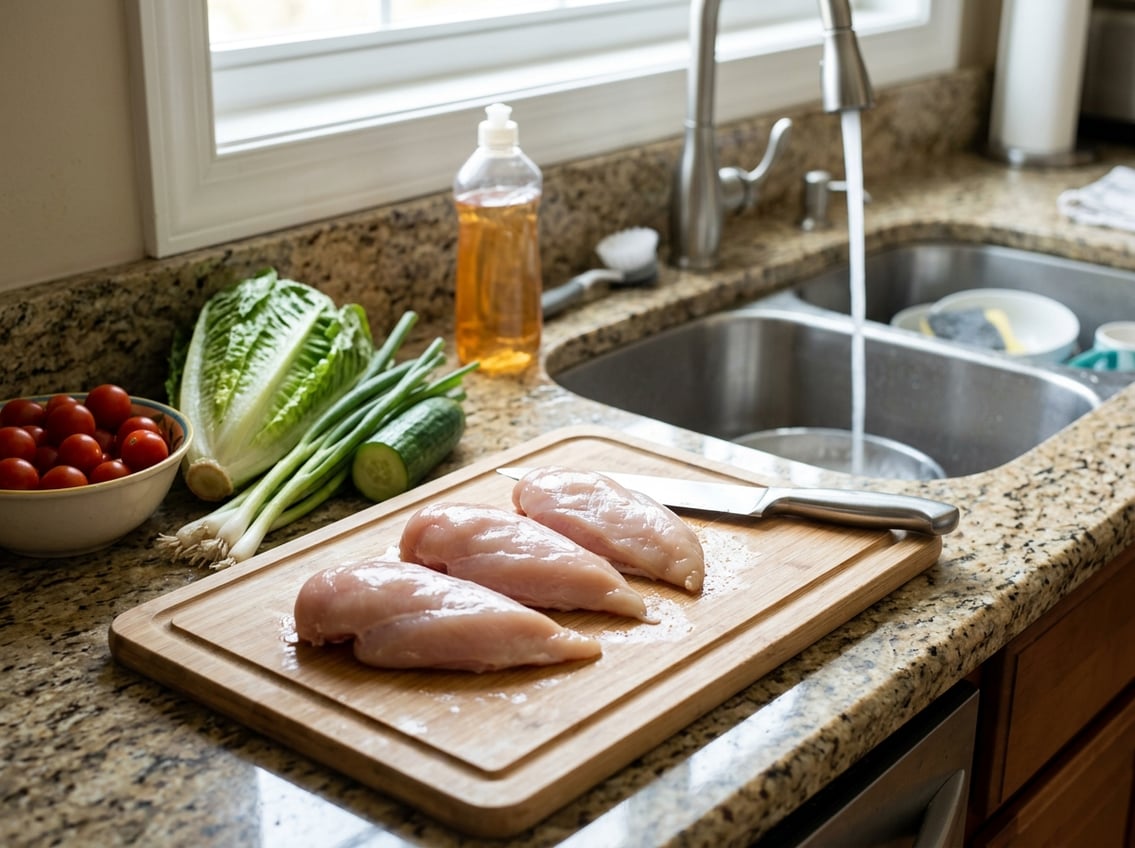
Washing raw chicken can create a chain reaction in your kitchen.
Small splashes and contact points can move bacteria from the sink to tools, counters, and food you plan to eat raw.
The risk comes from everyday tasks like setting down a spoon, touching a faucet, or placing a cutting board too close to produce.
Once raw chicken juices spread, cleanup becomes harder than it seems.
What Cross-Contamination Looks Like in Practice
Cross-contamination happens when bacteria move from raw chicken to another surface or food.
If you wash chicken, water droplets can land on your counter, nearby dishes, or your sleeves, then spread again when you keep cooking.
That means a clean-looking kitchen can still have contamination in hidden spots.
High-Risk Areas Like Sinks, Counters, and Utensils
The sink is a major risk zone because water flow can splash bacteria beyond the basin.
Counters and utensils are also vulnerable, especially if you place items near the chicken while rinsing.
Even a sponge can become part of the problem if it touches contaminated surfaces.
According to Martha Stewart’s safe handling advice, hot, soapy cleanup for utensils, boards, and counters is important after raw chicken contact.
How Raw Chicken Juices Create Hidden Risks
Raw chicken juices can spread without being obvious.
A small drip on the counter or a wet package bottom can contaminate a surface you touch later.
This is why many food safety experts warn against washing raw chicken.
The juices do not stay in one place, and bacteria like salmonella and campylobacter can travel with them.
What to Do Instead Before Cooking
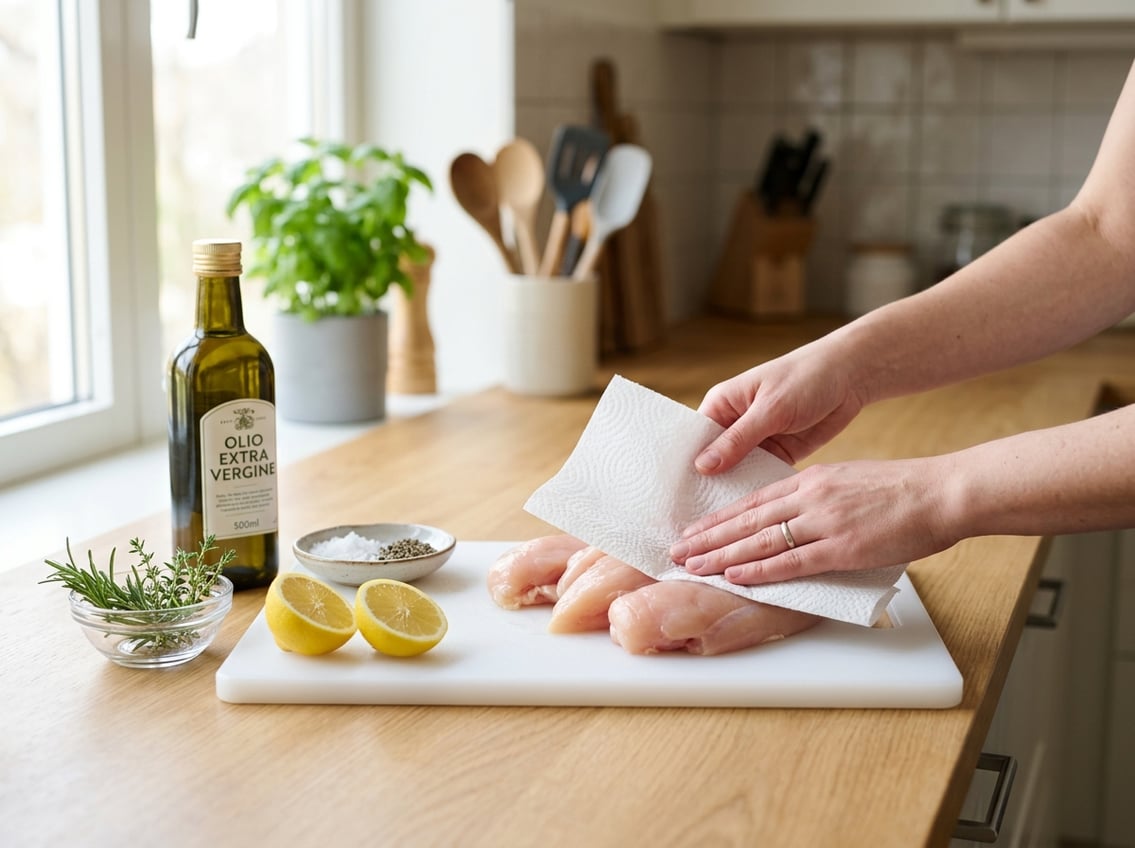
You do not need to wash chicken before cooking to prepare it well.
A few careful steps protect food safety and can help with texture and browning.
Focus on clean handling, dry the meat if needed, and keep raw chicken separate from ready-to-eat foods.
That approach is safer and more useful than rinsing.
Pat Chicken Breast Dry With Paper Towels
Pat the chicken breast dry with paper towels if you want better browning in the pan or oven.
Removing surface moisture helps the skin or outside brown more evenly.
Throw the paper towels away right away, then wash your hands.
Do not reuse them on other foods or surfaces.
Open Packaging and Discard Juices Carefully
Open the package over a plate, tray, or clean cutting board so liquid does not drip across the counter.
Dispose of the packaging and any juices promptly.
This is a simple food safety habit that lowers the chance of spread.
It also keeps your prep area easier to clean.
Use Separate Boards, Knives, and Plates
Use separate boards, knives, and plates for raw chicken and ready-to-eat foods.
If you put cooked chicken on the same plate that held raw chicken, you can contaminate the cooked food.
A dedicated board for raw meat is a smart habit.
It reduces the chance of mixing raw juices with vegetables, bread, or cooked items.
Wash Hands and Sanitize Contact Surfaces
Wash your hands with soap and water after touching raw chicken.
Clean counters, sinks, knives, and boards with hot, soapy water, then sanitize if needed.
Good cleanup matters as much as careful prep.
It helps stop bacteria from spreading after you handle the meat.
Why People Still Wash Chicken
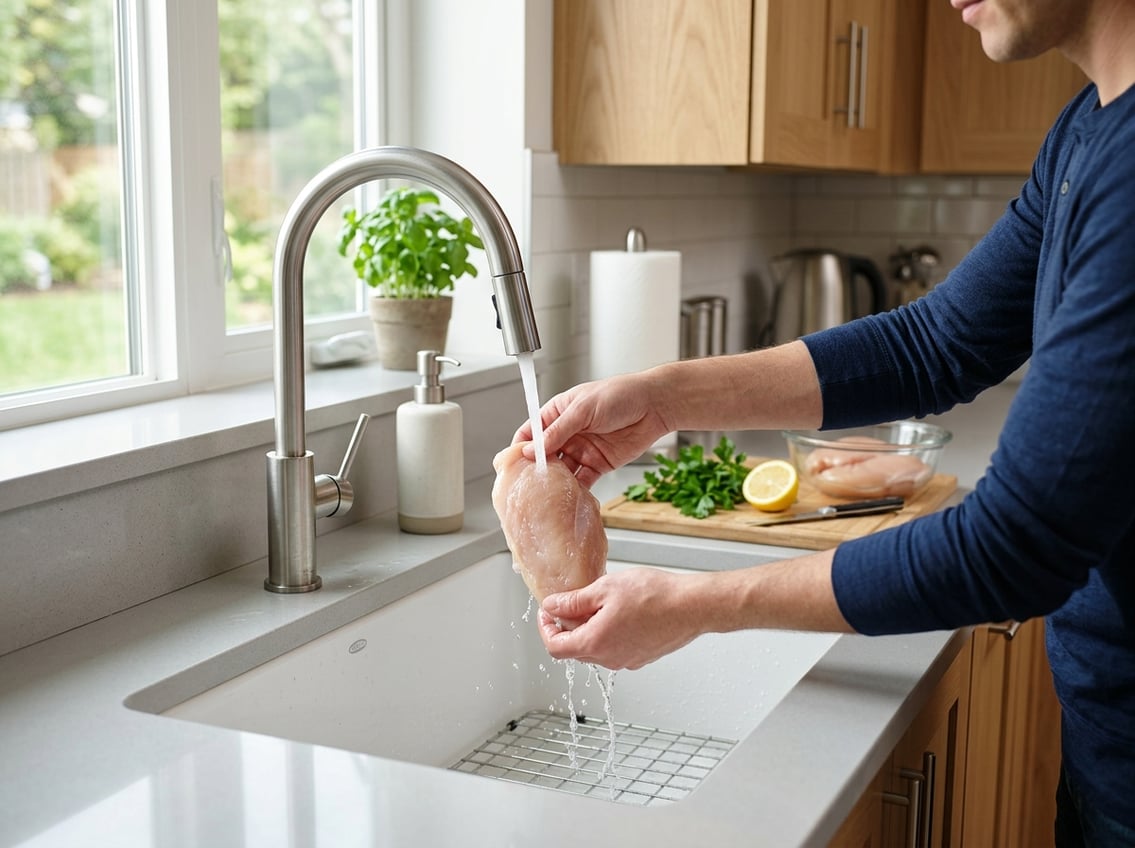
Many people still wash chicken because the habit has been passed down for years.
Older recipes and family routines can make rinsing raw chicken feel normal, even when current advice says otherwise.
You may also notice a slimy texture or liquid in the package and feel the urge to rinse it away.
That reaction is common, and it does not mean washing is the safest choice.
Family Habits and Older Recipe Advice
Some people learned to wash chicken from parents or grandparents.
In older cooking traditions, rinsing poultry seemed like a clean first step, and that idea stuck.
Modern guidance has moved away from that practice because food safety research showed the risk of spread.
As Martha Stewart notes, the USDA began advising against washing raw poultry in the 1990s.
Concerns About Slimy Texture or Packaging Liquid
Package liquid can make chicken look less appealing.
The same is true for surface moisture, which some people mistake for dirt or residue.
That feeling is understandable, yet the safer response is to drain, pat dry, and clean your hands and tools.
You do not need to rinse raw chicken to make it ready for cooking.
How to Handle the Urge to Rinse Poultry Safely
If you still feel like you should rinse raw chicken, pause and focus on safe prep instead.
Move the package carefully and use a clean board.
Dry the meat with paper towels if needed.
Cooking makes chicken safe.
If you want a cleaner process, control the surfaces around the chicken instead of rinsing it under running water.


