
Is Chicken Breast Same as Chicken Chest? Clear Differences
You may hear is chicken breast same as chicken chest and assume the two terms mean the same thing. In most kitchen settings, they point to the same edible area, but the wording is not equally precise in every context.
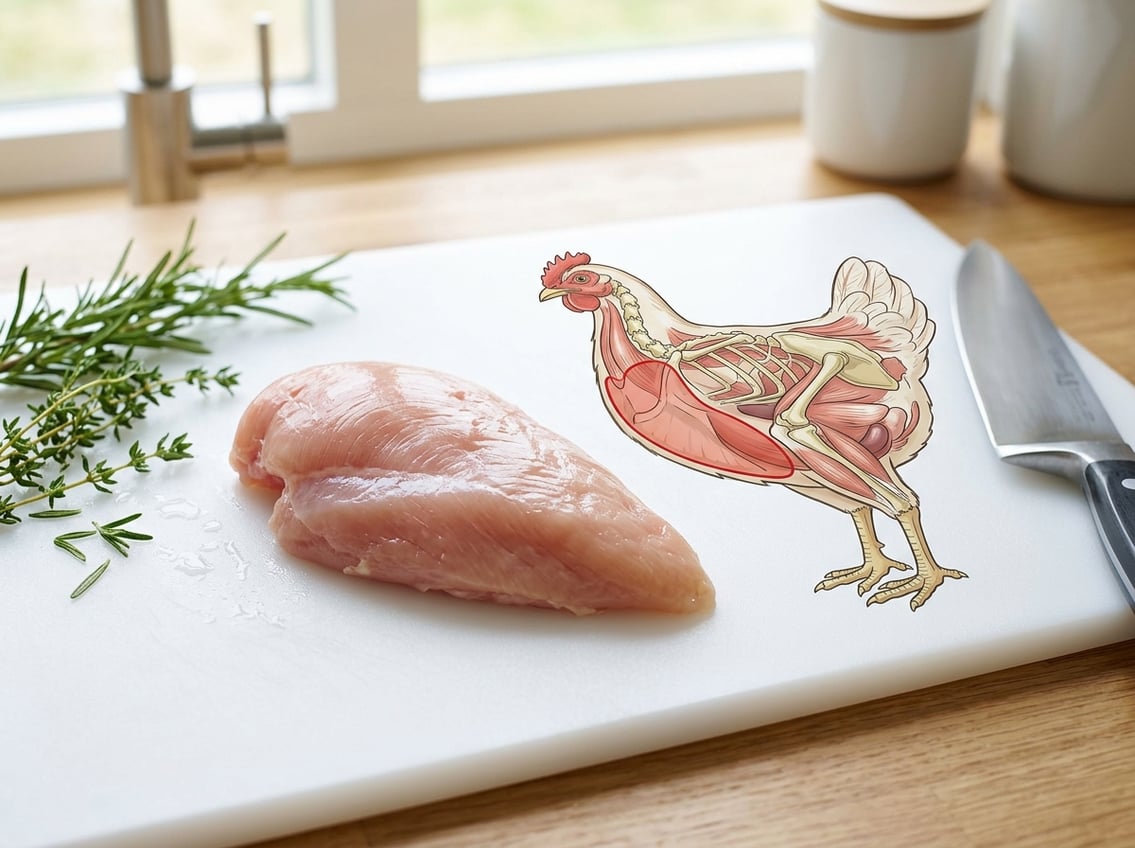
Chicken breast is the specific cut you buy and cook. Chicken chest is a broader anatomical phrase that can include the whole front body area.
That difference matters when you read recipes, shop for meat, or talk about chicken anatomy.
What Each Term Refers To
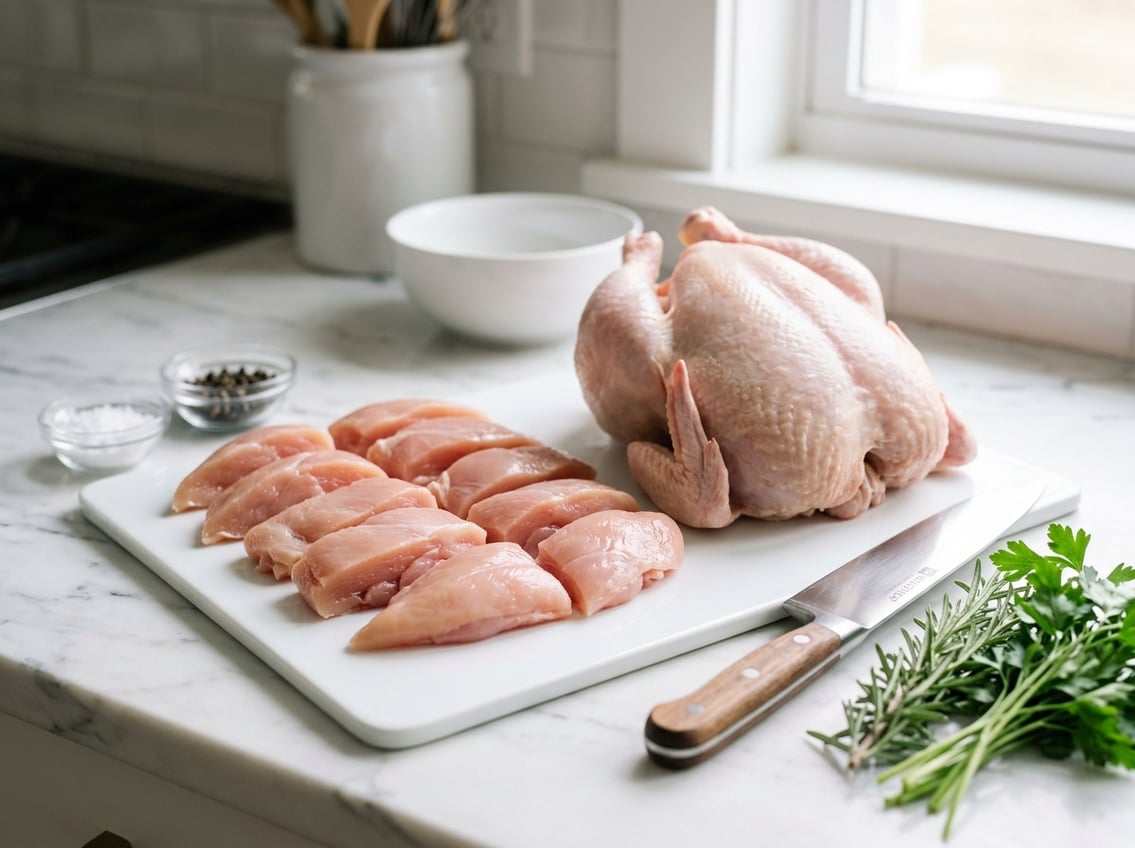
Chicken breast and chicken chest sit in the same general area. They do not always mean the same thing.
One term points to a food cut. The other can describe a larger body region with meat, bone, and cartilage.
Chicken Breast as the Edible Pectoral Muscle
Chicken breast refers to the large pectoral muscle on the front of the bird. It is the white meat you commonly buy as boneless, skinless breasts or split breasts.
This cut comes from the anatomical location over the breastbone. It is usually the leanest, most familiar part of the chicken for cooking.
In plain terms, when someone says “chicken breast,” they usually mean the edible muscle only.
Chicken Chest as the Broader Front Body Area
Chicken chest is not the standard retail name for a cut. It is a broader phrase that can include the breast meat plus nearby parts of the front body, such as the breastbone, surrounding cartilage, and other tissue.
That broader composition is why the term can sound vague in food conversations. If you are buying meat, “chicken breast” is the clear label you usually want.
Why the Terms Get Used Interchangeably
People often use the words loosely because the breast sits on the chest. In casual speech, that makes the terms feel interchangeable.
A recent explainer from My Kitchen Gallery notes that the breast is the meat from the chest area, while “chicken chest” can refer to the larger front section.
That is why the meaning changes with context, especially between anatomy and cooking.
Cuts, Butchery, and Kitchen Use

In the kitchen, the label you see affects how you trim, cook, and serve the meat. The breast is the common retail cut.
Tenderloin and fillet names can appear in butchery and packaging.
Where Chicken Tenderloin and Chicken Tenders Fit
Chicken tenderloins are the small strips found under each breast. They are separate from the main breast muscle, even though they sit nearby.
Chicken tenders usually refers to those tenderloins, either sold whole or breaded and shaped for frying. They are softer in texture and smaller than the breast, so they cook faster.
How Chicken Fillet and Chicken Breast Are Labeled
Some sellers use fillet to mean a boneless chicken breast. Others use it more broadly for any boneless piece taken from the breast area.
Labels can vary by store or country, even when the meat is the same. The terms chicken breast and chicken fillet often point to the same cut.
Chicken chest is still less exact in food labeling.
Culinary Implications for Recipes and Stock
Recipes written for chicken breast usually assume a lean, boneless cut that cooks quickly. If a recipe calls for a larger chest area with bone and cartilage attached, the cooking time will be longer and the texture may be different.
Bone-in pieces can add flavor to stock and braised dishes. Boneless breasts work well for grilling, sautéing, baking, and slicing into salads.
Nutrition and Practical Buying Differences

Chicken breast is one of the most common lean protein choices in the U.S. The exact nutrition changes with skin, bone, and cooking method.
Lean Protein and Protein Content
Chicken breast is valued for its high protein content and low fat. That makes it a common choice for meal prep, sports diets, and simple weeknight meals.
When the breast is skinless and cooked without added fat, it stays one of the leanest cuts available. If you buy a broader chest cut with skin or bone attached, the edible meat still provides protein, but the final serving can differ in weight and yield.
Vitamin B6, Niacin, and Other Nutrients
Chicken breast also provides vitamin B6 and niacin, which help support energy use in the body. It can also supply other nutrients such as selenium.
These nutrients are present in the meat itself. The main difference is usually not the nutrient type.
The difference is more about how much of the cut you eat and whether the skin or bone is included.
Nutritional Differences by Cut and Preparation
Cooking methods change the final nutrition more than the name does. Frying adds fat, while grilling, baking, poaching, and air frying keep the cut lighter.
A comparison of chicken breast nutrition on FoodStruct shows that breast meat is lower in saturated fat than many other chicken preparations.
If you are comparing chicken breast with a broader chest piece, the breast portion itself is usually the leanest part.
Terms That Commonly Cause Confusion

Some chicken terms sound similar to chest and breast, but they belong to medicine or anatomy, not the grocery aisle. A few of them also describe human body shapes, which creates even more confusion.
Why Humans Have Breasts but Chickens Do Not in the Mammalian Sense
Humans have breasts because humans are mammals with mammary gland tissue. Chickens are birds, so they do not have breasts in that mammalian sense.
When you use the word breast for a chicken, you are talking about anatomy and meat cut language, not a mammary gland. That is a key difference between human anatomy and poultry anatomy.
The Medical Meaning of Chicken Chest, Bird Chest, Pigeon Chest, and Pectus Carinatum
Doctors sometimes use “chicken chest” to describe a chest shape that sticks out. The formal term is often pectus carinatum, and people also call it pigeon chest.
Chondrogladiolar prominence is a more specific form and refers to a common type of outward chest protrusion. These medical terms do not relate to poultry meat, even though the words may sound similar.


