
What Is the Calories of Chicken Breast? Quick Guide
The calories in chicken breast depend on portion size, whether the meat is raw or cooked, and whether the skin is left on. A skinless chicken breast is one of the most common high-protein foods in the U.S., so knowing the calorie count helps you plan meals more accurately.
For a standard 3-ounce serving of cooked, skinless chicken breast, you usually get about 165 calories. Most of those calories come from protein.
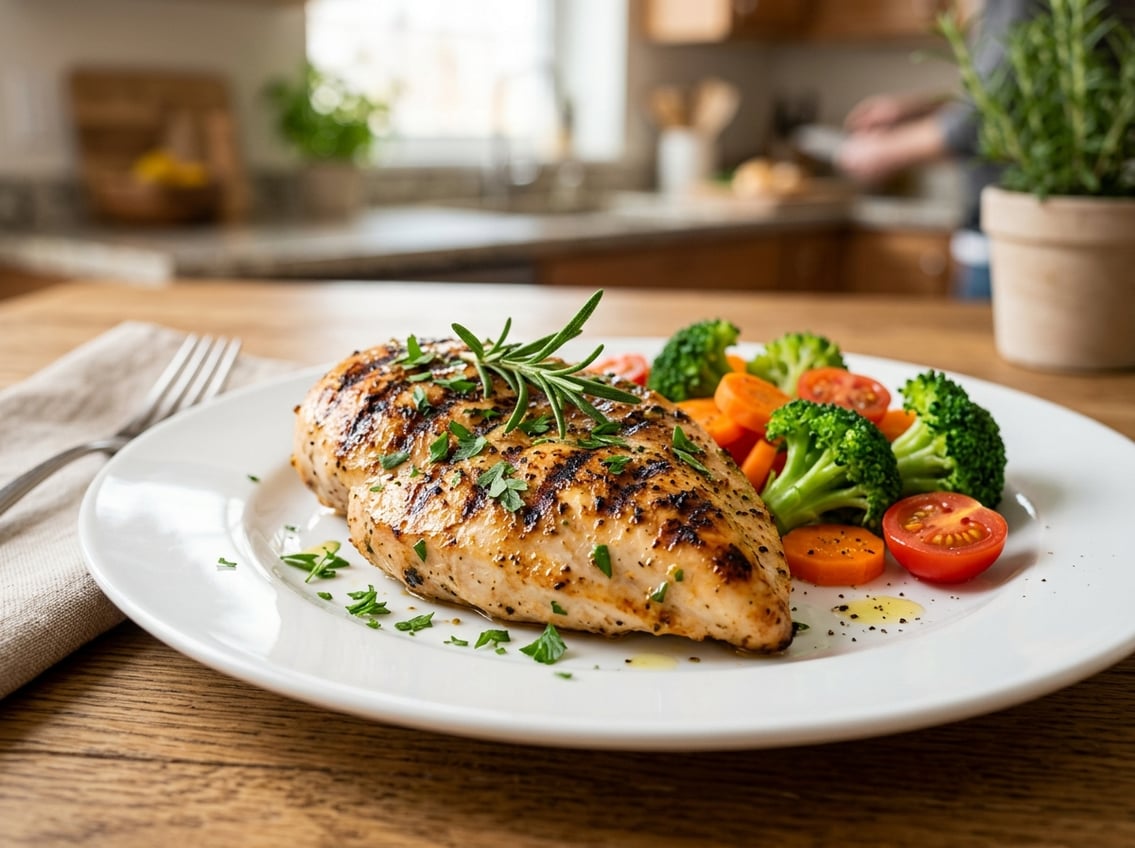
Serving size, cooking method, and added ingredients like oil, sauce, or breading can change the actual calories in chicken breast.
Chicken Breast Calories at a Glance
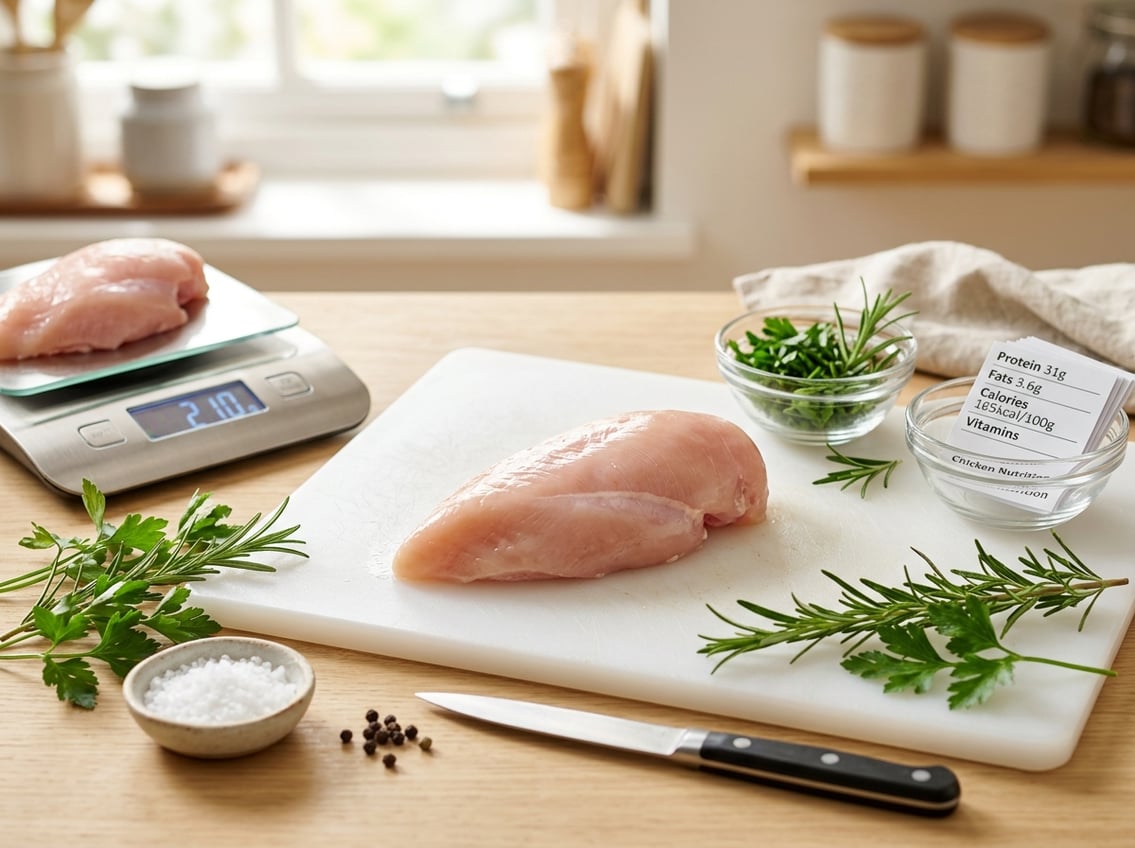
You can estimate chicken breast calories once you know the serving size. A smaller portion can fit a calorie-controlled plan, while a larger breast can contain far more calories than the label’s standard serving.
Cholesterol also matters for some people, since chicken is an animal food and the total changes with skin and preparation.
Standard Calories Per 100 Grams and Per 3 Ounces
A 3-ounce serving of cooked, skinless chicken breast has about 165 calories in many nutrition guides. Verywell Fit reports 128 calories for a 3-ounce grilled, boneless, skinless serving, showing how method and data source can shift the number: chicken breast calories and nutrition facts.
Raw chicken breast per 100 grams is often listed at about 110 to 120 calories. Cooked portions rise in calorie density because water is lost during cooking.
This means the same piece of chicken can show a different calorie amount depending on whether you weigh it raw or cooked.
Calories in Raw vs. Cooked Portions
Raw chicken breast contains more water, so it has fewer calories per gram than cooked chicken breast. Cooking removes moisture and concentrates the calories.
You should not compare a raw serving and a cooked serving one-to-one unless you use the same weight basis. If you track calories closely, weigh your chicken before or after cooking and stick to that method each time.
How Skin Changes the Calorie Count
Skinless chicken breast is the leanest choice. Keeping the skin on raises both fat and calories, and a 3-ounce serving of roasted or baked chicken breast with skin can be much higher in calories than the skinless version.
The skin also raises cholesterol intake compared with skinless chicken breast. Removing the skin before or after cooking makes a clear difference if you want a lower-calorie option.
Protein and Nutrition Profile
Chicken breast is a lean protein that provides a lot of protein without much fat. It also brings useful vitamins and minerals that support normal body function.
Protein Per Serving and Why It Matters
A 3-ounce cooked serving of chicken breast commonly provides around 25 to 26 grams of protein. That amount can support muscle repair after exercise and help you feel full after a meal.
Key Micronutrients Like Selenium, Niacin, Vitamin B6, and Phosphorus
Chicken breast is a good source of selenium, niacin, vitamin B6, and phosphorus. These nutrients help with energy use, cell function, and normal metabolism.
Verywell Fit notes that chicken breast is a very good source of selenium and phosphorus, along with vitamin B6 and niacin, which are important for thyroid function and cellular health: chicken breast nutrition facts and benefits.
Why Chicken Breast Is Considered a Lean Protein
You get a lot of protein with relatively little fat when you eat skinless chicken breast. Most of the calories come from protein, not fat.
This makes it useful if you want a filling meal without a large calorie load. It is especially practical when you want high protein for muscle maintenance, satiety, or weight loss.
How Cooking Method Affects Calories
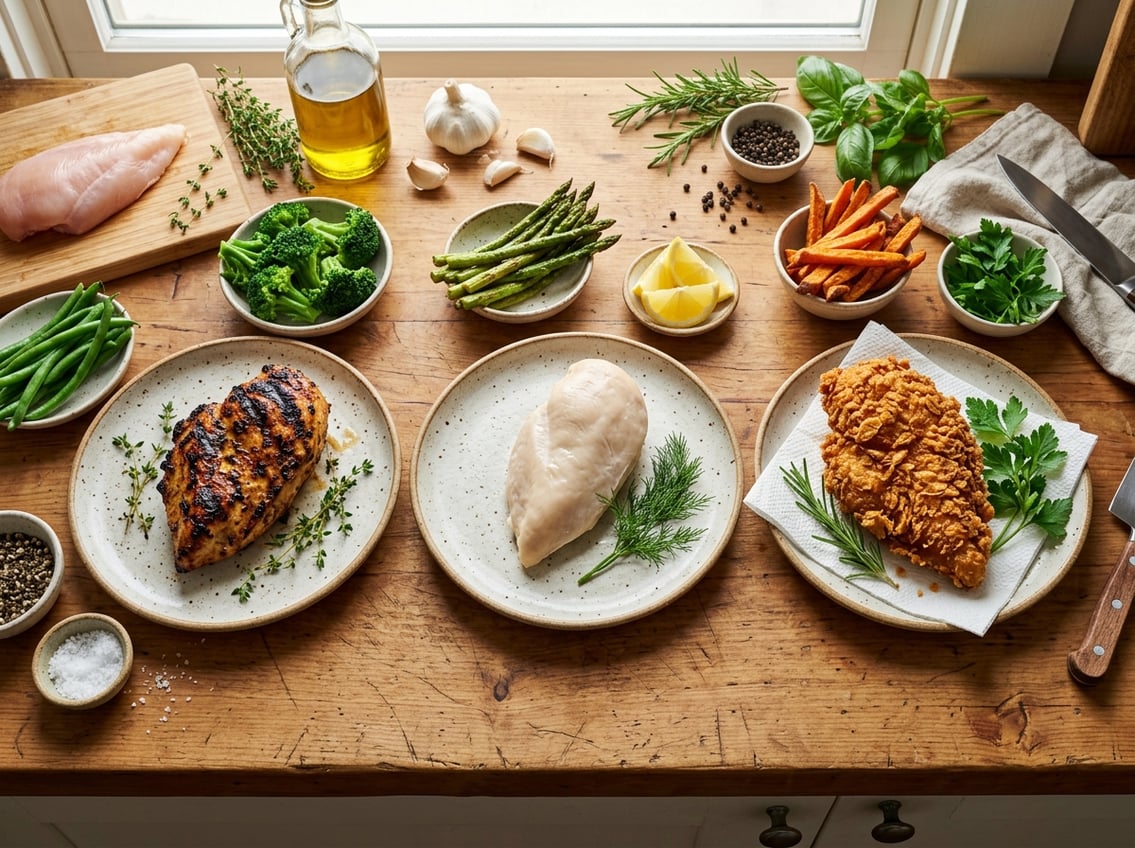
How you cook chicken changes the calories more than many expect. Grilling and baking keep the count low, while added oil, butter, sauce, or breading can push it higher fast.
Grilled, Baked, Poached, and Steamed Options
Grilled chicken breast and baked chicken breast are among the simplest lower-calorie choices. Poaching and steaming also work well because they do not require added fat.
When you season lightly and avoid heavy sauces, the calorie count stays close to the natural baseline of the meat.
Air Frying vs. Pan Cooking
Air frying creates a cooked texture with little or no added oil. Many use it for chicken breast when they want convenience without a big calorie increase.
Pan cooking can still fit a healthy plan, yet it often adds calories through oil or butter. If you use a skillet, measure the fat you add.
How Sauces, Oils, and Breading Add Calories
Oil, creamy sauces, and breading can quickly add calories. A few tablespoons of oil can add enough calories to make a lean meal much richer.
Baked chicken breast stays lighter when you use dry seasoning, herbs, or simple marinades. If you want accurate tracking, include every added ingredient in your total calories.
Using Chicken Breast in Real Meals
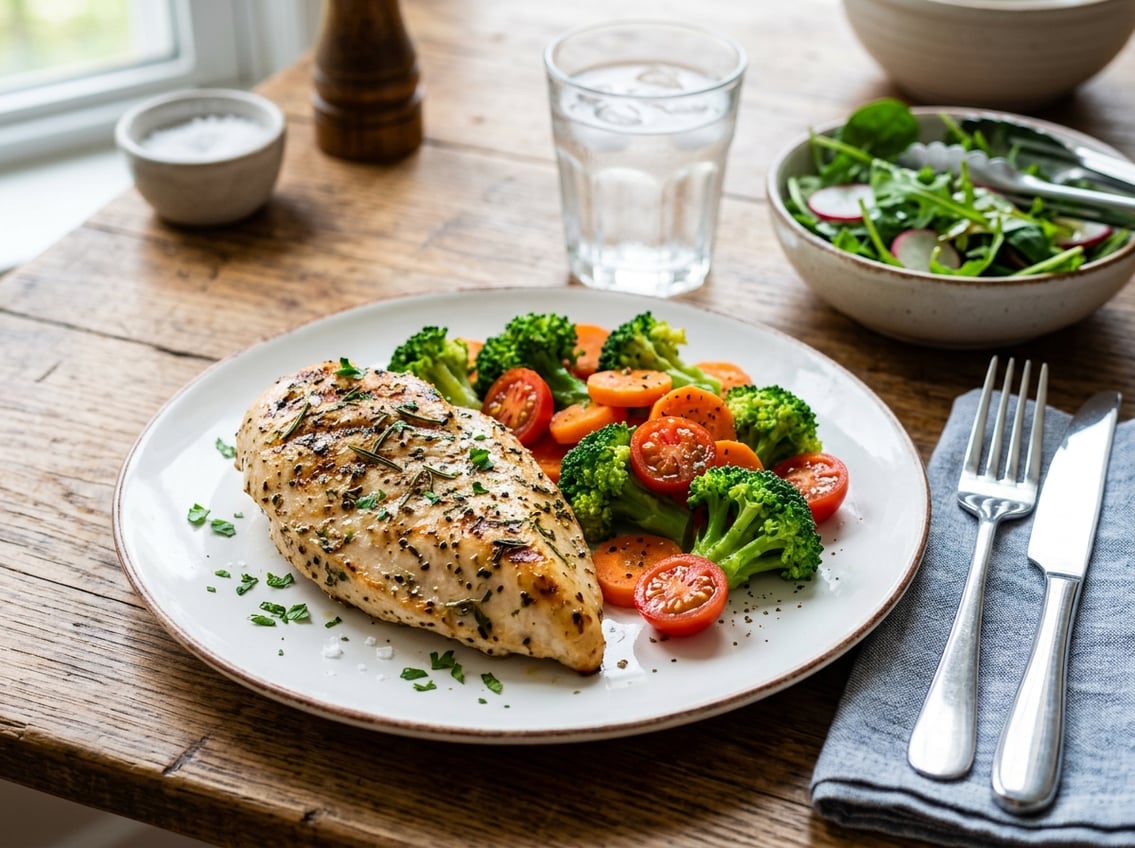
Chicken breast works best when you match the portion to your goal. A standard serving size is smaller than many restaurant portions, so the real calorie total can be higher than you expect if your plate is large.
Choosing the Right Portion for Your Goals
Start with 3 to 4 ounces of cooked grilled chicken breast if you want a simple reference point. That gives you a solid amount of protein without driving calories too high.
For muscle gain or higher-energy needs, a larger portion can make sense. For weight loss, a measured serving gives you better control over your total calorie intake.
Calories in Common Meals Like Chicken Caesar Salad
A chicken caesar salad can be a smart choice or a calorie-heavy one, depending on the dressing, cheese, croutons, and portion size. The chicken itself may stay fairly lean, while the extras add most of the calories.
A grilled chicken breast on a salad is often a better fit than fried chicken or a large amount of creamy dressing. If you want a lighter version, use less dressing and add more vegetables for volume.
When Chicken Breast Fits Weight Loss Plans Best
Chicken breast fits weight loss plans well when you want high protein and strong satiety with controlled calories.
It is especially useful when your meals need to keep you full for several hours.
Skinless chicken breast, measured portions, and simple cooking methods give you the best results.
This approach provides a filling meal without a large calorie hit.


