
When Are Chicken Breasts Better Than Thighs? Key Cases
When are chicken breasts better than thighs? Choose chicken breast when you want a leaner meal, a faster cook, or a milder cut that works well with sauces and marinades.
Chicken thighs offer juiciness and flavor, but chicken breast has a clear edge in several common cooking and nutrition situations.
If your goal is lower calories, higher protein per ounce, or a faster route to grilled or baked chicken, chicken breast is usually the better pick.
The Pioneer Woman’s comparison shows that boneless, skinless breast is generally lower in calories and fat than boneless, skinless thighs.
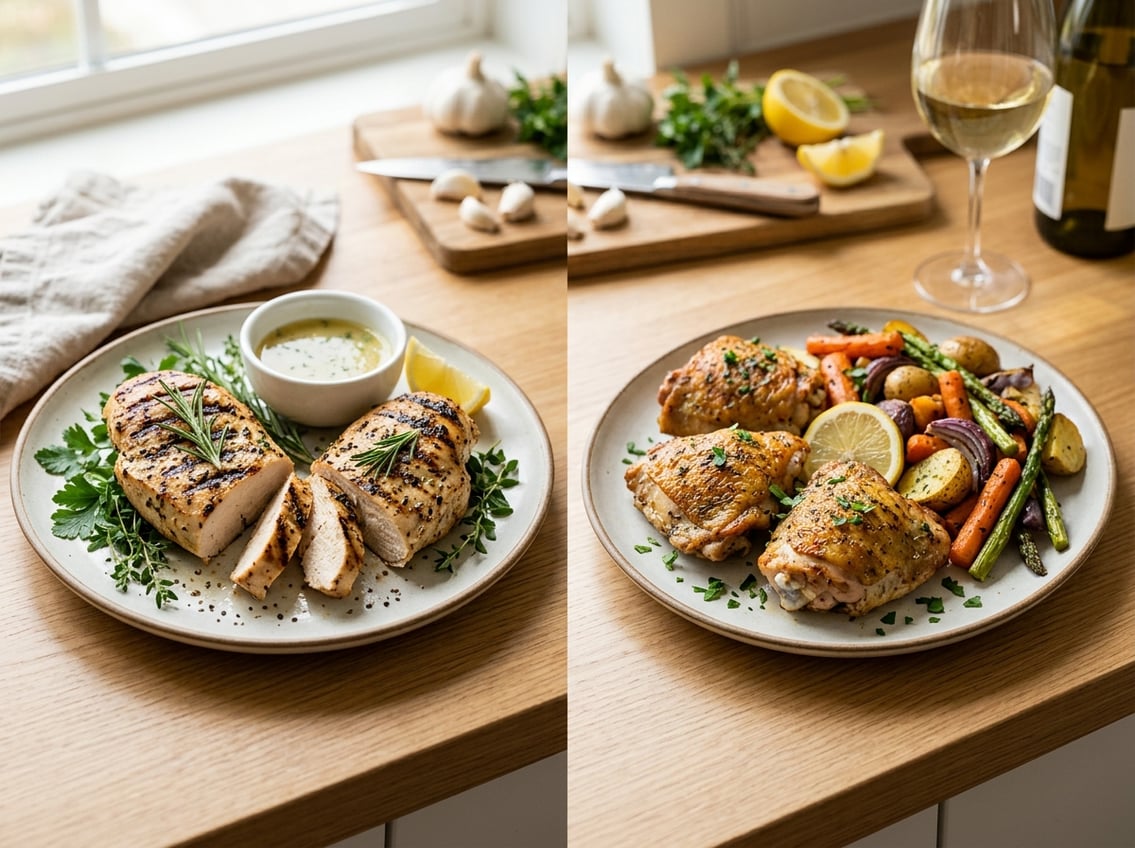
This does not mean thighs are worse. The best cut depends on your meal goal, your cooking method, and the texture you want.
When you know what each cut does well, choosing becomes much easier.
Best Times to Choose Chicken Breast
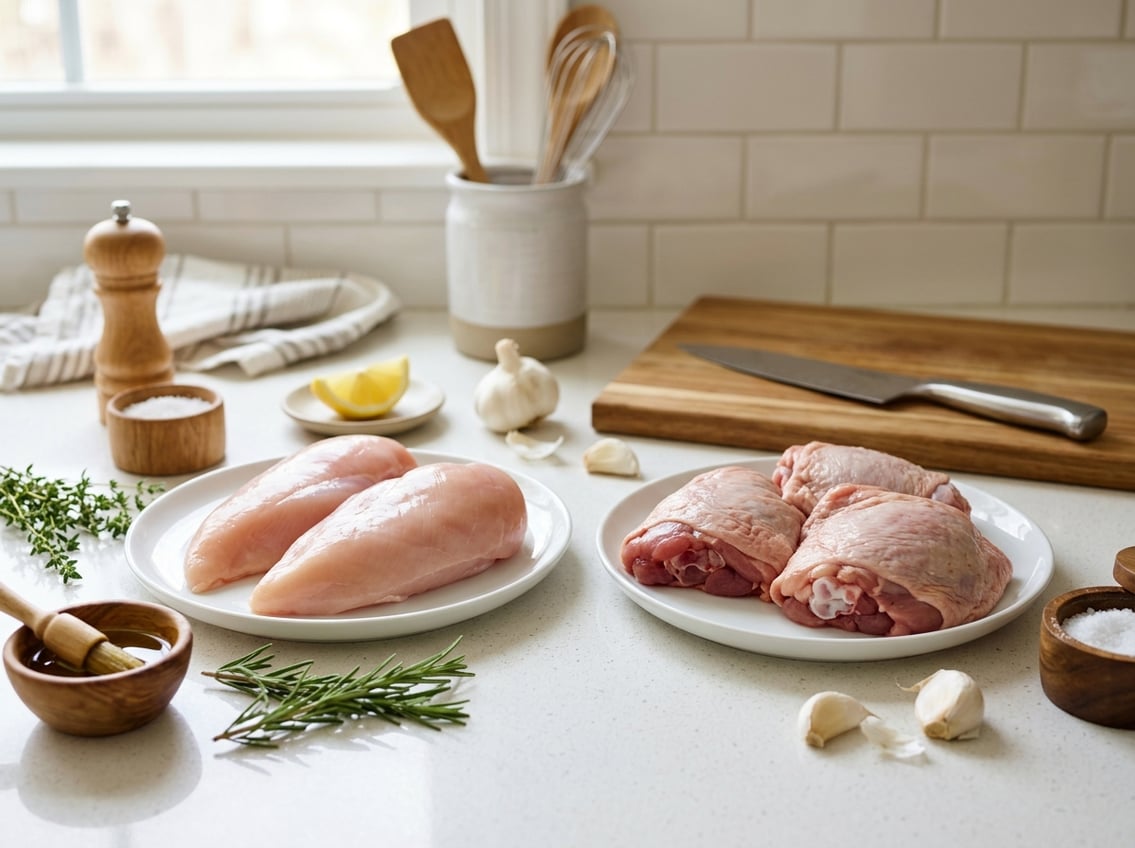
Chicken breast works best when you want a lean, flexible protein that fits many everyday meals.
It is the go-to choice when calories matter, when you want a simple flavor base, or when you need a cut that fits fitness-focused eating.
For Lower-Calorie, Higher-Protein Meals
Choose chicken breast when you want more lean protein and less fat.
Skinless chicken breast gives you protein without much extra fat.
That makes it a strong pick for lunch bowls, salads, and lighter dinners.
Boneless, skinless breast has fewer calories and less fat than boneless, skinless thighs, which is why people often choose it for calorie-controlled meals.
For Lean Meal Prep and Fitness Goals
If you batch cook meals for the week, chicken breast is easy to portion and pair with rice, vegetables, or potatoes.
It fits well into high-protein meal prep because it keeps macros simple and predictable.
Many people choose chicken breast for its strong protein per ounce advantage.
That is useful if you are tracking intake for weight loss, muscle gain, or general fitness.
For Mild Flavor That Takes on Marinades and Sauces
Chicken breast has a mild taste, so it absorbs seasoning well.
This makes it a solid match for bold marinades, creamy sauces, and strongly flavored rubs.
It works well in grilled and baked chicken recipes when you want the sauce or seasoning to stand out more than the meat itself.
How Breast and Thigh Compare Nutritionally
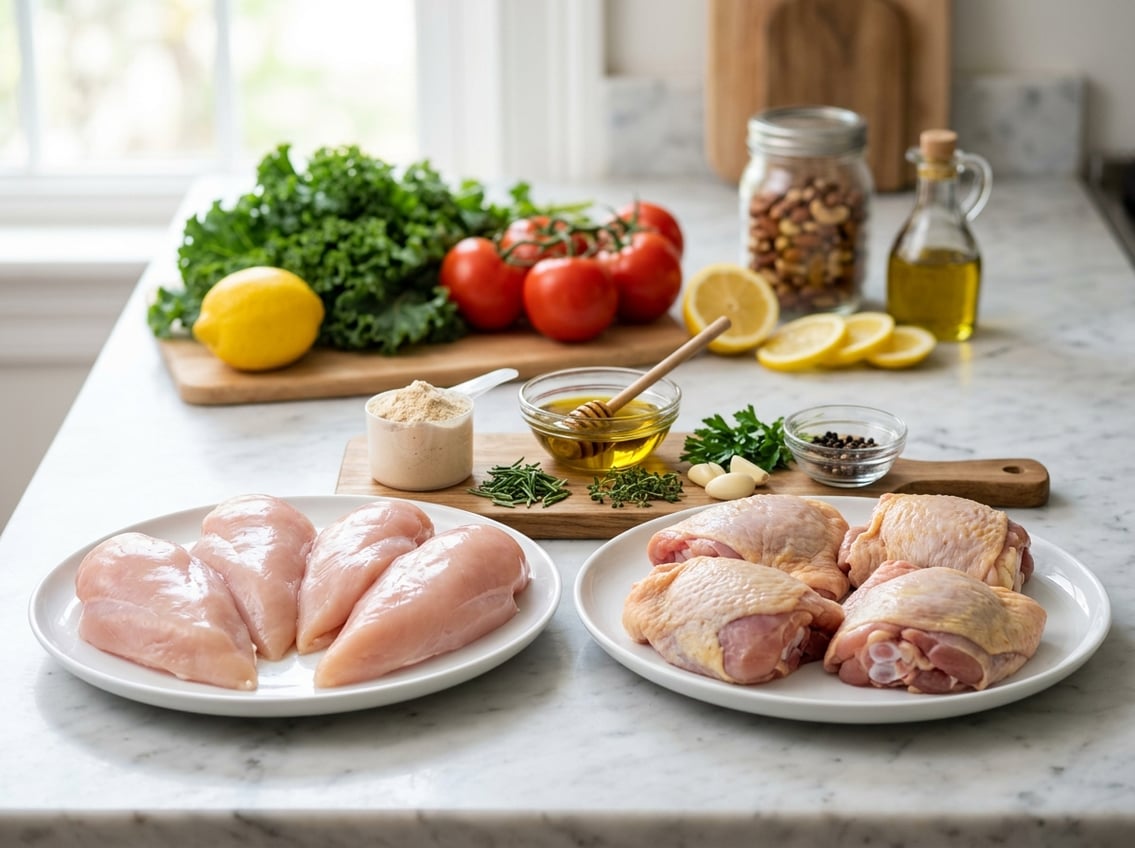
Chicken breast and chicken thigh both provide useful protein, but they are not equal in calories, fat, and micronutrients.
Skin, fat content, and whether you choose white meat or dark meat all affect the final nutrition profile.
Calories, Fat, and Protein Differences
Chicken breast is leaner, so it usually has fewer calories per serving.
Chicken thigh has more fat, which raises its calorie count and changes its texture.
For a common 3-ounce serving, boneless, skinless chicken breast is about 140 calories with 3 grams of fat, while the same serving of boneless, skinless thighs is about 170 calories with 9 grams of fat.
That is why breast is the better fit when you want lean protein with fewer calories per ounce.
Micronutrients and What Thighs Offer More Of
Chicken thighs bring more fat, which also means a richer taste and a more filling bite.
Dark meat tends to offer more iron and zinc than white meat, so some people prefer thighs for hearty meals.
Breast is still a strong source of protein and fits easily into a balanced diet.
The better choice depends on whether you want a lighter cut or a richer one.
How Skin Changes the Nutrition Profile
Skin changes the numbers more than many people expect.
Skinless chicken is leaner than skin-on chicken, whether you are using breast or thigh.
If you choose skin-on chicken, you add more fat and calories.
If your goal is to keep meals lighter, skinless chicken thighs are still richer than breast, while skinless chicken breast remains the leanest common option.
Cooking Situations Where Breasts Have the Edge
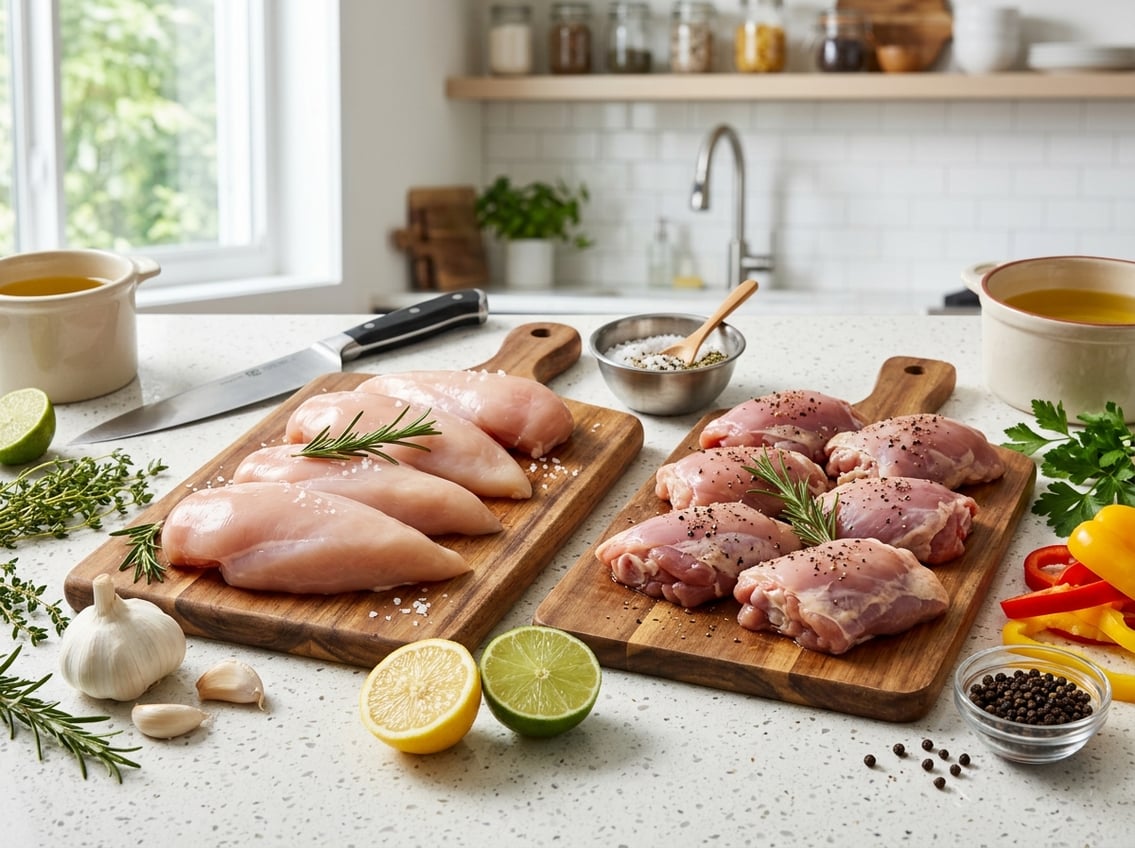
Chicken breasts shine in quick meals and in recipes where you want a clean, simple texture.
They are also useful when you plan to chop, shred, or slice the meat into another dish.
Quick-Cook Dishes That Benefit From White Meat
Chicken breast cooks faster than thighs in many methods because it has less fat and a denser lean structure.
This makes it a good fit for fast weeknight meals, stir-fries, and cutlet-style dishes.
It works well in grilled and baked chicken recipes when you want a short cook time and a lean result.
If you watch the cooking time closely, breast gives you speed and control.
Poached and Shredded Preparations
When you need cooked chicken for casseroles, soups, chicken salad, or enchiladas, choose breast.
It poaches well and shreds into clean, even pieces.
Poached chicken is often made with breast meat.
You can also use it for shredded chicken when you want a neutral base that blends into sauces and fillings.
When Thighs Are More Forgiving Instead
Chicken thighs are more forgiving if you cook a little too long.
They keep moisture better and are harder to dry out.
Thighs often work better for braises, slow cooking, and recipes with a longer cooking window.
If your schedule is loose or your heat control is not perfect, thighs can be the safer choice.
How to Pick the Right Cut for Your Goal
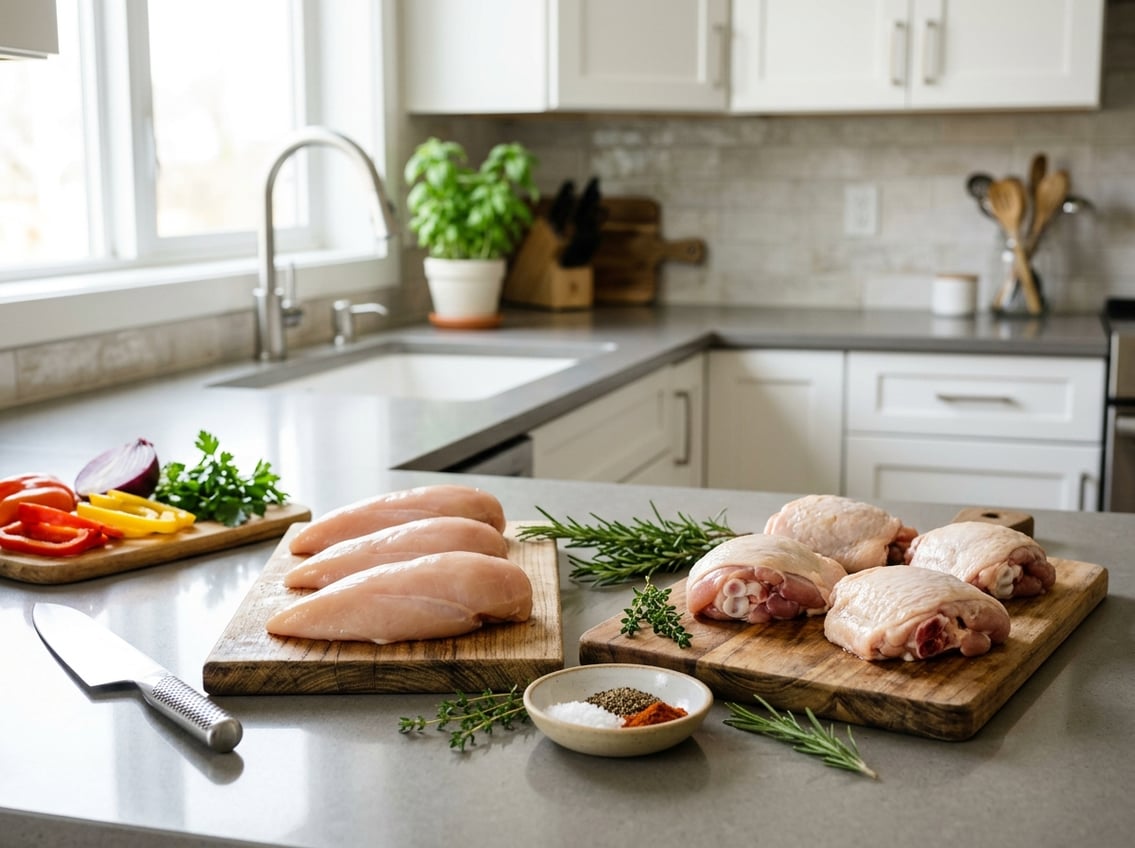
Your best cut depends on what matters most to you, not just on taste.
Weight goals, budget, family preference, and recipe type all point you toward a different choice.
Weight Loss, Fullness, and Everyday Eating
Choose chicken breast if you want a lighter meal with more protein for fewer calories.
That makes it a strong choice for everyday eating when you want portion control without giving up a filling main dish.
Choose chicken thighs if you want a richer meal that feels more satisfying and you are not focused on keeping fat as low as possible.
Both can fit a healthy pattern.
Budget, Flavor, and Family Preferences
Chicken thighs are often cheaper and bring more flavor, which can make them easier to serve to a family.
If your household likes juicy meat and deeper savory taste, thighs may be the easier sell.
Chicken breast is better when people want a mild, versatile cut that works in many dishes.
Skinless chicken breast is especially useful when you want a lighter meal without changing the rest of the recipe.
When Mixing Both Cuts Makes More Sense
You do not have to choose one cut for every meal.
Mixing breast and thighs helps you balance flavor, cost, and nutrition across the week.
For example, use breast for salads, wraps, and meal prep.
Use thighs for slower dinners or recipes that need more richness.
That way, you get the benefits of both skinless chicken breast and skinless chicken thighs without locking yourself into one style.


