
Is Boneless Chicken Breast Processed? What Counts
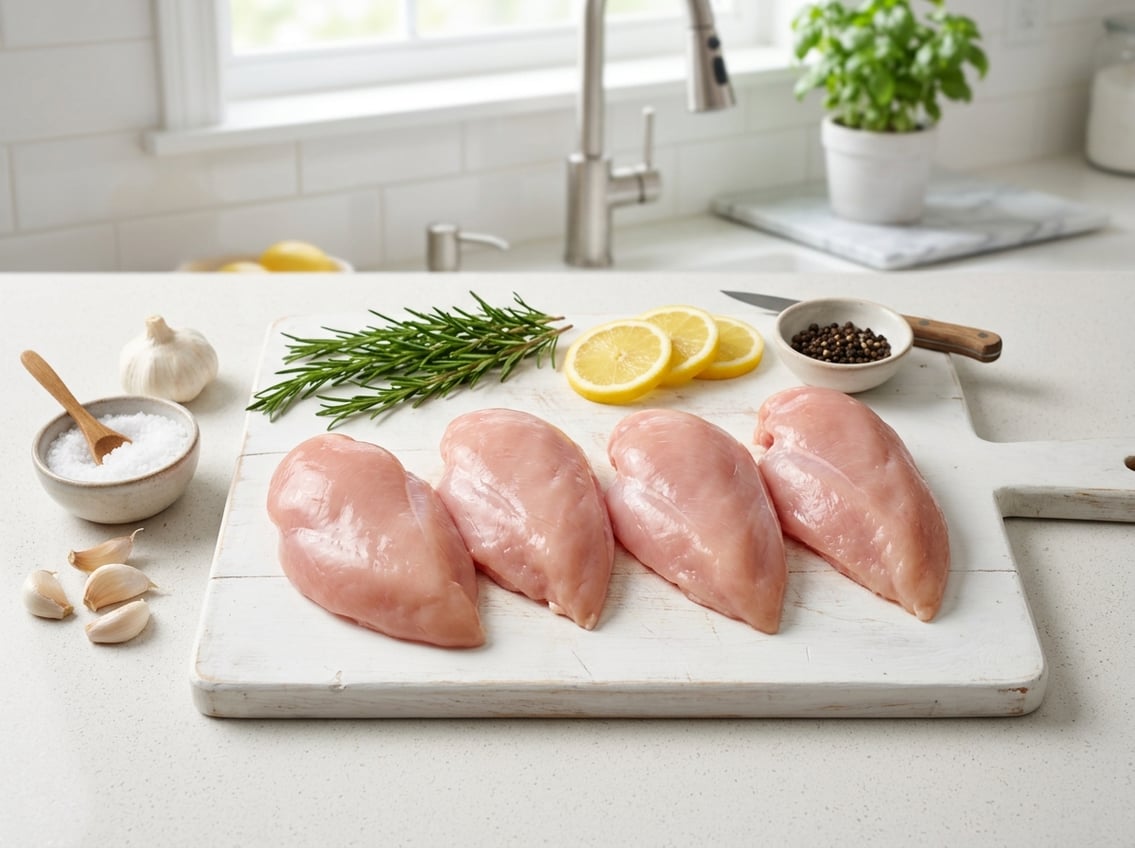
Is boneless chicken breast processed? In most grocery stores, producers have usually minimally processed it by cutting, trimming, deboning, and packaging it for sale.
That does not put it in the same category as cured meats, deli meats, sausages, or breaded chicken products with long ingredient lists.
If you buy plain raw boneless skinless chicken breast, you are usually buying a minimally processed food, not a heavily processed meat.
Some products are only simple poultry cuts, while others may be enhanced with salt solutions, broth, marinades, or additives that make them more processed.
The Short Answer and Why It Depends
Boneless chicken breast sits in a gray area because the word processed can mean different things in food labeling and nutrition.
A plain raw breast is not the same as processed meat like bacon, ham, salami, or hot dogs, but it still goes through some mechanical handling before it reaches your kitchen.
What “Processed” Means in Food Labeling
In food terms, processing can be as simple as cutting, trimming, chilling, freezing, or packaging.
That is very different from curing, smoking, fermenting, or adding preservatives such as nitrites and nitrates.
A raw chicken breast that has been deboned and packaged is processed in a technical sense, but it is usually not treated as processed meat in the public health sense.
That distinction matters when you compare poultry to deli meats or other ultra-processed options.
When Boneless Skinless Chicken Breast Is Just Minimally Processed
If your package lists only one ingredient, such as boneless skinless chicken breast, you are usually looking at a minimally processed food.
Frozen plain chicken breast often fits this pattern too, as described in a frozen chicken breast overview.
The product has been handled for convenience, but it still looks and cooks like a whole cut of meat.
No breading, no curing, and no heavy flavoring usually means you are close to the original food.
When Chicken Breast Crosses Into Processed Meat
Chicken breast becomes more processed when producers cure, smoke, bread, fully cook, shape, or pack it with added ingredients.
Examples include chicken nuggets, chicken patties, deli-style sliced chicken breast, and some “ready-to-eat” strips.
Boneless wings also fall into this more processed category because manufacturers usually bread and fry pieces of chicken breast, as explained in this look at how boneless chicken is made.
At that point, the processing is no longer just simple trimming and packaging.
How Boneless Chicken Breast Is Typically Prepared
Most boneless chicken breast sold in U.S. stores starts as a whole chicken part that workers have separated from the carcass.
The steps are usually practical and mechanical, not the same as creating a cured or reformulated meat product.

Deboning, Trimming, and Skin Removal
Workers remove chicken breasts from the bird, then trim away excess fat, cartilage, and connective tissue.
If the product is sold as skinless, processors remove the skin during processing.
These steps make the cut easier to cook and eat.
They do not, by themselves, turn the breast into a deli meat, a sausage, or an ultra-processed food.
Why Mechanical Preparation Does Not Always Mean Heavy Processing
Modern poultry plants often use a mix of hand work and machinery to separate breast meat efficiently.
That can sound more industrial than it is, but the result may still be a plain raw cut with no added ingredients.
A product can be mechanically prepared and still be nutritionally simple.
The presence of a machine or processing line does not automatically mean the food has been altered in a major way.
Fresh Cuts vs Injected or Marinated Products
Fresh chicken breast usually contains only chicken.
Injected or enhanced products can include water, salt, broth, sodium phosphate, or flavorings to improve tenderness and shelf life.
That added solution changes both the label and the nutrition facts.
If the package says marinated, seasoned, or enhanced, you are usually getting a more processed item than a plain fresh cut.
How to Tell What You Are Buying
The label gives you the clearest clue.
You can tell a lot by reading the ingredient list, checking the front-of-package claims, and noticing whether the product looks like a plain raw cut or a prepared food.
Ingredient List Signs to Check First
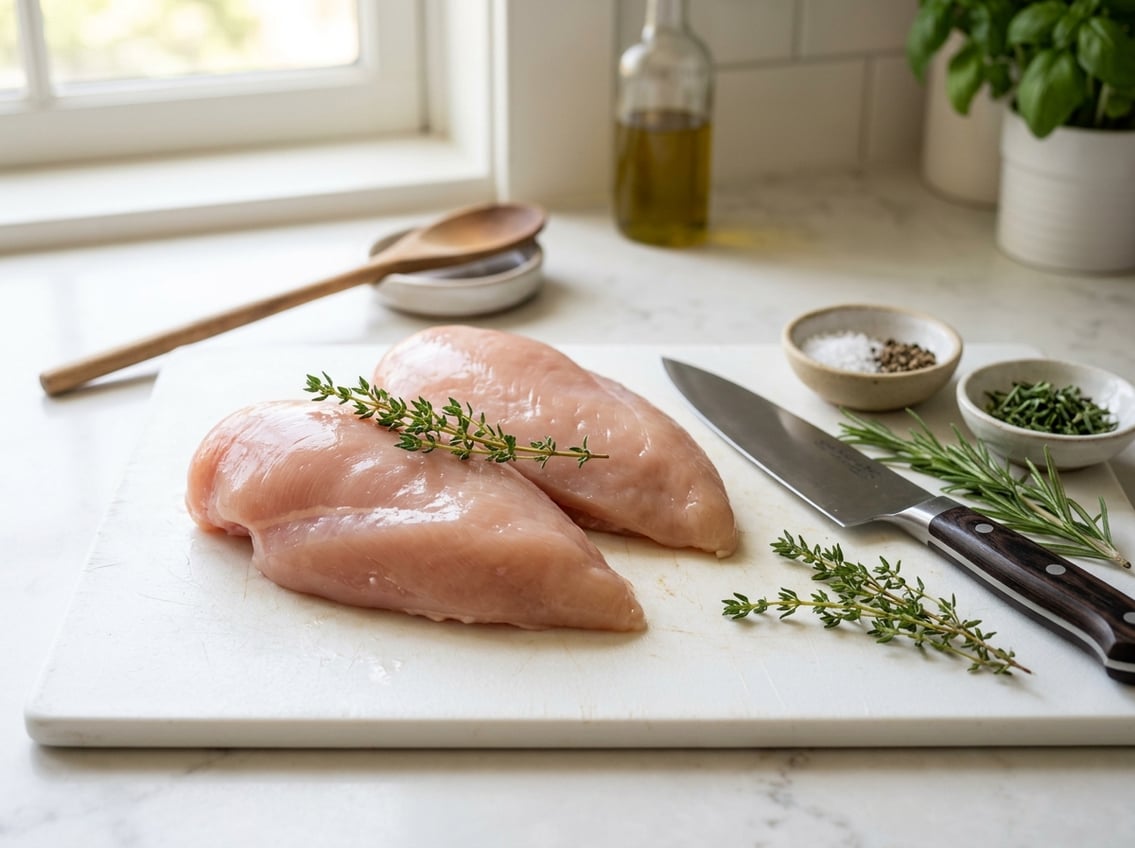
A plain product should have a very short ingredient list, sometimes just one item.
If you see salt, broth, sugar, starches, phosphates, or “natural flavor,” the product is no longer just a basic raw breast.
Look closely at the nutrition panel too.
Extra sodium is a major clue that the chicken has been altered.
Label Terms Like Seasoned, Enhanced, and Ready-to-Cook
Words like seasoned, enhanced, marinated, breaded, pre-cooked, and ready-to-cook usually mean more handling and more ingredients.
Those labels can still describe chicken breast, but not the plainest version of it.
If the package says solution added or contains up to X% of a solution, you are buying a product that has moved away from a simple whole cut.
That matters if you are trying to limit sodium or avoid additives.
Examples of Products That Are Closer to Whole Chicken
The closest options are usually:
- plain raw boneless skinless chicken breast
- frozen chicken breast with no added ingredients
- fresh chicken breast sold by weight at the meat counter
- vacuum-packed chicken with only one ingredient
Products farther from whole chicken include chicken cutlets, breaded fillets, grilled strips, lunch meat, nuggets, and restaurant-style boneless wings.
Those foods may still come from chicken breast, but they are more processed by design.
Health and Buying Considerations
Your choice between plain and altered chicken breast affects sodium, additives, and how easy the food is to fit into a simple diet.
It also changes how much control you have over flavor and cooking.
Nutrition Differences Between Plain and Altered Products
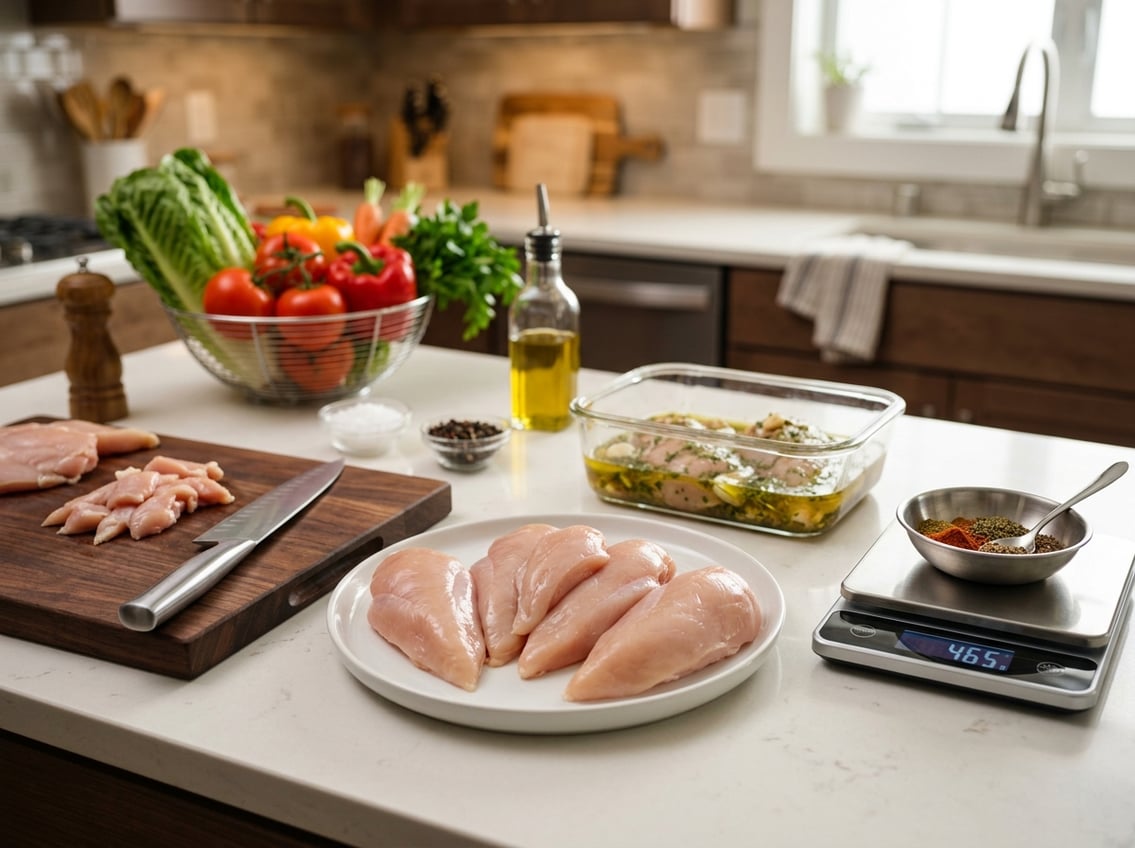
Plain chicken breast is lean, high in protein, and low in carbohydrates.
It is usually one of the simplest protein choices in the meat case.
Once the breast is injected, breaded, or cooked with sauces, the nutrition profile changes.
Calories, sodium, and sometimes fat can rise quickly, even if the base ingredient is still chicken.
Sodium and Additives to Watch
Sodium phosphate, broth, seasoning blends, and other added ingredients are common in enhanced poultry.
These can matter if you are watching blood pressure or aiming for a lower-sodium diet.
Deli chicken breast and other sliced poultry products often contain more salt and preservatives than plain raw meat.
Best Choices for Shoppers Who Want Less Processing
If you want the least processed option, choose plain raw boneless skinless chicken breast with a short ingredient list.
Fresh or frozen both work well as long as the label stays simple.
You can also buy a whole chicken and remove the breast yourself.
You can ask the meat counter for an unseasoned cut. That gives you the most control over what ends up on your plate.


