
Will Chicken Breast Make Me Fat? What Matters Most
If you have been asking will chicken breast make me fat, the direct answer is no, not by itself. Chicken breast is a lean protein, and your body weight changes mainly based on your total calorie intake, your activity level, and the rest of your diet.
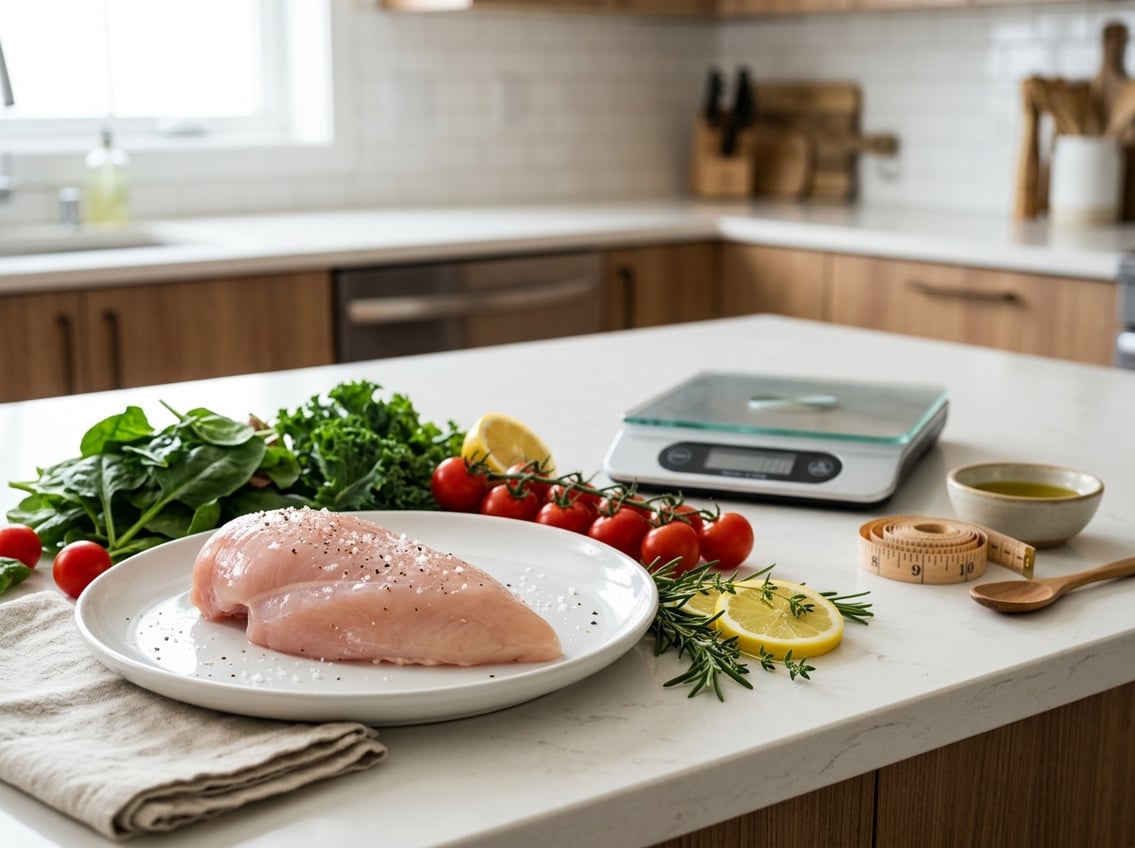
Chicken breast is not always a weight-loss food in practice. A large portion, extra oil, breading, creamy sauce, or a side of refined carbs can change the calorie total fast.
If you want chicken breast for weight loss, focus on how much you eat, how you cook it, and what you serve with it.
What Actually Determines Weight Gain
You gain fat when you regularly eat more calories than you burn. Even healthy foods can lead to weight gain if your portions are too large or your meal adds up to more calories than you need.
Portion control matters more than labeling one food as good or bad. Chicken breast is lean protein, so it often works well in a weight-loss plan, yet the calorie content of chicken still counts.
Calorie Balance Matters More Than One Food
No single food makes you fat on its own. Weight gain comes from a calorie surplus over time, whether those calories come from chicken breast, pasta, snacks, or drinks.
A plain 4-ounce portion fits many goals, while a large restaurant plate can push your daily intake much higher.
Why Lean Protein Can Support Fullness
Lean protein tends to be filling, which can help you eat less later. Chicken breast gives you protein with relatively little fat, so it often supports a more satisfying meal than many processed foods.
A 3-ounce serving provides a high amount of protein with few calories. That makes it useful when you want to stay full while keeping calories under control.
When Portion Size Changes the Outcome
A small serving can fit easily into a balanced day. A large serving, especially with extras, can turn a light meal into a high-calorie one.
If your chicken breast portion is twice as large as you planned, even a lean protein can work against your weight goals.
How Chicken Breast Nutrition Changes in Real Life
Chicken breast is usually low in fat when it is skinless. The numbers change with the cut, the weight you measure, and whether it is raw or cooked.
The calorie content of chicken also shifts when water cooks out, which can make the same portion look smaller on the plate.
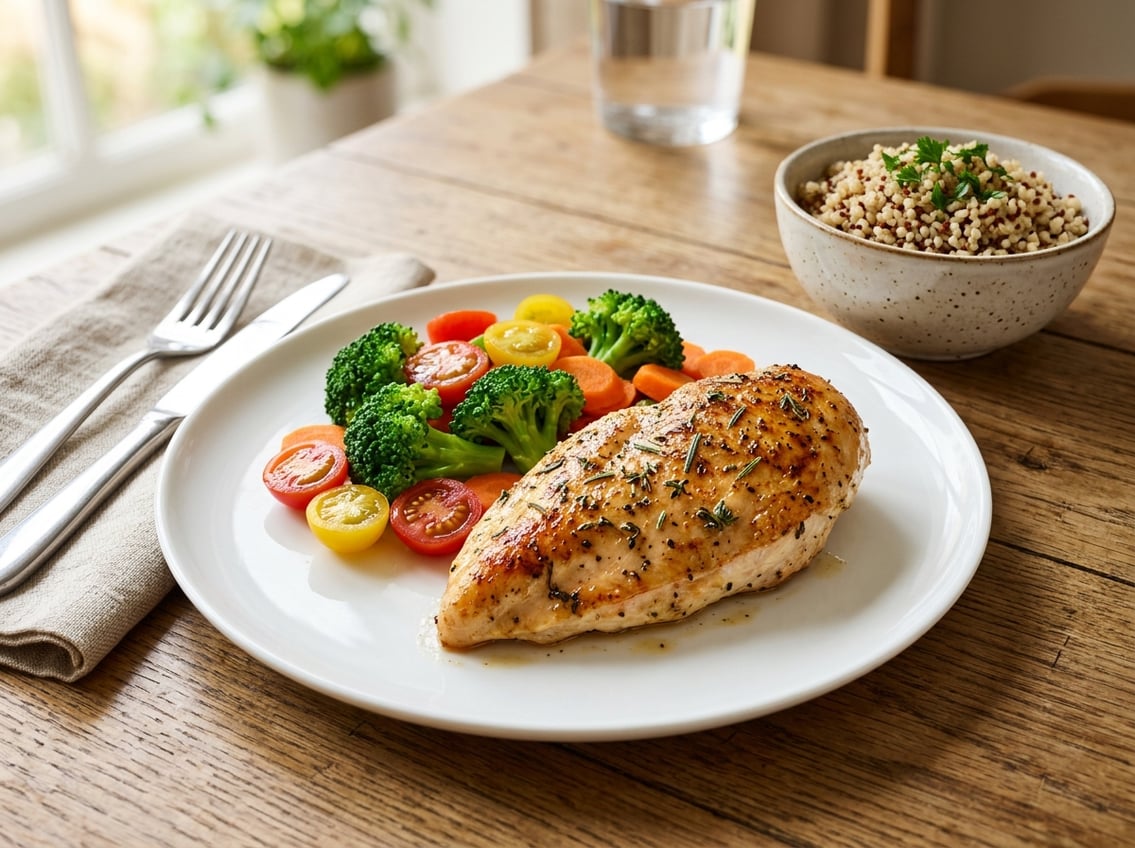
A food label or app entry can be helpful, yet you still need to match the serving size to the food you actually eat. Skinless chicken breast is usually the leanest choice.
Skinless Chicken Breast vs Skin-On Portions
Skinless chicken breast is much lower in fat than skin-on portions. The skin adds extra calories fast, even before you add oil, sauce, or breading.
If you want lean protein, skinless chicken breast is the easier option. Skin-on pieces can still fit into your diet, yet they are less predictable for weight management.
Raw vs Cooked Serving Size Differences
Raw and cooked weights are not the same. Chicken loses water during cooking, so a 4-ounce raw portion will weigh less after it is cooked.
If you measure chicken raw, use raw nutrition data. If you measure it cooked, use cooked values so you do not overestimate or underestimate the calorie content of chicken.
Typical Calories, Protein, and Fat Per Serving
A 3.5-ounce serving of skinless chicken breast is about 165 calories, with roughly 31 grams of protein and 3.6 grams of fat, according to Eating Meals.
Another common estimate is about 128 calories and 26 grams of protein per 3 ounces, as noted by One Good Food Blog.
Those numbers show why chicken breast is often treated as a lean protein. It gives you a lot of protein for relatively few calories.
Cooking Methods That Make It Lighter or Heavier
The way you cook chicken changes its calorie total more than many people expect. Dry heat methods usually keep the meal lighter, while frying, heavy breading, and rich sauces can raise calories and fat fast.
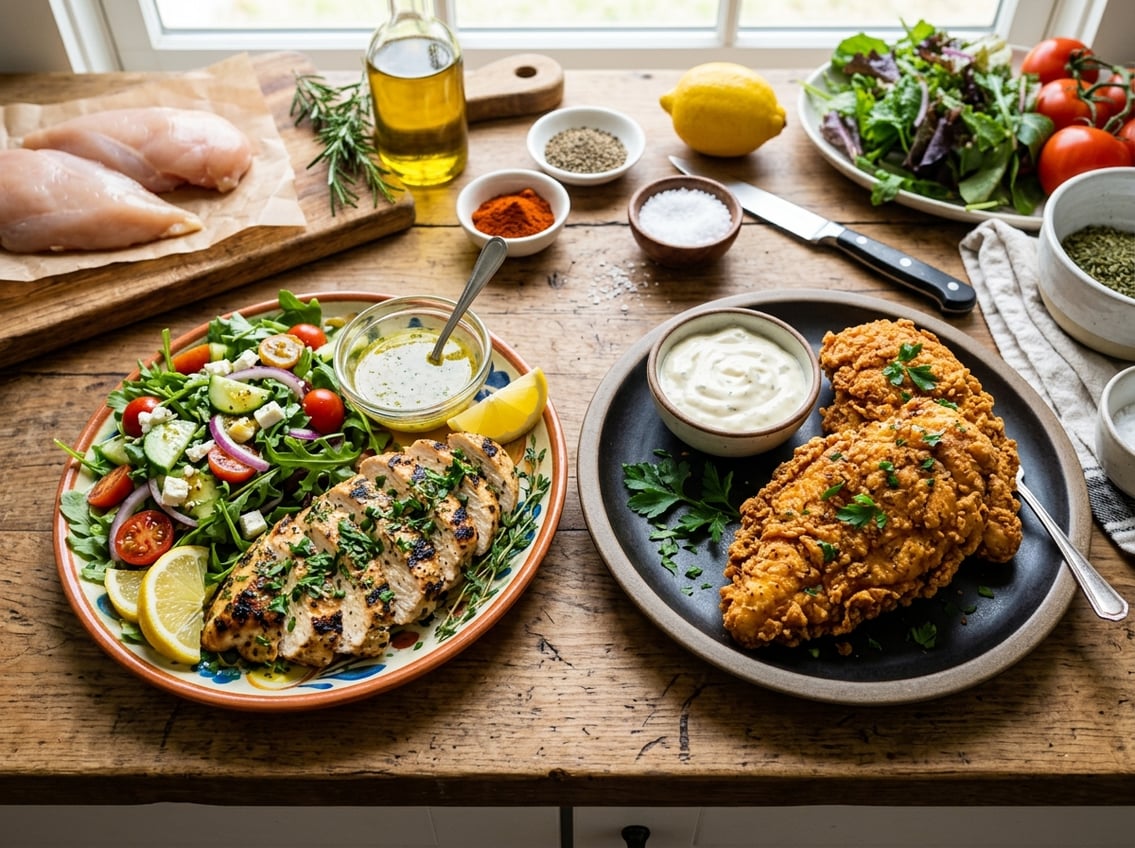
A plain chicken breast and a restaurant-style chicken meal can look very different. If your goal is weight control, the cooking method matters as much as the cut.
Grilled Chicken Breast and Baked Chicken as Lower-Calorie Options
Grilled chicken breast and baked chicken are common lighter choices because they do not need much added fat. They also keep the protein high without adding many extra calories.
Grilling, baking, steaming, and poaching all help keep calories lower.
Why Fried Chicken Breast Adds More Calories and Fat
Fried chicken breast absorbs oil, which raises both calories and fat. If the chicken is also breaded, the meal gets even heavier because you add refined carbs on top of the oil.
Fried chicken is much easier to overeat than grilled chicken. The portion may look similar, yet the calorie total can be far higher.
How Oils, Breading, and Sauces Change the Meal
A little oil can be fine, but several tablespoons can add a lot of calories. Breading, butter, cheese sauces, and creamy dressings can change a lean meal into a calorie-dense one.
If you want chicken breast for weight loss, keep the extras simple. Herbs, spices, lemon, salsa, and light sauces usually work better than heavy coatings.
How to Fit It Into a Weight-Loss Meal
Chicken breast fits best when you treat it as one part of a balanced plate. Portion control, vegetables, and simple sides help you stay full without overshooting your calorie target.
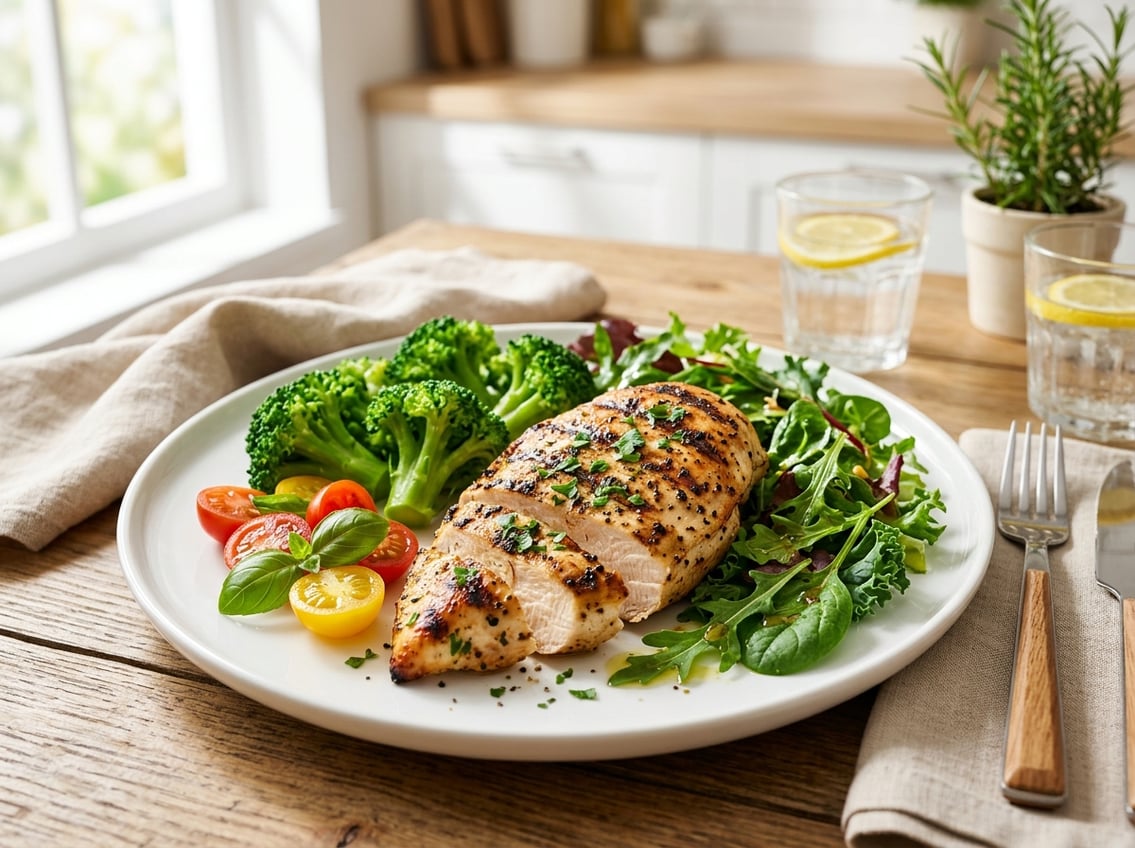
You do not need to remove chicken breast from your diet to manage weight. You need a portion and meal pattern that matches your goals.
Best Serving Sizes for Weight Management
A practical serving is often 3 to 4 ounces of cooked chicken breast, about the size of a deck of cards. That amount usually gives you enough protein without making the meal too calorie heavy.
If the rest of the meal is rich, a smaller portion may work better. If you are very active, you may need more, depending on your total daily intake.
Pairing Chicken Breast With Vegetables and Whole Foods
Chicken breast with vegetables is one of the easiest ways to build a filling meal. Vegetables add volume, fiber, and fewer calories, so your plate feels more satisfying.
Try pairing chicken breast with roasted broccoli, salad, green beans, peppers, or cauliflower rice. Whole foods like beans, brown rice, quinoa, or potatoes can also fit, as long as the portion stays reasonable.
Simple Meal Ideas That Stay Satisfying
A few balanced meals can make weight control easier.
- Try grilled chicken breast with roasted vegetables and a small baked potato.
- Serve chicken breast with vegetables over mixed greens and a light vinaigrette.
- Pair baked chicken with brown rice and steamed broccoli.
- Make a stir-fry by cooking chicken breast with vegetables in minimal oil.
These meals provide protein, fiber, and flavor while keeping calories in check.


