
What Do I Bake Chicken Breast at? Best Oven Temps
If you are asking what do I bake chicken breast at, the best answer is usually 400°F for a balanced mix of speed, browning, and juicy meat.
You can also use 375°F for a gentler bake, or 425°F to 450°F when you want faster cooking and more color.
Bake chicken breast to 165°F in the thickest part, then let it rest before slicing. That gives you a safe, tender result.
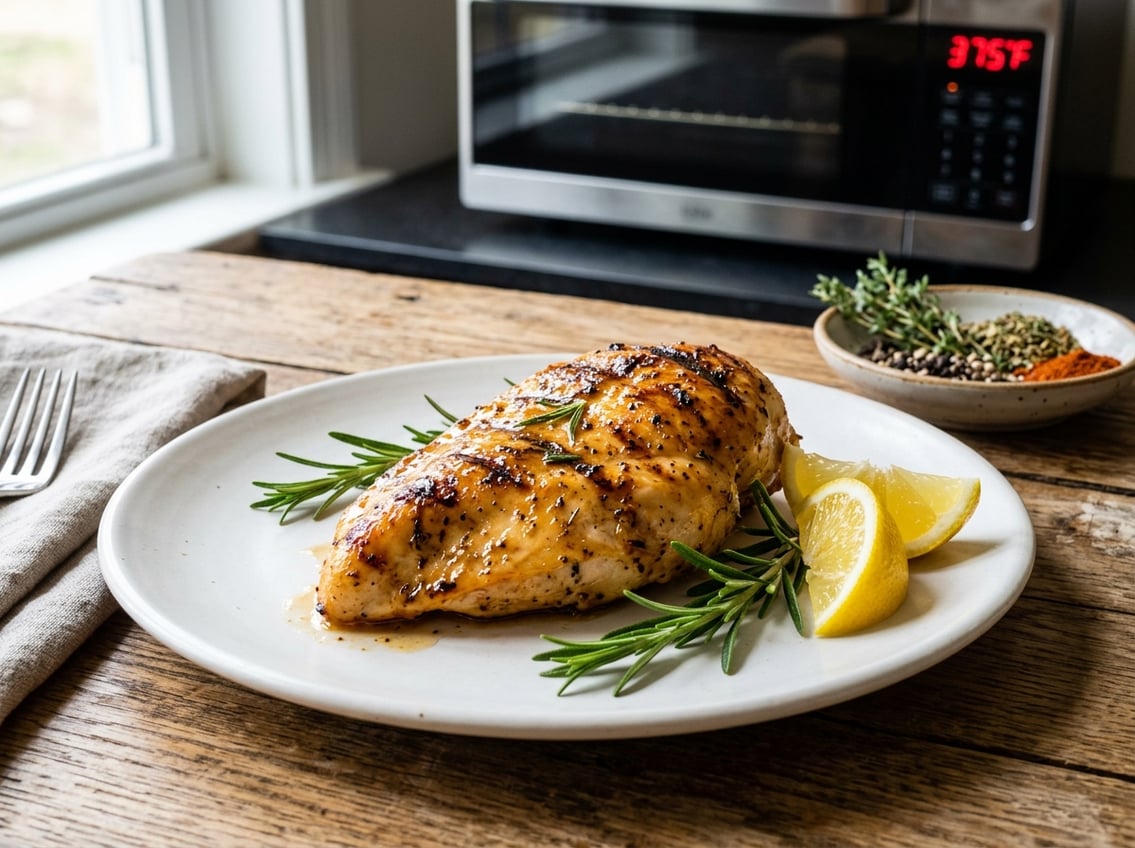
Baked chicken breast is a simple meal. It works well for dinner, meal prep, salads, and sandwiches.
Match oven temperature to the size and type of chicken breast. Watch doneness closely.
Best Oven Temperatures for Chicken Breast
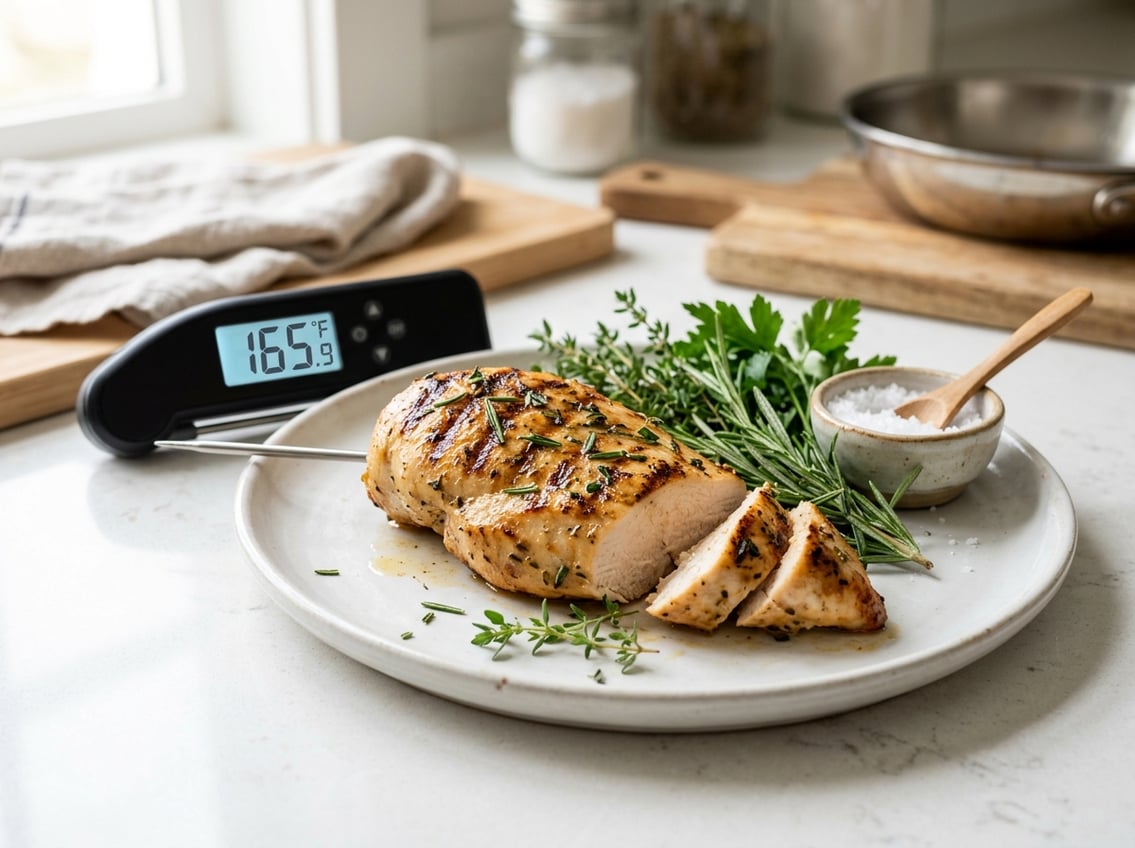
When you bake chicken breasts, temperature matters as much as time.
A good oven setting helps the meat cook through without drying out.
Why 400°F Is the Best Starting Point
For most home cooks, 400°F works best for baking chicken breast. It is hot enough to brown the outside while keeping the inside juicy.
This temperature is a strong middle ground when you are not sure how long to bake chicken breast or how thick the pieces are. It fits well with many oven baked chicken recipes.
When to Use 375°F for Gentler Baking
Use 375°F when you want a slower, more forgiving bake.
This is a common choice for baked chicken breast in many home recipes, including the easy baked chicken breast method from Better Homes & Gardens, which recommends baking uncovered at 375°F.
This lower heat can help if your chicken breast sizes vary or if you prefer a softer texture.
It is a solid choice for boneless skinless chicken breasts that are on the thicker side.
When 425°F to 450°F Works Better
Higher heat works well when you want faster cooking and stronger browning.
As noted in Allrecipes’ chicken breast temperature guide, 450°F can cook chicken breasts quickly, while other guides note that 400°F to 450°F can be a useful range for boneless, skinless cuts.
This range is helpful for thinner boneless skinless chicken breast pieces or when you want a more golden top.
It suits busy nights when you need chicken breasts done fast.
Boneless vs Bone-In Temperature Differences
Boneless skinless chicken breast cooks faster and more evenly than bone-in chicken breast.
Bone-in pieces hold heat longer, so they need a little more time even if the oven temperature stays the same.
For bone-in chicken breast, a moderate temperature such as 375°F works well because it gives the center time to cook before the outside dries out.
For boneless pieces, 400°F is often the best starting point.
How to Get Juicy Results Every Time
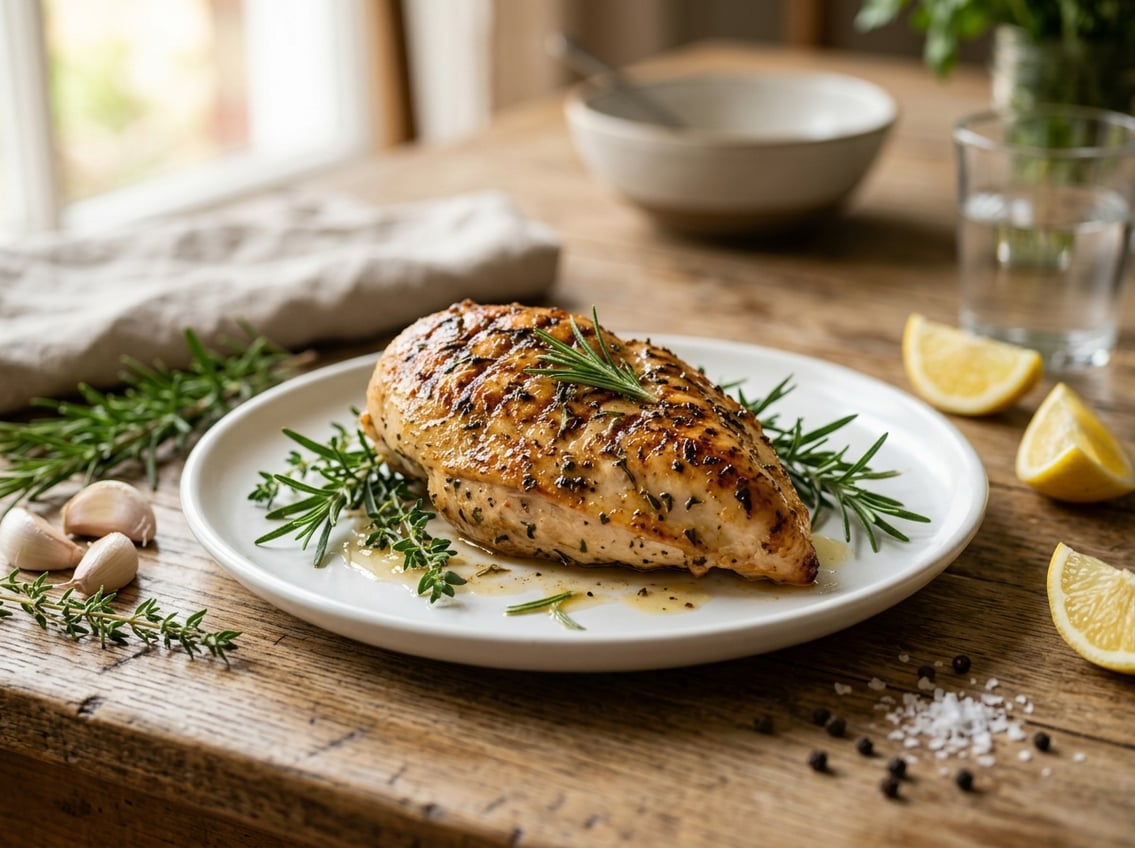
Juicy chicken comes from more than just oven temperature.
You get better results when you season well, keep the meat even in thickness, and avoid overcooking.
Seasoning and Oil for Better Browning
A little oil helps the surface brown and keeps seasonings in place.
Salt, pepper, garlic powder, paprika, and Italian seasoning all work well for a simple baked chicken breast recipe.
Coat both sides for more flavor in every bite.
If you want a flavorful chicken breast without much effort, this step matters.
Should You Brine First?
You can brine chicken breast if you want extra insurance against dry meat.
A short saltwater brine can help the meat hold moisture, especially with lean boneless skinless chicken breasts.
Brining is useful when the chicken is thick or when you use a simple seasoning mix.
It is not required for a good chicken breast recipe, but it can improve a basic baked chicken breast.
Why Even Thickness Matters
Chicken that is uneven in thickness cooks unevenly.
The thin end dries out before the thick end is done, which is a common reason baked chicken breast turns tough.
Pound the thicker part to a more even shape so the whole piece finishes at the same time.
That gives you more tender chicken breast and fewer dry edges.
Resting and Pull Temperature
Take the chicken out when the center reaches 165°F, or a little earlier if you know it will rest and finish gently.
Resting for 5 to 10 minutes helps the juices settle before you slice.
Cutting too soon lets the juices run out, which makes the meat seem dry.
Timing, Doneness, and Common Mistakes
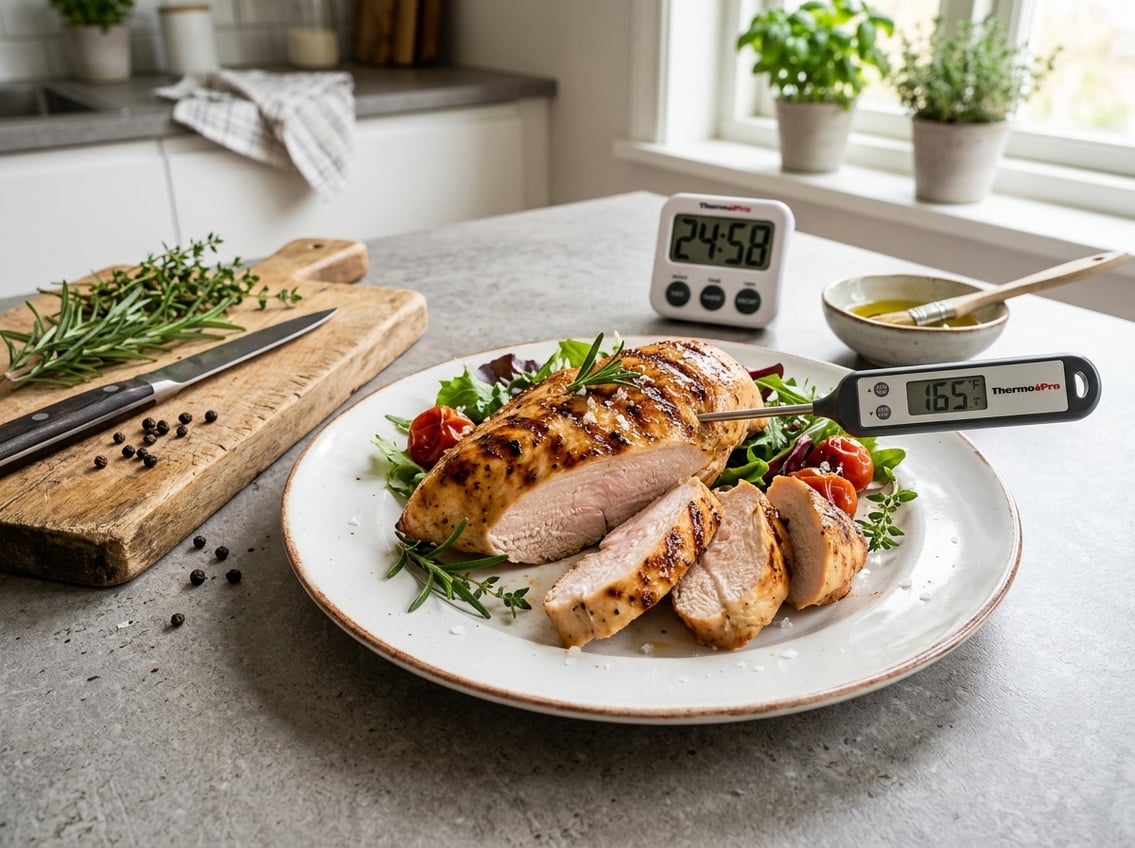
Bake time depends on size, thickness, and oven heat.
Even a strong oven setting will not fix chicken that is too thick in one spot or pulled too late from the oven.
How Size and Thickness Change Bake Time
Smaller boneless skinless chicken breast pieces cook faster than large ones.
A 6- to 8-ounce breast often takes about 25 to 30 minutes at 375°F, according to Better Homes & Gardens, while higher heat shortens that time.
If your chicken breasts are larger than 8 ounces, start checking early.
Chicken breast sizes vary a lot, so exact timing matters more than a fixed minute count.
The Safest Internal Temperature to Use
Aim for 165°F in the thickest part of the chicken breast.
Use a meat thermometer, since color alone does not tell you whether boneless skinless chicken breast or bone-in chicken breast is done.
Insert the thermometer into the center without touching the pan or bone.
That gives you a true reading.
Should Chicken Be Covered or Uncovered?
Bake chicken breasts uncovered when you want better browning and more even cooking.
Covered chicken tends to steam, which can soften the surface and reduce color.
If the top browns too fast, tent it loosely with foil near the end.
For most oven baked chicken, starting uncovered works best.
How to Avoid Dry or Rubbery Meat
Do not rely on time alone. Chicken that cooks too long, even by a small amount, can turn dry and rubbery.
Use a thermometer. Keep the pieces even.
Remove them when they reach temperature. If you want a repeatable baked chicken breast result, these steps matter more than any single oven setting.


