
Is Chicken Breast or Thigh Healthier? Key Differences
Chicken breast is usually the better pick if you want fewer calories, less fat, and more protein per bite. Chicken thigh still has a place in a healthy diet, especially if you care more about taste, moisture, and meal satisfaction.
If you want the leanest option, chicken breast usually wins. If you want more flavor and better satiety, chicken thigh can fit well, especially when you keep the skin off and use smart cooking methods.

Both cuts are good protein sources. You can include both in a balanced diet.
The real difference comes down to fat, calories, and how full you feel after eating them.
Nutrition Differences That Matter Most
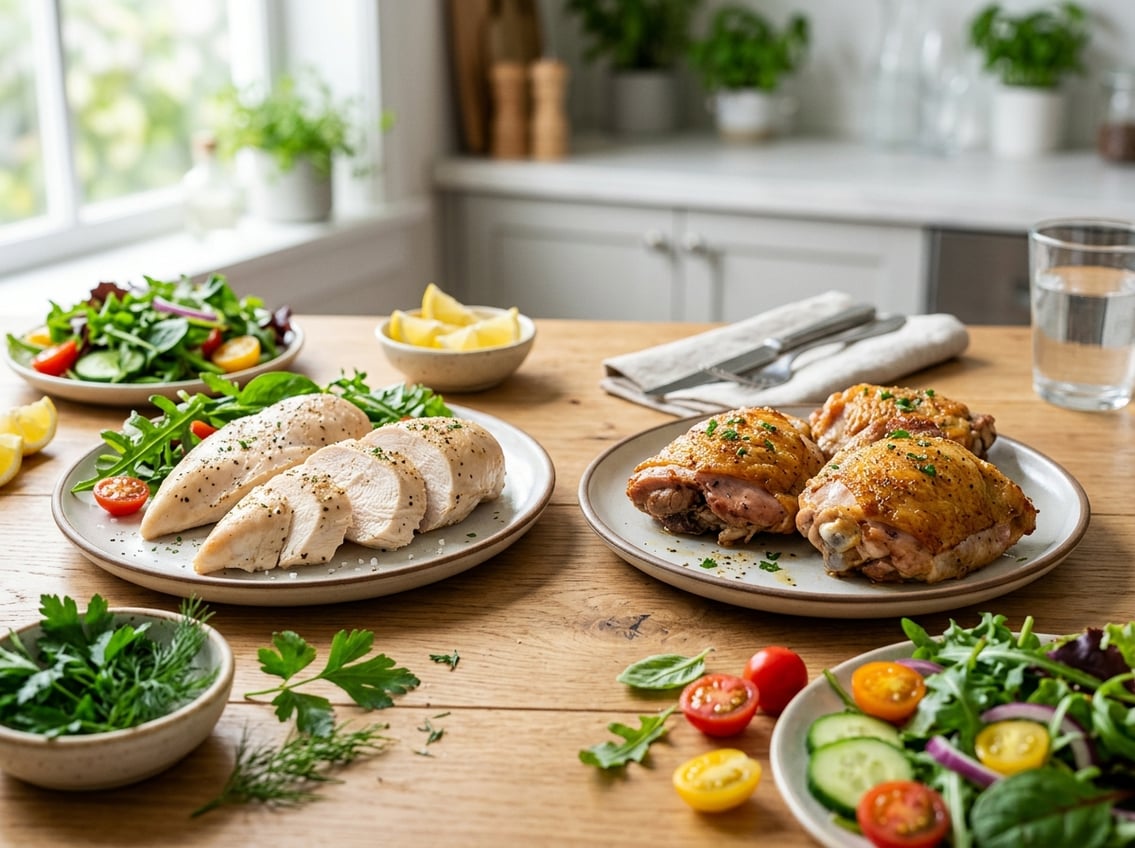
Chicken breasts and chicken thighs are both nutritious, but they do not have the same calorie and fat profile. Skinless chicken breast is usually the leaner choice, while skinless chicken thigh brings more fat and a richer taste.
The exact numbers change with cooking method, but the gap stays clear enough to guide your choice. Breast is lower in calories and fat, while thigh offers a little more iron and vitamin B-12.
Calories, Protein, and Fat Side by Side
A 100-gram serving of skinless, roasted chicken breast has about 165 calories, 31 grams of protein, and 3.57 grams of fat. The same amount of skinless, roasted chicken thigh has about 179 calories, 24.8 grams of protein, and 8.15 grams of fat.
Chicken breast is the stronger option when you want lean protein. Chicken thigh still provides a solid amount of protein, just with more calories from fat.
White Meat vs. Dark Meat
Chicken breast is white meat, while chicken thigh is dark meat. White meat tends to be lower in fat, which is why it often fits weight-control meals better.
Dark meat is naturally richer and usually tastes juicier. That extra fat can make meals more satisfying, even if the calorie count is a little higher.
How Myoglobin Changes the Nutrition Profile
Chicken thigh has more myoglobin than chicken breast, which gives it the darker color. Myoglobin does not make chicken unhealthy, but it helps explain why thigh meat is denser, richer, and often more tender after cooking.
That darker cut also tends to carry a bit more of certain minerals. The tradeoff is simple: leaner nutrition from breast, more flavor and moisture from thigh.
Which Cut Fits Different Health Goals
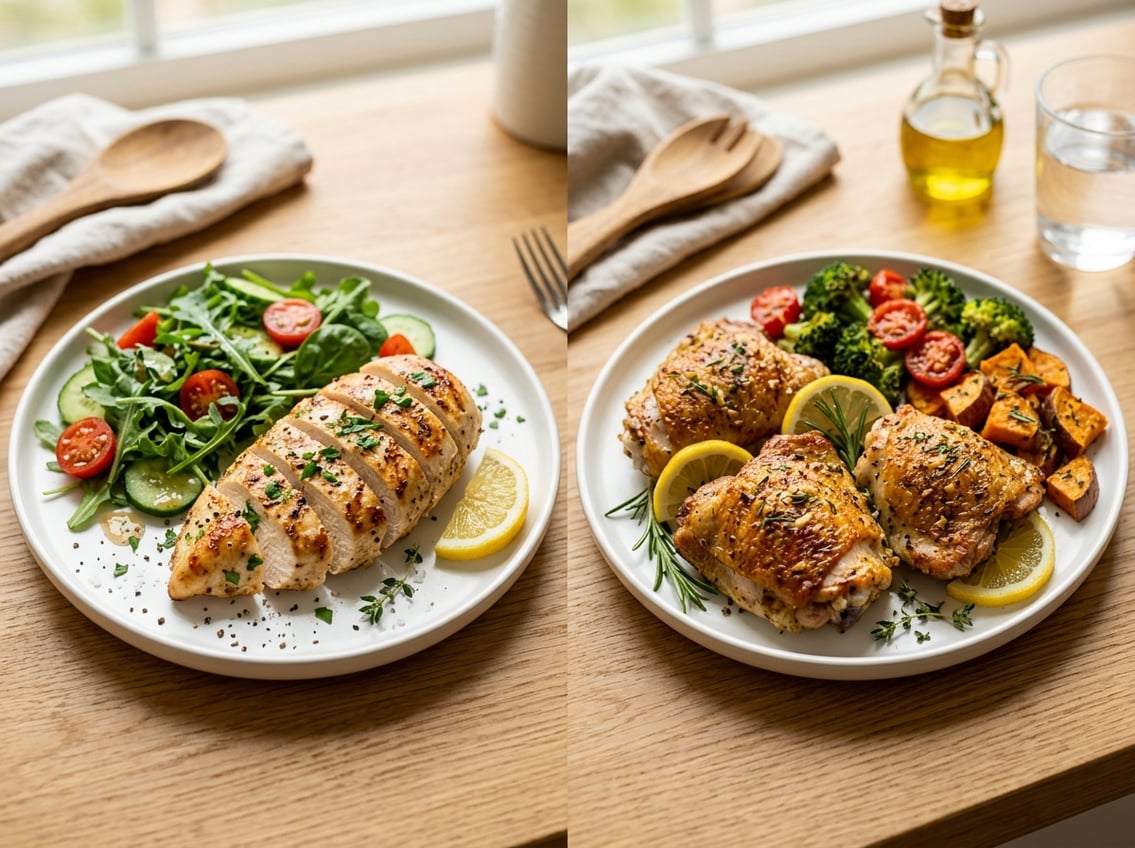
Your best choice depends on what you want from the meal. If you are focused on calories, fullness, or protein intake, the cut that helps most may change from one goal to the next.
Best Option for Weight Loss and Calorie Control
If your goal is weight loss, skinless chicken breast is usually the better pick. It gives you more protein with fewer calories and less fat, which can make it easier to stay within your calorie target.
Skinless chicken thighs can fit a weight-loss plan if your portions stay modest.
Best Option for Fullness and Meal Satisfaction
If you want a meal that feels more filling and satisfying, chicken thigh often has the edge. The extra fat adds flavor and can help the meal feel more complete.
Satiety can shape how well you stick to your eating plan. A slightly richer cut may help you feel satisfied with a smaller side dish or fewer snacks later.
Best Choice for High-Protein Eating
For high-protein eating, skinless chicken breasts are usually the better option. They give you more protein per calorie, which is useful if you are aiming to build muscle or keep your meals lean.
Breast is the more efficient protein source when you want to maximize protein without adding much fat.
How Preparation Can Change the Health Equation
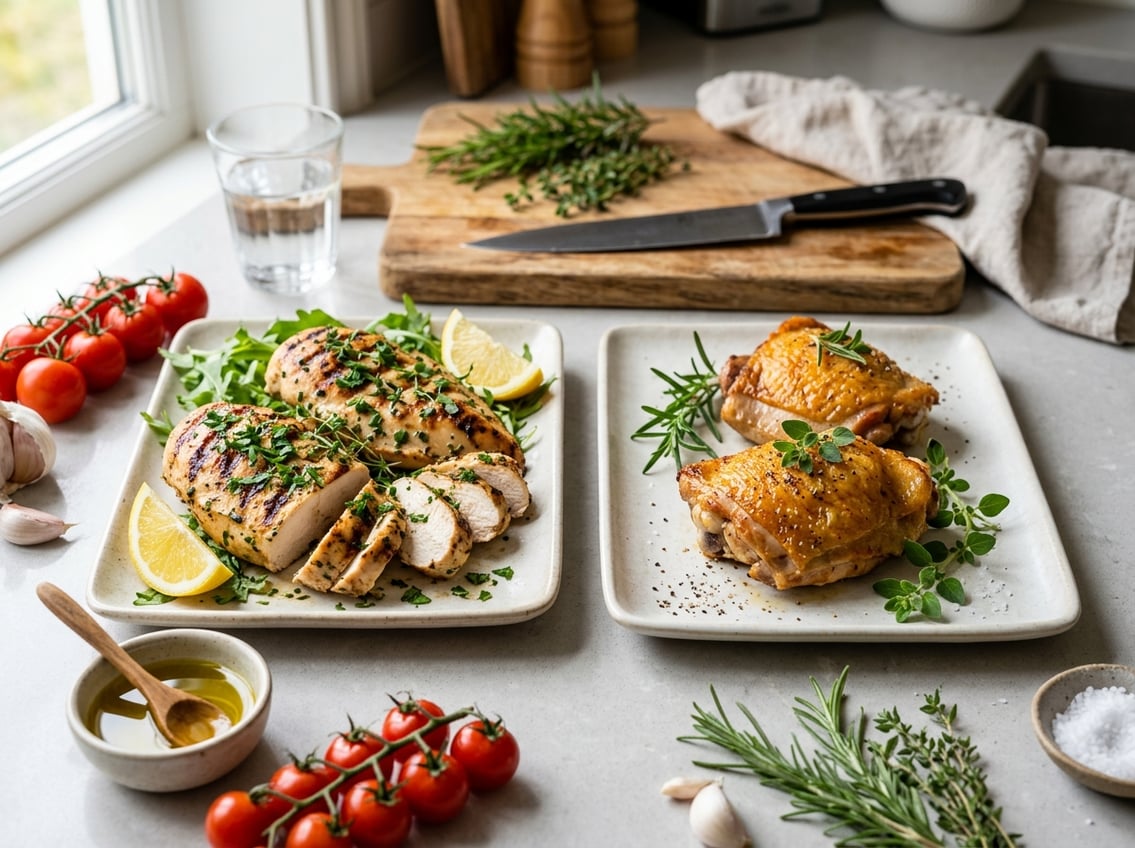
The way you cook chicken can change the nutrition more than the cut itself. Skin, added oil, breading, and heavy sauces can all raise calories and fat fast.
Skinless vs. Skin-On Chicken
Skinless chicken is almost always the leaner choice. Leaving the skin on chicken breasts or thighs can raise fat and calorie content by about 25% to 30%.
If you want a healthier meal, start by removing the skin. That one step makes either cut easier to fit into a balanced eating pattern.
Grilled Chicken, Baked Chicken, and Roasted Chicken
Grilled chicken, baked chicken, and roasted chicken are usually the best choices for keeping calories lower. These methods use less added fat than frying, and they let the natural protein content stay the focus.
Roasting on a rack can also help fat drip away while cooking.
When Added Oils, Breading, or Marinades Matter
Added oils can raise calories quickly, even when the chicken itself is lean. Breaded chicken can add both refined carbs and extra fat, especially if it is fried.
Marinades can help with flavor, but pre-made versions may add sodium or sugar. For a cleaner option, use simple seasonings and keep an eye on packaged chicken with additives.
How to Choose Based on Taste, Budget, and Cooking Style

Taste and budget also shape what you actually eat. The best cut is the one that fits your goals and that you can cook well.
Why Chicken Breasts Cook Differently
Chicken breasts are lean, so they dry out faster if you cook them too long. That makes timing more important, especially for pan cooking or grilling.
When you cook them carefully, skinless chicken breasts give you a mild flavor and a clean texture. They work well in salads, bowls, wraps, and simple meal prep.
Why Chicken Thighs Are Often Juicier
Chicken thighs stay juicier because they contain more fat. That extra moisture makes them more forgiving if you cook a little past the ideal point.
Dark meat also has a richer flavor that works well in stews, sheet-pan meals, and roasted dishes. For many people, that taste makes healthy eating easier to stick with.
When Mixing Both Cuts Makes Sense
Mixing chicken breasts and chicken thighs can be a smart approach.
You can use breast when you want a lean meal. Use thigh when you want more flavor or a softer texture.
That balance can also help with budget. Chicken thighs are often less expensive by the pound.
A mix of white meat and dark meat gives you flexibility without forcing one cut to do every job.


