
When to Butterfly Chicken Breast for Better Cooking
When you butterfly chicken breast, you create thinner meat that cooks faster and more evenly. This is especially helpful for high-heat methods like grilling, pan-searing, or breading.
Butterflying chicken breast gives you better control over cooking time, texture, and shape. It also makes stuffing or rolling much easier.
The technique is simple, but the best time to use it depends on the cut size, the recipe, and the finish you want.
Best Times to Use This Prep Method
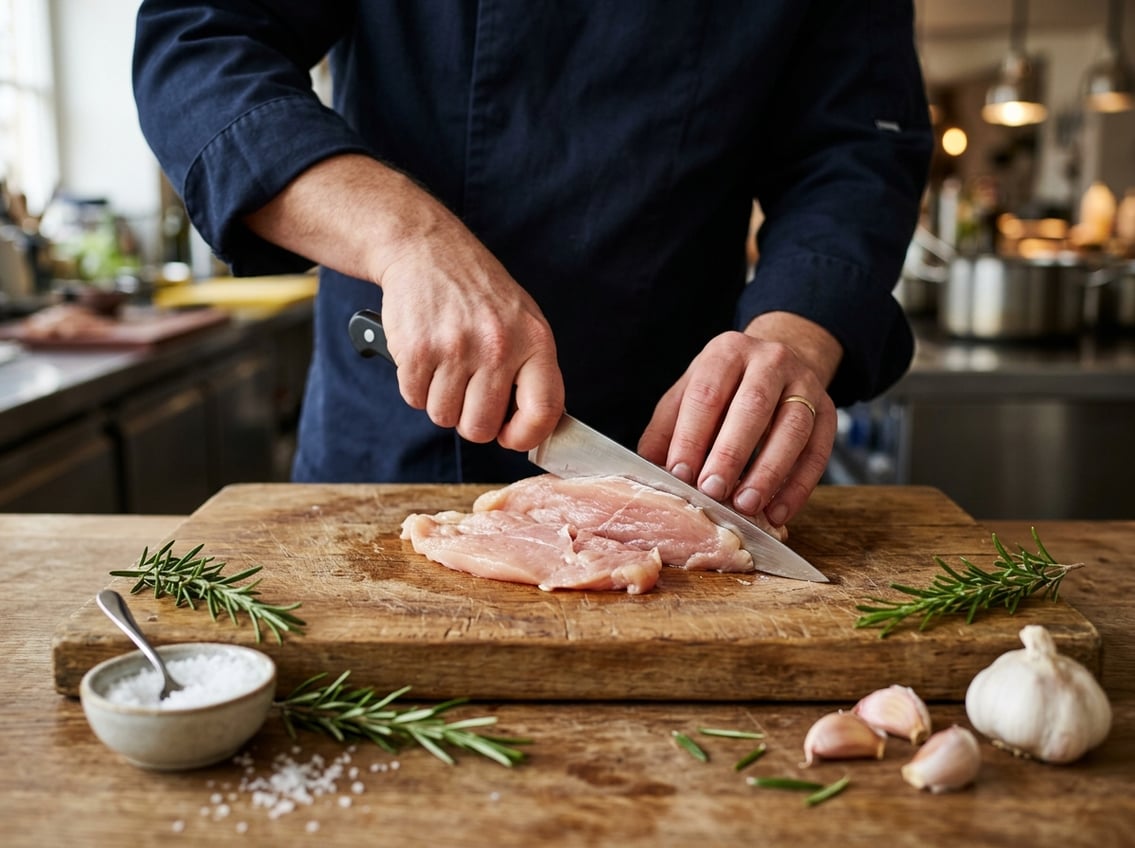
Butterflying works best when thickness is the main problem. When a breast has a thick end and a thin end, the meat cooks unevenly, so splitting it makes the meat more even and easier to manage.
You can also use this method when you need a broad, flat surface for seasoning, fillings, or fast cooking. The method creates thinner, more even pieces and makes stuffing or rolling possible.
For Faster, More Even Cooking
Butterfly the chicken breast if you want the inside to finish at the same time as the outside. Thin, even pieces cook more predictably than a whole breast with a thick center.
If you cook multiple pieces at once, butterflying helps you time them better on the stovetop, in the oven, or on the grill.
Before Grilling, Pan-Searing, or Breading
Grilling and pan-searing work best with even thickness. A butterflied chicken breast gives you more contact with the hot surface, so you get a better sear and fewer raw spots.
Before breading, a flatter piece is easier to coat and cooks through before the crust gets too dark.
When You Want More Surface Area for Marinades
Butterflying a chicken breast gives you more exposed surface area for seasoning. Dry rubs, oil-based marinades, and spice mixes cling better to the wider shape.
You still need time for flavor to move into the meat, but the seasoning stays more evenly distributed.
For Stuffing, Rolling, or Chicken Roulade
Butterflying is a smart first step when you plan to stuff or roll chicken breast. The cut opens like a book, making it easier to add fillings without tearing the meat.
This shape works well for chicken roulade, where you roll the thin breast around herbs, cheese, or vegetables. A flatter piece rolls more neatly and holds its shape better during cooking.
When Another Cut Is the Better Choice
Butterflying is useful, but it is not always the right move. If the breast is already small, the recipe needs a thicker center, or you want a different texture, another cut may work better.
Turning the meat into cutlets gives you more control than keeping it attached at the fold. The choice depends on how you want the final piece to look and cook.
When to Leave the Breast Whole
Leave the breast whole when you want a juicier center and the recipe already allows enough cook time. Roast-style dishes and slow braises often do better with a full breast.
Skip butterflying if the breast is already thin and even. More cutting can make the meat too fragile.
When to Turn It Into Chicken Cutlets Instead
If you need a very thin piece for breading or quick frying, make chicken cutlets instead of stopping at a butterfly cut. Cutting all the way through gives you two separate pieces that are easier to portion.
You can keep the halves attached for a butterflied breast or cut them apart for cutlets. That small choice changes the final shape and cooking speed.
How Portion Size and Thickness Affect the Decision
A large, thick breast is a strong candidate for butterflying. A small breast may cook fine as-is, especially if your heat is moderate and your timing is careful.
If you need one generous plated piece, a butterflied breast may fit better than two smaller cutlets.
How to Do It Cleanly and Safely
Start with good setup and a sharp knife for clean butterflying. You want control, not force, because force raises the chance of slipping or tearing the meat.
A level board, a stable hand position, and a sharp blade make a clear difference.
Tools and Knife Setup
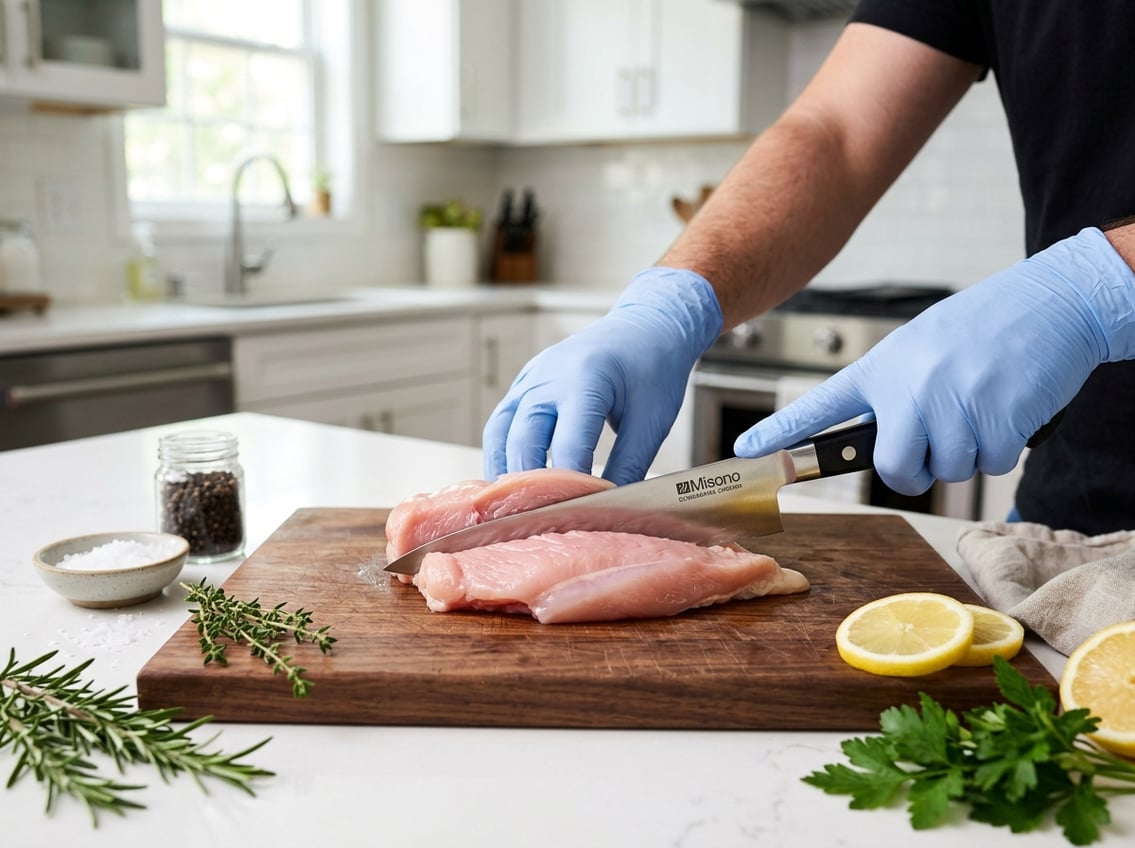
Use a sharp chef’s knife or boning knife and a cutting board for raw meat. A sharp blade slides through the chicken with less pressure.
Keep the breast cold and dry before you cut it. That makes it easier to hold steady and easier to see the thickest part.
How to Slice and Open It Like a Book
Place the breast flat on the board with the smooth side up. Hold the top of the meat with your non-cutting hand, then cut horizontally into the thickest side.
Stop before you cut all the way through, then open the meat along the hinge. This is the basic shape of a butterflied chicken breast.
How Far to Cut Without Separating It
Cut almost to the far edge, not through it. Leaving a narrow attached side keeps the breast connected and helps it open cleanly.
If you want cutlets instead, keep cutting through the last bit of meat. For a butterflied chicken breast, the hinge should stay intact.
When to Pound for Even Thickness
Pound the breast after cutting if it still has uneven spots. Place the meat between plastic wrap or in a bag, then gently flatten the thicker areas.
A light pound is enough in most cases, since too much force can tear the butterflied chicken breast.
Cooking Results, Storage, and Common Mistakes
Butterflied chicken breasts cook differently from whole breasts because they are thinner and more even. That changes timing, browning, and how much room you have for seasoning or fillings.
The main risks are overcutting, uneven pounding, and poor storage. Careful prep solves most of those issues before cooking starts.
How Butterflied Chicken Breasts Cook Differently
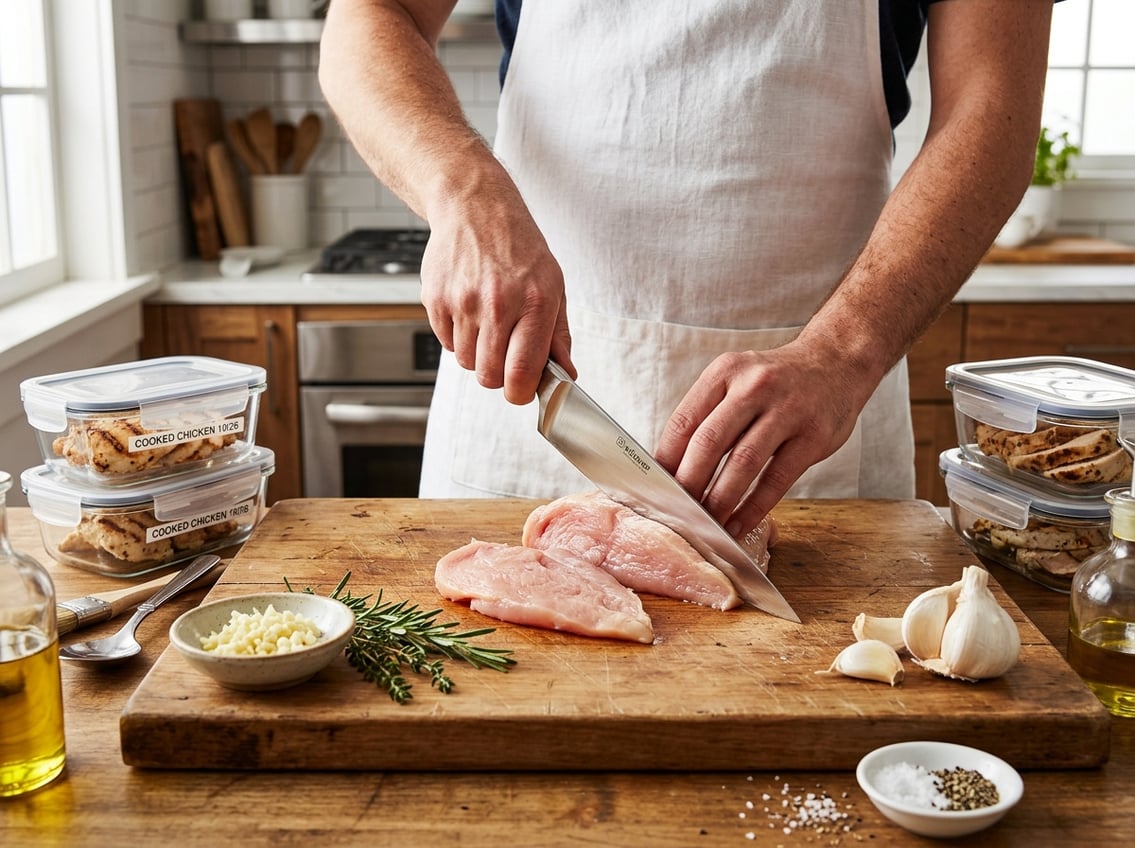
Butterflied chicken breasts usually cook faster than whole breasts because they are thinner. They also brown more evenly, which helps with grilled, pan-seared, or breaded dishes.
The flatter shape can dry out faster if you leave it on the heat too long. Timing matters more with butterflied chicken breasts than with thicker pieces.
Mistakes That Cause Tearing or Dryness
Using a dull knife forces the meat apart instead of slicing it cleanly. Cutting too deep can separate the breast before you want to.
Dryness often comes from overcooking after butterflying. Since the meat is thinner, it reaches doneness sooner than a whole breast.
How to Store Raw Prepared Pieces
If you prep chicken ahead of time, place the butterflied breast in a sealed container or wrap it tightly in the refrigerator.
Store it on the lowest shelf so juices do not drip onto other food.
Use it within a day or two for the best texture and safety.
If you want to freeze it, wrap each piece well so the thin edges do not dry out.


