
When to Season Chicken Breast for Best Results
You get the best results when you season chicken breast based on how fast you plan to cook it and how much flavor you want in the meat.
For a quick chicken breast recipe, season right before cooking. For deeper flavor and better browning, give the salt more time to work.
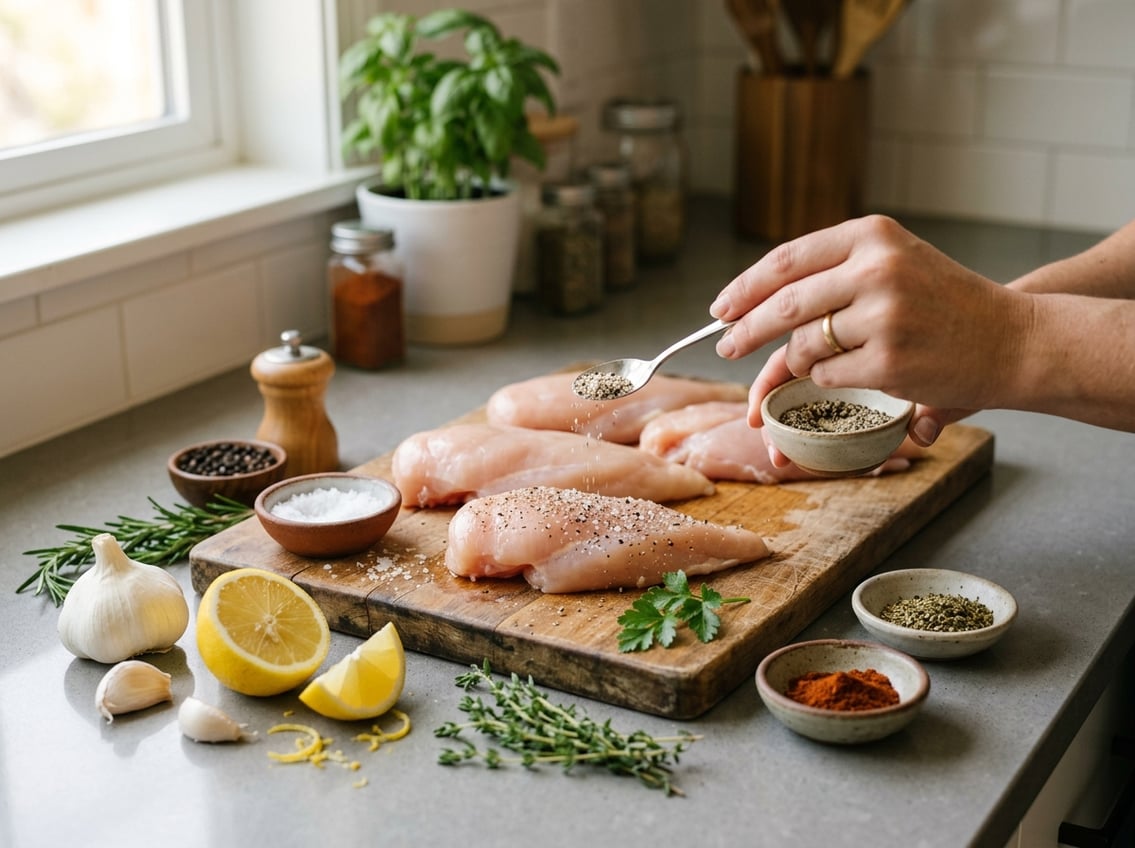
When you decide when to season chicken breast, consider whether you use salt, a dry rub, or a marinade.
The wrong timing can leave you with bland meat or a wet surface that does not brown well.
The right timing helps you season chicken in a way that supports flavor and texture.
A simple rule works in most kitchens. Season chicken right before cooking for speed, 30 to 60 minutes ahead for better flavor, or overnight with salt for deeper seasoning.
Best Timing for Seasoning
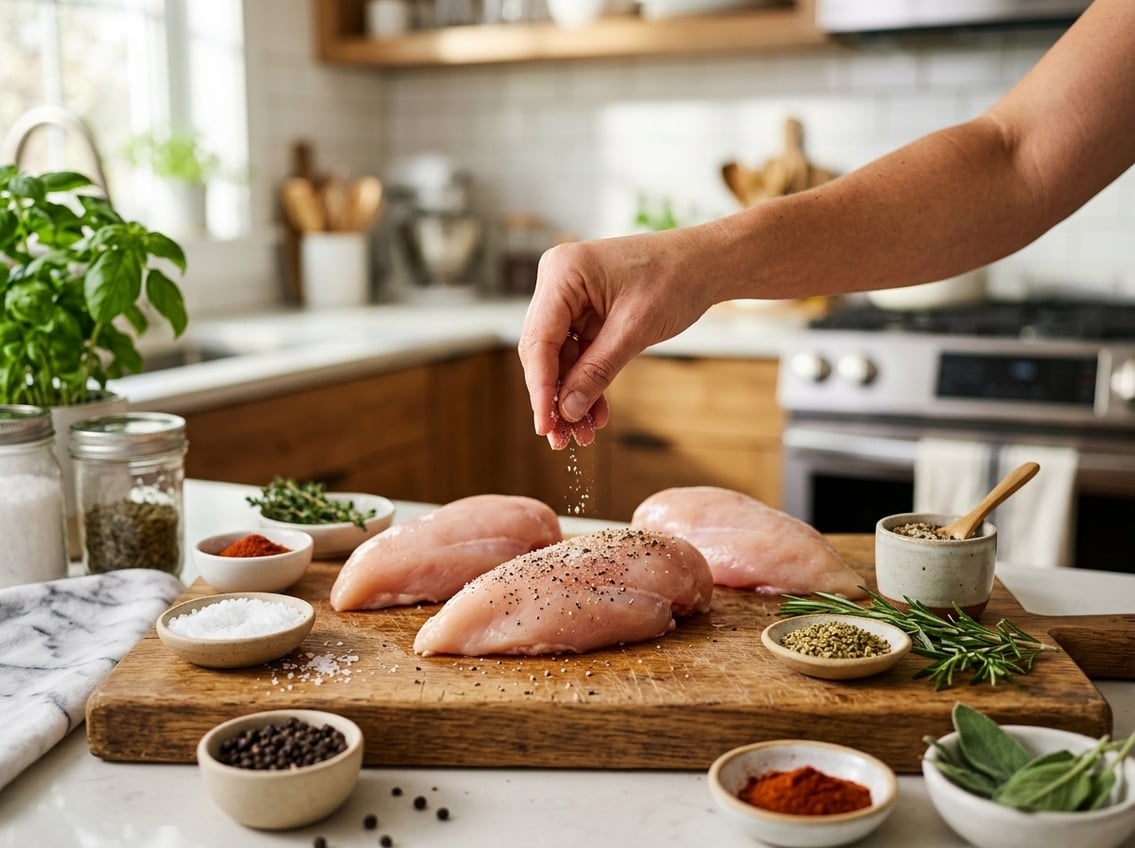
Choose the best timing for seasoning chicken breast based on your schedule and your desired result.
Short timing works for convenience, while longer timing gives the chicken more time to absorb salt and build flavor.
A dry rub, a simple salt-and-pepper mix, or your favorite seasoning all work better when you match the timing to the cut.
Thicker pieces need more time than thin ones. A marinade changes the rules again.
Season Right Before Cooking for Fast Weeknight Meals
Season chicken right before cooking when you need a fast dinner.
This works well for skillet meals, baked chicken breast, and busy nights when you do not have time to wait.
Use this method with salt, pepper, and your favorite chicken seasoning. It gives solid flavor with very little planning.
Season 30 to 60 Minutes Ahead for Better Flavor
Seasoning chicken 30 to 60 minutes ahead gives salt time to start moving into the meat.
That short wait can improve flavor and help the surface dry a little, which supports browning.
This timing gives you a simple upgrade without overnight planning. It is a good middle ground for most chicken breasts.
Salt Overnight for Deeper Seasoning and Better Browning
Salt overnight when you want the deepest flavor and the best browning.
Dry-brining lets salt work through the meat more evenly, which can improve the final result.
This works especially well for thicker chicken breasts and for recipes where you want juicy chicken with a better crust.
A link between salt and better moisture control appears in The Ultimate Guide to Seasoning Chicken Breasts.
When a Chicken Marinade Makes More Sense Than a Dry Rub
Use a chicken marinade when you want added moisture and another layer of flavor from ingredients like oil, acid, or herbs.
Marinades are useful for grilled or baked chicken breast when you want the outside to carry more flavor.
A dry rub is better when you want stronger browning and a more concentrated crust.
If you want a crisp surface and easy prep, dry seasoning usually fits better.
How to Apply Seasoning Properly
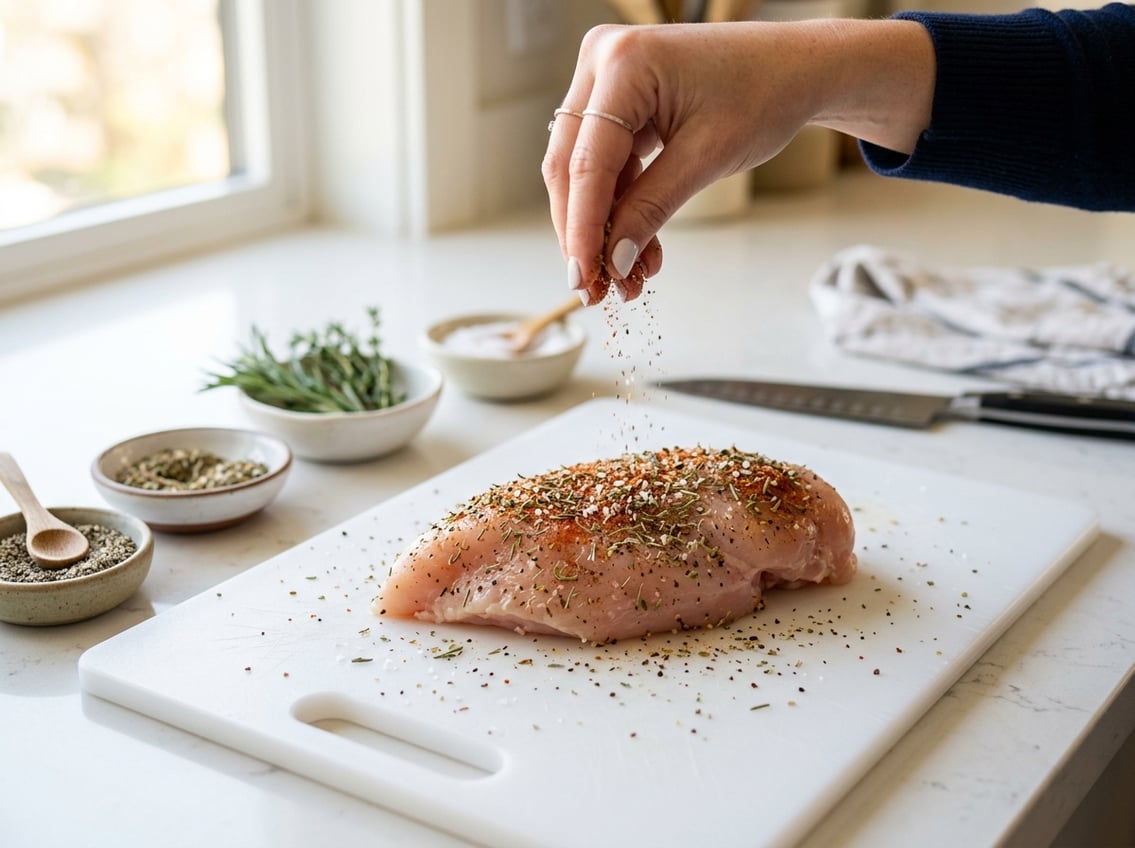
How you season chicken matters as much as when you season it.
Good coverage, the right amount of salt, and a dry surface help your seasoning stick and cook well.
Simple chicken seasoning works best when you spread it evenly and avoid clumping.
Homemade spice blends can do a lot for flavor, as long as you use them correctly.
Pat Dry First So the Spices Stick
Pat the chicken dry with paper towels before adding seasoning.
A dry surface helps salt, pepper, and spice blends cling better.
This step also helps the chicken brown instead of steam.
If the surface is wet, even good seasoning can slide off or taste weaker.
Use Oil Lightly and Season Both Sides Evenly
Use a light coating of oil if you want the seasoning to stick more easily.
A little oil helps spice blends spread across the meat without making it greasy.
Season both sides evenly, and do not forget the edges.
For a simple chicken seasoning, a mix of salt, pepper, garlic powder, and paprika covers most everyday needs.
How Much Salt and Seasoning to Use Per Pound
Start with about 1 teaspoon of kosher salt per pound of chicken breast, then adjust to taste.
For a spice blend, use enough to lightly coat both sides without creating a thick crust.
If you use a salty store-bought mix, use less extra salt.
Good chicken seasoning should enhance flavor, not bury it.
When to Use Seasoning Under the Skin on Skin-On Cuts
Place seasoning under the skin when you cook skin-on chicken breasts or bone-in cuts.
That helps flavor the meat directly and works well with salt, pepper, and herb blends.
For boneless skinless breasts, even surface coverage and proper cooking time matter more.
Best Seasoning Options for Chicken Breast
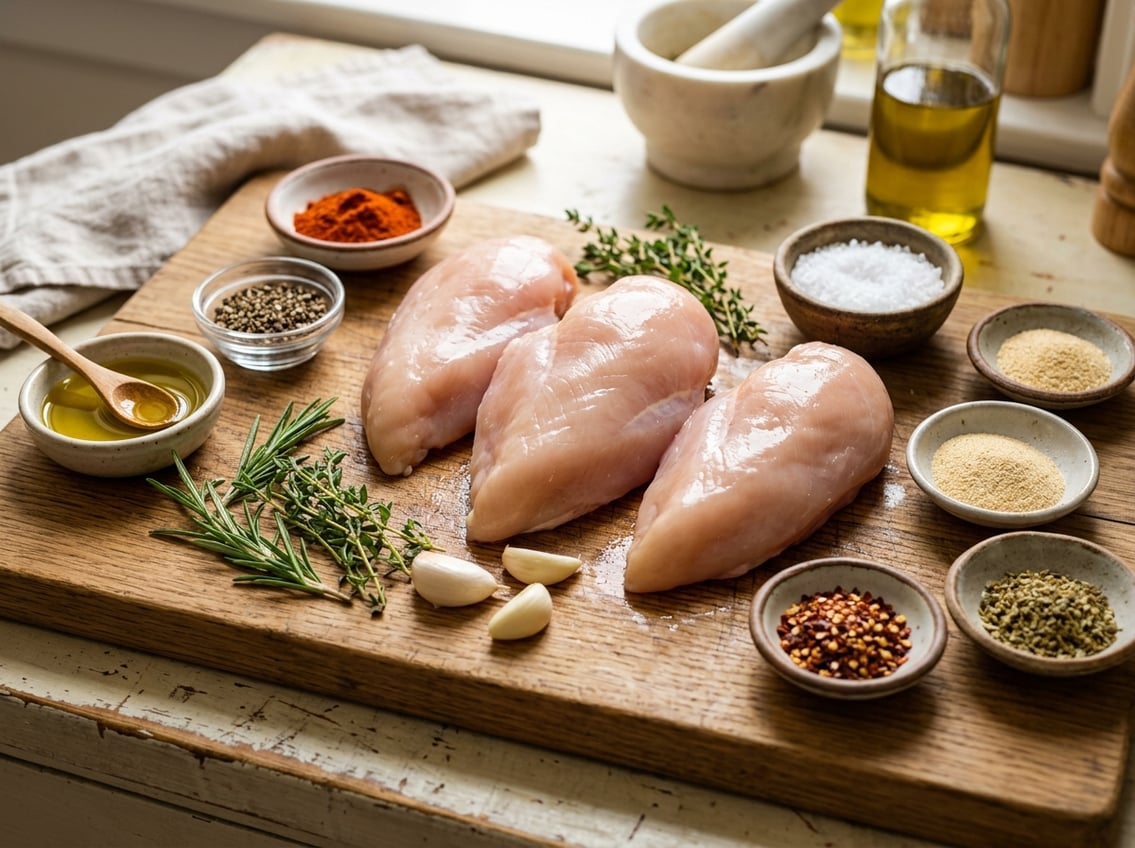
Choose the best seasoning for chicken based on the flavor you want.
A good base blend usually starts with salt, pepper, garlic powder, and paprika.
Homemade seasoning gives you more control, while store-bought blends save time.
Even a pork rub can work in a pinch if the salt level and spice profile fit your recipe.
Classic All-Purpose Blend for Everyday Cooking
A basic blend of paprika, garlic powder, onion powder, pepper, and salt works for most chicken breast recipes.
This is a reliable seasoning for baking, pan-searing, or grilling.
If you want a mild, flexible seasoning, this blend fits well with salads, rice bowls, and sandwiches.
Smoky and Spicy Variations for More Bold Flavor
Use smoked paprika, cayenne, and extra pepper when you want more heat and depth.
Granulated garlic and onion powder give the mix a strong savory base.
These flavors work well in a chicken rub for grilling or high-heat roasting.
A little cayenne goes a long way, so start small.
When to Use Taco Seasoning, Italian Seasoning, or Cajun Seasoning
Use taco seasoning when you plan to serve the chicken in tacos, bowls, or wraps.
Italian seasoning fits pasta dishes, salads, and baked chicken breast with tomatoes or cheese.
Cajun seasoning works best when you want a sharper, spicier finish.
These blends can also make a simple chicken breast taste more complete with little effort.
How Store-Bought Blends Compare With Homemade Mixes
Store-bought blends are fast and consistent, which helps on busy nights.
Homemade spice blends give you more control over salt, heat, and garlic level.
Some blends made for pork rub can work on chicken if you check the salt and sugar content first.
For more ideas on pantry blends, see the seasoning list in The Ultimate Guide to Seasoning Chicken Breasts.
Cooking for Juicy Results After Seasoning
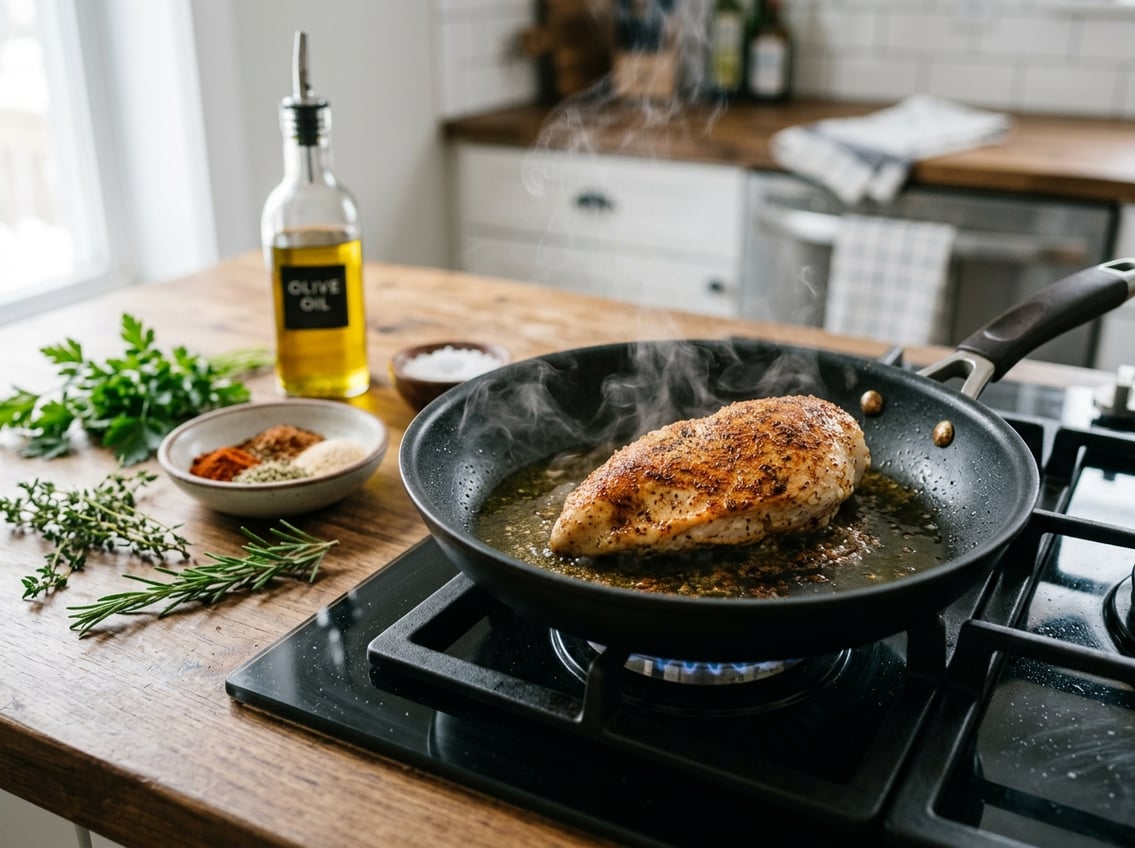
Careful cooking keeps seasoned chicken breast juicy.
The timing of seasoning helps, but the final texture depends on heat, rest time, and doneness.
A seasoned chicken breast can dry out if you overcook it, even with the right seasoning.
Using the right temperature protects moisture.
How Timing Affects Baked and Pan-Seared Chicken Breast
For baking, season 30 to 60 minutes ahead to help the surface dry and brown better.
For pan-searing, seasoning right before cooking is often enough if the pan is hot and the chicken is dry.
A baked chicken breast usually benefits from earlier salt timing more than a quick skillet meal.
The goal is to improve flavor without adding extra steps.
Why Resting Matters After Cooking
Let the chicken rest for a few minutes after cooking.
Resting helps the juices settle back into the meat instead of running out when you slice it.
If you cut too early, even well-seasoned chicken can seem dry.
How to Avoid Dry, Overseasoned, or Bland Chicken
Use a thermometer to avoid dry chicken.
Measure your salt and spice blend to avoid overseasoning.
Season all sides and choose a blend with enough salt, garlic, pepper, and paprika.
A balanced chicken seasoning gives you better flavor without a long ingredient list.
Checking Doneness Without Guesswork
Check the thickest part of the chicken breast with a meat thermometer. Chicken breast is done when the center reaches 165°F.
This tool helps you keep chicken breast juicy. It is a reliable habit for any chicken breast recipe.


