
Is Chicken Breast Good for Dogs? Benefits and Safety
If you wonder if chicken breast is good for dogs, the short answer is yes, as long as you serve it plain, fully cooked, and in the right amount.
It can be a useful source of lean protein for dogs, especially when you want a simple treat or meal topper.

Chicken breast is a safe, nutrient-rich option for many dogs, but the way you prepare and portion it matters just as much as the food itself.
Plain chicken is easy to digest and works well in many feeding plans.
It is also one of the most common proteins in dog food and home-cooked meals.
You should treat chicken breast as a supplement to a balanced diet, not a replacement for complete dog food.
Safe preparation, sensible portions, and attention to your dog’s health needs make the difference.
What Chicken Breast Offers Dogs Nutritionally

Chicken breast for dogs is simple, lean, and packed with protein.
It can support muscle maintenance, energy, and recovery when you feed it as part of a balanced diet.
It is a common choice when you want chicken for dogs without a lot of extra fat.
Why It Is Considered a Lean Protein
Chicken breast is one of the leanest cuts of chicken.
Compared with darker cuts or skin-on pieces, it has less fat and fewer extra calories, which makes it useful for dogs that need careful weight control or a gentler protein choice.
That lean profile is one reason people suggest it for dogs with sensitive stomachs or lower calorie needs.
According to Zoorithm’s safe feeding guide for chicken breast, plain cooked chicken breast is often used for dogs that need a low-fat option.
Key Nutrients That Support Canine Health
Chicken breast provides high-quality protein, supporting muscle repair and tissue maintenance.
It also contains B vitamins like B6 and niacin, plus minerals such as phosphorus and selenium.
These nutrients help support energy use, bone health, and immune function.
When you feed chicken breast in small amounts, it can add useful nutrition without a lot of extra fat.
When It Works Best as a Treat or Meal Topper
Chicken breast works well as a treat, training reward, or meal topper.
It is especially useful when you need a high-value food that is easy to portion and simple to digest.
You should not use it to replace a complete and balanced dog food.
For most dogs, chicken breast works best as an add-on, not the main meal.
How to Feed It Safely

Safe feeding starts with proper cooking and plain preparation.
The main risks come from bacteria, bones, and seasonings, so keep chicken simple and careful.
Best Cooking Methods and What to Avoid
Boil or bake plain chicken breast for the safest results.
Cook it until it reaches a safe internal temperature, then let it cool and cut it into small pieces.
Avoid frying, breading, butter, oil-heavy pan sauces, and any recipe with added salt or spices.
Simple cooking keeps chicken easy to digest and lowers the chance of stomach upset.
Why Raw Poultry Is Risky
Raw poultry carries a risk of harmful bacteria like salmonella, which can make your dog sick and also expose people in your home to illness.
That risk is why raw chicken is not a good choice for most dogs.
Some raw-fed diets exist, but they require careful handling and veterinary guidance.
For everyday feeding, cooked chicken breast is the safer option.
Bones, Skin, Seasonings, and Sauces to Skip
Never give cooked chicken bones to your dog, since they can splinter and cause choking or internal injury.
Skip the skin too, since it adds fat that may upset your dog’s stomach.
Also avoid garlic, onion, salt, cream sauces, and seasoning blends.
Houndsy’s chicken feeding guidance recommends plain skinless chicken breast as the safest approach.
How Much to Serve and Who Should Avoid It
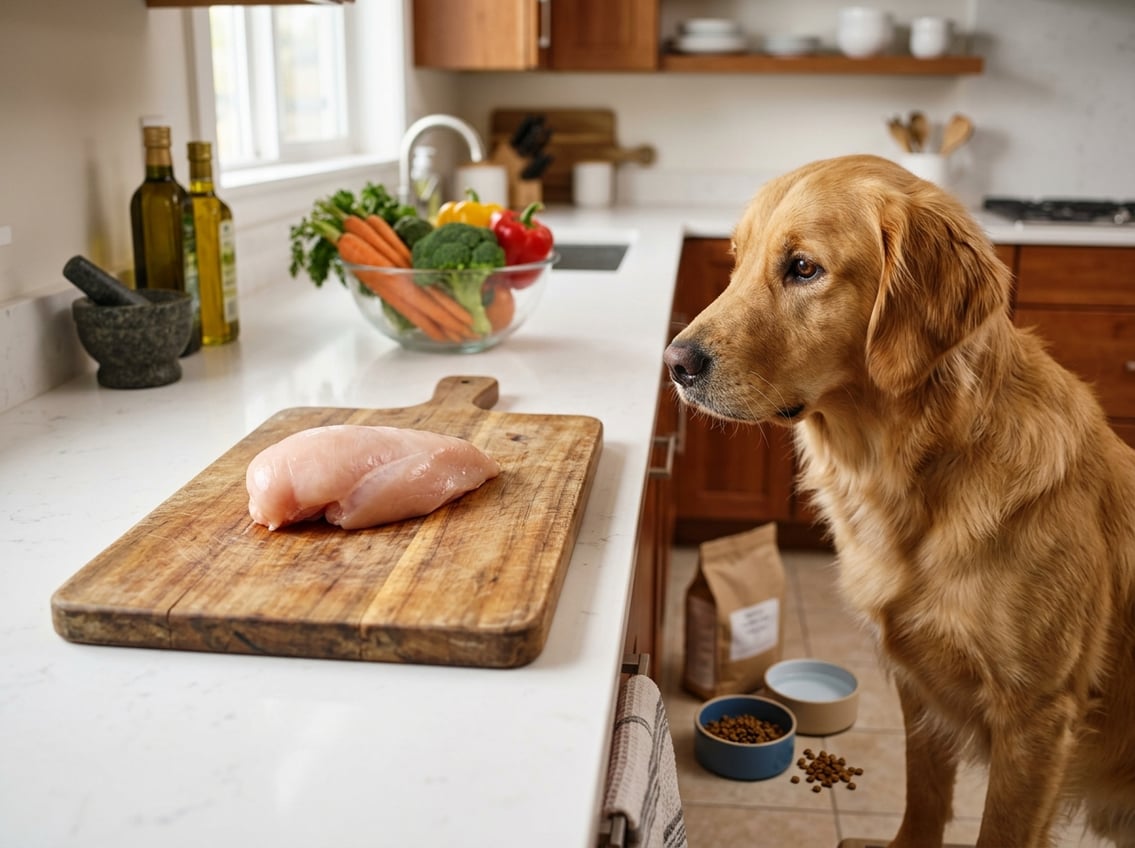
Portion size depends on your dog’s size, calorie needs, and the role chicken plays in the diet.
Even a healthy lean protein for dogs can cause problems if you give too much or use it too often.
Portion Size by Dog Size and Diet Role
For small dogs, a few small pieces may be enough as a treat or topper.
Medium and large dogs can usually handle larger amounts, but the chicken should still fit within the day’s calorie budget.
A practical rule is to keep chicken as a small part of the diet.
Zoorithm notes that small dogs may get about 1 to 2 ounces, while medium to large dogs may have around 3 to 4 ounces occasionally, depending on their needs.
Can Dogs Eat It Every Day
Some dogs can eat chicken every day if it is plain, cooked, and properly portioned.
Even then, it should not replace a complete food unless your vet has created a balanced home-cooked plan.
Daily feeding also raises the chance of calorie overload if you are not careful.
If your dog is on a restricted diet, ask your vet before making chicken breast a daily habit.
Allergies, Sensitive Stomachs, and Vet Red Flags
Some dogs develop a food allergy to chicken. Signs include itching, ear problems, vomiting, diarrhea, or ongoing skin irritation.
If your dog has pancreatitis, a history of digestive upset, or a poultry allergy, chicken breast may not be the right choice. Stop feeding it and call your vet if your dog vomits, has diarrhea, seems itchy, or acts unwell after eating it.


