
Where to Cut Chicken Breast for Strips, Cubes, and Cutlets
Knowing where to cut chicken breast helps you get pieces that cook evenly, stay tender, and match the dish you are making.
The right cut also makes raw chicken easier to portion for meal prep, stir-fries, sandwiches, and quick weeknight meals.
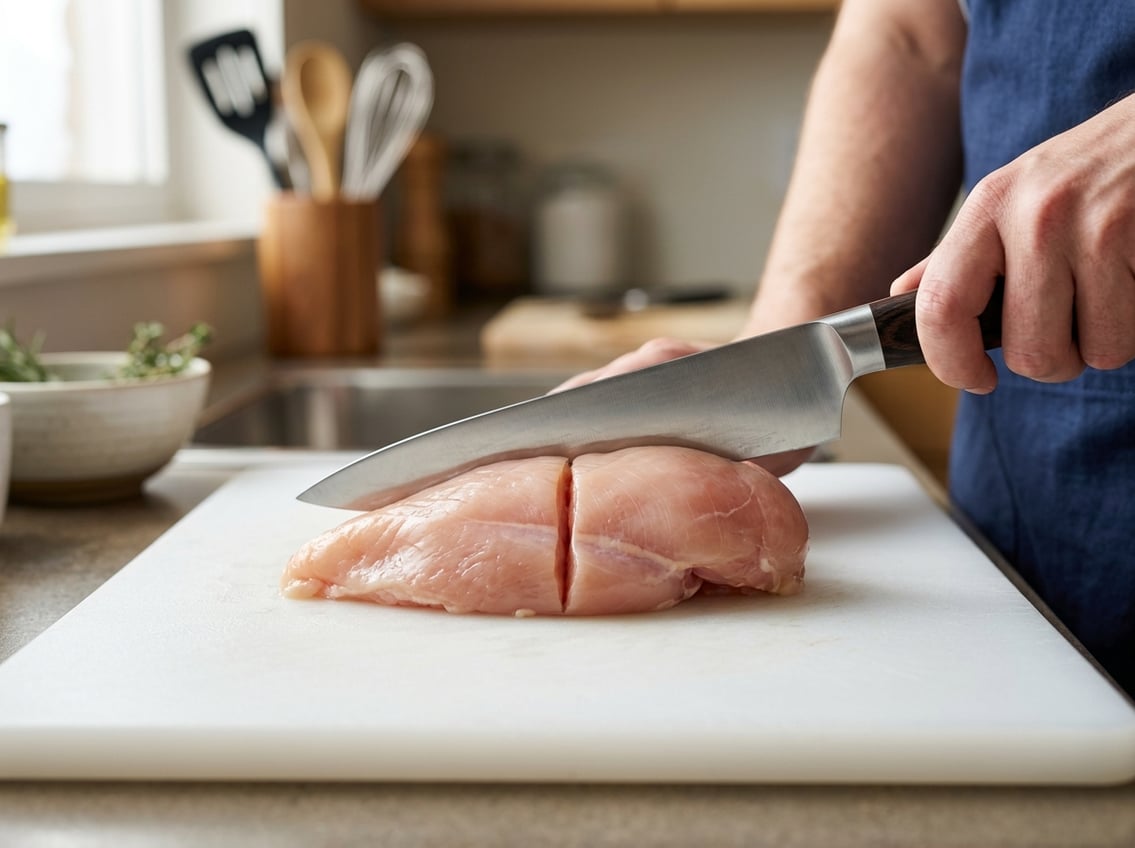
If you cut chicken breast the right way, you get cleaner slices and more even cooking.
The main rule is simple: place the breast on a stable cutting board, identify the grain, and cut in the direction your recipe needs.
For many dishes, you slice across the grain so the meat stays tender, as explained in how to cut chicken breasts so they stay juicy and tender.
Set Up the Chicken and Find the Grain
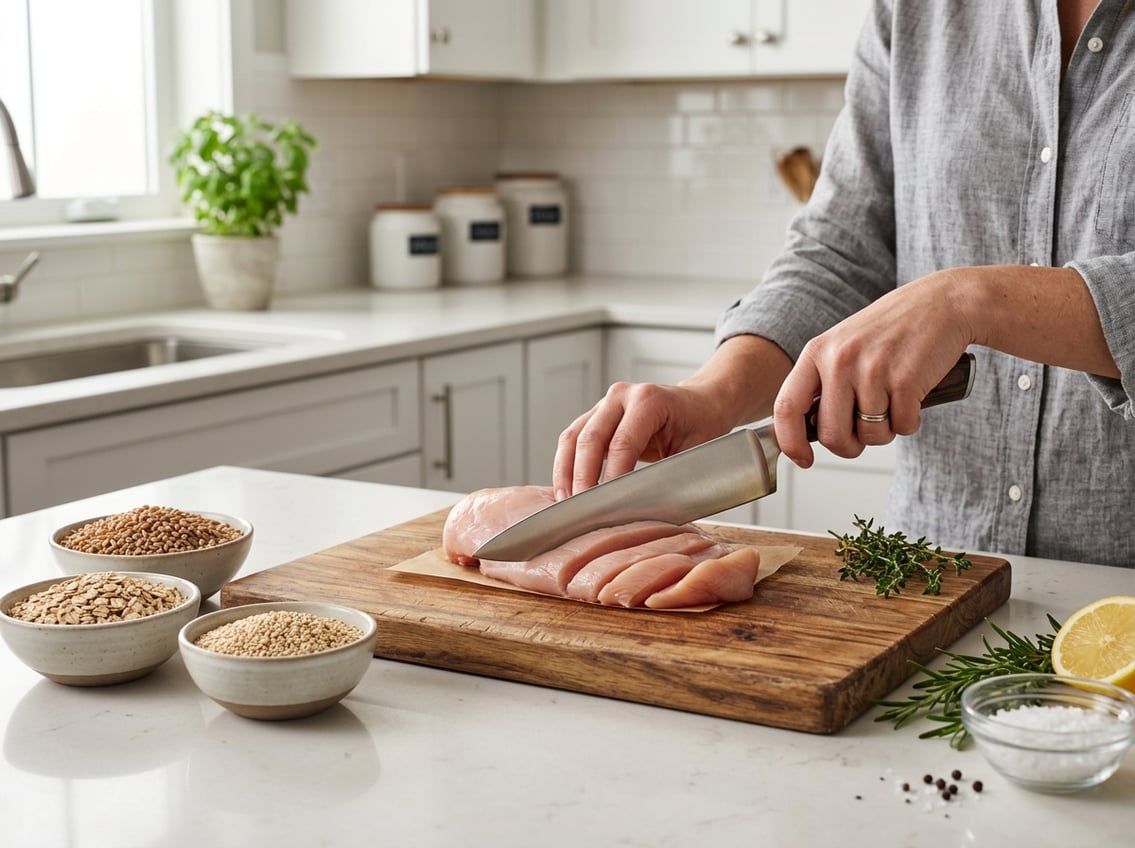
A clean setup makes cutting safer and more accurate.
Keep the chicken steady, the knife sharp, and the surface dry so the meat does not slide.
Use a Stable Cutting Surface and the Right Knife
Use a stable cutting board that does not move.
If needed, place a damp kitchen towel under the board to keep it from slipping.
A sharp chef’s knife gives you the most control for cutting chicken breast.
A dull blade tears the meat, which leads to ragged edges and uneven pieces.
Keep your other hand curled away from the blade while you work.
How to Identify the Thick End, Thin End, and Grain
A boneless chicken breast usually has one thicker side and one thinner side.
The thicker end works for wider slices, while the thinner end cooks faster and is useful for smaller pieces.
To find the grain, look for the faint lines that run through the meat.
Those lines show the muscle fibers.
For tender results, cut against the grain by slicing across those lines.
When to Pat Dry or Partially Chill the Meat
Pat the chicken dry with paper towels if the surface is wet or slippery.
Dry meat is easier to handle and gives you more control over the first cut.
If the breast feels soft and difficult to slice evenly, chill it briefly in the refrigerator so it firms up a little.
Do not freeze it solid.
Slightly firm meat is easier to portion cleanly.
Where to Cut for Strips, Tenders, and Cubes
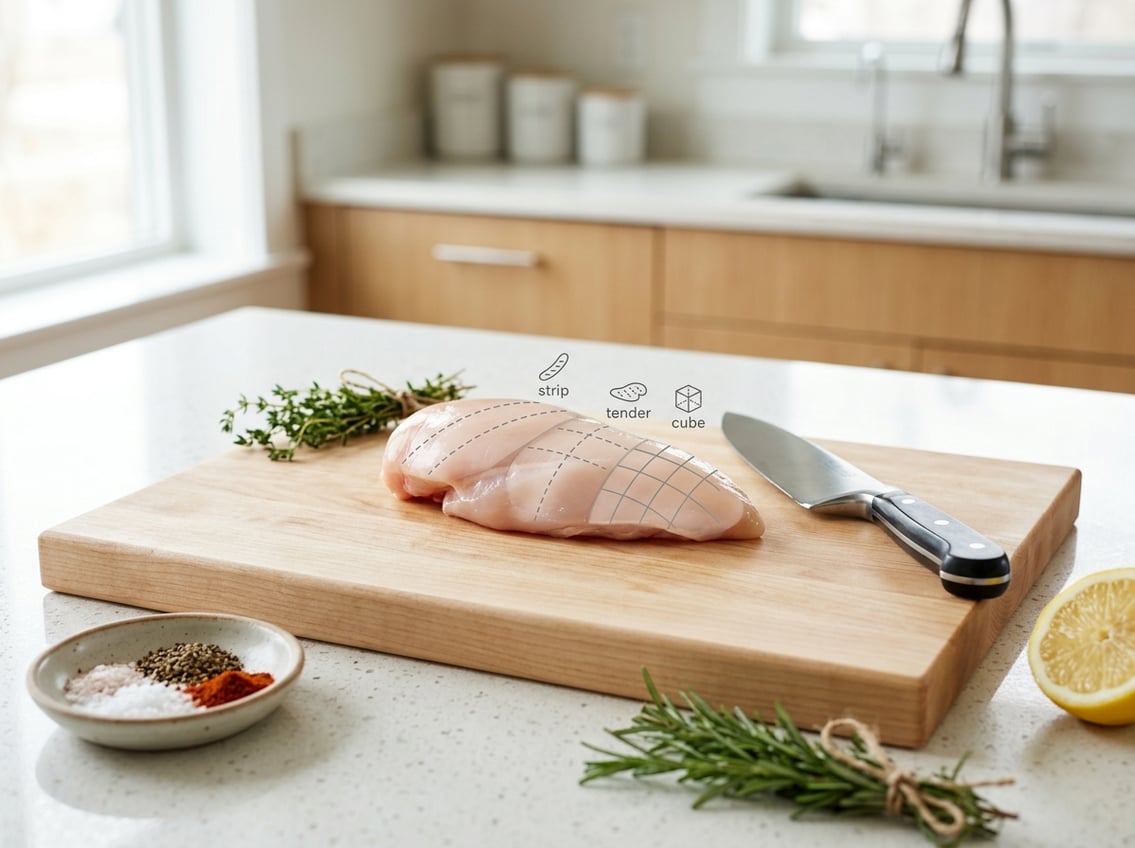
For strips, tenders, and cubes, start by slicing the breast into even sections.
Uniform size helps all the pieces cook at the same speed and fit your recipe.
How to Slice Chicken Breast Into Even Strips
To slice chicken breast into strips, lay the breast flat and cut it lengthwise into long pieces.
For most dishes, 1/2-inch to 3/4-inch strips work well.
If you want chicken breast strips for stir-fry, tacos, or sautés, keep each cut smooth and even.
For tender results, slice across the grain to shorten the muscle fibers and keep the meat less chewy, as explained in How to Cut Chicken Breasts.
How to Cut Chicken Breast Into Tenders
To cut chicken breast into tenders, start near the thicker end and slice long, narrow pieces that resemble the natural shape of a tenderloin.
Aim for strips that are slightly wider in the middle and taper at the ends.
If your recipe calls for breaded chicken tenders, keep the size close to the same thickness from piece to piece.
That helps the coating cook evenly.
For a closer match to store-bought shape, use the thickest part of the breast and cut lengthwise.
How to Cut Chicken Breast Into Cubes
For cubed chicken, first slice the breast into strips.
Then turn the strips and cut crosswise into cubes.
This gives you cleaner, more even pieces than trying to cube the whole breast at once.
For most recipes, 1-inch cubes work well.
Smaller cubes cook faster and are better for soups, skillet meals, and skewers.
Larger cubes hold up better in saucy dishes.
Where to Cut for Cutlets and Thin, Even Pieces
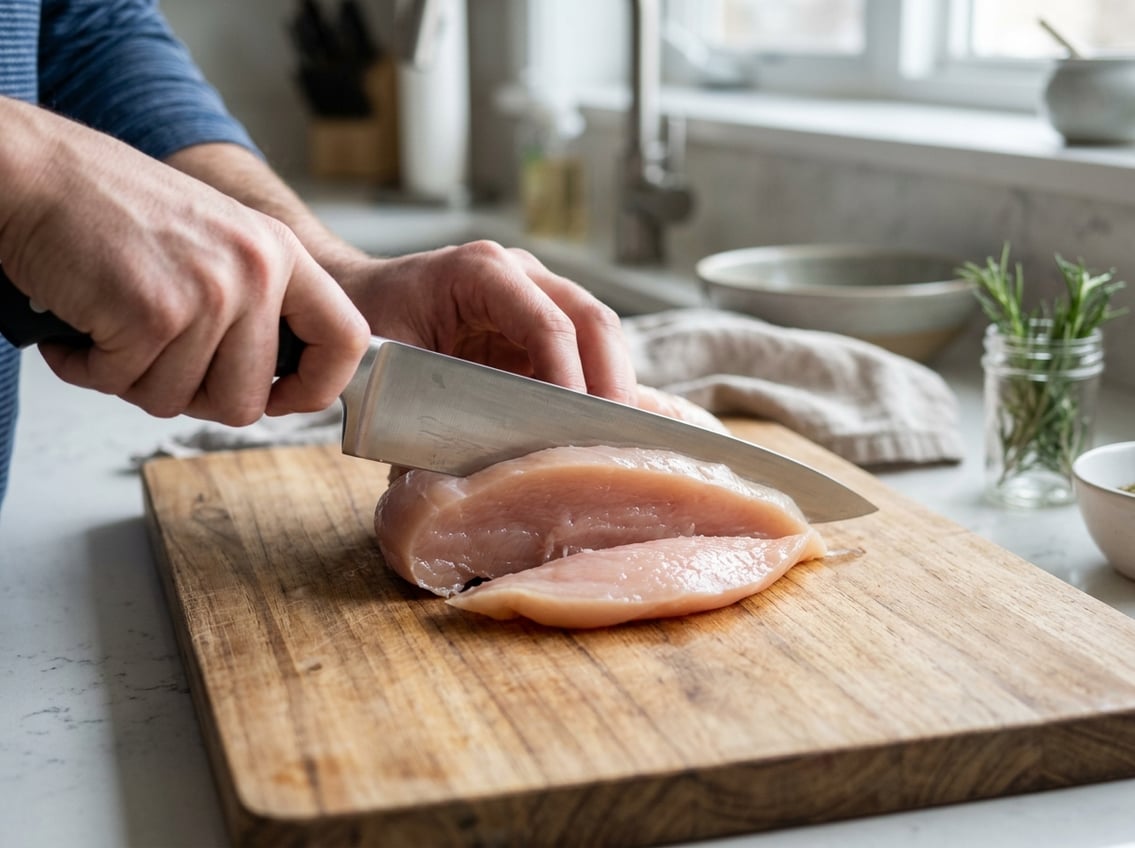
Cutlets are thin pieces with even thickness from end to end.
You make them by opening the breast or slicing it horizontally, then adjusting the thickness so it cooks quickly and evenly.
How to Butterfly a Chicken Breast Safely
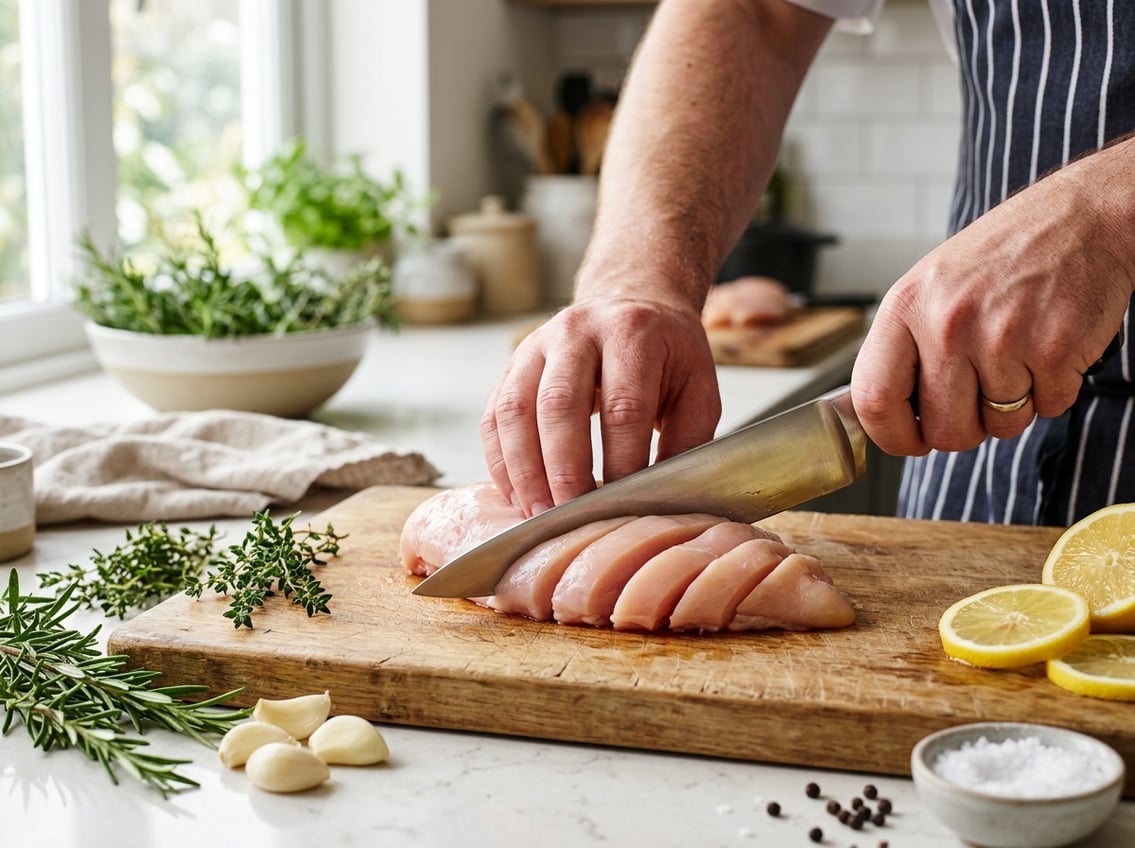
To butterfly a chicken breast, place your hand flat on top of the breast and use a sharp knife to slice horizontally through the middle, stopping before you cut all the way through.
Open it like a book.
Keep the knife parallel to the board and move slowly.
If the breast is very thick, butterfly it first, then decide whether you want one large thin piece or two cutlets.
How to Turn a Butterflied Breast Into Cutlets
Once you open the breast, slice through the center seam or divide the opened piece into thinner portions.
The best cutlets are about 1/4 to 1/2 inch thick, which is a common range in guides on how to cut chicken breasts into cutlets.
Because whole breasts are often uneven, trim the thicker side separately so both pieces cook at the same speed.
This helps for breaded recipes and pan-seared chicken.
Best Uses for Thin Cuts in Quick-Cooking Recipes
Thin cuts work well for chicken parmesan, cutlets, and other fast-cooking meals.
Use cutlets for dishes that need short cook times, such as skillet dinners, sandwiches, and breaded cutlets.
Thin pieces brown faster and stay more uniform when you pound or slice them to the same thickness.
Adjust the Cut for Cooked Chicken and Different Meals
When you cut cooked chicken, focus on preserving moisture.
The grain rule still matters, and the slice size should match the dish.
How to Cut Cooked Chicken Without Drying It Out
Let cooked chicken rest before slicing so the juices settle back into the meat.
Then use a sharp knife and cut against the grain for the most tender texture, as explained in How to Cut Chicken Breasts.
Cut in smooth strokes instead of sawing back and forth.
Thin slices work well for serving, while larger chunks help the meat stay juicy in a sauce.
Best Slice Shapes for Salads, Soups, and Saucy Dishes
For chicken salad, choose small cubes or thin strips so the pieces mix easily with dressing.
For chicken noodle soup, bite-size chunks fit neatly on a spoon.
For saucy meals, use medium pieces that hold their shape, such as chunks or thicker slices.
For salad and meal prep, keep the cuts uniform so they look neat and reheat evenly.
Common Mistakes That Lead to Tough or Uneven Pieces
One common mistake is cutting with the grain instead of against it. That leaves the fibers long and makes the chicken feel stringy.
Using a dull knife or cutting pieces at random sizes can also cause problems. Slicing before the meat rests can lead to dry, uneven results.
Use a sharp knife and steady the board. Cut with the final dish in mind.


