
Why Chicken Breast Hard to Chew: Causes and Fixes
Why chicken breast is hard to chew often comes down to a few basic cooking problems. Overcooking, undercooking, uneven heat, or a breast that was already prone to a firm bite before it ever hit the pan can all play a role.
With the right temperature control and a few small technique changes, you can cook chicken breast that feels tender and juicy. These adjustments make chicken easier to slice and chew.
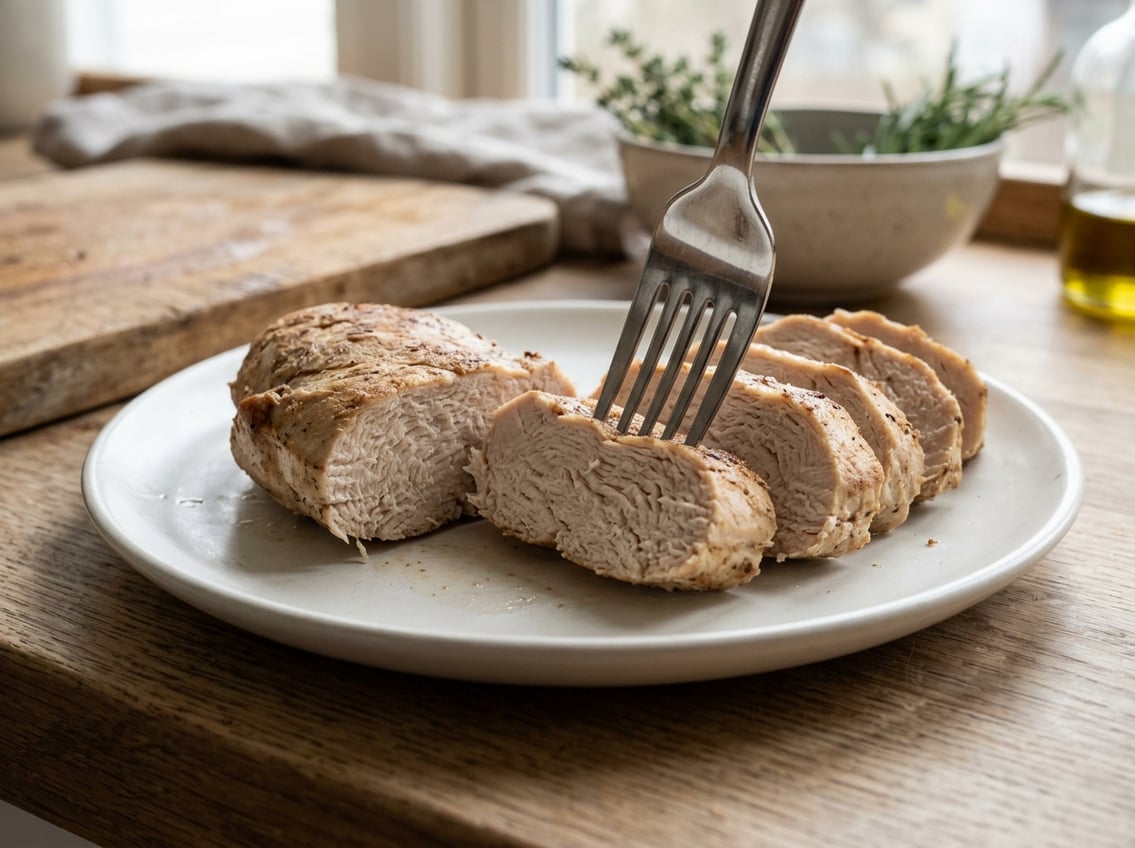
The Main Reasons Texture Turns Tough
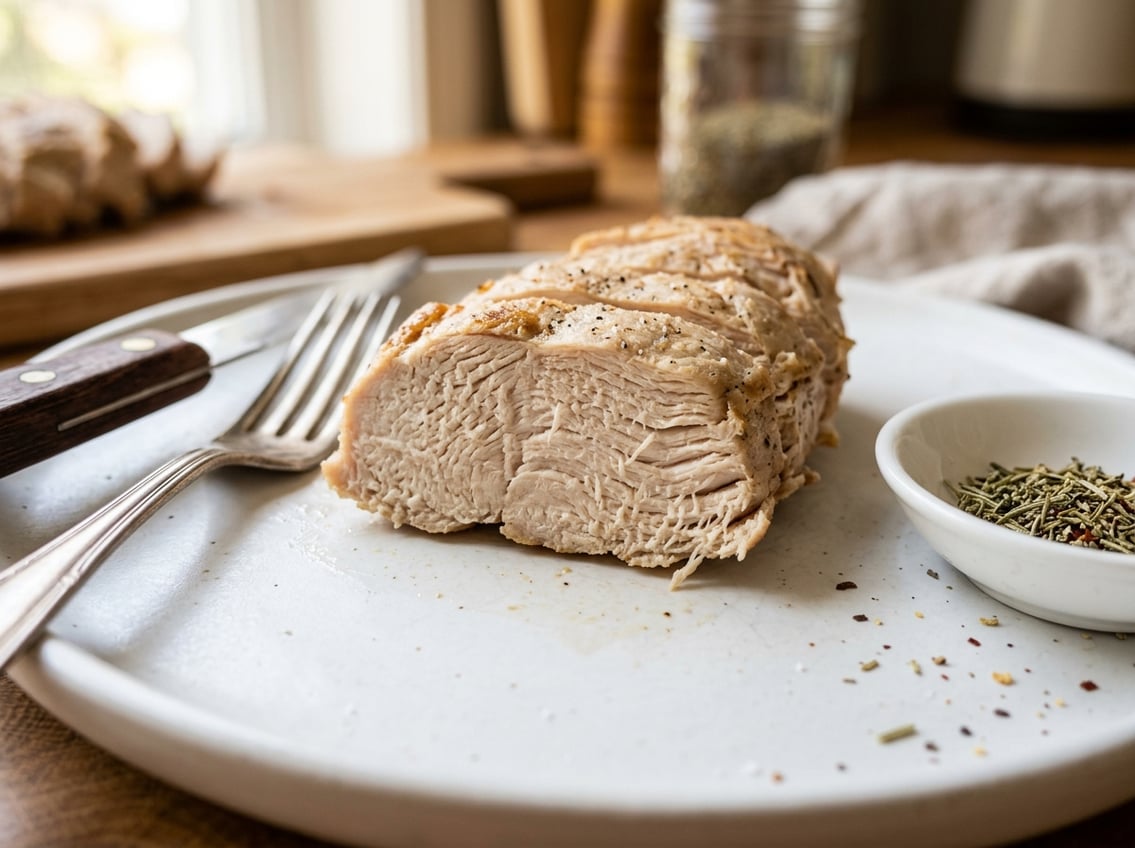
Heat, timing, or the cut itself often create a tough chicken breast. The lean structure that makes chicken breast popular also makes it less forgiving than thighs.
Overcooking and Moisture Loss
Overcooking toughens chicken breast. When you cook the meat too long, the muscle fibers tighten and push out moisture, leaving you with a dry, chewy result.
A meat thermometer helps you stop at the right point instead of guessing.
Undercooked Centers and Rubbery Bite
Undercooked chicken feels rubbery or dense in the middle. The outside may look done while the inside still has a pale, springy texture.
Check the thickest part and aim for the safe internal temperature for chicken.
Uneven Thickness and Fast-Drying Edges
A thick end and thin end cook at different speeds. The thin edges dry out before the center is ready.
Pounding the breast to an even thickness helps the whole piece cook at the same rate.
Why Lean White Meat Is Less Forgiving
Chicken breast has very little fat, so it lacks protection against heat. The texture changes quickly, while a richer cut can stay tender longer.
If you want juicy and tender chicken, you need more control than you would with a fattier cut.
How to Cook for a Better Bite
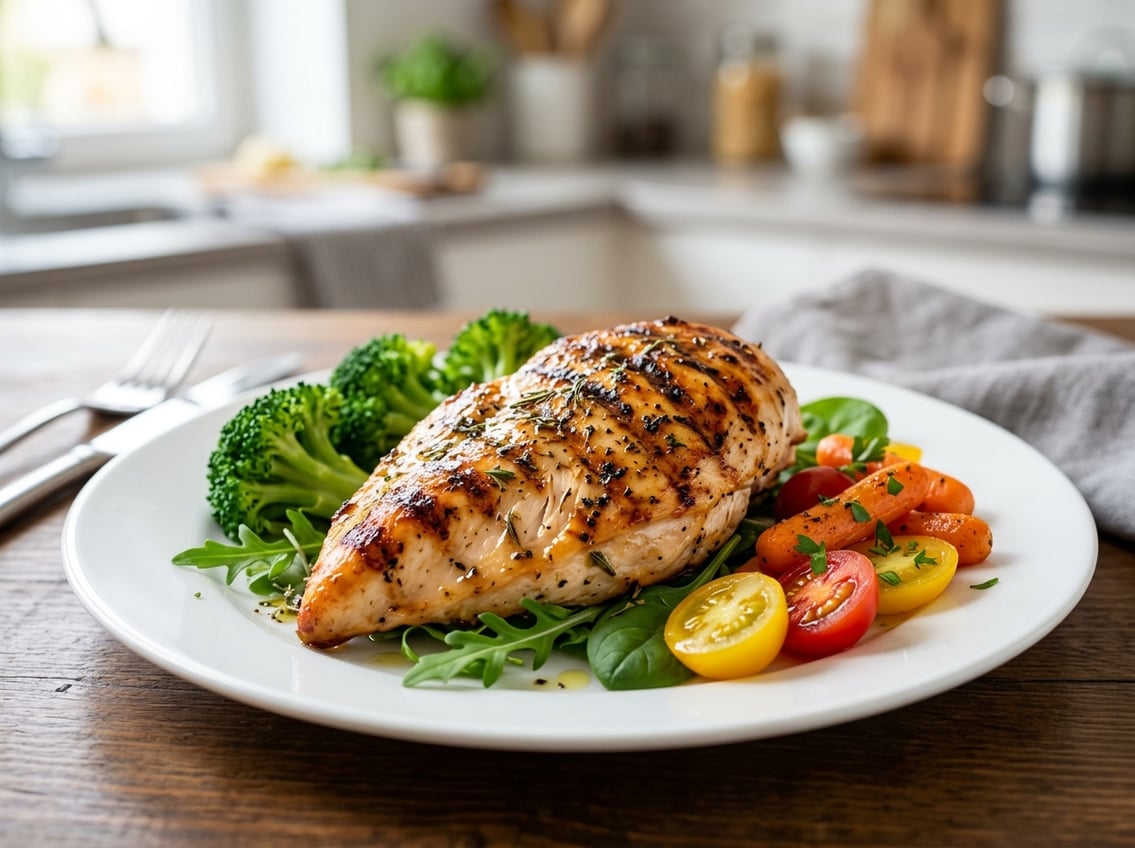
Better texture starts with heat control, seasoning, and simple prep steps. These help the meat stay moist.
Best Temperature Targets for Juiciness
Use a meat thermometer and check the thickest part of the breast. Pull the chicken off the heat as soon as it reaches a safe internal temperature to protect moisture.
Marinating, Brining, and Pounding
Marinating chicken with salt, oil, and a mild acid can add flavor and improve texture. Brining helps the meat hold moisture better.
Pounding the breast to an even thickness shortens cooking time and helps the meat cook evenly.
Moist Cooking Methods That Help
Moist cooking methods like poaching, gentle baking, or covered cooking help chicken stay juicy. These methods reduce the risk of a hard outer layer forming before the center is cooked.
They also give you more room for error than high heat methods.
Resting and Slicing Against the Grain
Let the chicken rest after cooking so the juices stay in the meat. Slice against the grain to shorten the muscle fibers and make each bite easier to chew.
These steps often improve chicken breast texture.
When the Problem Starts Before Cooking
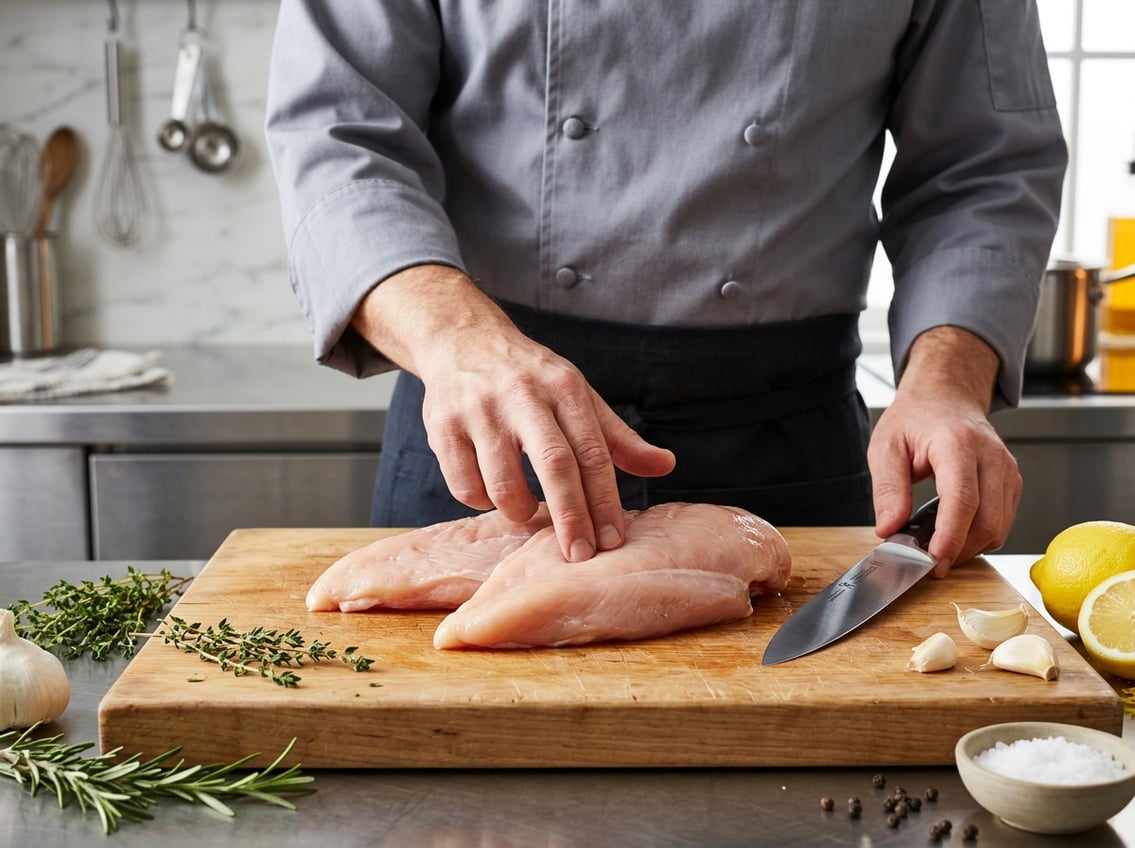
Sometimes the problem starts before you cook. Some breasts have a dense, stringy, or woody feel before they ever reach the stove.
This can change the final bite no matter how careful you are.
How to Spot Woody Breast Syndrome
Woody breast syndrome makes the meat feel firm, rigid, or hard to press with your fingers. The outside may look normal while the inside feels dense once cut.
If the texture seems unusually stiff or stringy, you may be dealing with this issue.
Why Some Breasts Feel Dense or Stringy
A woody breast can create a tough or chewy chicken breast even when you cook it correctly. The fibers may feel tight, and the meat may be hard to chew.
What the Poultry Industry Has to Do With It
Commercial production is linked to woody breast syndrome. This has become more common in some commercially raised birds.
It is not caused by your cooking pan or seasoning. If you see it often, the problem may start with the bird itself and not your technique.
When to Choose Chicken Thighs Instead
If you do not like the texture of chicken breast, chicken thighs may be the better choice.
Thighs have more fat and stay tender more easily. They work especially well in skillet meals, braises, and saucy dishes.
When you want reliable juiciness and less risk of a chewy bite, thighs are often the simpler option.


