
What Is Chicken Breast Cooked Temperature? Safe, Juicy Guide
Chicken breast should reach an internal temperature of 165°F, or 75°C, to be safe to eat. That number gives you a reliable target for food safety and helps you avoid undercooked meat.
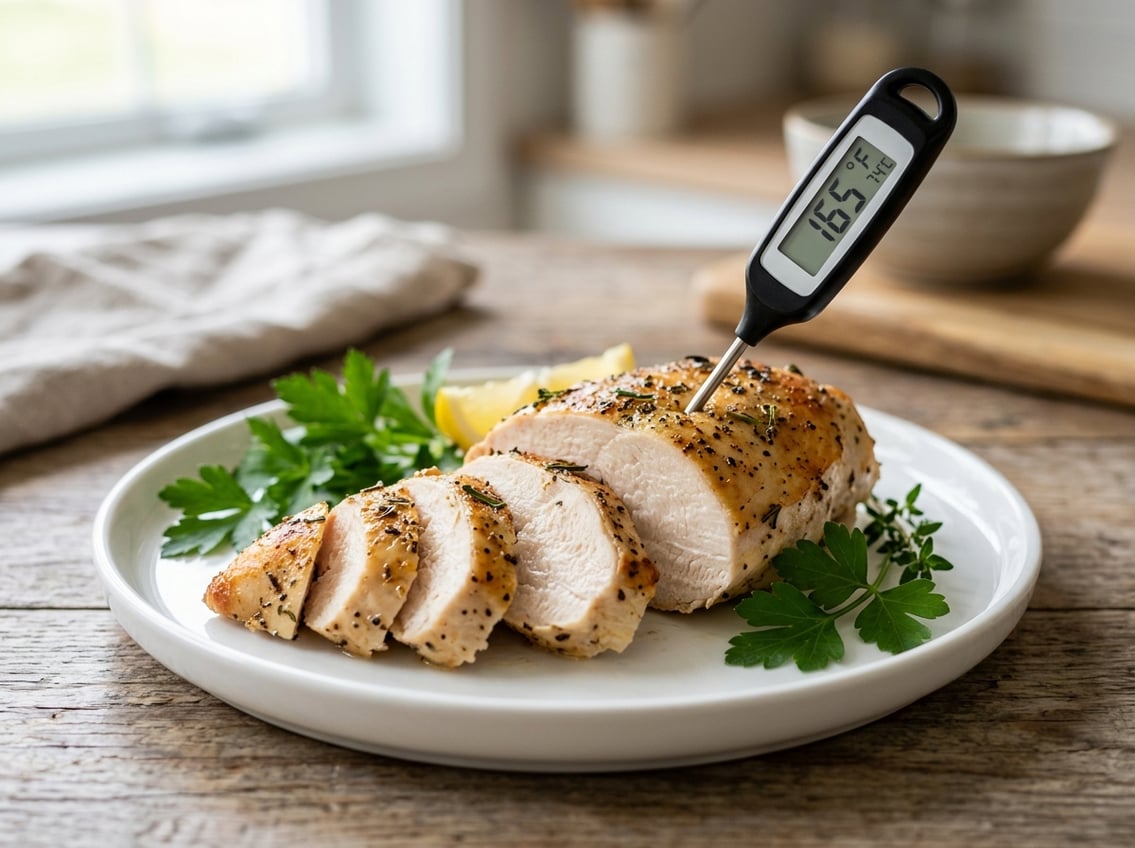
If you want perfectly cooked chicken, use a thermometer and aim for 165°F at the thickest part of the breast. Don’t judge doneness by color alone.
Chicken breast is lean, so it can go from moist to dry fast. With the right internal temperature and a few simple checks, you can cook it safely and keep it juicy.
Safe Internal Temperature for Chicken Breast
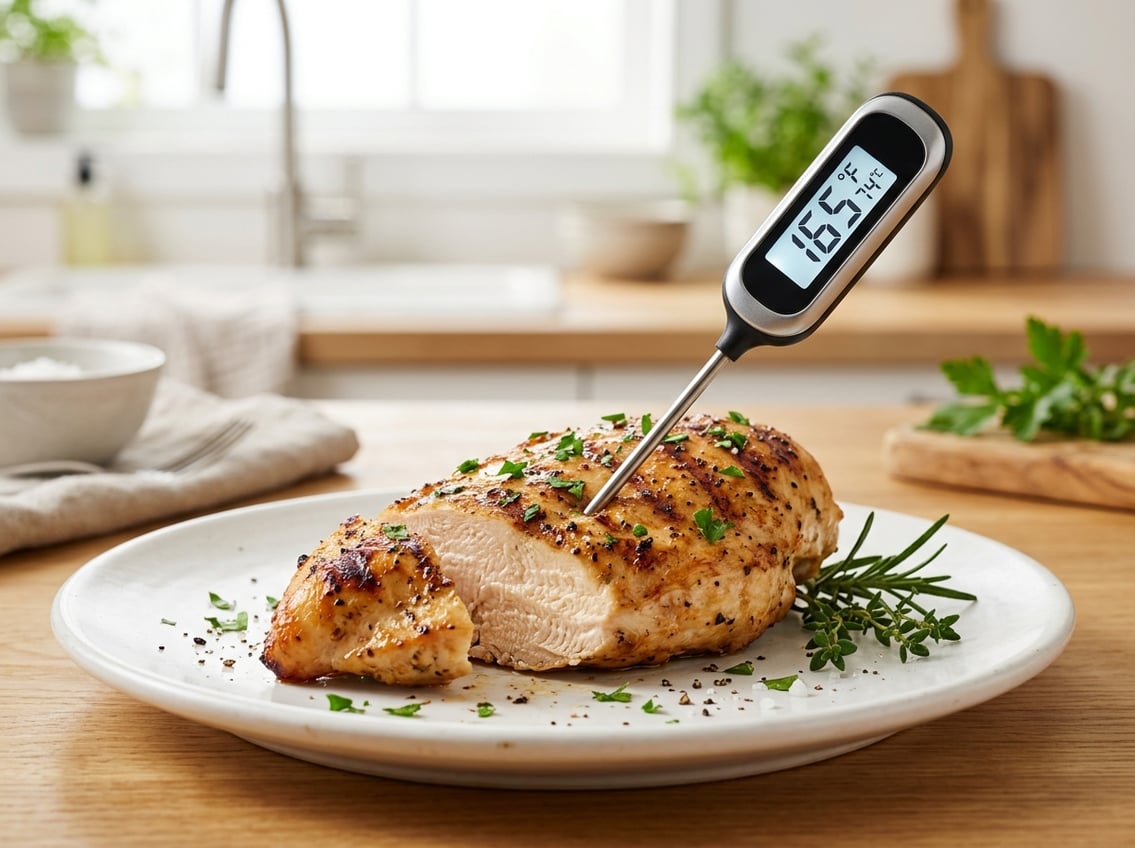
Chicken breast needs a safe cooking temperature that kills harmful bacteria without drying the meat out too much. The key target is the same whether you bake, grill, or pan-cook it.
Why 165°F Is the Safe Minimum
You should cook chicken breast to 165°F to reduce the risk from bacteria such as salmonella and campylobacter. These bacteria can cause foodborne illness.
Food safety guides, including Allrecipes’ chicken breast temperature guide, recommend 165°F as the number to trust. Check the thickest part of the breast for the most accurate reading.
What 75°C Means in Celsius
If you use Celsius, 75°C is the same safe target as 165°F. That makes it easy to follow recipes or labels from different regions.
A thermometer reading of 75°C tells you the chicken has reached a safe cooking temperature throughout the center. If the reading is lower, give it more time and check again.
Why Food Safety Matters More Than Color
Cooked chicken can look white before it is fully safe. Juices can run clear and the surface can brown while the center still falls short of the needed temperature.
Color is not enough to judge doneness. The goal is to avoid foodborne illness, not just make the chicken look cooked.
How to Check Doneness Accurately
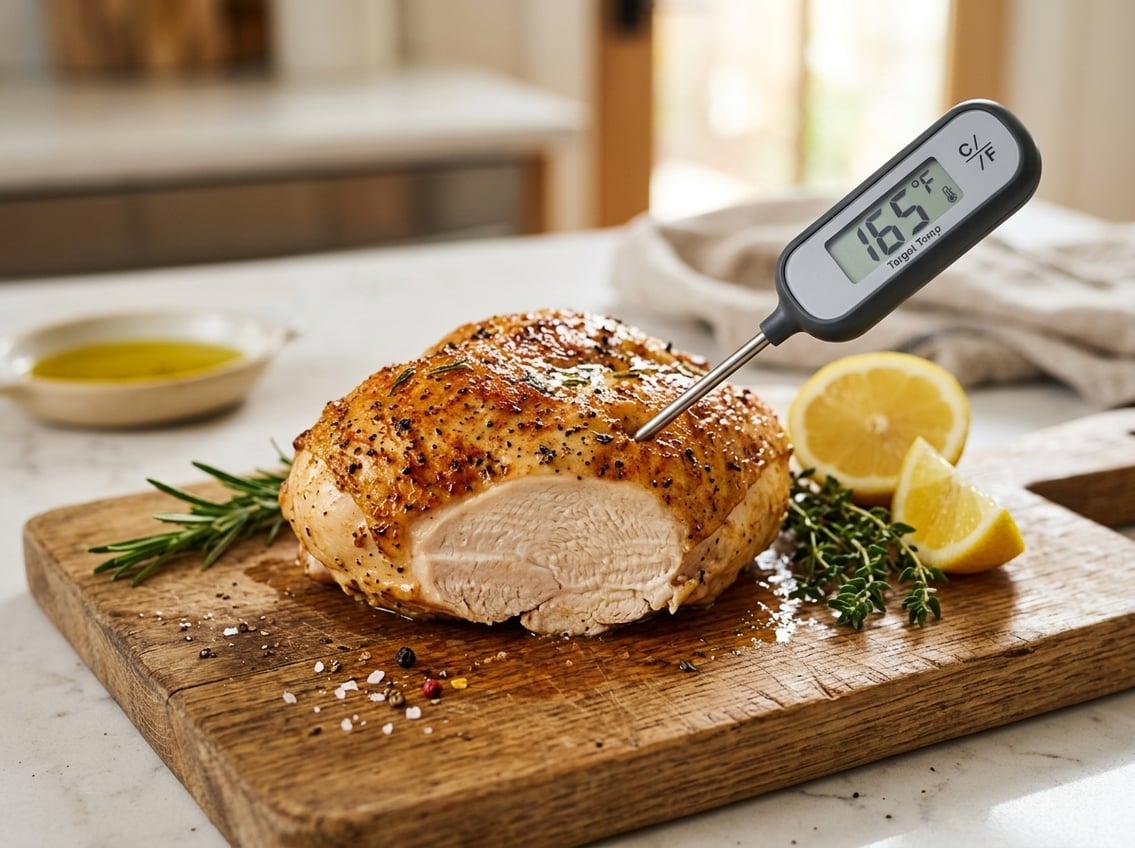
A thermometer gives you the most reliable answer. Placement matters as much as the number on the screen.
You want the reading from the thickest part of the breast, with no bone in the way.
Where to Insert a Meat Thermometer
Insert the meat thermometer into the thickest part of the chicken breast. Avoid touching bone, because bone can give you a false reading.
If the breast is uneven, check the thickest center point. That spot is the last to finish cooking, so it tells you whether the whole piece has reached safe temperature.
Instant-Read vs. Probe Thermometer
An instant-read thermometer gives you a quick spot check. It works well when you want to test the chicken near the end of cooking.
A probe thermometer stays in the meat while it cooks. This helps you track the chicken internal temperature without opening the oven or grill too often.
Both tools work if you calibrate and use them correctly.
How Carryover Cooking Affects the Final Reading
Carryover cooking means the chicken keeps cooking after you remove it from the heat. The internal temperature can rise a few degrees while it rests.
If you pull the breast a little before 165°F and let it finish gently, you can use carryover cooking to your advantage. For most home cooks, a final target of 165°F is still the easiest and safest goal.
How to Keep Chicken Breast Juicy
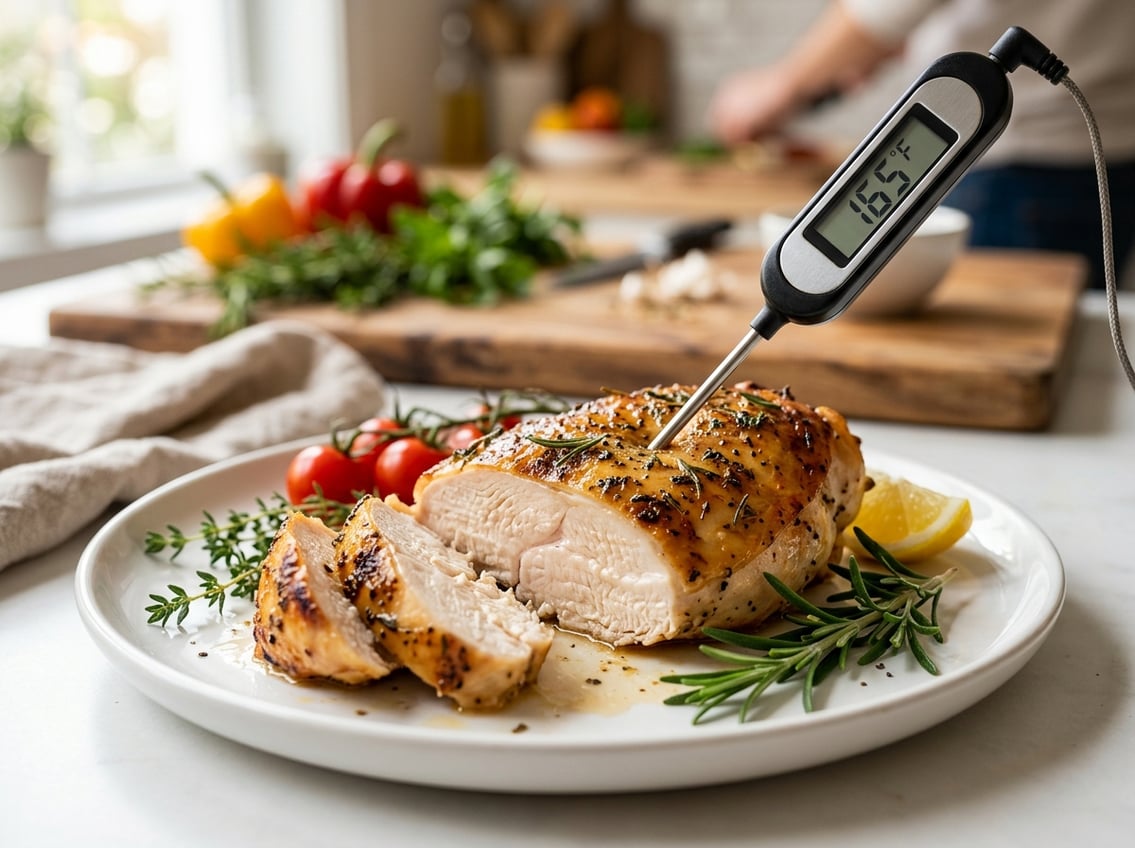
Juicy chicken depends on timing, moisture, and even thickness. The main goal is to avoid overcooking chicken while still reaching a safe internal temperature.
When to Pull It Off the Heat
Pull the chicken when it reaches about 160°F to 163°F if you plan to rest it, since carryover cooking can finish the job. If you prefer a simpler rule, remove it right at 165°F and rest it briefly.
A short rest helps the juices settle back into the meat. This gives you a better chance at juicy chicken instead of dry slices.
Brining and Marinades for Better Moisture
Brining helps chicken breast hold moisture during cooking. A saltwater brine can improve texture and reduce dryness, especially for lean cuts.
Marinades add flavor and can help with moisture too. According to Allrecipes’ chicken breast tips, marinating or brining can help keep the meat juicy and tender.
Even Cooking With Uniform Thickness
Chicken breast often has one thick end and one thin end, which causes uneven cooking. Pounding it to an even thickness helps it cook more evenly.
You can also butterfly a very thick breast if needed. Even cooking makes it easier to avoid dry edges and a raw center.
Best Cooking Methods and Temperature Tips
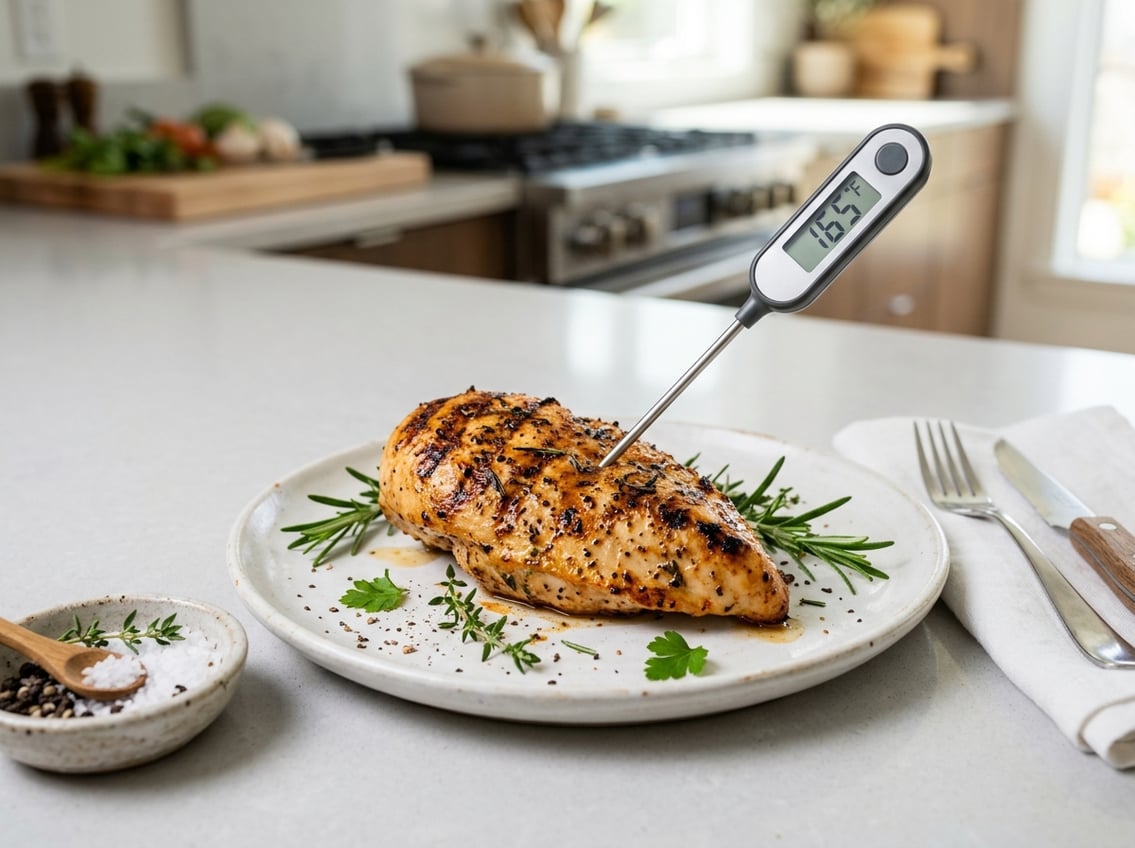
The best method depends on the texture you want and the time you have. Each method can produce juicy chicken if you manage the cooking temperature and check doneness properly.
Baking Chicken Breast in the Oven
For baking chicken breast, a hot oven gives good browning and even cooking. Allrecipes recommends roasting at 450°F for about 15 to 18 minutes, or baking at 375°F for 30 to 35 minutes.
Use the thicker pieces as your guide, and check the center with a thermometer near the end. Oven size, breast thickness, and starting temperature all affect the final cook time.
Grilling and Pan Cooking Basics
On the grill, use medium-high heat so the outside browns without burning before the inside is done. On the stovetop, a hot skillet works well if you keep the heat steady and avoid crowding the pan.
Turn the chicken only once if possible. That helps with even browning and better texture, while still letting the center reach the safe internal temperature.
Sous-Vide for Precision Cooking
Sous-vide gives you precise control over chicken breast temperature.
You cook the sealed chicken in a water bath.
Then you finish it quickly in a pan for color.
This method helps you get juicy chicken because the meat cooks evenly.
You still need to follow safe time and temperature rules.
A quick sear at the end adds better texture.


