
What Is Formed Chicken Breast? Meaning and Labels
You may see formed chicken breast on a label, menu, or package and wonder what it means. In simple terms, it is chicken breast meat that processors shape from pieces, trim, or restructured meat instead of selling it as one intact breast.
That places it in the wider category of processed chicken and, in many cases, processed meat.
Formed chicken breast is still chicken, but it is not always a whole, untouched breast cut. Manufacturers can make it look, cook, and taste like a breast, while using smaller pieces or blended ingredients to create a uniform product.
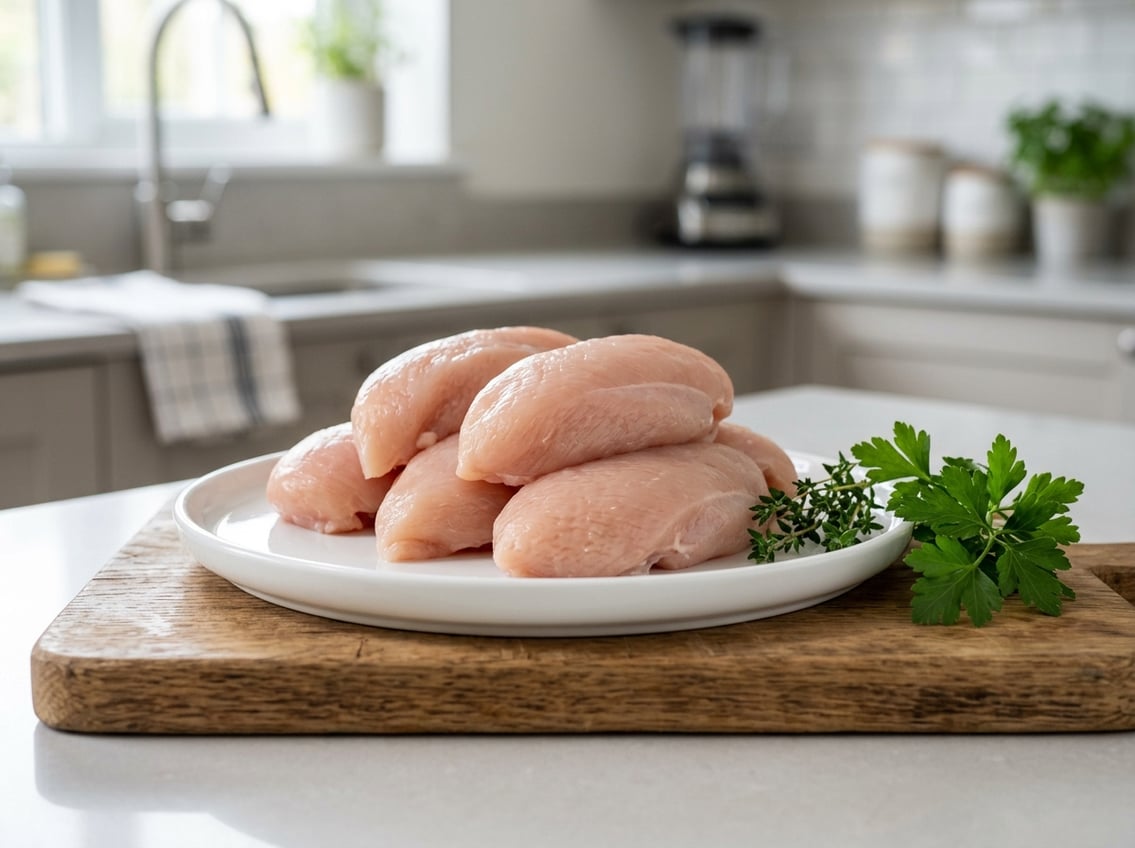
What the Term Means on Chicken Products
Formed chicken breast usually means chicken breast meat has been reshaped into a consistent form. Processors may use whole breast meat, trimmed pieces, or a mix of chicken parts that they mold to resemble a standard breast cut.
A plain whole breast, sometimes called a whole breast or boneless breast, stays closer to the bird’s original muscle structure. Formed products differ because producers alter them for size, shape, or texture.
That is why the label matters when you compare it with boneless chicken, deli meat, or other processed chicken and processed meats.
How Formed Meat Differs From Whole-Muscle Poultry
Whole-muscle poultry keeps the muscle fibers largely intact. Processors rearrange, press, or bind formed meat so it holds together as one piece.
You may notice a more even thickness and a more uniform bite.
That difference matters if you want the closest match to a natural chicken breast. A whole breast cooks and slices like a single cut, while formed meat can behave more like a shaped food product.
Why Manufacturers Restructure Chicken Breast
Manufacturers use formed chicken breast to improve consistency, reduce waste, and meet demand for uniform portions. Restaurants and retailers often want pieces that look the same, cook at the same rate, and fit a specific package size.
This also helps turn trim into a saleable product. Instead of discarding smaller pieces, processors turn them into a shaped item that still tastes like chicken.
How Formed Pieces Get a Uniform Shape and Texture
Processors create the shape by pressing, binding, and sometimes marinating the chicken breast meat so it holds together. Some products use meat glue, also called transglutaminase, to help proteins link more firmly.
Others rely on mixing and compression alone, along with flavoring agents to standardize taste.
The result is a product that looks neat on a plate and behaves predictably in cooking. That predictability is useful in food service and in frozen retail items.
How It Is Made From Raw Cut to Finished Product
Formed chicken breast starts with raw poultry parts that workers trim, sort, and prepare for shaping. The process can stay close to plain boneless chicken, or it can move deeper into processing depending on the product style.
The main steps usually include cutting, binding, seasoning, and molding.
In some products, processors add mechanically separated chicken, which makes the product more processed than a simple formed breast.
Using Trimmed Chicken Parts and Deboned Meat
The process often begins with chicken parts taken from a chicken carcass after deboning. Processors may use breast trim, smaller chicken breast meat pieces, or other boneless chicken portions that are still suitable for food use.
Workers sort these pieces by size and texture. If a product is meant to look like a breast, the processor selects pieces that can be shaped into a larger, even cut.
Binding, Seasoning, and Forming Methods
Once trimmed, the meat may be combined with salt, water, and flavoring agents. Some formulas use transglutaminase, or meat glue, to help the pieces stick together during cooking and slicing.
Others use pressure, tumbling, or molding equipment to shape the meat without a binding enzyme.
The goal is a stable final piece with a smooth surface and a regular shape. This is common in breaded products, value-added entrees, and some deli-style items.
When Mechanically Separated Chicken Enters the Picture
Not every formed product uses mechanically separated chicken, but some do. Processors create that ingredient by pressing chicken parts to recover usable meat from the bones and remains of the chicken carcass.
When that happens, the texture and label become more important. A product with mechanically separated chicken is usually more processed than one made from recognizable breast meat alone, even if the final shape still resembles a chicken breast.
Where Readers Commonly See It in Stores and Restaurants
You are most likely to see formed chicken breast in breaded frozen foods, lunch meats, and ready-to-eat items. It is also easy to confuse these products with standard retail cuts, since many labels use familiar words like breast or chicken breast.
The difference often shows up in the ingredient list, not just the front label.
That is why it helps to compare it with items such as whole breast, boneless breast, breast quarter, breast quarter without wing, leg quarter, whole leg, thigh, drumstick, thigh with back, and even gizzard products that come from other parts of the bird.
Frozen Breaded Items and Chicken Nuggets
Frozen breaded foods often use formed meat because the shape needs to stay consistent after coating and cooking. Chicken nuggets are a common example, and many are built from pieces that processors grind, blend, or shape before breading.
You may also see chicken patties, strips, and similar products in this category. These items can be made from chicken breast meat, lower-cost trim, or a combination that processors mold into a regular shape.
Lunch Meats and Other Deli Counter Products
Deli meat made from chicken often uses processing steps that are more intensive than plain retail cuts. Sliced breast-style products, chicken frankfurter, chicken bologna, and chicken ham may all contain formed or restructured poultry.
These foods are still chicken, yet they are usually treated as processed meat or processed meats because of their added ingredients and shaping steps.
The label often tells you more than the display case does.
How It Compares With Standard Retail Cuts
A standard boneless breast or whole breast is sold as a cut from the bird. A formed product may look similar, yet it can contain multiple pieces joined together, seasoned, or pressed into one unit.
That difference can affect texture, cooking time, and price. Retail cuts like thigh, drumstick, and whole leg are more direct parts of the bird, while formed products are designed for consistency and convenience.
How to Judge Quality, Nutrition, and Labels
The label tells you a lot about how much processing has taken place. If you want a product closer to plain chicken, ingredient lists and nutrition facts matter more than the front-of-package name.
A product can still be useful and safe while being processed chicken.
Ingredients That Signal More Processing
Watch for long ingredient lists, added flavoring agents, starches, binders, and added sodium. Terms like transglutaminase or meat glue mean the meat has been joined during production.
A short label is usually easier to read and often points to less processing. A plain package of boneless chicken breast should list chicken and little else, while formed or deli-style products often include several additives.
Nutrition Trade-Offs Compared With Plain Chicken Breast
Plain chicken breast meat is lean and high in protein. According to MasterClass’s chicken breast nutrition overview, a 4-ounce serving of raw boneless skinless chicken breast is about 110 calories, 26 grams of protein, and 1 gram of fat.
Processed chicken products often have more sodium and sometimes more calories from breading, sauces, or added ingredients. That does not make them unhealthy by default, yet they are not the same nutritionally as plain breast meat.
Simple Buying Tips for Better Product Choices
Look for plain boneless breast with a short ingredient list if you want the least processed option.
Choose products that clearly state whole muscle chicken breast when that matters to you.
When a package says formed, restructured, breaded, enhanced, or includes multiple fillers and flavoring agents, you can expect a more processed product.
The USDA designed meat and poultry labeling terms to help you read these claims more accurately, as explained in a USDA labeling terms guide.


