
How Are Chicken Breasts Made From Farm to Pack
You may think chicken breasts are simply pulled from a bird and packed, yet the process is much more controlled than that.
When you ask how chicken breasts are made, the answer starts on the farm and continues through careful processing, trimming, chilling, inspection, and packaging.
In the U.S. market, each step protects food safety, maintains product quality, and creates the boneless chicken cuts you see in stores.
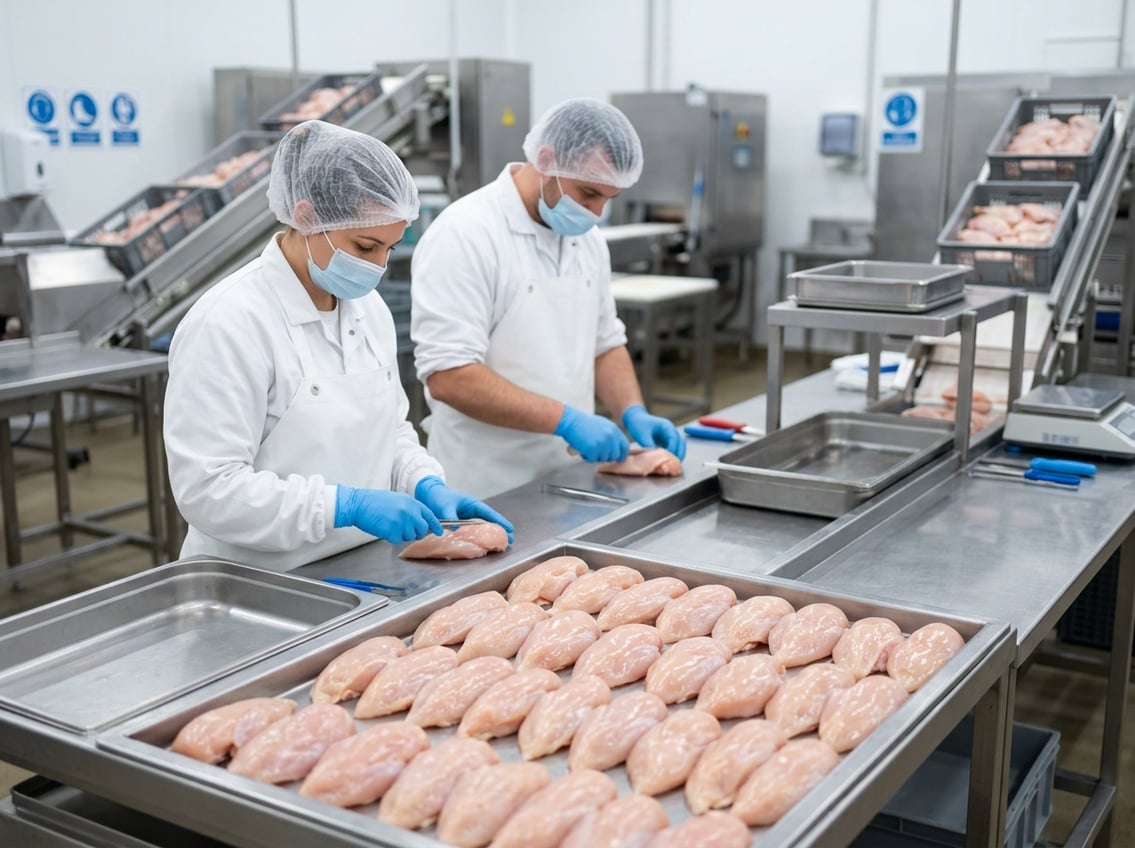
From Bird to Chicken Breast
A chicken breast does not grow as a separate product. It is the large chest muscle from a live bird, and workers remove it during processing at a processing plant.
The steps begin with healthy broiler chickens that are raised for meat, not eggs.
What Part of the Bird Becomes the Breast Meat
The breast meat comes from the pectoral muscles on the front of the bird. These are the largest white meat muscles, sitting above the ribs and in front of the wings.
When workers break down a whole bird, the breast area can become bone-in breast, split breast, or boneless chicken breast. The final cut depends on how the plant separates the carcass and how much trimming happens later.
When Broiler Chickens Are Ready for Processing
Broiler chickens reach market size and age, often around 6 to 8 weeks. At that point, they have enough body weight to produce the breast size the market wants.
Plants and farms select healthy birds with even growth. Sick, injured, or too-small birds are not ideal for processing, because those issues affect yield and meat quality.
How Breast Meat Is Separated From the Carcass
After the bird arrives at the plant, workers prepare the carcass for cut-up. After slaughter, feather removal, and chilling, workers or machines separate the breast from the back and other parts.
A back/breast separator uses a saw or similar tool to split the carcass. Workers then remove the breast section and send it to deboning or further portioning.
Deboning, Trimming, and Portioning
After workers separate the breast, they turn the meat into the familiar boneless product you buy in stores.
This stage in the processing plant sets the final size, shape, and appearance of the cut.
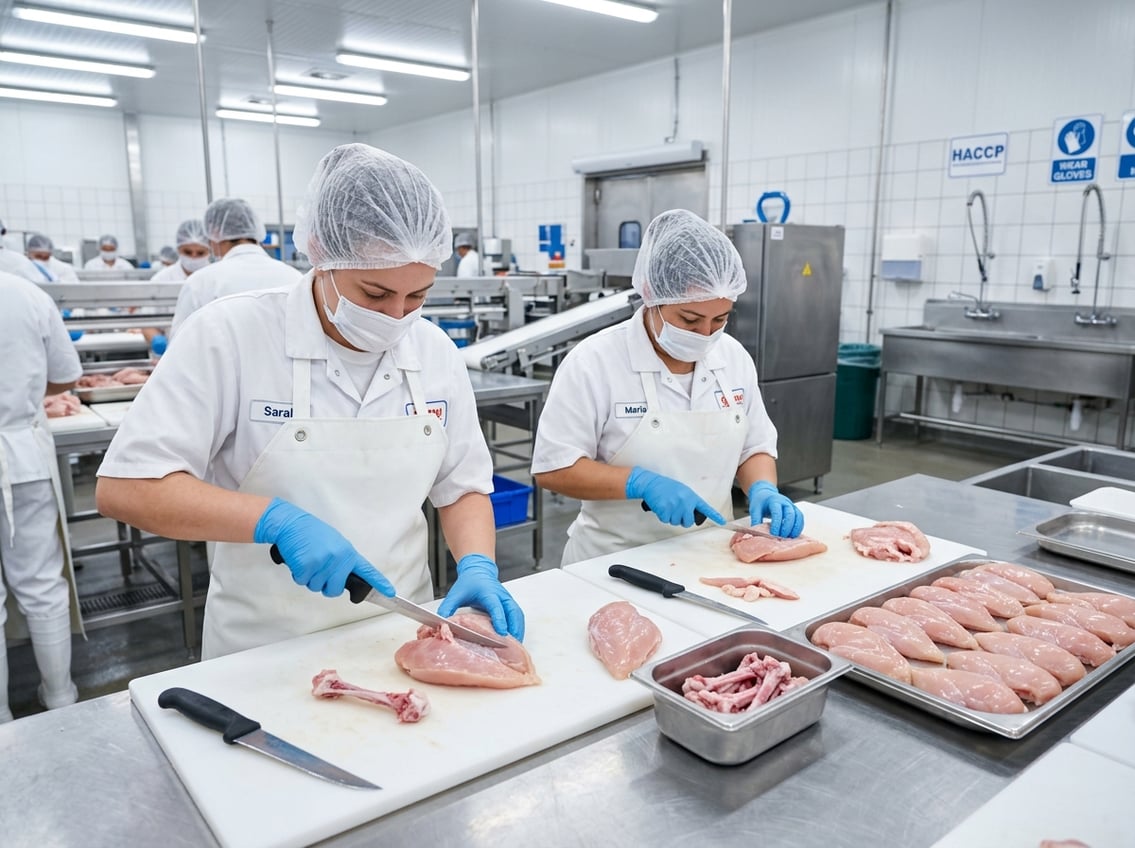
Manual vs. Automated Deboning Methods
Workers can debone by hand, by machine, or with a mix of both. Manual work gives cutters more control over yield and shape.
Automated systems improve speed and consistency on high-volume lines. In many plants, machines separate much of the meat, then workers finish the job.
How Skin, Fat, Cartilage, and Bone Fragments Are Removed
Deboning involves more than removing the main bone. Workers also trim away skin, fat, cartilage, and any loose bone pieces that remain after the breast is cut free.
This cleanup step improves safety, texture, and appearance. A finished boneless breast should feel smooth, with no sharp fragments or heavy leftover connective tissue.
How Breasts Are Sized for Retail and Food Service
Workers sort breasts by weight and thickness to match different buyers. Retail packs are often smaller and more uniform, while food service buyers may want larger pieces for slicing, grilling, or batch cooking.
Sorting by size helps stores label packages clearly. This makes it easier for you to compare products and choose the cut that fits your recipe.
Chilling, Inspection, and Packaging
After cutting, chicken breasts move quickly into cooling, quality checks, and packing.
These steps protect food safety and help the product stay fresh while it travels to stores.
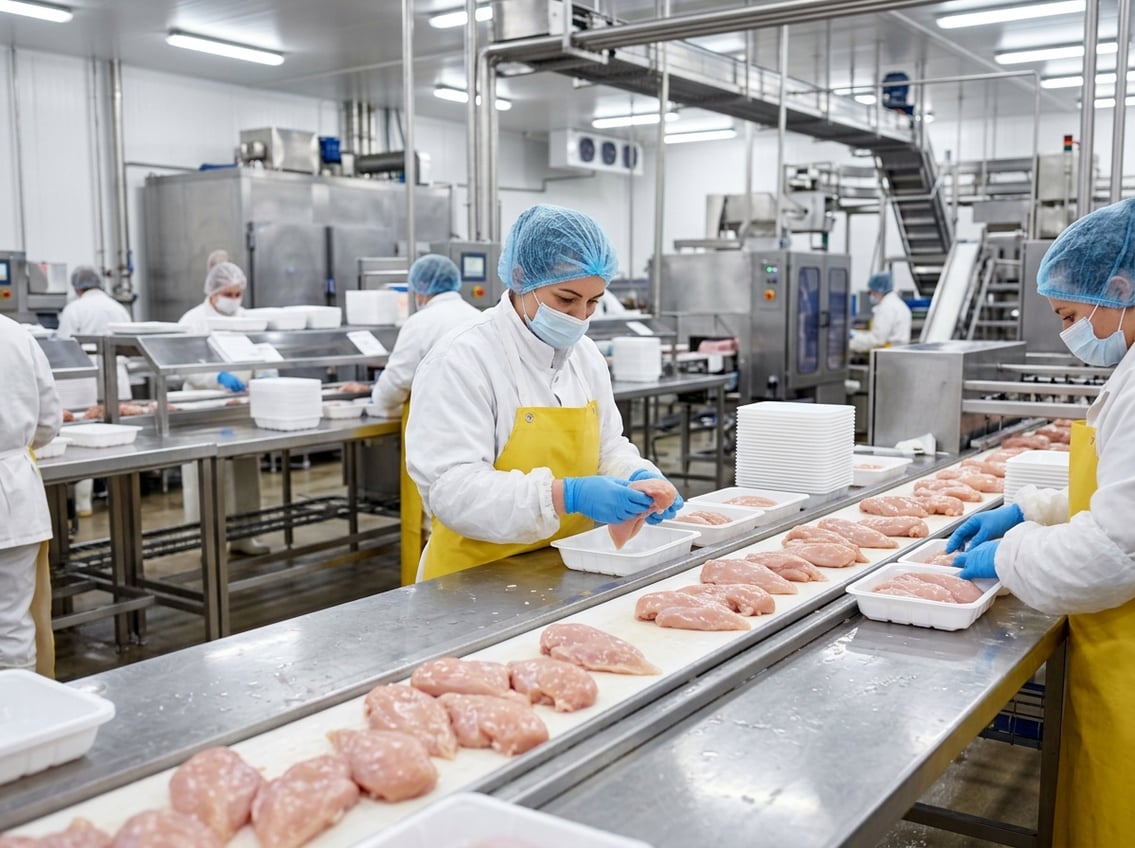
How Chicken Breasts Are Cooled for Food Safety
Plants cool chicken fast after processing to slow bacterial growth. They may use immersion chilling or air chilling, both of which bring the meat temperature down quickly, as described in poultry chilling guidance.
Immersion chilling uses cold water. Air chilling uses cold air in a controlled room.
Quality Checks and Grading Standards
Workers inspect the breasts for trim quality, color, damage, and leftover bone or skin. Plants follow food safety rules to reduce contamination and remove any product that does not meet standards.
Quality checks keep packages consistent and reduce the chance you will find uneven pieces or damaged meat.
How Fresh and Frozen Packs Are Prepared for Stores
Workers place fresh chicken breasts in trays, bags, or vacuum packs, then keep them cold through storage and shipping. They chill frozen breasts further, pack them for freezer storage, and keep them at low temperatures during transport.
Packaging must seal well and show clear labels. That includes weight, safe handling instructions, and storage guidance so you can keep the meat in good condition at home.
What Shoppers Should Know Before Buying
When you shop for chicken, the label and cut matter as much as the price.
Knowing what you are buying helps you choose the right boneless chicken for your meal.
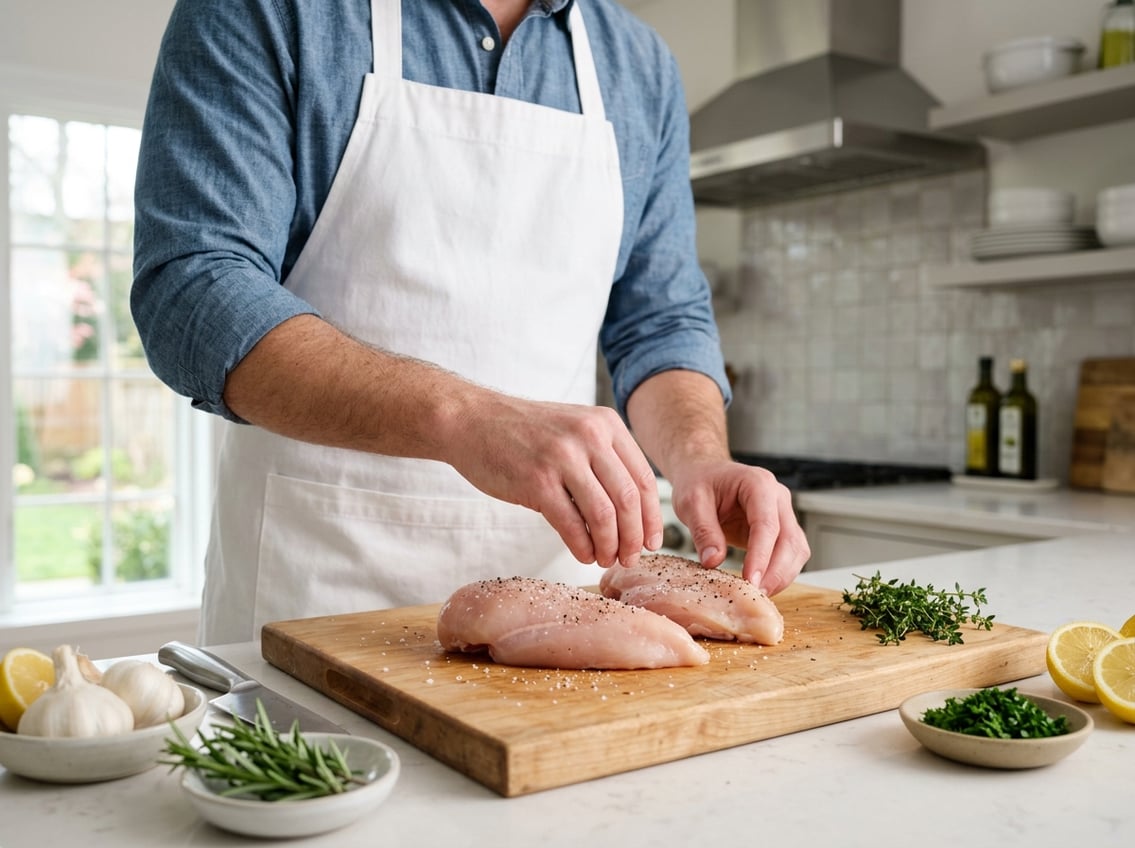
Boneless Skinless Breasts vs. Other Boneless Chicken Cuts
Boneless skinless breasts are lean and mild, which makes them a common choice for quick meals.
Other boneless cuts, like thigh meat, are darker, richer, and usually contain more fat.
If you want a lighter texture and faster cooking time, breasts are often the better fit.
If you want more moisture and deeper flavor, other boneless cuts may work better.
Labels, Additives, and Moisture Retention Solutions
Chicken labels can include air chilled, organic, free range, or enhanced. Some packages also say the meat contains added broth or salt solution, which can raise the sodium level and change the texture.
Reading the ingredient statement helps you spot moisture retention solutions. If you want plain meat, look for packages that list only chicken.
Texture, Leanness, and Common Cooking Uses
Chicken breasts are lean, so they can dry out if you overcook them.
You can grill, bake, stir-fry, slice them for salads, or shred them for soups or sandwiches.
For the best results, cook chicken breasts to a safe internal temperature.
Use moderate heat and avoid cooking them for too long to keep the texture tender.


