
How Are Chicken Breasts Cooked? Best Methods Explained
You can cook chicken breasts in several reliable ways, and the best method depends on the texture and flavor you want.
The main options are baking, pan-searing, grilling, and poaching, each with a different result.
The key is to match the cut, heat, and timing to the dish, then stop cooking when the center reaches 165°F so the meat stays tender.
That approach gives you more control than following a single chicken breast recipe for every meal.
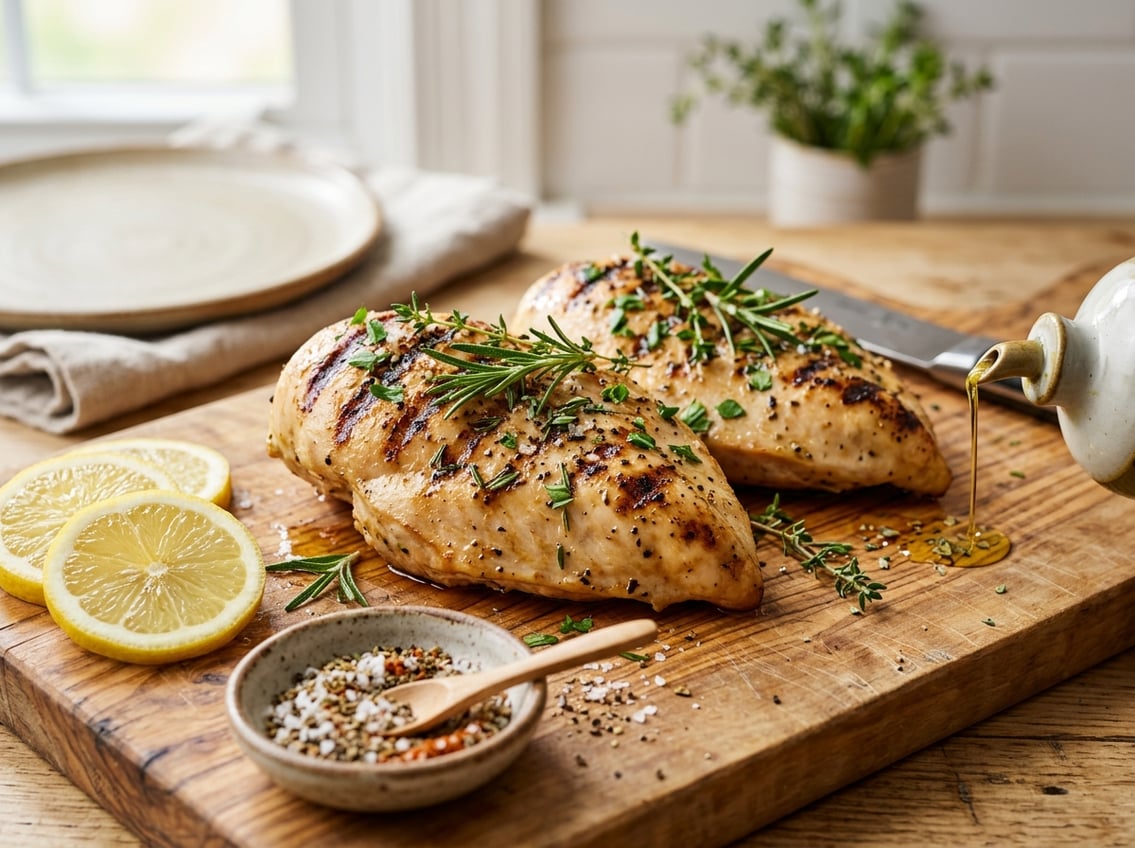
You will get better results when you choose the right type of chicken breast, prep it well, and let it rest before slicing.
Those steps matter whether you use chicken breast recipes for meal prep, weeknight dinners, or a fast meal.
Best Ways to Cook Chicken Breasts
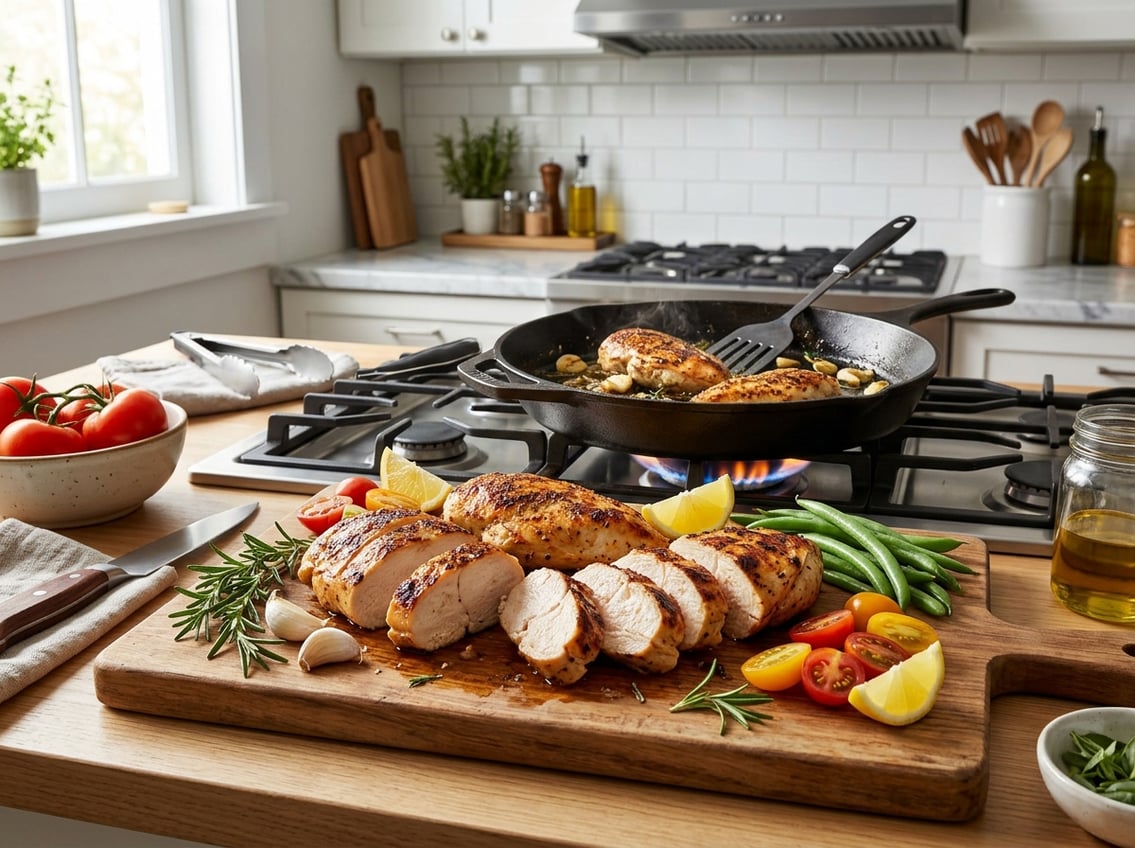
Each cooking method gives a different finish.
To cook chicken breast well, focus on heat level, cooking time, and the final texture you want.
Bake for Fast, Even Oven Cooking
Baking is one of the easiest ways to cook chicken breast for even doneness.
It works well when you want baked chicken breasts for salads, sandwiches, or meal prep.
To bake chicken breast, place seasoned chicken in a hot oven, usually around 400°F to 425°F, and cook until it reaches 165°F in the center.
A simple baked chicken breast guide explains that baking gives a hands-off method with reliable results when you check doneness with a thermometer.
Use similar heat and adjust for thickness.
Thicker pieces need more time, while thinner pieces cook much faster.
Pan-Sear for a Golden Crust
Pan-seared chicken breasts have a browned outside and a moist center.
This method works well when you want a juicy chicken breast with a more flavorful crust.
Heat a skillet with a little oil, then cook the chicken over medium-high heat until both sides are deeply golden.
A hot pan builds color fast before the inside dries out.
Pan-searing is a strong choice for weeknight meals because it cooks quickly and pairs well with simple sauces.
Grill for Smoky Flavor
When you grill chicken breast, you get a smoky taste and light char.
This method works best when the breasts are evenly thick and lightly oiled before cooking.
Grilling is useful for summer meals and outdoor cooking.
According to the grilling instructions in a chicken breast guide, use medium-high heat and cook to an internal temperature of 165°F to keep the meat safe and tender.
Poach for Tender Sliced or Shredded Meat
Poaching cooks chicken gently in simmering liquid.
It is a good choice when you want soft meat for soups, chicken salad, tacos, or shredded fillings.
The texture stays mild and moist because the heat stays low.
Poached chicken is a practical option when appearance matters less than tenderness.
Choose the Right Cut Before You Start
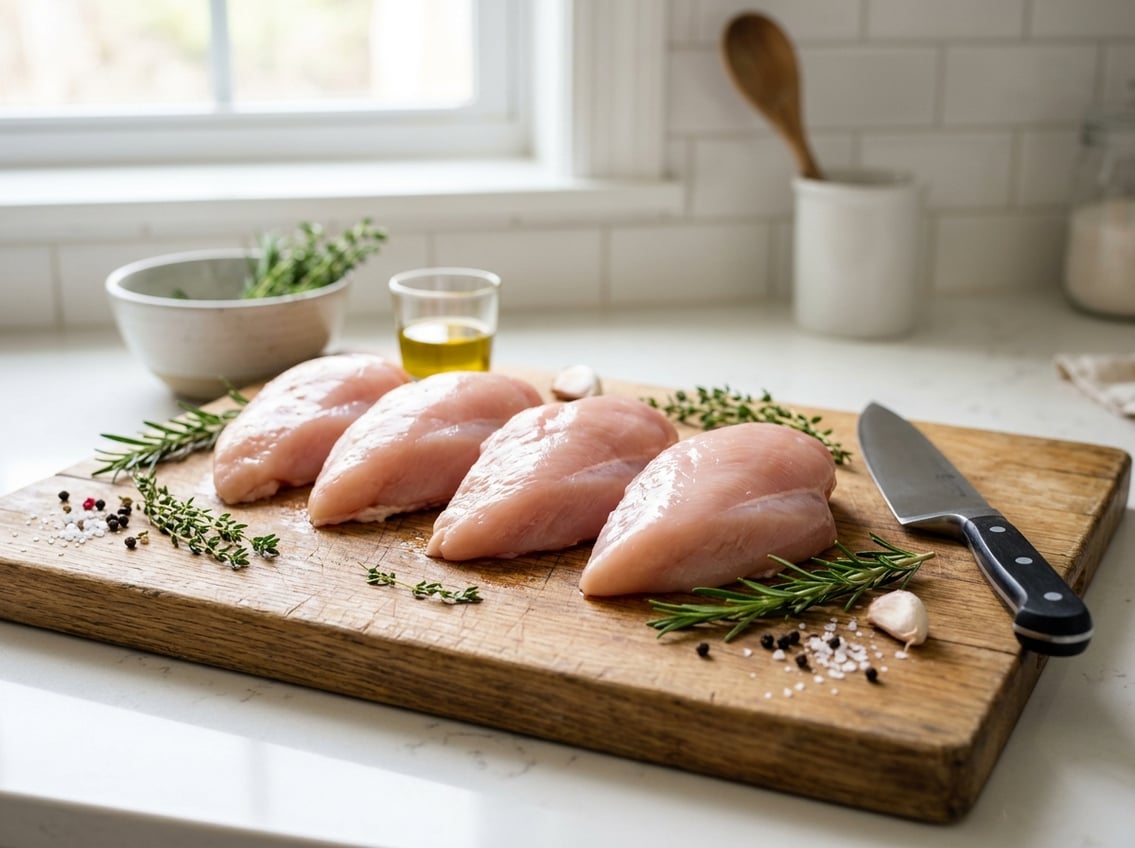
The cut you choose changes cooking time, moisture, and texture.
Chicken breasts are sold in several forms, and each one suits a different kind of meal.
Boneless Skinless Options for Speed
A boneless chicken breast or boneless skinless chicken breast cooks fast and works well for quick dinners.
Boneless skinless chicken breasts are a common choice when you want simple prep and easy slicing.
A skinless chicken breast is also good for lower-fuss cooking because it needs little trimming.
These cuts are easy to season and adapt to many recipes.
Bone-In and Skin-On Options for More Moisture
A bone-in skin-on chicken breast usually cooks more slowly, but it can stay moist longer.
The bone helps moderate heat, and the skin can protect the meat as it cooks.
A skin-on chicken breast also develops better surface flavor when roasted or pan-finished.
This choice works well when you want a richer result and do not mind extra cooking time.
Why Thickness and Size Affect Cooking Time
Not all chicken breasts cook the same way.
Large or uneven chicken breasts can finish with dry edges before the center is done.
If one side is much thicker, the outside may overcook while the middle is still raw.
Size and thickness matter as much as the cooking method itself.
Prep Steps That Keep the Meat Juicy
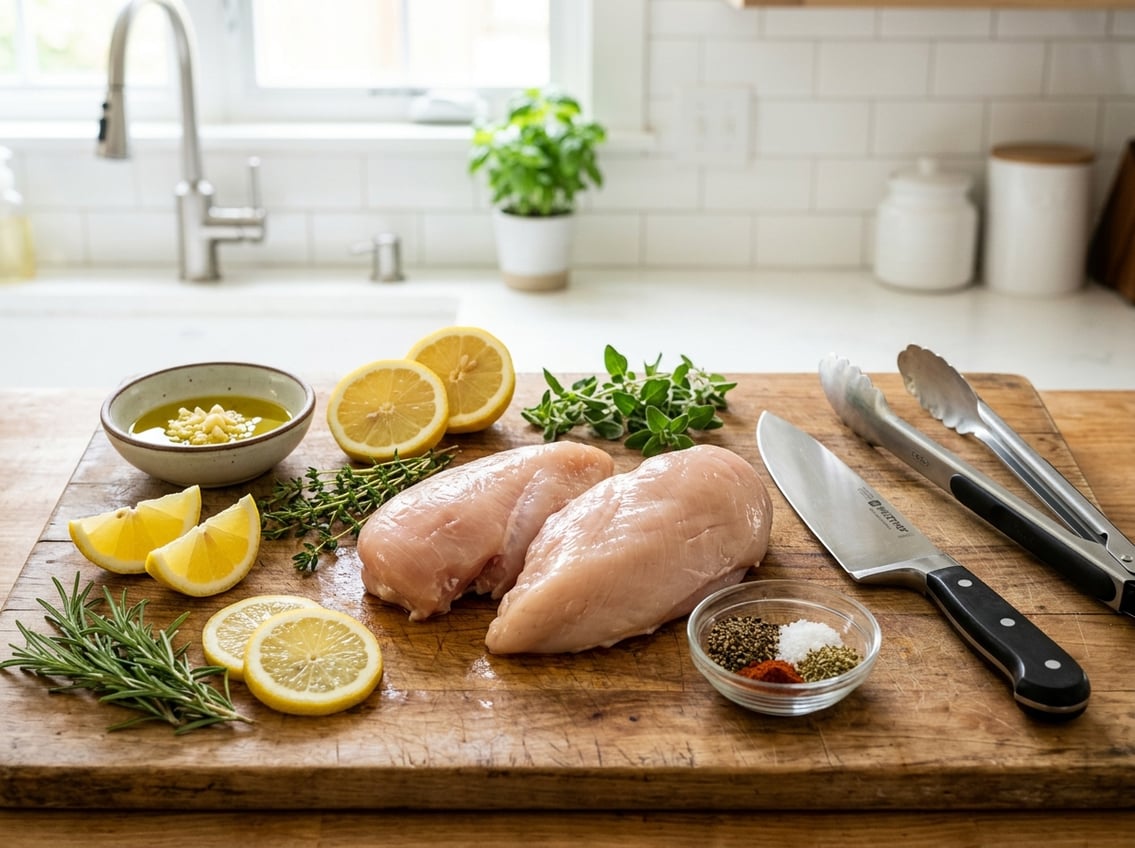
Good prep makes juicy chicken breasts much easier to achieve.
A few small steps before cooking can improve flavor, texture, and moisture retention.
Brining and Marinating for Better Moisture
Brining helps chicken hold onto moisture during cooking.
A marinade adds flavor and can also help keep the surface from drying out.
For an easy chicken breast recipe, a simple mix of oil, acid, salt, and herbs is enough.
As noted in a simple chicken breast marinade guide, even 30 minutes of marinating can improve flavor.
Pounding or Slicing for Even Cooking
If the breasts are uneven, pound them to a similar thickness.
You can also slice large chicken breasts into cutlets, strips, or smaller pieces for faster, more even cooking.
This matters when you cook chicken breast for stir-fries, salads, or fast skillet meals.
Thin, even pieces are less likely to dry out.
Seasoning, Resting, and Using a Thermometer
Season the chicken before cooking so the flavor reaches the meat, not just the surface.
Salt, pepper, garlic powder, paprika, and herbs all work well.
After cooking, let the chicken rest for a few minutes so the juices settle.
Use a thermometer and stop at 165°F in the thickest part for safe, accurate results.
How Cooking Method Matches the Dish
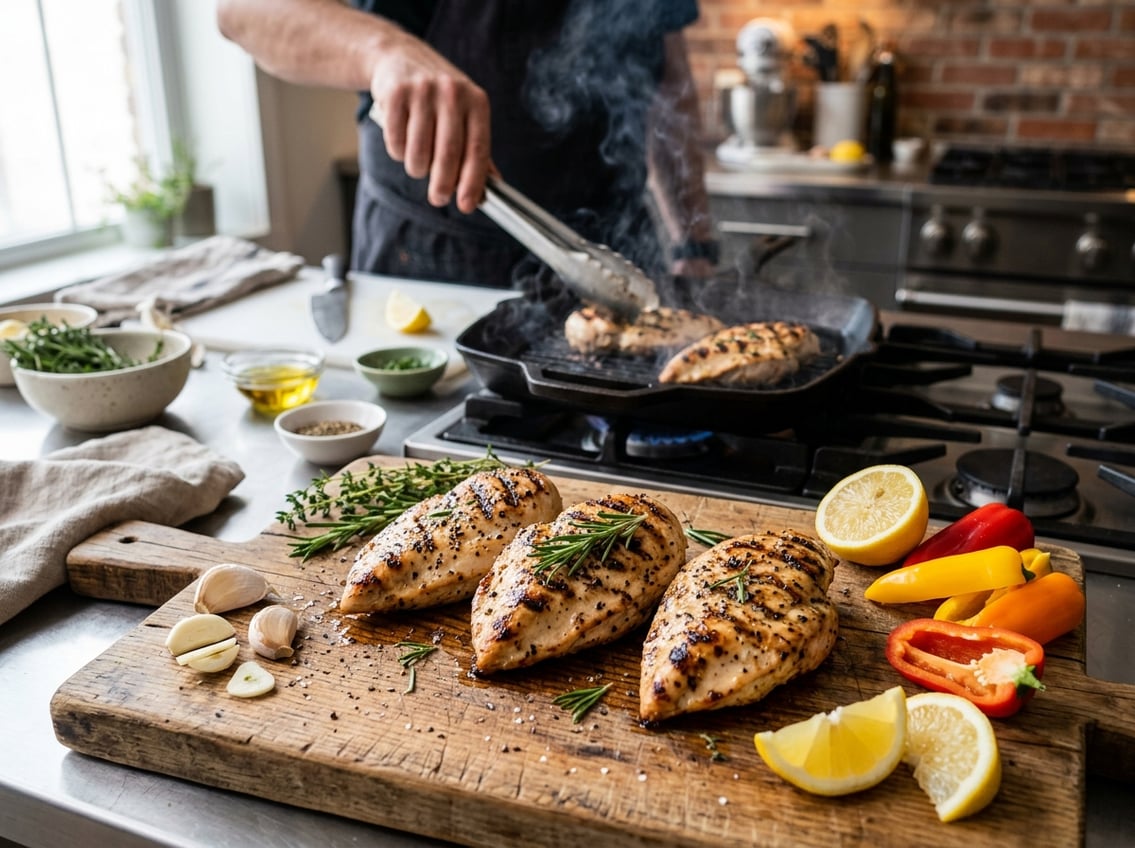
The best method depends on how you plan to use the meat.
Some chicken breast recipes need clean slices, while others need browned edges or shredded texture.
When to Use Oven-Cooked Chicken in Meal Prep
Oven-cooked chicken works well for meal prep because it is easy to batch cook.
You can make several chicken breasts at once, then slice them for bowls, wraps, and salads.
Baked chicken breasts also store well and reheat without much effort.
That makes them a strong choice when you want a flexible protein for the week.
Stovetop Chicken for Sauces and Skillet Meals
Stovetop chicken is a good fit for dishes with sauce.
Pan-seared chicken breasts work especially well in creamy sauces, lemon pans, and skillet dinners because the browned bits add flavor.
This method also helps when you want to finish the chicken with vegetables in the same pan.
It is efficient and gives you more control over the final texture.
Best Picks for Chicken Fajitas and Cajun Chicken
Sliced chicken breasts cook fast in a hot pan and absorb seasoning well for chicken fajitas. Thin strips brown quickly and fit neatly into tortillas.
A boneless skinless chicken breast works well for cajun chicken because it takes on bold spice and cooks evenly. High heat and quick cooking help keep the meat from drying out in these dishes.


