
Does Chicken Breast Have Saturated Fat? Quick Nutrition Guide
Chicken breast contains saturated fat, but the amount is usually low, especially if you choose skinless chicken breast.
If you are asking whether chicken breast has saturated fat, the answer is yes, but not much in a plain, skinless serving.
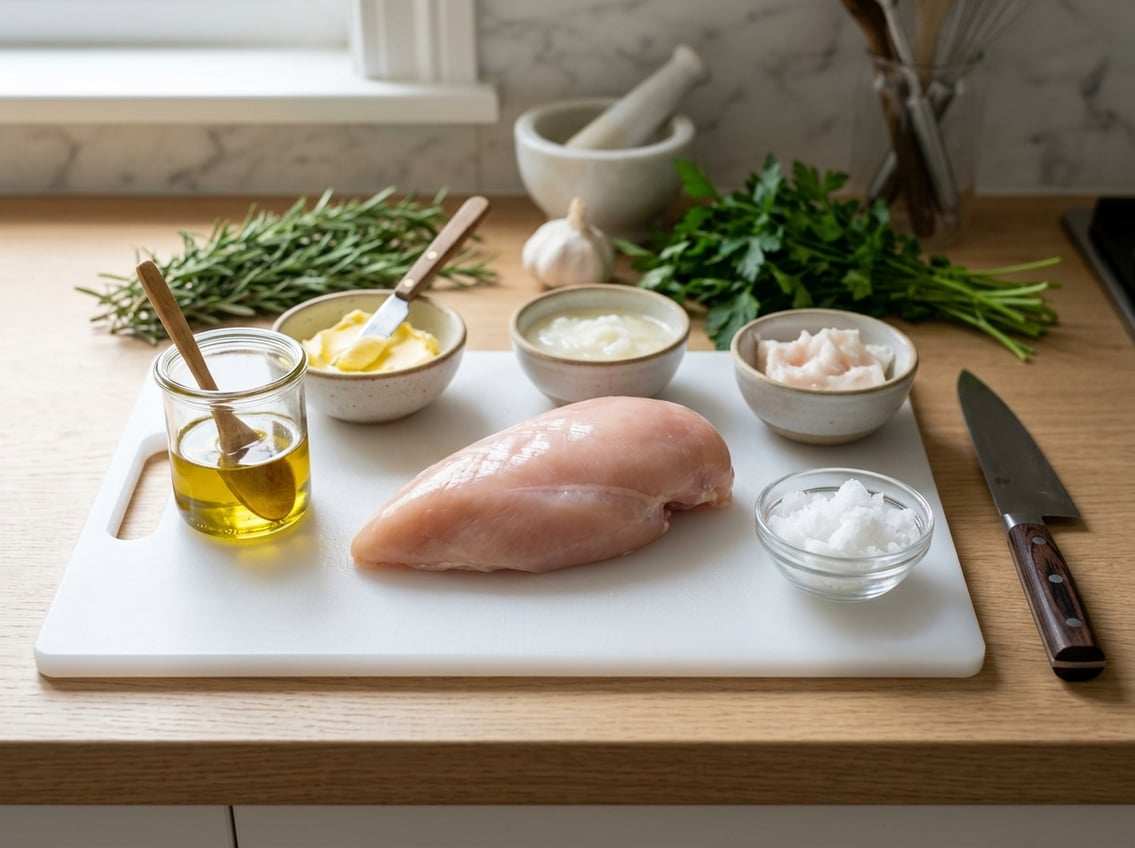
Chicken breast is a lean protein, and its saturated fat level stays low unless you keep the skin on, fry it, or add rich coatings and sauces.
The numbers change with cooking method, portion size, and whether the skin stays on.
A plain skinless chicken breast differs greatly from fried chicken breast with breading and oil.
The Short Answer and Nutrition Numbers
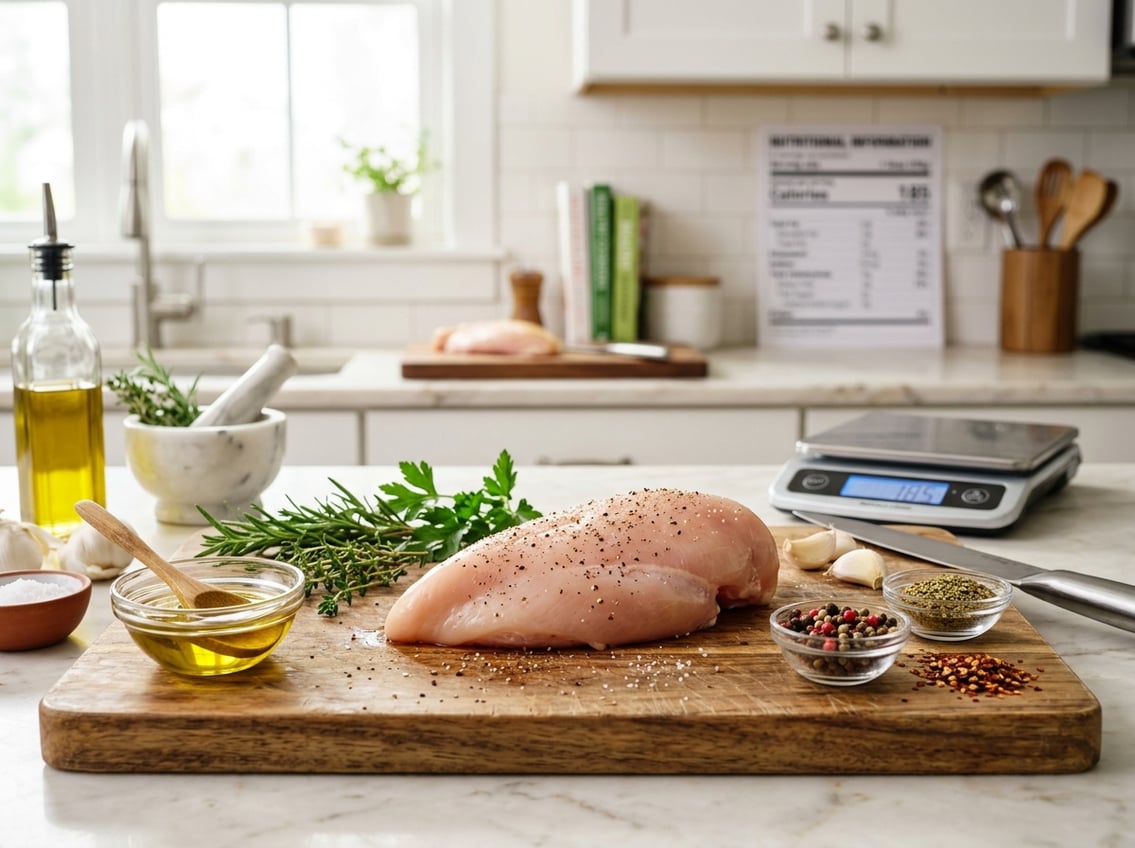
Skinless chicken breast is one of the leanest common animal proteins.
The saturated fat content is low enough to fit well in many balanced eating plans.
How Much Saturated Fat Is in Skinless Chicken Breast
A cooked, skinless chicken breast has about 1.7 grams of saturated fat per medium breast according to FatSecret’s chicken breast nutrition facts.
A 4-ounce serving of skinless chicken breast contains about 1.38 grams of saturated fat.
Raw skinless chicken breast contains even less before cooking, but cooking changes the final number slightly.
The main point is that skinless chicken breast has saturated fat, but the amount is small.
Chicken Breast Nutrition Facts and Protein Content
Chicken breast nutrition facts show why people choose it often.
One medium skinless breast in the FatSecret database provides about 282 calories, 6.09 grams of total fat, and 52.91 grams of protein.
That high protein content makes chicken breast a strong lean protein option.
If you compare the fat to the protein, you get a food that offers a lot of protein for relatively little saturated fat.
How Saturated Fat Fits Into a Lean Protein Profile
Lean protein foods usually have more protein than fat, and chicken breast fits that pattern.
The saturated fat stays modest in a plain skinless serving.
Skinless chicken breast is a practical choice when you want protein without a large amount of saturated fat.
The nutrition profile changes when you add skin, fry it, or use heavy sauces.
What Changes the Fat Content Most

The biggest changes come from the skin, the cooking method, and what you add during cooking.
Even a lean cut like skinless chicken breast can pick up a lot more saturated fat with the wrong preparation.
Skinless vs. Skin-On Breast
Removing the skin makes a major difference.
FatSecret lists a medium chicken breast with skin at about 15.13 grams of total fat and 5.89 grams of saturated fat, compared with 6.09 grams of total fat and 2.12 grams of saturated fat for a medium skinless breast.
That gap is large enough to matter in daily eating.
Skin-on chicken breast is still a protein food, but it is no longer as lean as skinless chicken breast.
Grilled Chicken Breast vs. Fried Chicken Breast
Grilled chicken breast keeps the fat lower because it does not absorb cooking oil or breading.
Fried chicken breast can add a lot more fat, especially when the coating stays on.
FatSecret lists skinless chicken breast that is fried with coating eaten at about 8.85 grams of saturated fat per medium breast.
That is much higher than the baked or roasted skinless version.
Portion Size and Added Oils, Breading, and Sauces
Portion size matters because fat increases as the serving gets larger.
A bigger breast brings more calories, more total fat, and more saturated fat.
Added oils, breading, and creamy sauces can change the nutrition quickly.
A plain grilled chicken breast stays lean, while fried or breaded chicken breast can move much closer to fried chicken in fat content.
How Chicken Breast Compares in Real Meals
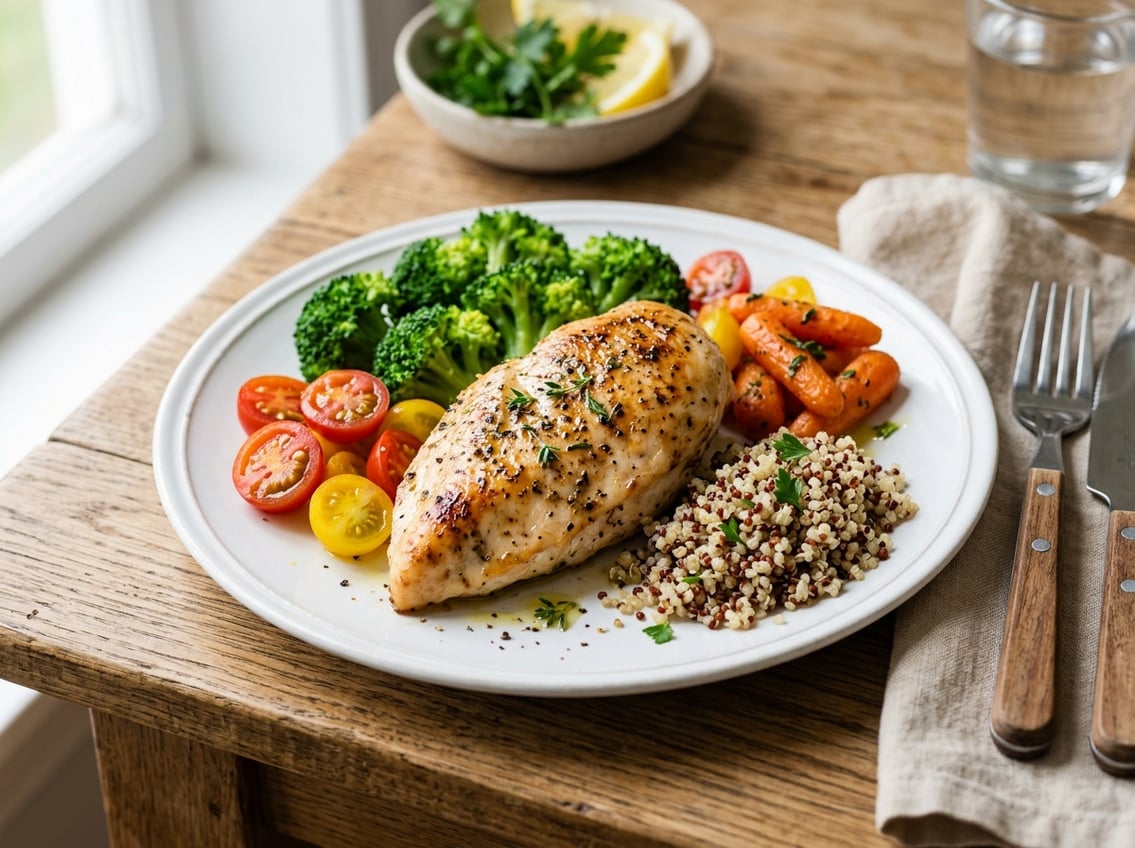
In real meals, chicken breast usually starts as a lean choice and then changes based on what you serve with it.
The rest of the plate can matter as much as the meat itself.
Chicken Breast vs. Dark Meat and Other Animal Proteins
Chicken breast usually has less saturated fat than dark meat like thighs and drumsticks.
That is one reason breast meat is often used in heart-conscious menus and weight-focused meal plans.
Compared with fattier cuts of beef, pork, or fried chicken, plain chicken breast usually stays lower in saturated fat.
It is still useful to check labels and preparation methods, since the same chicken breast can range from very lean to fairly rich.
How Restaurant Dishes Like Chicken Caesar Salad Can Shift the Numbers
Restaurant meals can change the picture quickly.
A chicken caesar salad may include grilled chicken breast, but the dressing, cheese, croutons, and portion size can add a lot of fat.
A dish made with fried chicken can push the saturated fat even higher.
In these meals, the chicken breast may still be the protein base, but the full plate determines the final nutrition.
When Chicken Breast Fits a Heart-Conscious Eating Pattern
Chicken breast works well in a heart-conscious eating pattern when you keep it skinless and use simple cooking methods.
Grill, bake, roast, or broil chicken breast to keep its saturated fat low.
Pair chicken breast with vegetables and whole grains.
Use modest portions of sauce so chicken breast remains a lean protein.


