
How to Chicken Breast in Oven for Juicy Results
You can master how to chicken breast in oven with a simple method that keeps the meat moist, seasoned, and safe to eat.
The key is controlling thickness, heat, and timing so you do not overbake lean chicken.
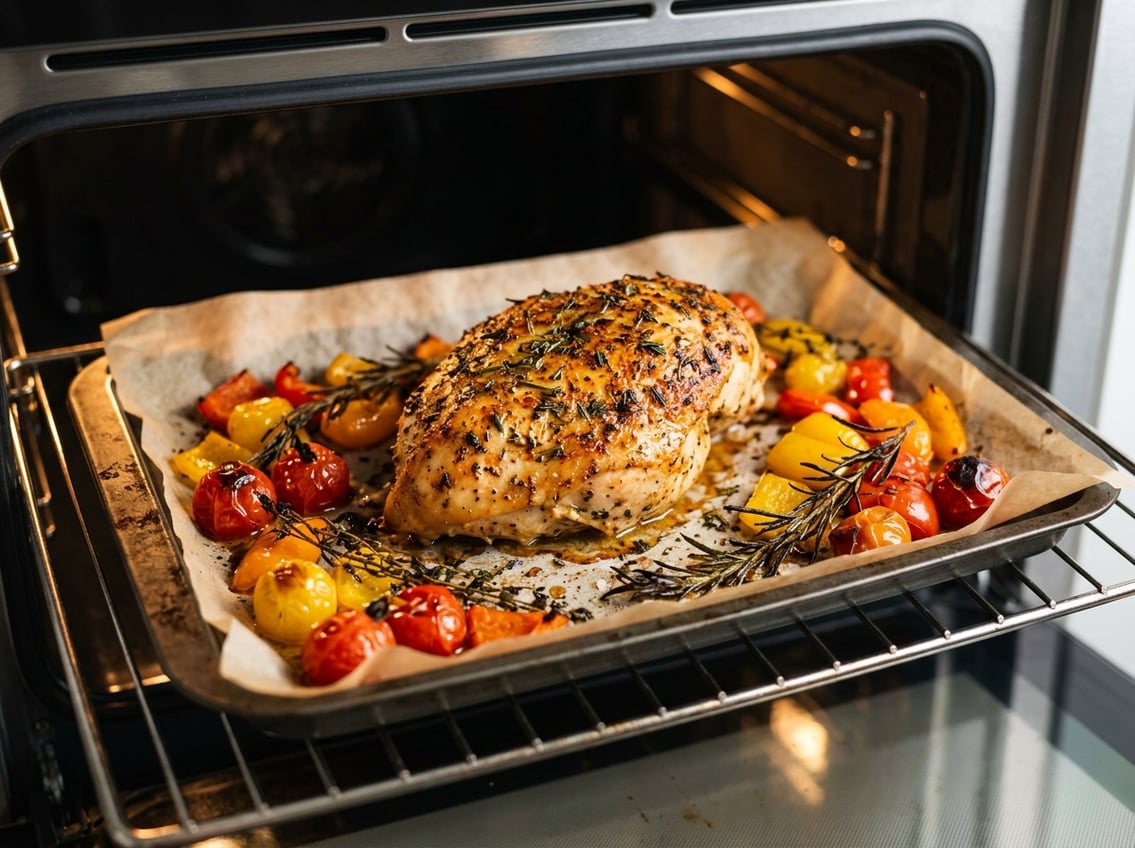
A good baked chicken breast does not need many ingredients or complicated steps.
With the right oven temperature and a thermometer, you can make an oven baked chicken breast that works for weeknight dinners or meal prep.
Bake Time, Temperature, and Doneness
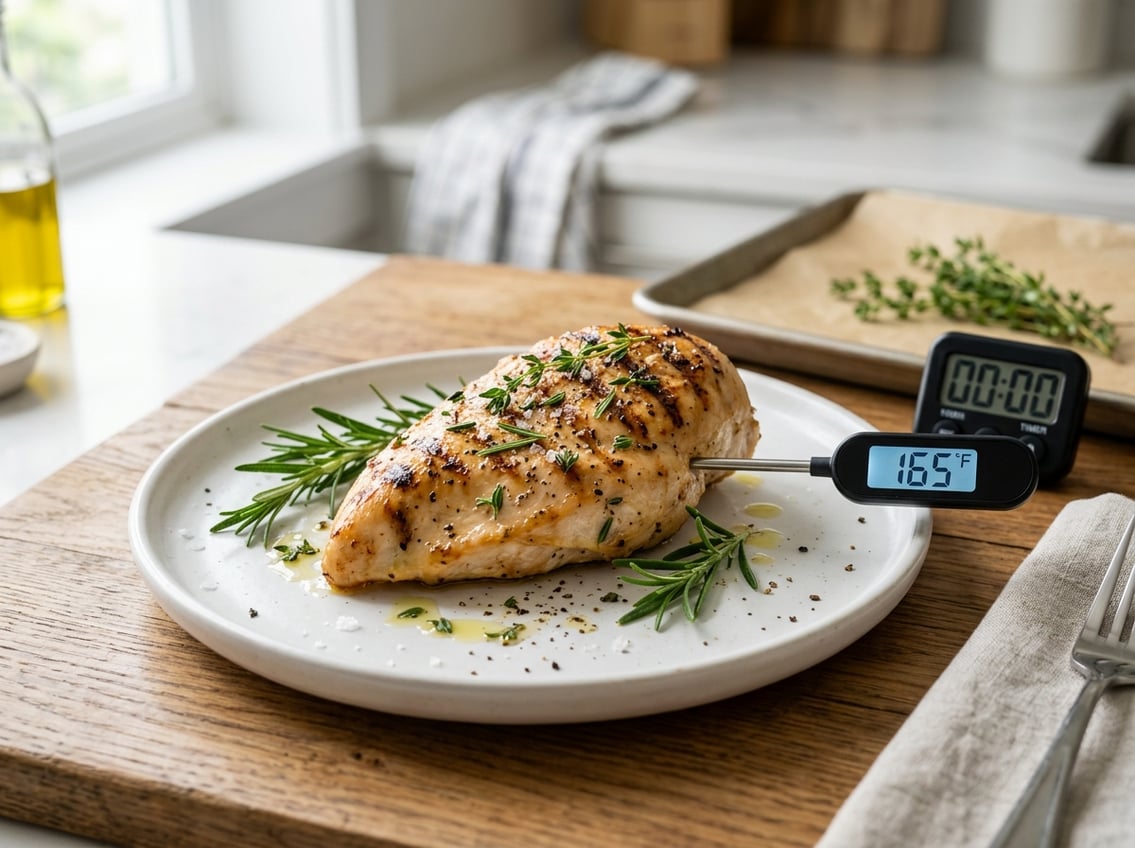
Size matters most for how long to bake chicken breast.
Thin pieces cook fast, while thicker pieces need more time.
You can avoid dry meat by checking the center with an instant read thermometer.
Best Oven Temperature for Tender Meat
A hot oven gives you better browning and helps a juicy chicken stay tender.
Many reliable methods use 425°F for oven baked chicken breasts, which gives good results for boneless cuts and keeps the cooking time manageable, as shown in this juicy baked chicken breast method.
If your oven runs hot or your chicken breasts are very thick, watch the temperature closely.
The goal is cooked through meat that still feels moist when sliced.
How Long Different Sizes Need
The range for how long to bake chicken breasts depends on weight and thickness.
A helpful guide from Food Network notes that timing changes based on whether the chicken is boneless, skinless, or bone-in.
Small boneless breasts may need about 14 to 16 minutes at 425°F.
Medium breasts about 16 to 20 minutes, and larger breasts about 20 to 25 minutes.
If the pieces are uneven, the thinner parts will finish first.
When to Pull It From the Oven
Pull the chicken when the thickest part reaches 165°F, or slightly earlier if you plan to rest it before serving.
Many cooks remove oven baked chicken breast at 155°F to 160°F, then let carryover heat finish the job to help preserve moisture.
Do not rely on color alone.
Only a thermometer tells you when the chicken is done without guessing.
Prep and Seasoning That Prevent Dryness
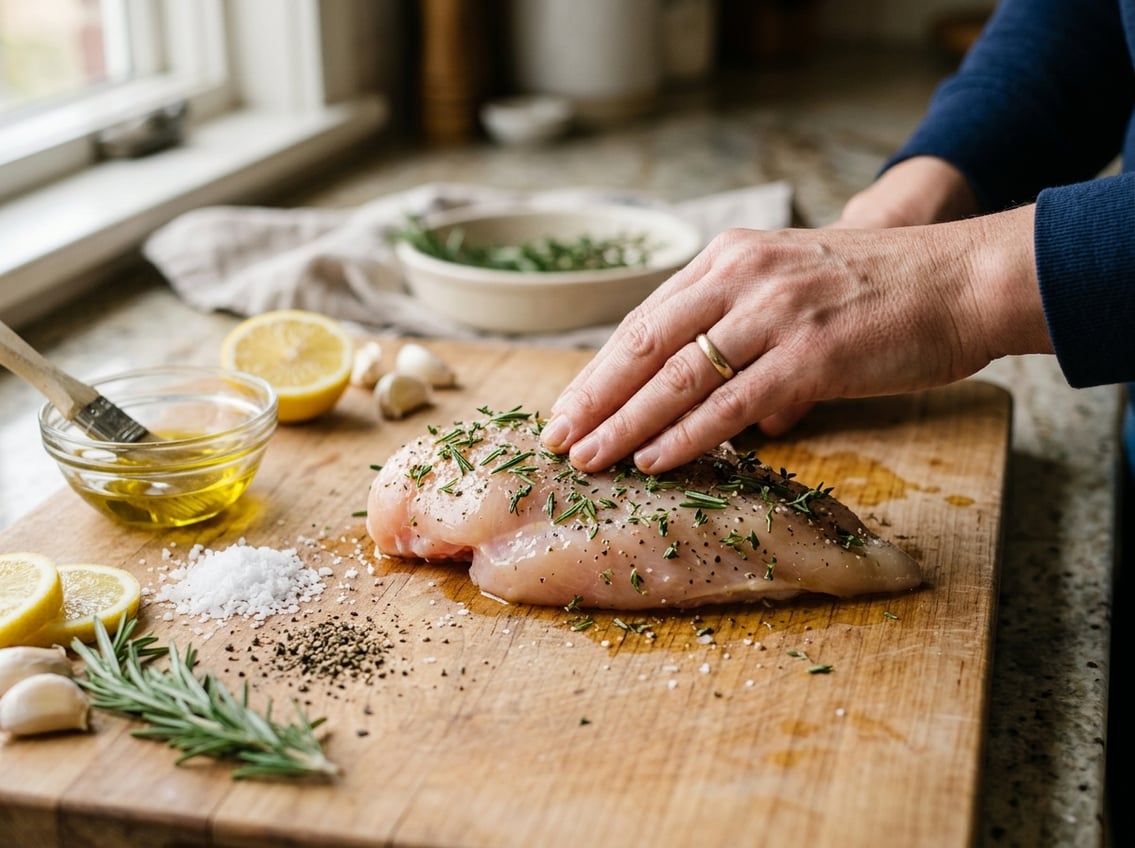
Dry chicken usually starts before it ever goes into the oven.
When you prepare the meat evenly, use enough salt, and coat it with oil, baking chicken becomes much more forgiving.
Choosing Boneless Skinless Cuts
For most home cooks, boneless skinless chicken breasts are the easiest choice.
They cook quickly and pair well with nearly any seasoning.
Try to choose breasts that are close in size.
Similar pieces cook at the same rate, which helps prevent one piece from drying out while another is still finishing.
How to Prep for Even Cooking
Pound each boneless skinless chicken breast to an even thickness before seasoning.
That step helps the middle and edges cook at the same pace, as noted in Well Plated’s method.
Pat the chicken dry first, then season it.
If you use a dry brine or salt ahead of time, you give the meat more flavor and a better chance to stay juicy.
Simple Seasoning and Oil Basics
Your basic chicken breast ingredients can be as simple as olive oil, salt, pepper, garlic powder, and paprika.
A thin coat of oil helps the seasoning stick and supports better browning during bake chicken breasts cooking.
For a dependable baked chicken breast recipe, keep the seasoning balanced rather than heavy.
Too much spice can overpower the mild flavor of the meat, while too little salt can leave it flat.
Step-by-Step Oven Method
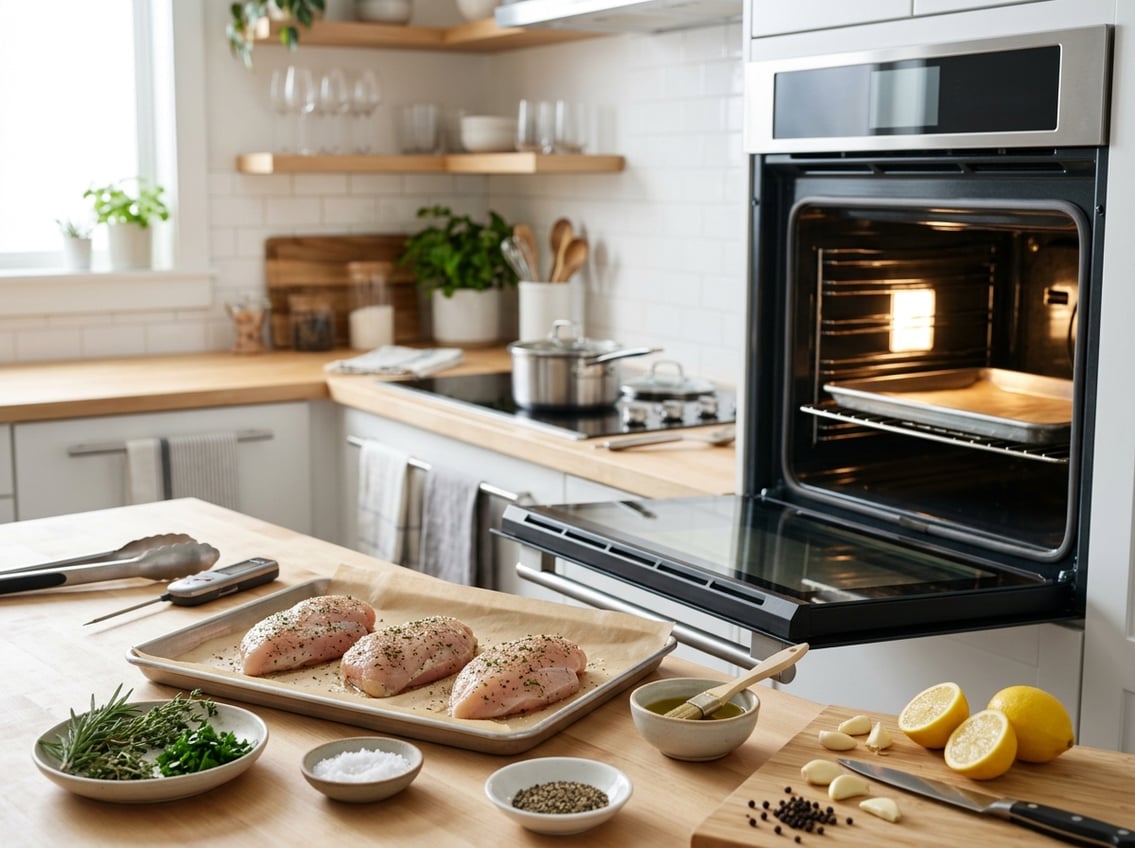
This method keeps the process simple and gives you a reliable oven baked chicken result.
Spacing, temperature, and rest time matter as much as the seasoning.
Pan Setup and Spacing
Heat the oven to 425°F and use a metal baking sheet or a shallow baking dish large enough for a single layer.
Leave space between each piece so the hot air can move around the chicken, which helps the outside cook evenly.
A light coating of oil or nonstick spray makes cleanup easier.
If you use a baking dish, avoid crowding the pan, since tight spacing can trap moisture and slow browning.
How to Bake Without Overcooking
Place the seasoned chicken on the pan and bake until the thickest part reaches 165°F.
Start checking early and remove the meat as soon as it is done for the best chance at a juicy oven baked chicken breast.
An instant read thermometer removes guesswork.
It helps you avoid overcooked chicken that looks fine on the outside but feels dry inside, similar to the approach in this oven baked chicken breast guide.
Resting and Slicing for Better Texture
Let the chicken rest for 5 to 10 minutes before slicing.
Resting gives the juices time to settle back into the meat.
Slice against the grain for a cleaner texture.
If you cut too soon, the juices run out and the chicken can seem drier than it really is.
Storing, Reheating, and Using Leftovers
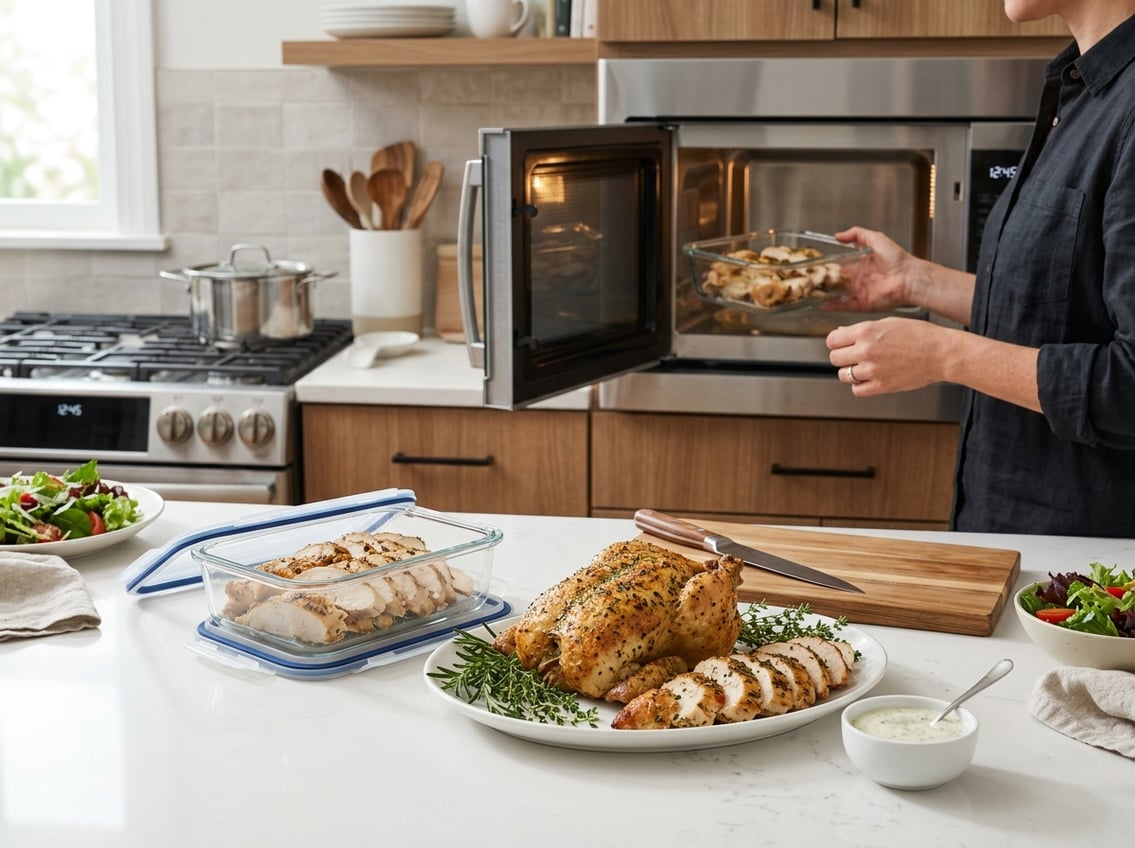
Proper storage keeps baked chicken breasts safe and useful for several days.
Leftovers can stay tender if you chill them quickly and reheat them gently.
How to Store Baked Chicken Safely
Cool the chicken, then place it in an airtight container and refrigerate it within 2 hours.
For the best quality, use store baked chicken leftovers within 3 to 4 days.
If you want to keep it longer, freeze sliced portions in a freezer-safe bag or container.
Label the date so you can rotate it into meals in a steady way.
Best Ways to Reheat Without Drying Out
To reheat baked chicken, use low heat and add a little moisture if needed.
A 350°F oven works well, especially if you cover the chicken loosely with foil so it warms without drying out, which matches advice in Well Plated’s storage notes.
You can also warm it in a skillet with a splash of broth or water.
Microwaving works in a pinch, though short bursts at medium power usually protect texture better than high heat.
Meal Prep and Leftover Serving Ideas
Leftover chicken works well in salads, grain bowls, wraps, soups, and pasta.
Because it is already cooked, you can quickly use it for lunches and fast dinners.
If you keep it sliced or shredded, you can add it to vegetables, rice, or potatoes with very little extra work.
You can turn one batch of juicy chicken into several meals across the week.


