
How to Cook Chicken Breast in a Pan Perfectly
You can master how to chicken breast in pan with a simple stovetop method that gives you browned, juicy chicken without much effort. The key is to use the right cut, dry the surface well, sear it without moving it, and check the temperature so you do not overcook it.
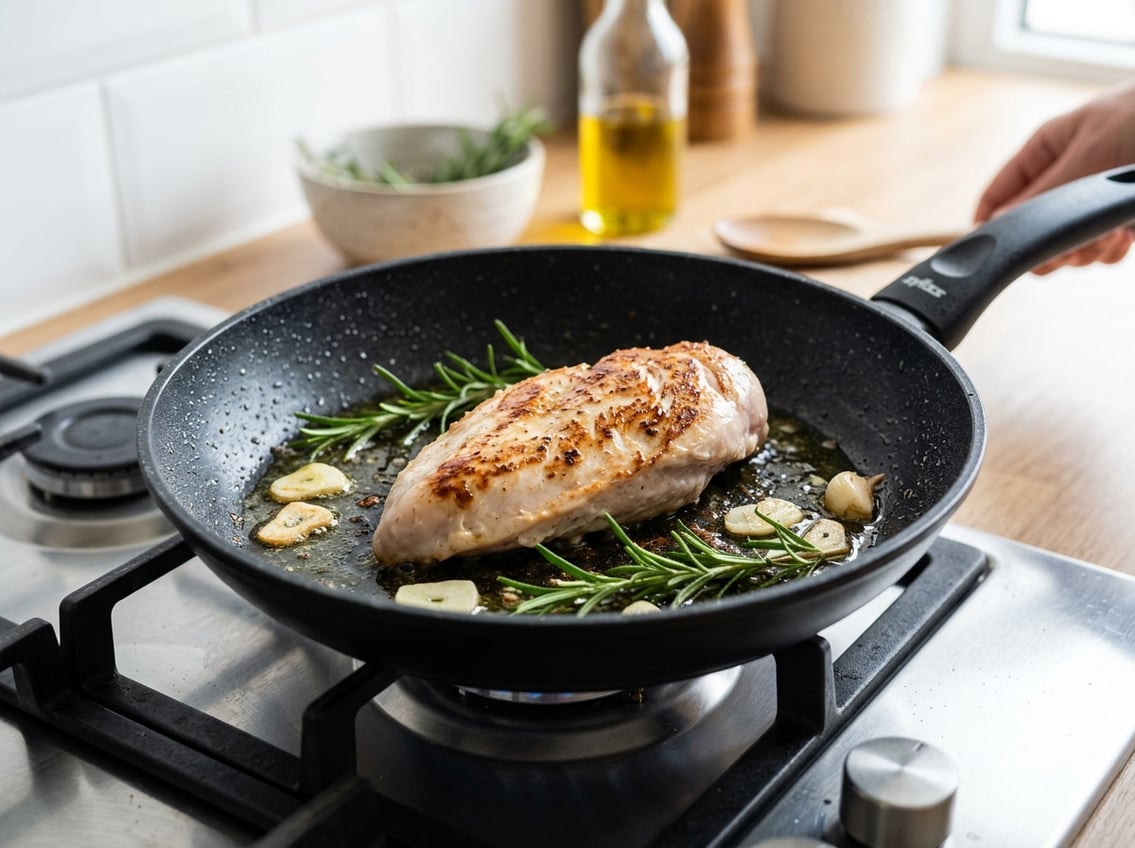
If you want to know how to cook chicken breast or how to cook chicken breast in a pan, this method is a strong starting point. It works for an easy chicken breast recipe and a quick weeknight dinner.
The biggest difference between dry chicken and a juicy result is control. When you cook chicken breast in a pan, use steady heat, simple seasoning, and a meat thermometer so you know exactly when the chicken is done.
What You Need Before You Start
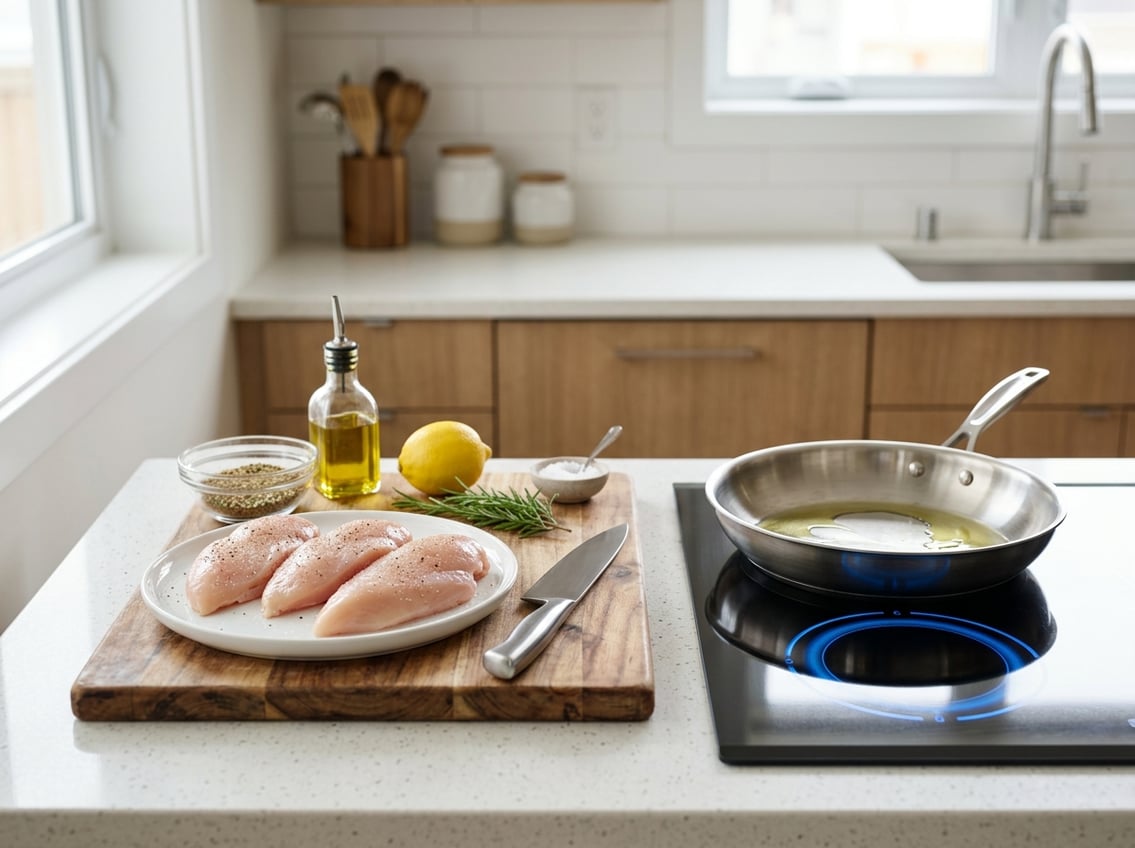
The best setup for skillet chicken starts with even-sized pieces and a good pan. You only need a few ingredients and a reliable thermometer.
Best Chicken Cuts and Thickness for Even Cooking
For the best pan-seared chicken breast, use boneless skinless chicken breasts. They cook quickly and brown well in a skillet.
Thin chicken breasts cook faster and more evenly than thick ones. If your chicken breasts are uneven, pound them gently to an even thickness so the center cooks at the same pace as the edges.
Bone-in chicken breasts can work, but they take longer and are harder to cook evenly in a pan.
Skillet, Oil, and Basic Seasoning Choices
Choose a large skillet that holds the chicken in one layer without crowding. A heavy pan holds heat better and gives you better browning.
Use oil with a higher smoke point, such as avocado oil or olive oil, so the surface gets hot enough to sear. Salt and black pepper work well, but garlic powder, paprika, or Italian seasoning can add more flavor.
Why a Meat Thermometer Matters
A meat thermometer removes the guesswork. An instant-read thermometer tells you when the thickest part reaches 165°F, which is the safest target for chicken.
Boneless skinless chicken breast can dry out fast if you overcook it. Checking the temperature keeps the chicken juicy.
Step-by-Step Stovetop Method
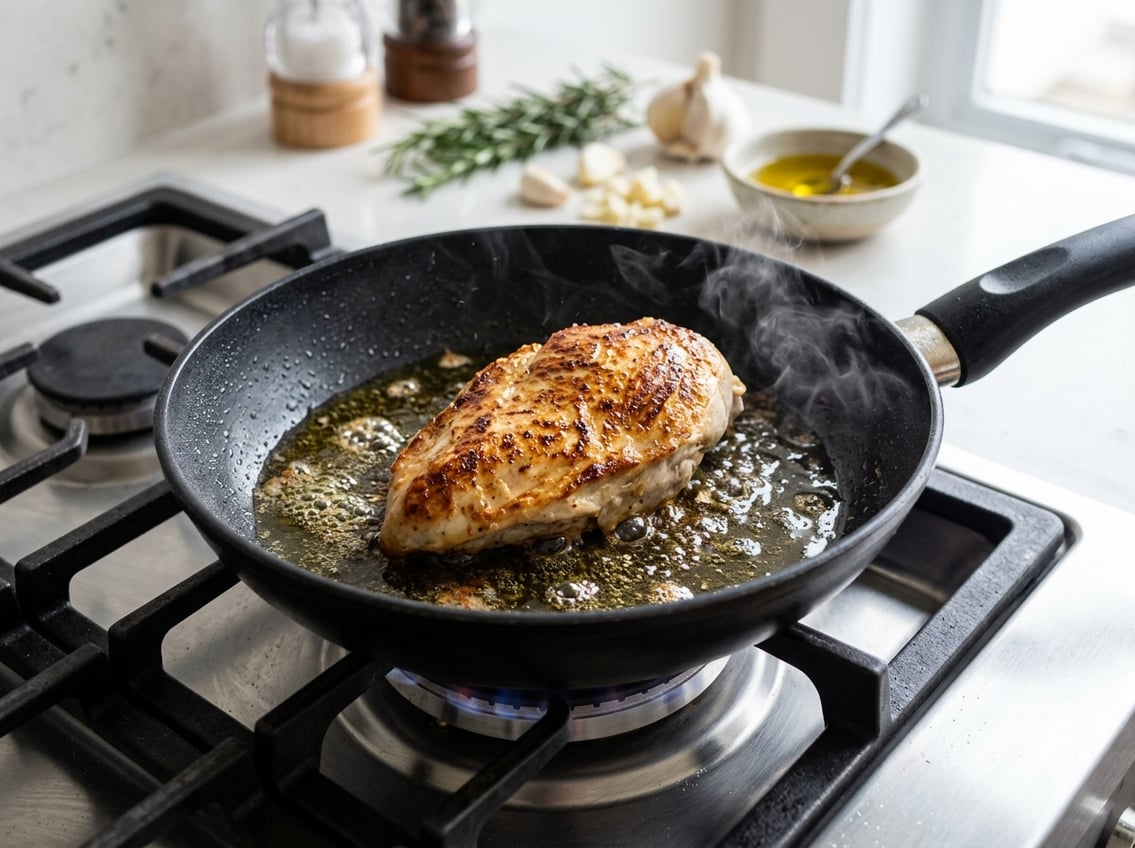
This pan-seared chicken breast method is fast and dependable. You dry the chicken, season it, sear one side without moving it, then finish gently so the inside stays tender.
Prep and Season the Chicken
Pat the chicken dry with paper towels, then season both sides with salt and pepper. Dry chicken browns better, while wet chicken tends to steam.
If the breasts are thick, pound them lightly to even them out. This helps the chicken cook at the same speed.
Sear the First Side Without Moving It
Heat the skillet over medium-high heat and add enough oil to coat the bottom. When the oil shimmers, place the chicken in the pan and leave it alone.
Let the first side cook for 5 to 7 minutes. That still contact gives pan seared chicken its golden crust.
If it sticks, give it another minute instead of forcing it.
Flip, Finish Cooking, and Rest Before Slicing
Flip the chicken and cook the second side for another 5 to 7 minutes. Lower the heat a little if the outside browns too fast before the center is done.
Use an instant-read thermometer in the thickest part. When it reaches 165°F, move the chicken to a plate or cutting board and rest it for 5 minutes.
That resting time helps keep your juicy chicken breast from losing its juices when you slice it.
How to Keep It Juicy and Fix Common Mistakes
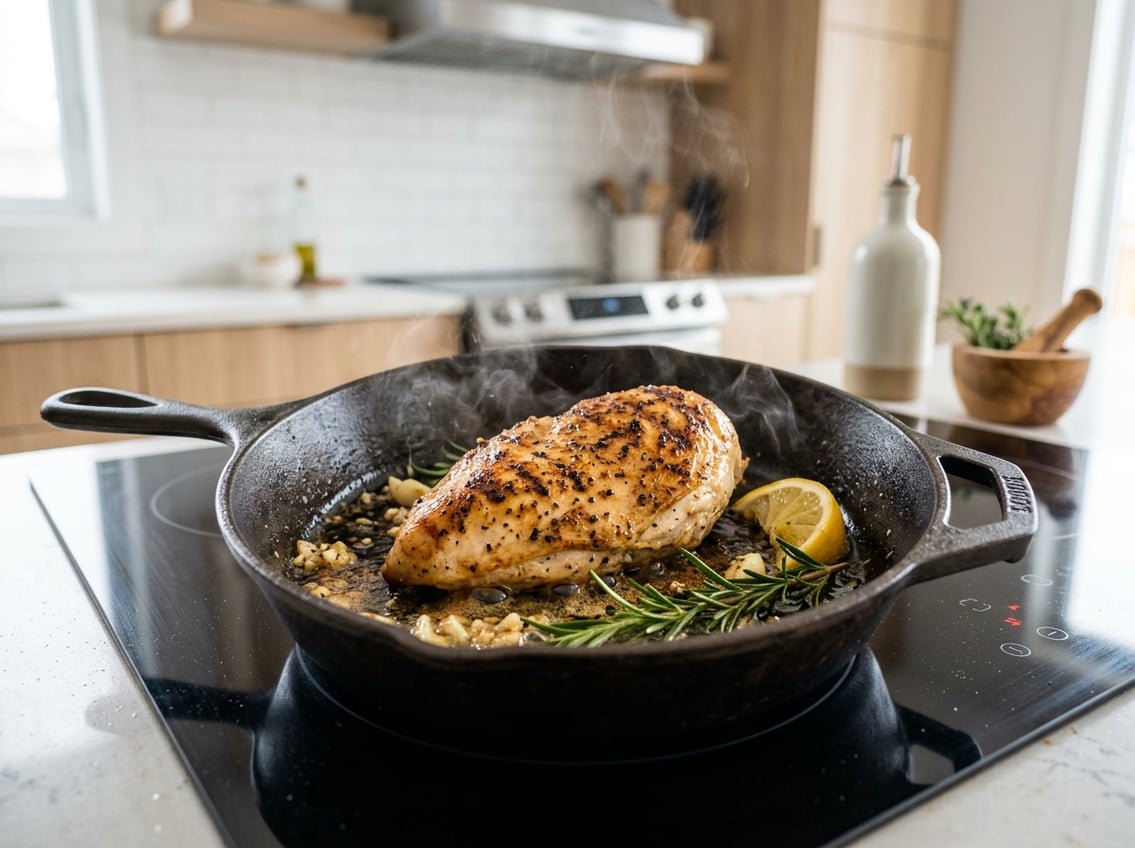
Small changes make a big difference with pan-cooked chicken. Thickness, temperature, and timing all affect whether your chicken stays moist or turns dry.
Cooking Times for Thin vs Thick Pieces
Thin chicken breasts may need only a few minutes per side. Thick boneless chicken breasts need more time, and uneven pieces can cook unevenly if you do not flatten them first.
A lid can help finish thicker pieces without burning the outside. For very thick chicken, a stove-to-oven method may work better, especially when you want a strong sear and more even cooking.
How to Tell When Chicken Is Done
Check the temperature with a meat thermometer or instant-read thermometer and check the thickest part of the breast.
If you do not have one, cut into the center and look for meat that is opaque with no pink center. The juices should run clear.
Why Chicken Turns Out Dry or Pale
Chicken turns dry when it cooks too long or over too high heat. It can turn pale when the pan is not hot enough, the surface is wet, or the chicken is crowded.
If your stovetop chicken is dry, pull it off the heat a little earlier next time and let it rest. If it is pale, dry the chicken better and make sure the skillet is fully heated before it goes in.
Serving, Sauces, and Leftovers
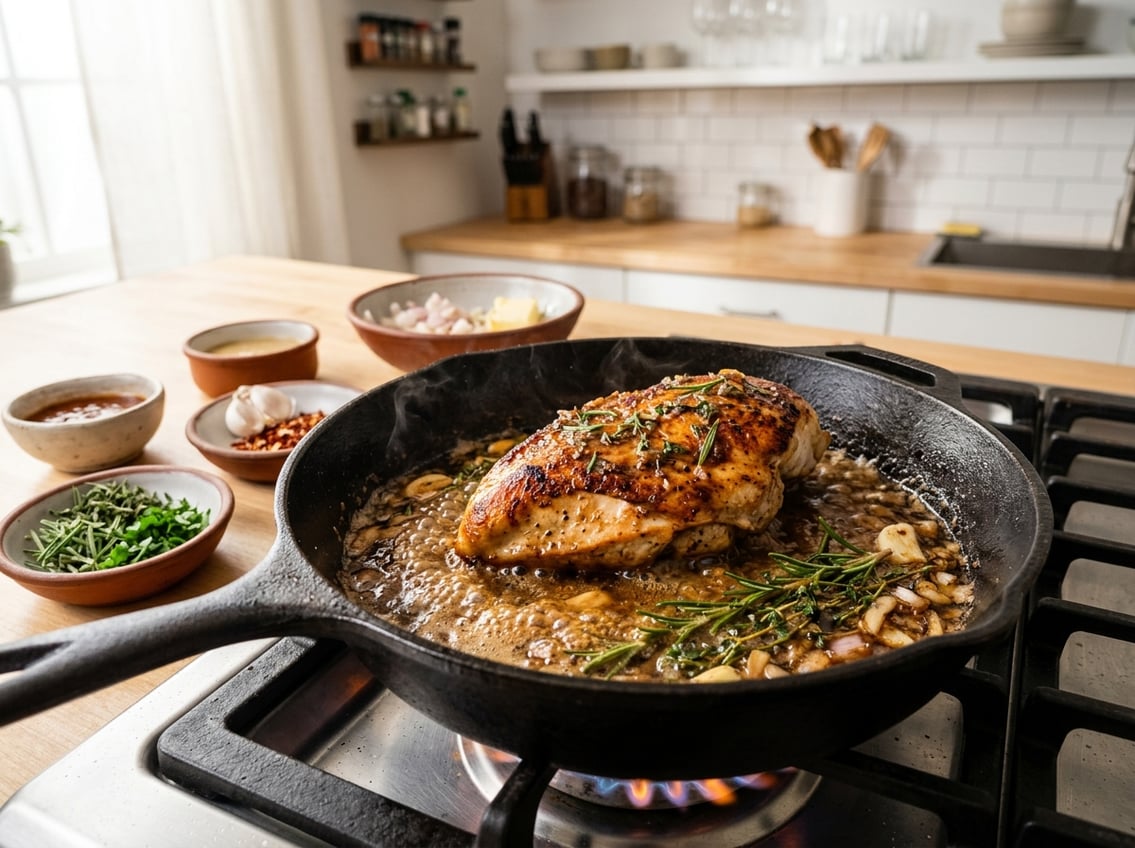
A simple pan sauce can turn a plain seared chicken breast into a complete meal. Leftovers store well, so you can use extra chicken for lunches or another dinner.
Simple Pan Sauce Options
After you take out the chicken, keep the browned bits in the pan. Add butter, broth, lemon juice, or a splash of white wine to loosen the pan sauce and pick up that flavor from the bottom of the skillet.
A basic butter-and-garlic sauce works well with a pan-seared chicken breast. A little Dijon mustard or chopped herbs can also fit the same pan sauce base.
Serving Ideas for Weeknight Meals
This chicken works well with rice, mashed potatoes, roasted vegetables, pasta, or a simple salad. It is also a strong protein for wraps, grain bowls, and sandwiches.
A well-cooked seared chicken breast pairs with almost any side you already have.
How to Store and Freeze Extras
Place leftover cooked chicken in an airtight container and keep it in the refrigerator for 3 to 4 days.
Reheat the chicken gently to prevent it from drying out.
You can freeze cooked chicken for up to 3 months.
Thaw the chicken overnight in the fridge before reheating or using it in salads, soups, or lunch boxes.


