
How Should Chicken Breast Be Cut for Better Results
You should cut chicken breast based on the dish you are making. Keep the slices even and, when needed, cut against the grain.
That simple approach gives you better texture and more even cooking. It also helps prevent dryness.
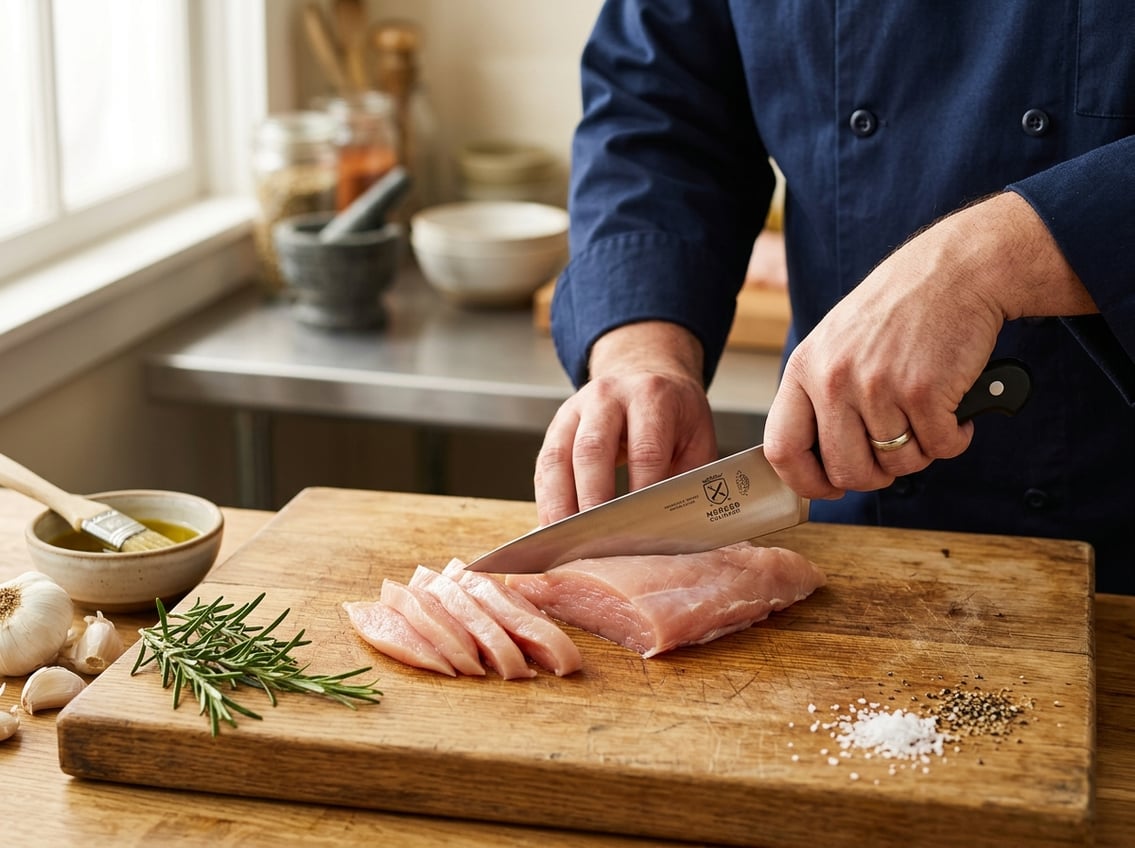
The best results come from matching the cut to the recipe. Slice in a way that shortens the muscle fibers.
When you know how to cut a chicken breast, you can turn the same ingredient into cutlets, strips, cubes, or thin slices. These different cuts cook more evenly.
A sharp knife and a steady cutting board make a big difference. If you cut chicken breasts with a plan, you handle the meat more easily before cooking and it is easier to eat after it is done.
The Best Way to Slice for Tender, Even Cooking
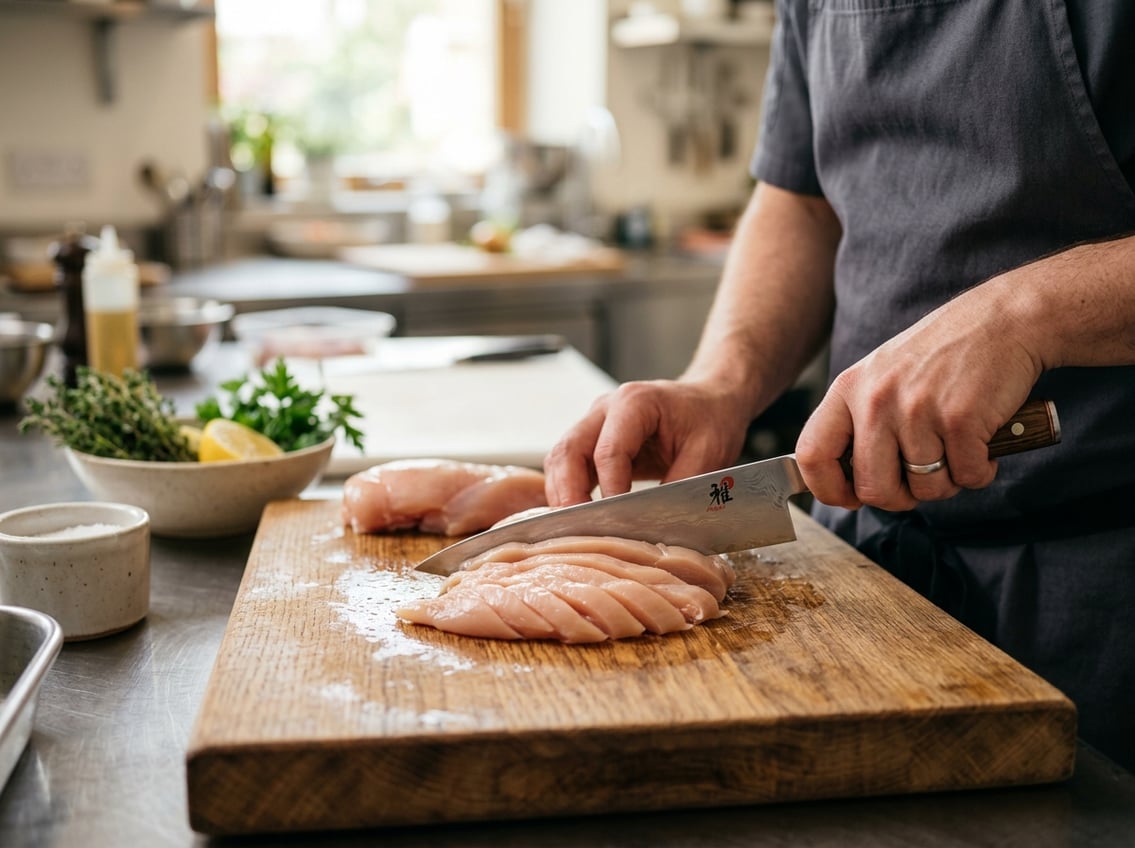
If you want tender chicken, cut against the grain and keep your pieces as even as possible. That helps each slice stay soft and cook at the same speed.
How you slice chicken breast matters just as much as how you cook it. A good cut can make lean meat juicier and easier to chew.
Why Cutting Against the Grain Matters
Chicken breast has visible muscle fibers that run in one direction. When you cut against the grain, you shorten those fibers, which makes each bite less chewy.
If you slice with the grain, the fibers stay long and stringy. That can make even properly cooked chicken feel tough.
How to Identify the Grain Before You Slice
Look closely at the surface of the breast. You should see faint lines running across the meat, and those lines show the grain.
If you are unsure, bend the chicken slightly. The fibers will tend to split in the same direction.
Once you spot the lines, turn the breast so your knife crosses them. That makes cutting against the grain easier and more natural.
Why Uniform Thickness Helps Chicken Cook Evenly
When one end is thick and the other is thin, the thin part can dry out before the thick part is done. Even thickness helps the whole piece finish at the same time.
It also makes slices look neater for serving and meal prep. If needed, pound thicker areas lightly before you slice.
That gives you a more even shape before the chicken hits the pan or oven.
How to Prepare and Cut Raw Chicken Safely

Start safe prep before the knife touches the meat. A clean workspace, a stable cutting board, and dry chicken make cutting easier and cleaner.
This matters any time you are cutting chicken breast for strips, cutlets, or cubes. A careful setup also helps you move faster with less mess.
Set Up a Stable Cutting Board and Sharp Knife
Place your cutting board on a flat surface that will not slide. If it shifts while you are cutting chicken, you lose control of the knife and the pieces become uneven.
Use a sharp chef’s knife or boning knife. A dull knife can tear the meat instead of making clean cuts.
Pat Dry and Position the Breast for Cleaner Cuts
Pat the chicken breast dry with paper towels before you slice it. Less surface moisture means the meat is less slippery and easier to control.
Place the breast flat on the board with the thicker end facing you if you plan to make strips or cutlets. That gives you a clearer view of the shape and helps guide each cut.
Step-by-Step for Cutting Chicken Breast Into Strips
-
Lay the breast flat on the board.
-
Trim off any excess fat or loose pieces.
-
Slice the breast across the grain into long, even pieces.
-
Keep each strip about the same width so it cooks at the same rate.
For most recipes, cut chicken breast into strips that are thin enough to cook quickly, yet wide enough to stay moist. Strips work well for stir-fries, salads, tacos, and quick skillet meals.
Which Cut to Use for Different Recipes
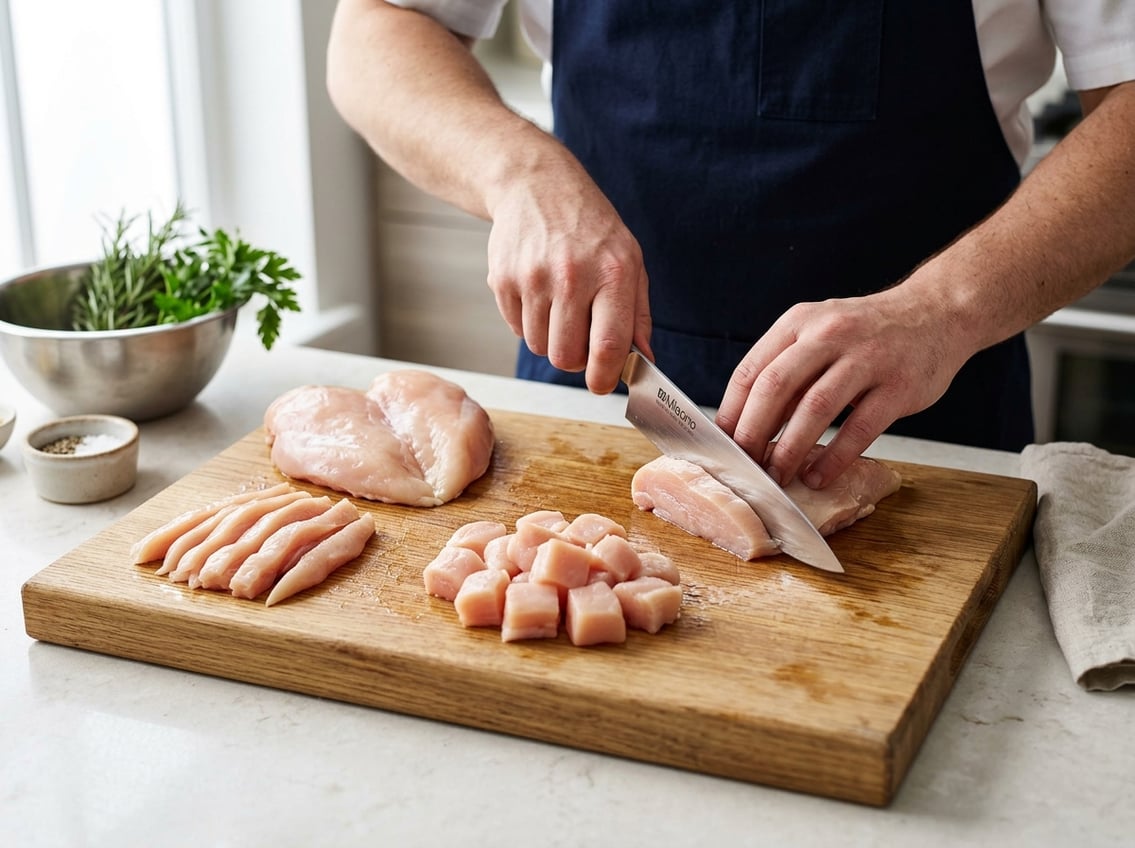
The right cut depends on how you plan to cook the chicken. Thin cutlets work well for breaded dishes, while strips and cubes fit faster cooking methods.
If you match the cut to the recipe, you get better texture and more even browning. It also helps the chicken fit the rest of the dish without extra trimming.
When to Make Cutlets From a Butterflied Chicken Breast
A butterflied chicken breast is a breast that you split open like a book and then flatten. From there, make cutlets by slicing through the thickest part or by pounding the breast into a thinner, even layer.
Use this method when you want quick cooking and an even surface for breading. It works especially well for pan-fried or baked recipes that need a uniform shape.
Best Cuts for Chicken Parmesan and Chicken Piccata
For chicken parmesan, cutlets are usually the best choice because they cook fast and stay tender under sauce and cheese. A thinner piece also makes breading easier to manage.
For chicken piccata, thin cutlets or lightly pounded breasts work well too. The sauce coats the surface better, and the chicken cooks before it has time to dry out.
When Strips or Cubes Make More Sense
Use chicken breast strips for stir-fries, fajitas, and salads. Strips cook fast and are easy to portion.
Use cubes for soups, skewers, pasta, and dishes with sauces. Cubes are also useful when you want smaller pieces that mix well with vegetables or grains.
Common Mistakes That Affect Texture
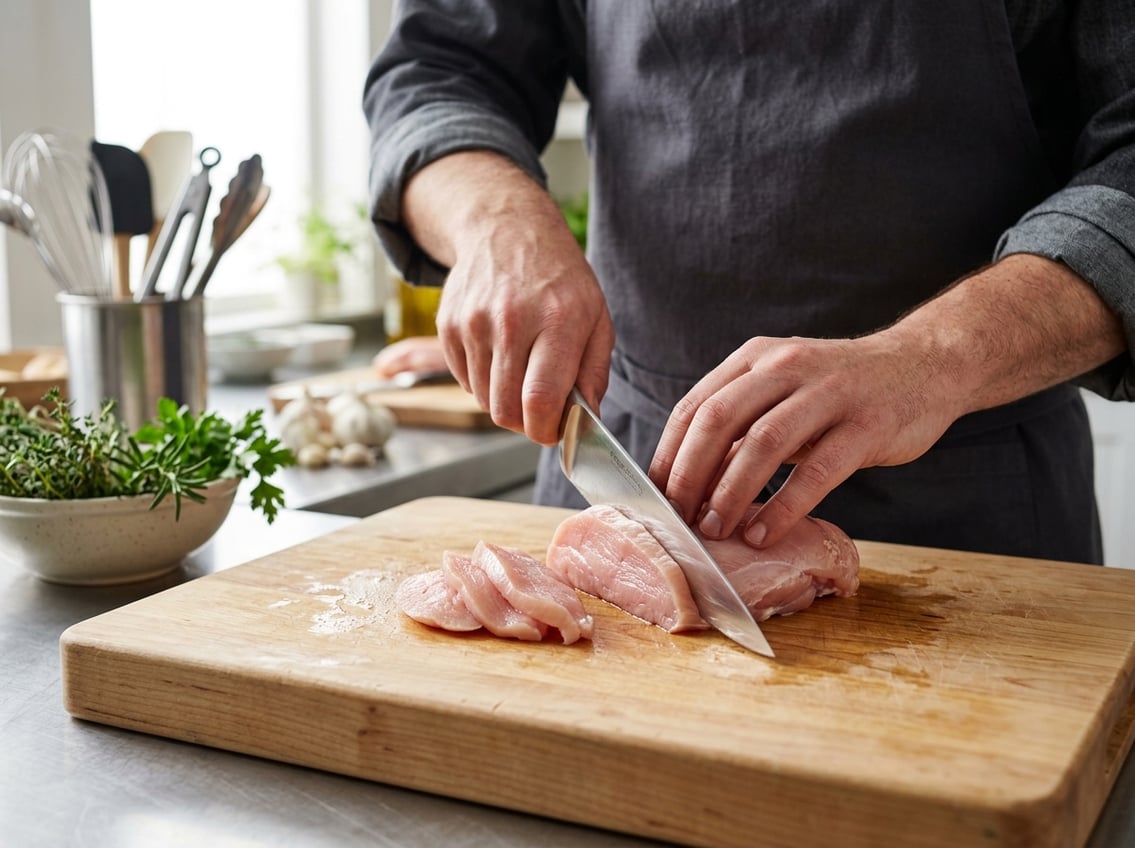
Texture problems usually come from a few simple mistakes. The cut may look fine at first, yet the final bite can turn tough, dry, or uneven.
You can avoid most issues by paying attention to grain direction, thickness, and timing.
Cutting With the Grain Instead of Across It
If you cut against the grain, you shorten the fibers and make the meat easier to chew. If you slice with the grain, the fibers stay long and the chicken can feel stringy.
This mistake is easy to miss because the pieces may still look neat. The difference shows up when you eat them.
Making Pieces Too Uneven for the Cooking Method
Pieces of mixed size cook at different speeds. Small pieces dry out while large pieces stay underdone.
Try to keep each slice close in size to the others. That matters whether you are making strips, cutlets, or cubes.
Slicing Too Soon After Cooking
If you slice chicken too soon, juices run out onto the board instead of staying in the meat.
Let cooked chicken rest before you slice chicken breast so the juices settle back through the meat.
A short rest gives you cleaner slices and better moisture.
That small wait can improve the final texture.


