
Are Chicken Breast or Thighs Better for Your Goals?
You may wonder, are chicken breast or thighs better for your goals. The right answer depends on what you want from the meal.
If you want fewer calories and more protein per bite, chicken breast usually fits better. If you want richer flavor, more juiciness, and a cut that is harder to dry out, chicken thighs often win.
Both cuts can fit a healthy diet. You can use either in quick weeknight meals, meal prep, or family dinners.
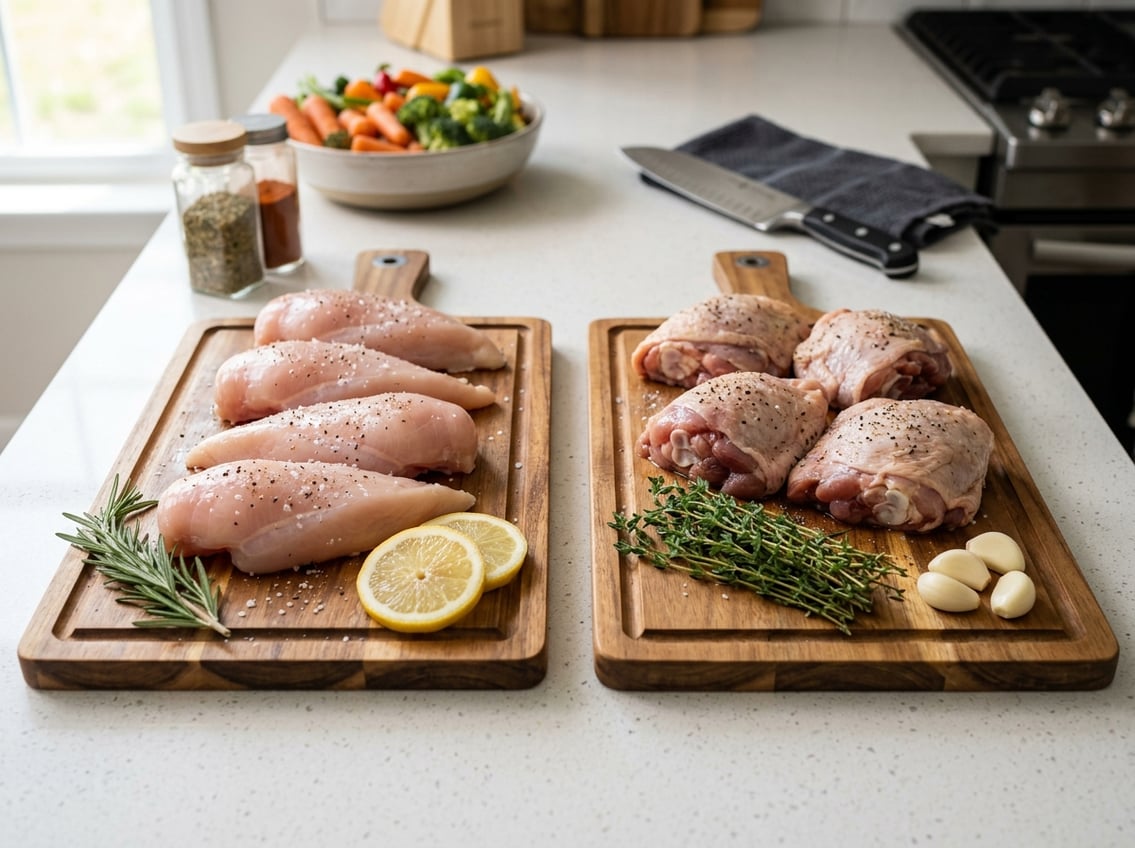
Best Choice by Health and Nutrition Goal
If your main goal is lean protein, choose chicken breast. Skinless chicken breasts have fewer calories and less fat than skinless chicken thighs, so they work well for cutting calories or keeping portions lighter.
Both cuts can support a healthy diet, according to The Pioneer Woman’s comparison of chicken breasts vs. thighs.
Lower Calories and More Protein per Serving
Chicken breast gives you more protein for fewer calories. This matters if you are building meals around high protein with less fat.
A 3-ounce serving of boneless, skinless chicken breast is lower in calories than the same amount of boneless, skinless chicken thigh, according to The Pioneer Woman.
Chicken breast fits well for:
- weight loss plans
- high-protein meal prep
- lower-fat diets
- meals where you want a mild flavor base
Satiety, Fat Content, and Everyday Fullness
Chicken thighs have more fat, which can make them feel more filling. Fat also helps carry flavor, so thighs often taste richer with less seasoning.
If you eat smaller meals and want them to feel satisfying, chicken thighs can work well. If you want the leanest option, chicken breast is the better match.
Micronutrients in White Meat and Dark Meat
Chicken breast is white meat, while chicken thighs are dark meat. Dark meat contains more myoglobin, which helps store oxygen in muscle tissue and gives thighs a darker color and stronger taste.
Chicken thighs give you more iron and zinc in each serving, as explained in this chicken breast vs. thigh diet comparison. Chicken breast still provides high-quality protein.
Flavor, Texture, and Why They Cook Differently
Chicken breast and chicken thigh behave differently in the pan or oven. White meat is leaner and milder, while dark meat has more fat, more myoglobin, and a softer texture that stays moist longer.
The difference affects taste, tenderness, and how easy each cut is to cook well.
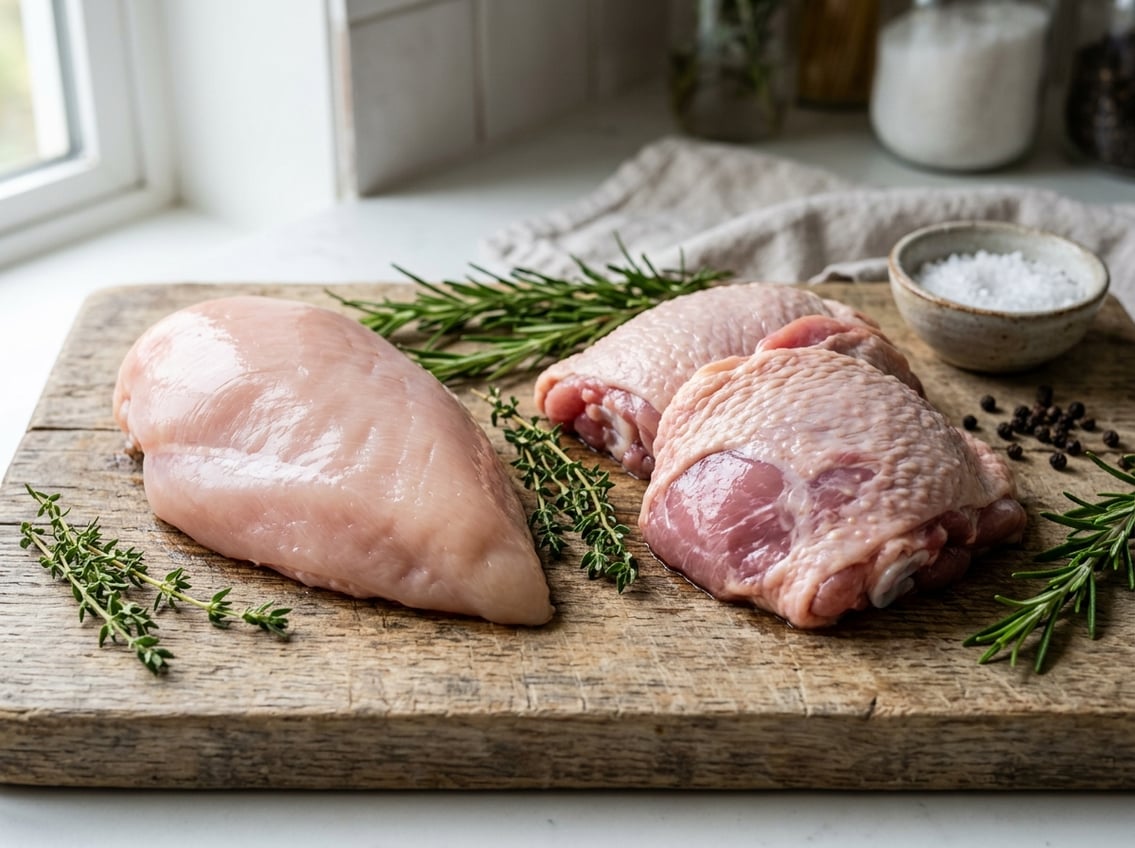
Why Breasts Taste Milder and Leaner
Chicken breasts have a light, mild flavor that works well when you want sauces, spices, or marinades to stand out. That mild taste makes breast a flexible base for salads, wraps, pasta dishes, and sandwiches.
The lean texture means breast can feel firm and clean on the plate. If you like a simple chicken flavor without much richness, breast usually fits better.
Why Thighs Stay Juicier and More Forgiving
Chicken thighs have more fat and a stronger flavor, so they usually taste juicier. They also forgive longer cooking times.
People often pick thighs for recipes where moisture matters, such as braises, stir-fries, and high-heat cooking. According to The Pioneer Woman, thighs are harder to overcook than breasts.
How Connective Tissue and Muscle Type Affect Results
Chicken thighs contain more connective tissue than breasts, which helps explain their tender, rich texture after cooking. Heat and time break down that tissue, especially in slow or moist cooking.
Chicken breasts are more delicate and can dry out fast if you cook them too long. For the best result from breasts, use careful cooking and remove them from heat as soon as they finish.
When to Use Each Cut in Real Cooking
The best cut depends on the recipe and the heat level you plan to use. Chicken breasts shine in fast, lean meals.
Chicken thighs work better when you want more flavor, better moisture retention, or extra room for error.
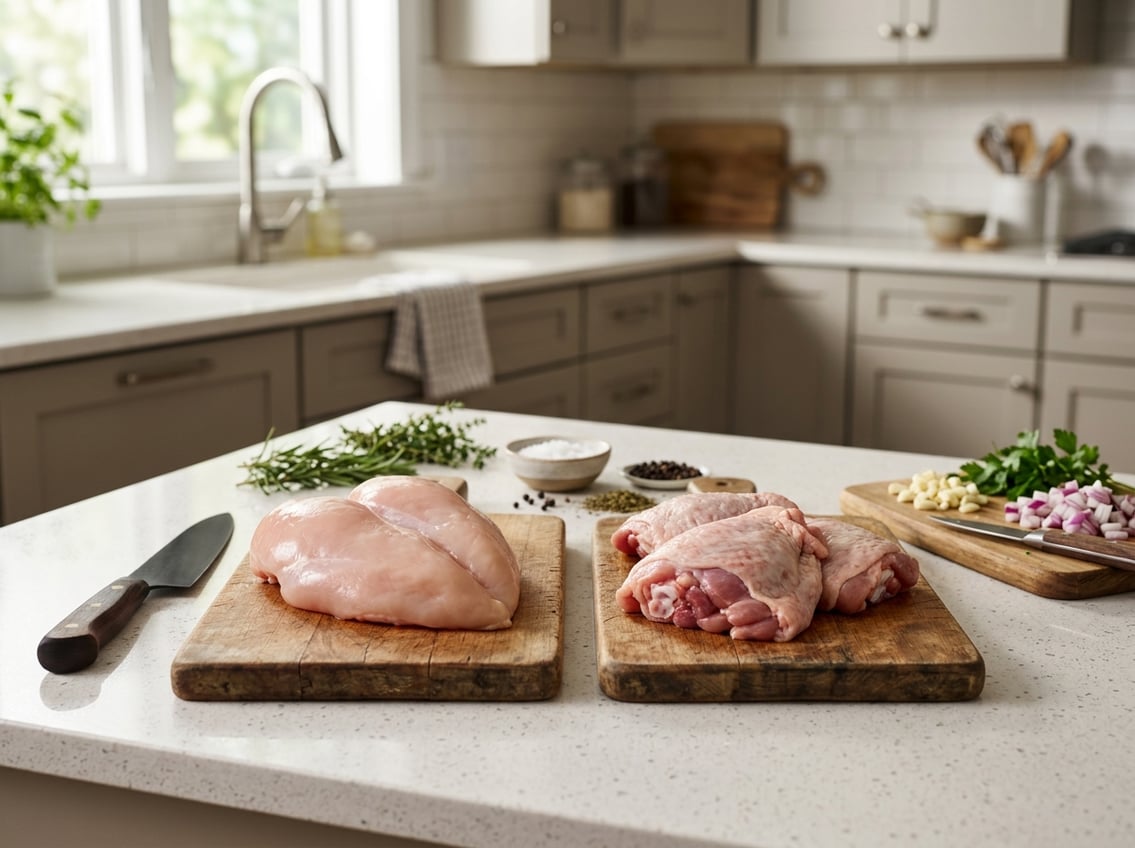
Grilled Chicken and Quick High-Heat Meals
For grilled chicken, chicken breast works well when you want a lean result and can control the cook time closely. Thin cutlets, even thickness, and a thermometer help keep it from drying out.
Chicken thighs also do well on the grill, especially when you want more flavor and a juicier bite. Their higher fat content makes them more forgiving over direct heat, which is why people often use them for high-heat cooking, as mentioned by The Pioneer Woman.
Baked Chicken and Roasted Chicken Dinners
For baked chicken and roasted chicken dinners, both cuts can work. Chicken breasts are a good choice when you want a lighter dinner with simple sides like vegetables, rice, or potatoes.
Chicken thighs fit well in roasted dishes where you want deeper flavor and a more tender texture. Bone-in, skin-on thighs add even more flavor during roasting, while skinless chicken thighs still give you a good middle ground.
Meal Prep, Marinating, and Avoiding Dry Meat
Chicken breast is useful for meal prep when you want predictable portions and high protein. You get the best results if you avoid overcooking and slice it after resting.
Chicken thighs are easier for meal prep because they stay moist longer in the fridge. They also reheat well.
Marinating helps both cuts. It matters more with breast if you want to protect it from drying out.
If you cook chicken breasts often, use a thermometer. Stop cooking as soon as the center reaches a safe temperature.


