
Are Chicken Breasts Good for Dogs? Safety and Benefits
Are chicken breasts good for dogs? Yes, plain cooked chicken breast can be a safe, lean protein for many dogs when you serve it in the right amount and prepare it without seasoning.
Chicken is easy to digest and is widely used in dog food.

If you are wondering if chicken breast is a good choice for dogs, the answer is yes, as long as it is plain, fully cooked, and fed in moderation.
That makes it a useful option for dogs that need lean protein, a bland diet, or a simple topper for regular meals.
Chicken breast is not the right choice in every situation.
Raw poultry, bones, skin, heavy seasoning, and fried preparation can create safety problems.
Some dogs need more careful portion control than others.
When Chicken Breast Is a Good Choice

Chicken breast is a simple, lean protein option that fits into many diets.
Many recommend it because plain, fully cooked chicken is easy to digest and usually safe.
Lean Protein and Key Nutrients
Chicken breast is high in protein, which supports muscle repair, tissue health, and immune function.
It also provides vitamin B6, niacin, phosphorus, and selenium, which help with energy use, bone health, and cell protection.
The low fat content makes it a practical choice for dogs that need lighter meals.
Skinless chicken breast is leaner than dark meat, which matters if your dog needs to limit extra fat.
Which Dogs May Benefit Most
Chicken breast suits dogs that need a gentle, easy-to-digest protein source.
It is helpful for picky eaters, dogs recovering from stomach upset, and dogs that need help maintaining a healthy weight.
It can work well as a training treat or meal topper.
Some dogs with sensitivities to other proteins may do better with chicken, although chicken can still cause allergies in some pets.
Why Plain Boiled Chicken Is Commonly Recommended
People often recommend plain boiled chicken because it avoids added fat, salt, and seasoning.
That simple preparation lowers the risk of stomach upset and keeps the food easy to digest.
Plain, fully cooked chicken with no seasoning is generally the safest way to serve it.
If your dog needs a bland diet, boiled chicken breast is often one of the first foods veterinarians suggest.
Safety Risks and When to Avoid It

Chicken can be safe, but some forms are risky or unsuitable.
The main concerns are raw poultry, bones, skin, seasoning, and how your dog reacts to the meat.
Why Raw Poultry Is Risky
You should not feed raw chicken to dogs unless your veterinarian gives a specific reason and clear guidance.
Raw meat can carry bacteria such as Salmonella and Campylobacter, which can affect both dogs and people who handle the food.
Even dogs with strong stomachs can shed bacteria after eating contaminated food.
Bones, Skin, Seasonings, and Fried Chicken
Cooked chicken bones can splinter and cause choking or internal injury.
Chicken skin and fatty cuts can also be too rich for some dogs.
Avoid chicken with garlic, onion, salt, butter, sauces, batter, or frying oil.
These ingredients can upset digestion, add excess fat, or cause poisoning in the case of garlic and onion.
Allergies, Sensitive Stomachs, and Pancreatitis Concerns
Some dogs do not tolerate chicken well.
Signs can include itching, vomiting, diarrhea, gas, or loss of appetite.
If your dog has a history of pancreatitis, obesity, or a very sensitive stomach, even lean chicken breast may be too much if you feed it in large amounts.
Watch for changes after feeding chicken, and stop if symptoms appear.
How to Serve It the Right Way
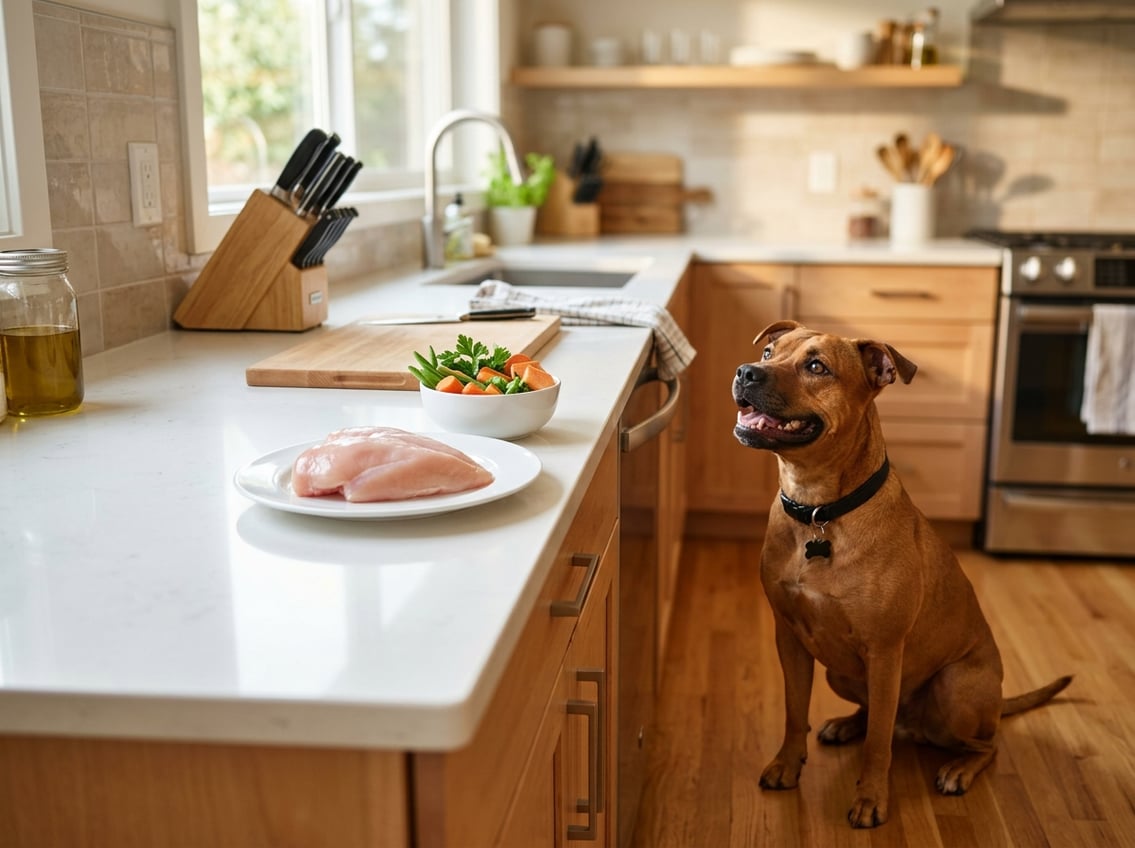
Prepare chicken breast simply, serve small portions, and watch your dog’s response.
Chicken breast can work as a treat, topper, or short-term bland diet ingredient when handled carefully.
Best Preparation Methods for Home Feeding
Cook chicken breast fully with no seasoning, oil, or sauces.
Boiling, baking, or steaming all work well.
After cooking, remove all bones, skin, and visible fat.
Cut the meat into small pieces so it is easy to chew and swallow.
Portion Size and How Often to Offer It
Use chicken breast as a small part of the meal, not the main diet.
The right amount depends on your dog’s size, activity level, and daily calorie needs.
A few small pieces are enough for many dogs.
If you plan to feed it often, ask your veterinarian how it fits into your dog’s regular food without upsetting nutrition balance.
Using Chicken Breast as a Meal Topper or Bland Diet Option
Chicken breast adds interest to your dog’s meals. You can mix a small amount into regular kibble to improve taste without adding much fat.
You can also use plain boiled chicken in a bland diet for short periods, especially after mild stomach upset. If your dog keeps vomiting, has diarrhea, or refuses food for more than a day, contact your veterinarian before continuing any home diet.


