
Chicken Breast vs Thigh: Nutrition, Taste, and Best Uses
Chicken breast and thigh offer a choice between leanness, flavor, and cooking style. If you want fewer calories and more protein per bite, choose chicken breast.
If you want a juicier cut that stays tender with high-heat cooking, pick chicken thigh.
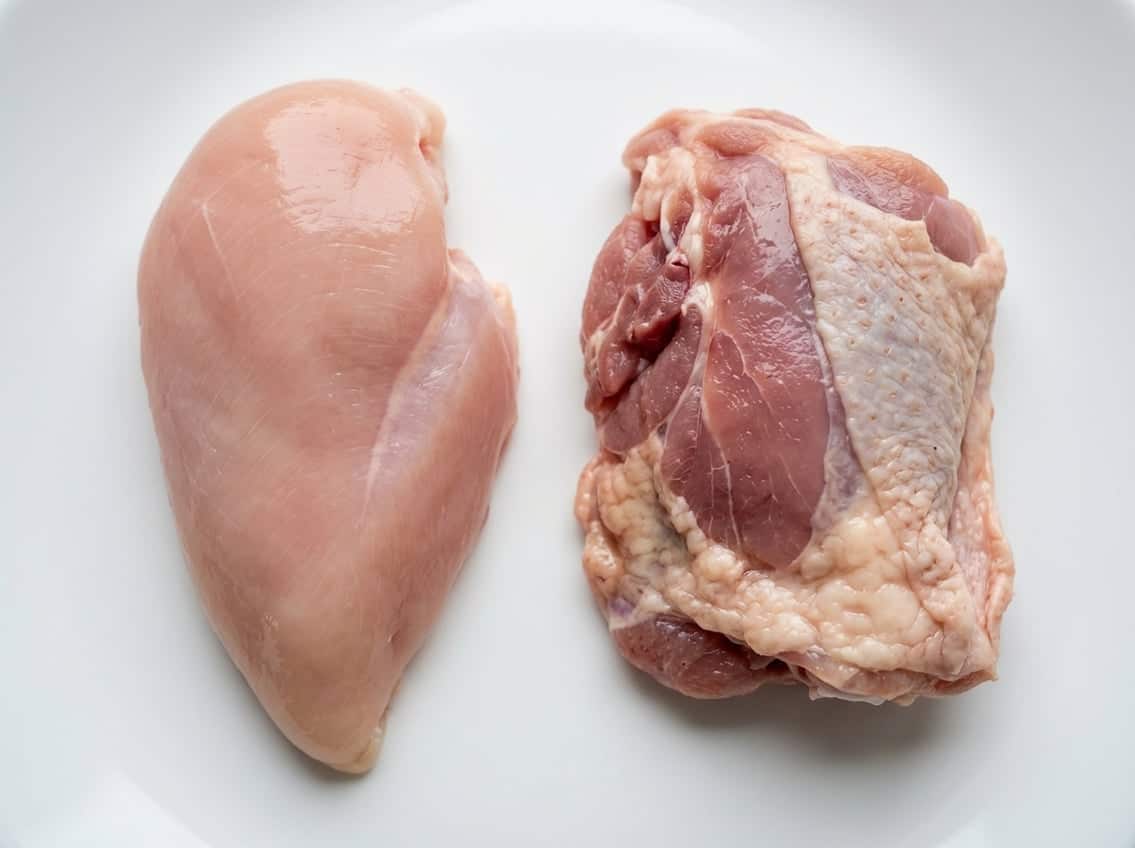
The best cut depends on your goal, serving size, and how much fat and flavor you want. Both cuts fit a healthy diet, but the right choice changes with the recipe and your nutrition target.
In the U.S., people choose chicken often because it is affordable, flexible, and easy to prepare. Fat content, protein content, texture, and how each cut handles heat set chicken breasts and thighs apart.
Key Differences
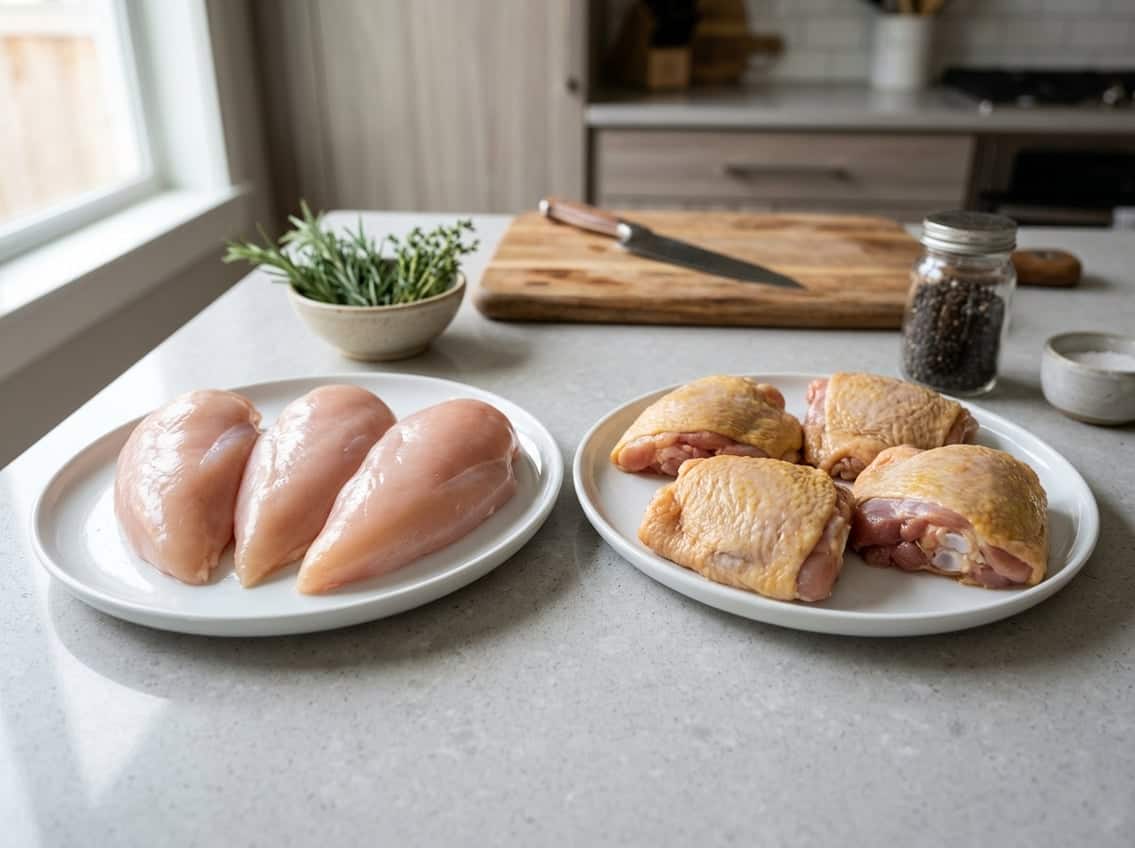
Chicken breasts are lean white meat. Chicken thighs are darker and richer.
Thighs contain more myoglobin, giving them a deeper color and fuller taste. Skinless chicken breasts are lower in calories and fat than skinless chicken thighs at the same serving size.
Calories, Protein, and Fat
A 3-ounce serving of boneless, skinless chicken breast provides about 140 calories and 3 grams of fat. The same amount of boneless, skinless chicken thigh has about 170 calories and 9 grams of fat.
Chicken breast is the high-protein, lower-fat option. Chicken thigh still provides solid protein, just with more fat and a richer taste.
White Meat vs Dark Meat
Chicken breast is white meat. Chicken thigh is dark meat.
White meat is usually leaner. Dark meat tends to be juicier and more forgiving in the pan or oven.
Myoglobin gives dark meat its color. More myoglobin means a darker cut, stronger flavor, and a slightly different texture.
How Skin Changes the Numbers
Skinless chicken gives you the leanest version of either cut. Skinless chicken thighs still carry more fat than skinless chicken breast.
Skin-on chicken thighs add even more calories and fat. If you want a lighter meal, choose skinless chicken.
If you want more flavor and do not mind extra fat, skin-on chicken thighs work well in recipes where crisp skin matters.
Nutrition Goals
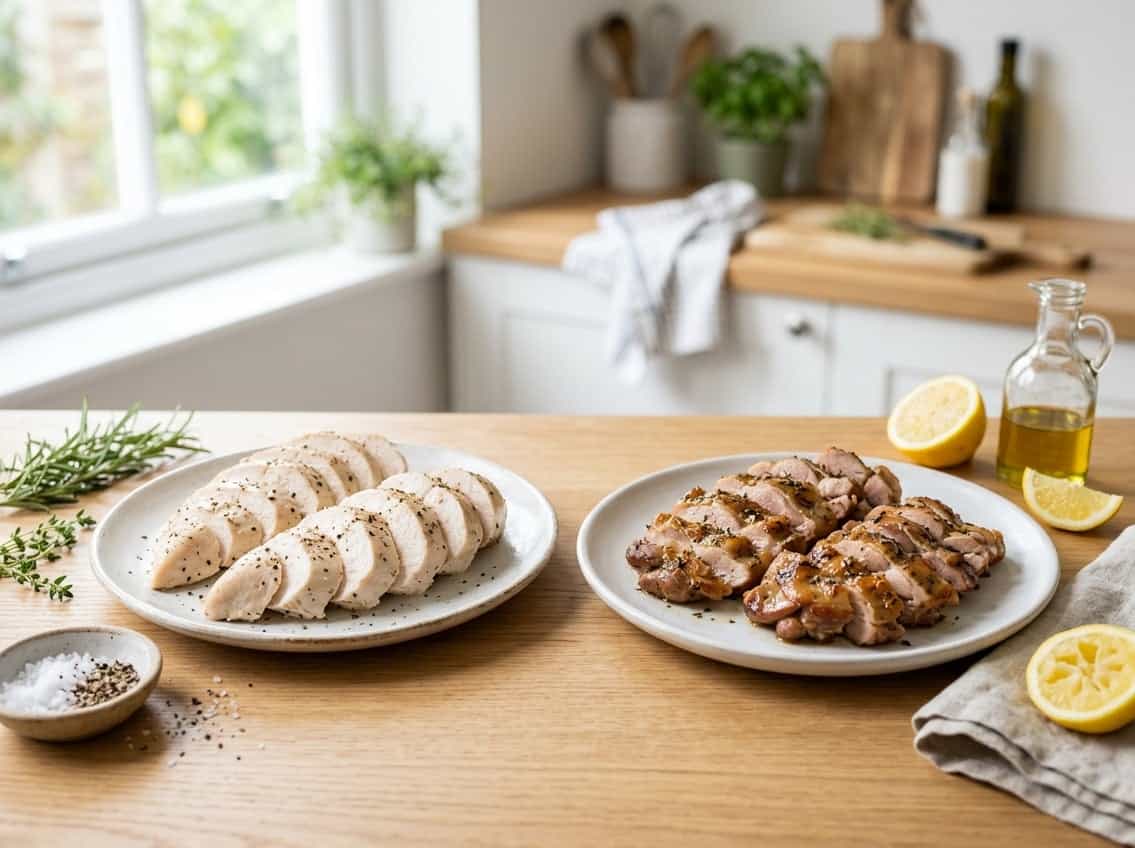
Your choice depends on whether you care most about calories, protein, or how filling the meal is. Chicken breast fits cutting, weight loss, and high protein eating plans.
Chicken thigh works better when you want more flavor, more fat, and a meal that feels more satisfying.
For Weight Loss and Lower Calories
If you want lower calories, chicken breast is the easier pick. It gives you a lot of protein for a small amount of fat.
Skinless chicken breast works well if you are tracking macros closely. It is the most straightforward lean protein choice here.
For Muscle Gain and Higher Protein
Both cuts provide quality protein for muscle gain. Chicken breast gives you more protein for fewer calories, making it easier to keep fat low.
If you need extra calories for bulking, chicken thigh helps you reach them more easily. It adds more dietary fat, making meals more calorie dense.
For Satiety and Flavor
If you want a meal that feels more filling and tastes richer, chicken thigh often has the edge. The extra fat adds flavor and helps meals stay satisfying longer.
Many people find chicken breast easier for salads, wraps, grain bowls, and lunch prep. The right choice is the one you will eat regularly.
Micronutrients and Health
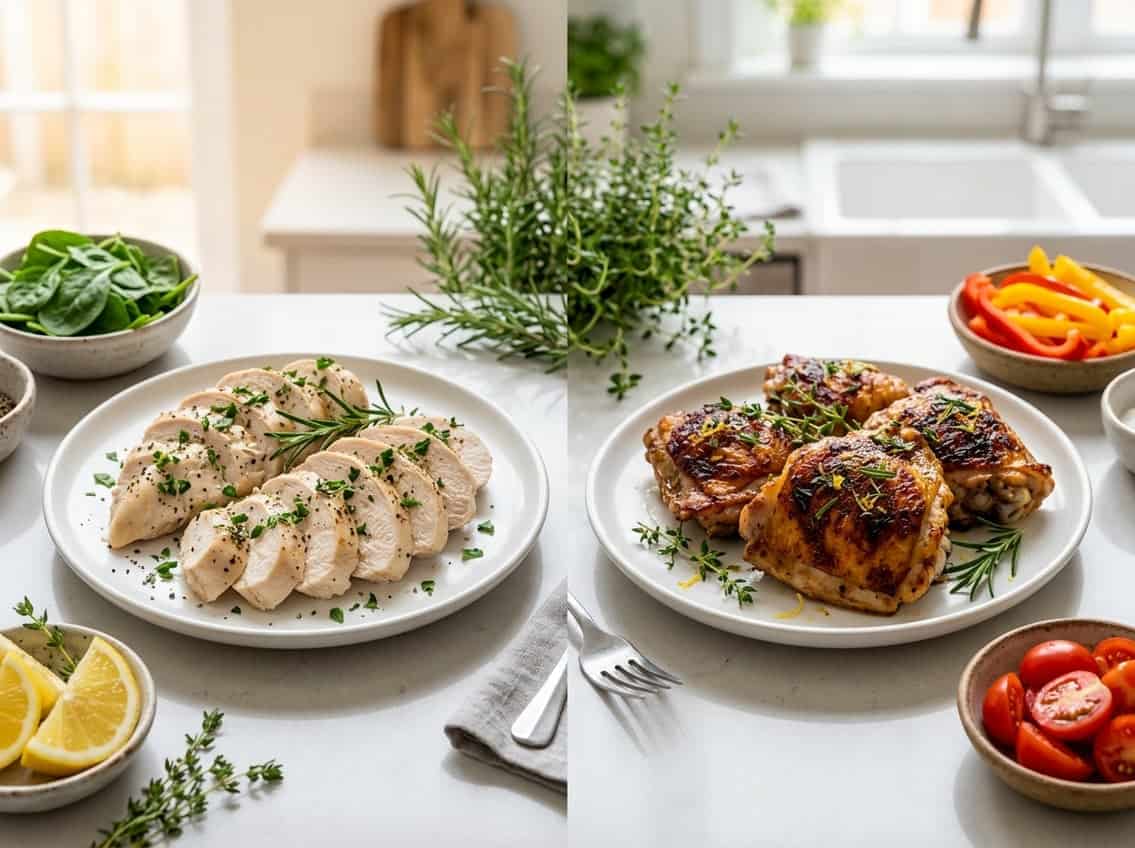
Chicken provides more than protein. Both white and dark meat offer vitamins and minerals, with small differences depending on the cut.
Chicken breast is leaner. Chicken thigh brings a little more iron and zinc.
B Vitamins, Choline, and Energy
Chicken is a good source of B vitamins and choline. B vitamins help your body turn food into energy.
Choline supports cell structure and nerve function. Both chicken breast and thigh contribute these nutrients.
Phosphorus, Potassium, and Minerals
Chicken supplies phosphorus and potassium, which support bone health, muscle function, and fluid balance. These nutrients appear in both cuts, though amounts vary with preparation.
If you want a nutrient-dense protein, chicken fits that role well. The cut you choose mainly changes the calorie and fat profile.
Vitamin B12, Iron, and Zinc
Dark meat contains a bit more iron and zinc than white meat. Chicken breast still offers these nutrients, just usually in smaller amounts.
Vitamin B12 is present in both cuts and helps your body make red blood cells and support the nervous system.
Cooking Methods and Recipes

Chicken breast and chicken thigh behave differently in the kitchen. Chicken breast cooks faster and dries out more easily.
Chicken thighs stay juicy under higher heat and longer cook times. That difference shapes which recipes work best for each cut.
Grilled and Baked Chicken
Grilled and baked chicken work well for chicken breast when you want clean flavor and fast cooking. Thin cutlets, marinated breasts, and bone-in pieces all cook well if you watch the time.
Chicken thighs also work on the grill and in the oven, especially when you want more flavor and less risk of dryness. Thighs are forgiving in high-heat cooking.
Roasted Chicken Thighs
Roasted chicken thighs hold onto moisture better than chicken breasts because of their higher fat content. That makes them a strong choice for recipes with spices, marinades, or sauces.
Skin-on chicken thighs crisp well in the oven. If you want a dinner that feels hearty and stays tender, roasted chicken thighs are a safe option.
How to Choose the Right Cut for Meal Prep and Weeknight Cooking
Chicken breast works well for meal prep because you can slice it easily and keep calories lower.
You can add it to salads, rice bowls, sandwiches, or pasta dishes with little effort.
For weeknight cooking, choose chicken thighs when you want more flavor and less worry about overcooking.
Use skinless chicken for a lighter meal.
For richer taste and juicier results, pick skin-on chicken thighs or bone-in pieces.


