
Chicken Breast vs Thighs: Nutrition, Taste, and Best Uses
Chicken breast vs thighs is a choice you make often, whether you are planning quick weeknight dinners, tracking calories, or trying to get better flavor in your meals.
The right cut depends on what you care about most, since each one brings a different mix of nutrition, texture, cost, and ease.
If you want the leanest option with the most protein per calorie, chicken breast is usually the better pick.
If you want richer flavor, more juiciness, and more forgiving cooking, chicken thighs usually win.
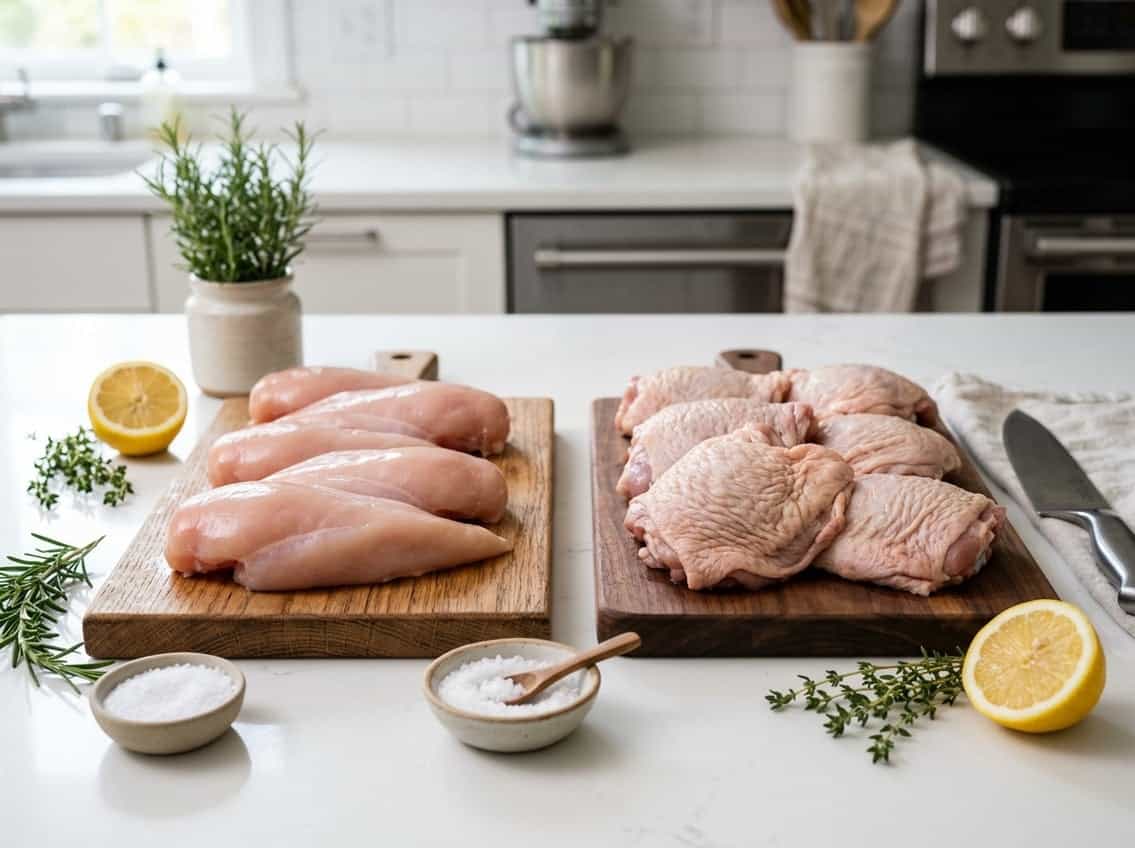
You do not need to treat one cut as always better than the other.
Both chicken breasts and chicken thighs can fit a healthy diet, and both can work well in everyday meals.
The better choice depends on your goal, your recipe, and how much time you want to spend cooking.
Key Differences at a Glance
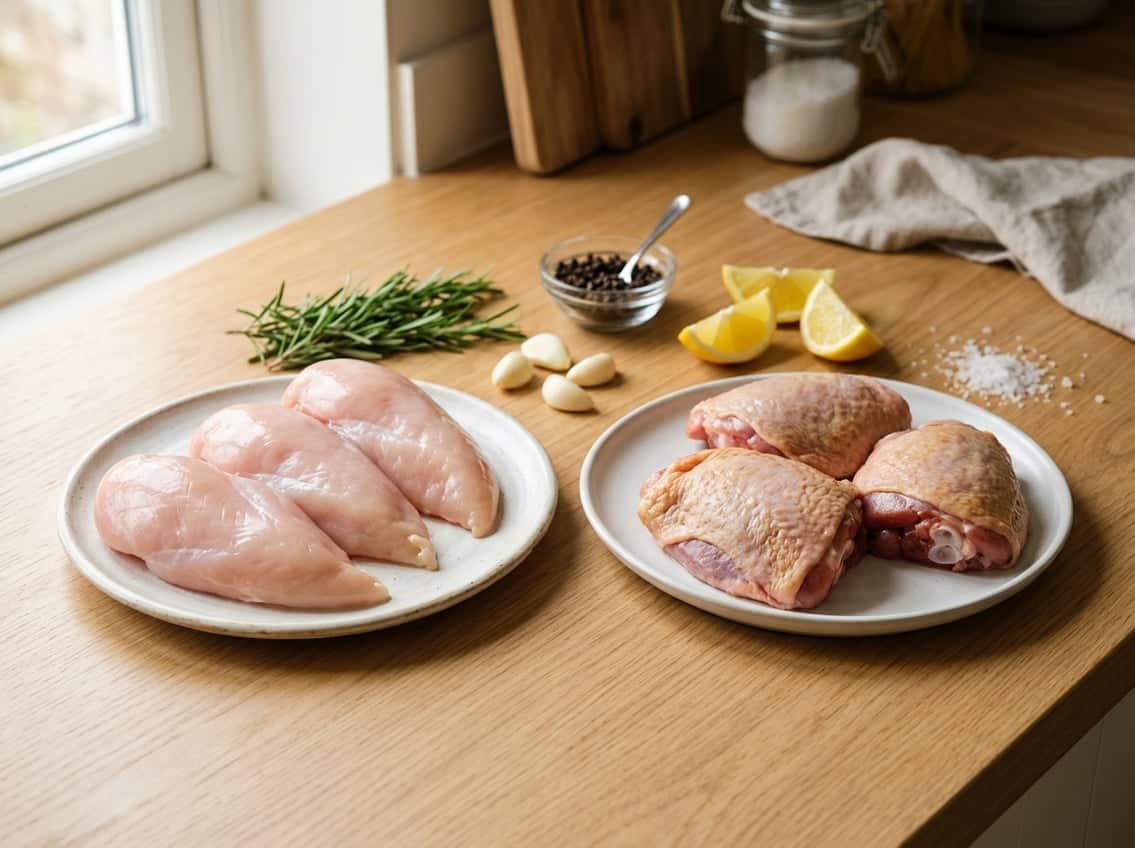
Chicken breast is leaner, milder, and usually lower in calories.
Chicken thigh has more fat, more flavor, and a juicier texture that holds up well during longer cooking.
Calories, Protein, and Fat Per Serving
A 3-ounce serving of boneless, skinless chicken breast has about 140 calories and 3 grams of fat, according to The Pioneer Woman’s comparison of chicken thighs vs. chicken breasts.
The same serving of boneless, skinless chicken thighs has about 170 calories and 9 grams of fat.
Both cuts are high in protein, but chicken breast gives you more protein for fewer calories.
That makes it useful when you want a lean protein source without adding much fat.
White Meat vs Dark Meat
Chicken breast is white meat.
It has a lighter color, a firmer texture, and a mild flavor that picks up seasoning well.
Chicken thigh is dark meat, and it tastes richer because it contains more fat.
That extra fat helps chicken thighs stay moist longer during cooking.
It also gives them a softer, more savory bite than chicken breasts.
How Skinless and Skin-On Change the Numbers
Skinless chicken breast and skinless chicken thigh are the most common nutrition comparison because they give you the clearest look at the meat itself.
Once you add skin, the fat and calorie count rises.
Skin-on chicken brings more flavor and better browning.
Skinless chicken keeps the meal lighter.
If you are comparing skinless chicken breasts with skinless chicken thighs, the breast is still the leaner pick.
Which Cut Fits Your Goal
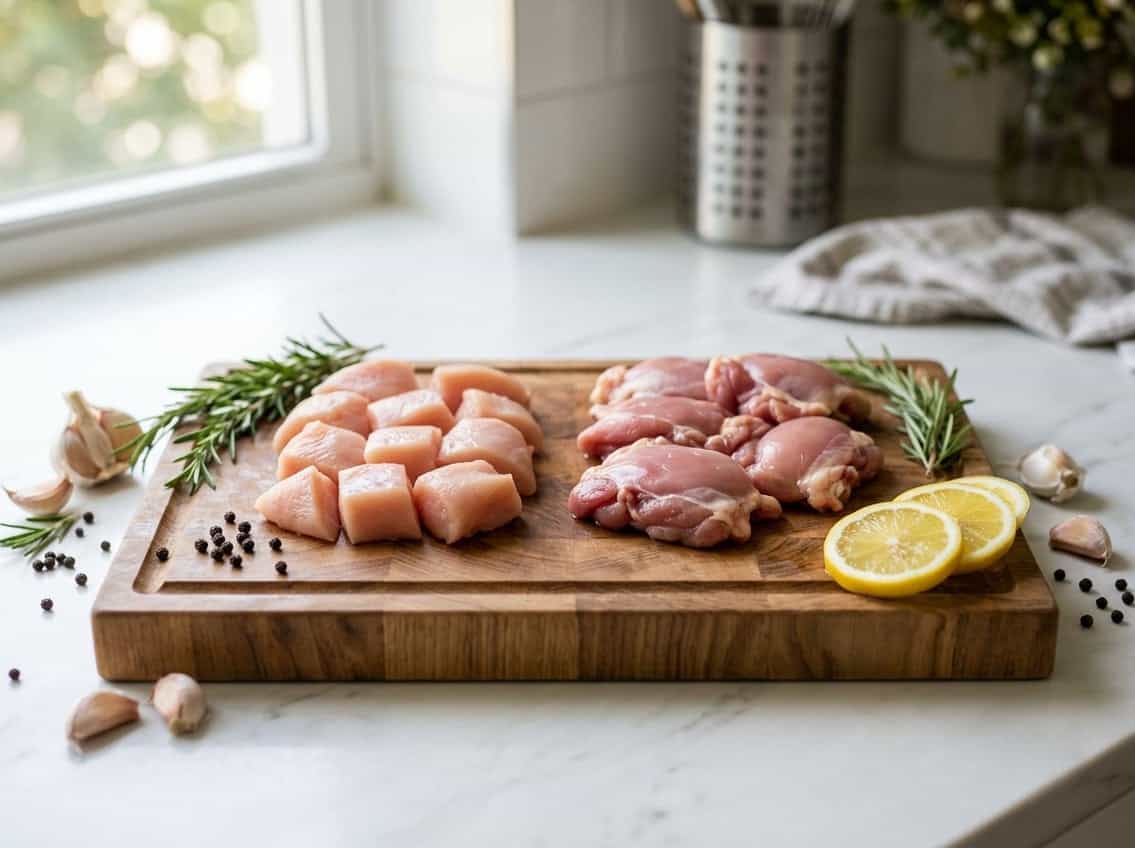
Your goal should guide the cut you buy.
If you want a lighter meal, chicken breast fits better.
If you want more satisfaction from the meal, chicken thighs often do the job better with less effort.
Best Option for Weight Loss and Lean Protein
Choose chicken breast when you want lower calories and higher protein density.
Skinless chicken breast works well in meal plans built around portion control, salads, grain bowls, and simple sides.
If your goal is to keep fat low while still getting enough protein, chicken breasts fit well.
They are also easy to measure and portion for weekly prep.
Best Choice for Fullness and Richer Flavor
Pick chicken thighs when you want a meal that feels more filling and tastes deeper without much extra seasoning.
Skinless chicken thighs still bring more fat than chicken breast, which helps them stay tender and satisfying.
If you cook at higher heat or like longer simmered dishes, thighs often give you better results with less chance of dryness.
A meal can feel more complete even with a simple sauce or spice blend.
When Mixing Both Cuts Makes Sense
Mixing chicken breast and chicken thighs can give you the best balance of texture, flavor, and nutrition.
You might use chicken breast for salads or wraps, then use chicken thighs in stews, tacos, or rice bowls.
This approach also helps if you cook for different preferences in the same household.
One cut can keep the meal lean, while the other adds richness.
Flavor, Texture, and Cooking Performance
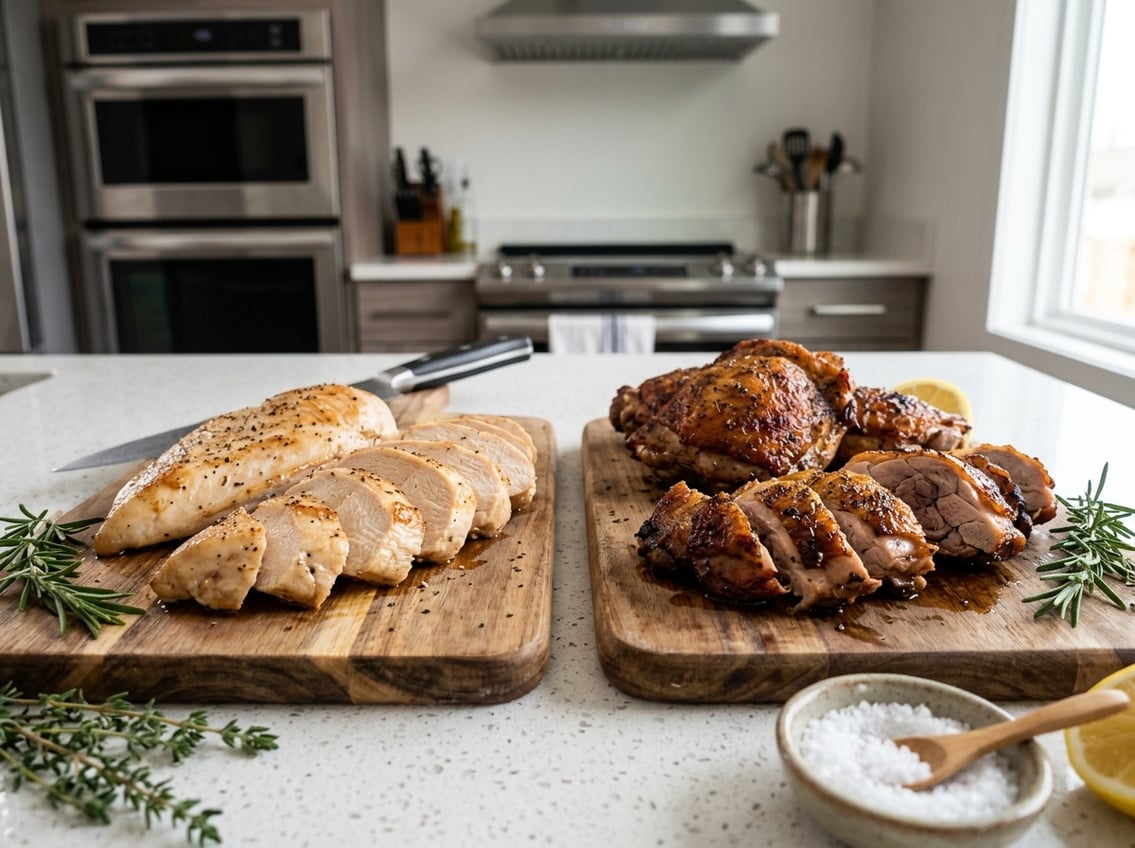
Chicken breasts and chicken thighs behave differently in the pan, oven, and on the grill.
Breast meat cooks faster and needs more care.
Thigh meat stays juicy longer and gives you more room for error.
Why Breasts Cook Faster but Dry Out More Easily
Chicken breast is lean, so it cooks quickly.
That speed is useful when you need dinner fast, especially for sliced chicken, cutlets, or thin pieces.
The same leanness makes it easier to dry out if you cook it too long.
For grilled chicken, baked chicken, or roasted chicken, you get the best result when you watch the temperature closely and remove it as soon as it is done.
Why Thighs Stay Juicier and Handle Longer Cooking
Chicken thighs have more fat, so they stay moist even when cooked a little longer.
That makes them more forgiving for busy weeknights and for recipes that need more time in the oven or skillet.
According to The Pioneer Woman’s chicken thighs guide, thighs work well for grilling, deep-frying, and braising because they do not dry out as easily as breasts.
The texture stays tender and juicy, even in stronger heat.
Best Results for Grilled, Baked, and Roasted Dishes
For grilled chicken, thighs are usually easier to manage if you want moisture and char.
For baked chicken, breasts work well when you want a clean, lean result and you cook them carefully.
For roasted chicken, thighs often give you better flavor and a nicer finish, especially with skin-on chicken.
If you want crisp skin and a richer bite, skin-on chicken thighs are hard to beat.
Buying, Budget, and Everyday Meal Planning
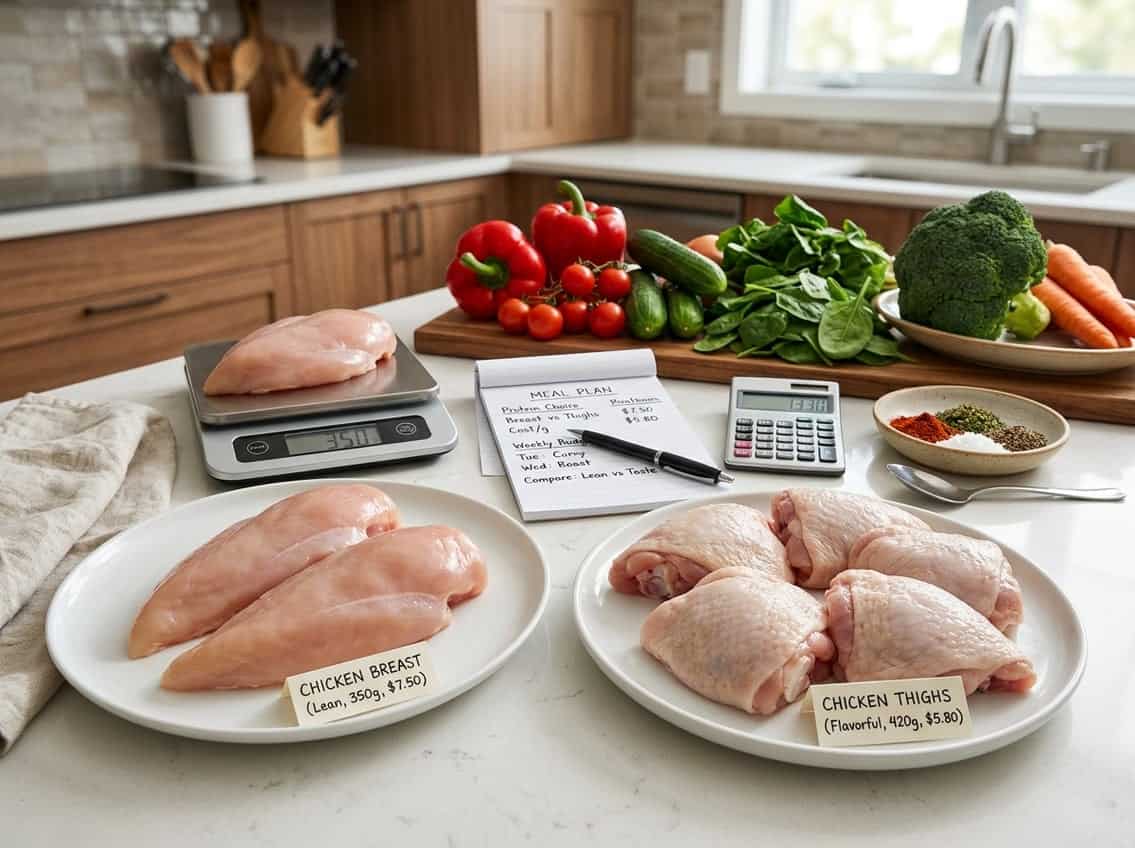
Your grocery choice may come down to price, packaging, and how you plan to use the meat during the week.
Chicken thighs often cost less, while chicken breasts are more common in lean meal plans.
Cost, Convenience, and Availability
Chicken thighs are often less expensive than chicken breasts, especially when you buy bone-in or skin-on cuts.
That price gap can make thighs a practical choice when you are feeding a family or stretching your budget.
Chicken breasts are widely available in U.S. grocery stores and work well when you want a simple, standard protein for many recipes.
Both cuts are easy to find, though breasts are more often sold as boneless and skinless chicken breast for quick cooking.
What to Check on Labels and Packaging
Check whether you are buying boneless or bone-in, skinless chicken breast or skin-on chicken thighs.
The label changes both the cooking method and the nutrition numbers.
Also check the sell-by date, package seal, and whether the meat looks evenly colored and well chilled.
If you are buying for the week, choose a package size that matches your planned meals so you avoid waste.
How to Choose for Meal Prep, Salads, Soups, and Slow Cooking
Chicken breasts work well for meal prep when you want clean slices for salads, wraps, and lunch bowls.
If you do not overcook them, they reheat well.
Chicken thighs stay tender through long cook times, so they work better for soups and slow cooking.
Baked chicken and roasted chicken both work with either cut. The best choice depends on whether you want lean texture or richer flavor.


