
Does Chicken Breast Have Bones? What to Know
You may ask, does chicken breast have bones in the package you buy at the store. The short answer is usually no.
Most chicken breast sold in U.S. grocery stores is boneless, especially if the label says boneless skinless chicken breast.
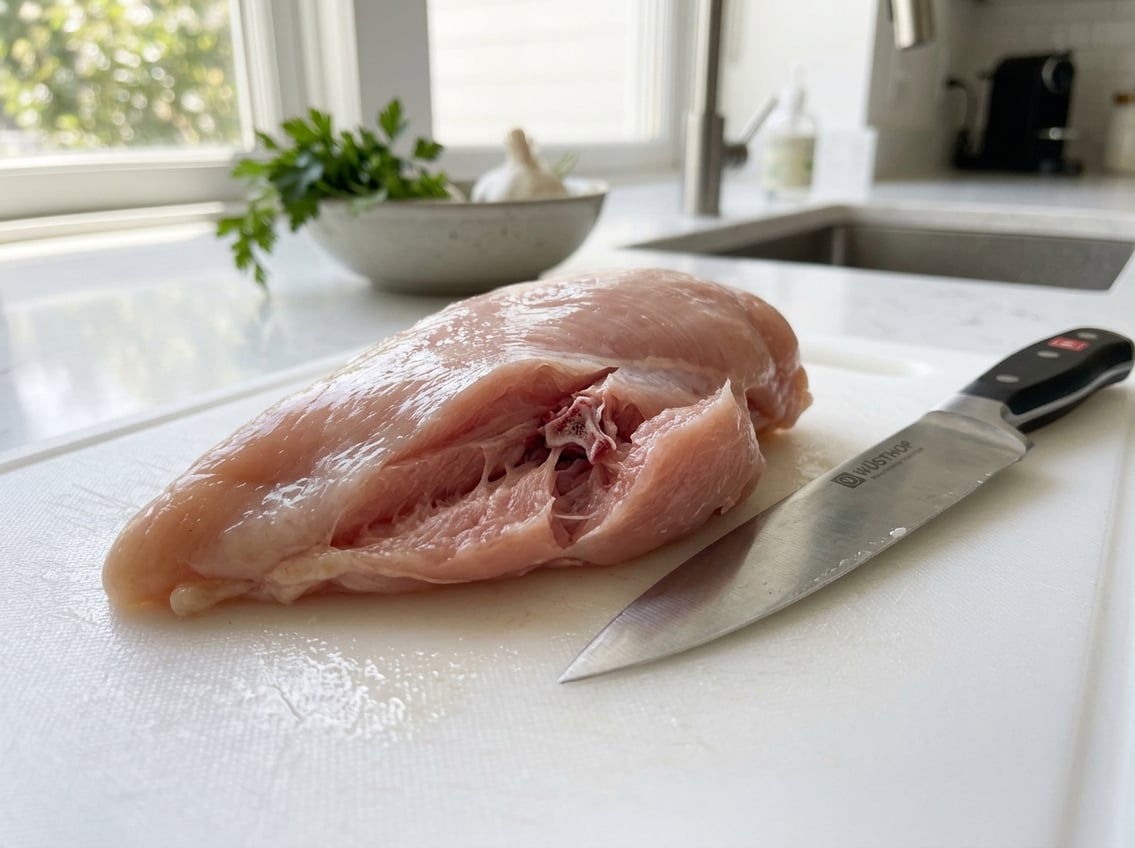
Chicken breast can still contain small bone fragments, even when the package says boneless, so food safety checks still matter.
The breast comes from the chest area of the bird. It is one of the leanest cuts.
In most cases, workers remove the bone during processing. The way the cut is made, trimmed, or packaged can change what ends up on your cutting board.
What You’re Actually Buying at the Store
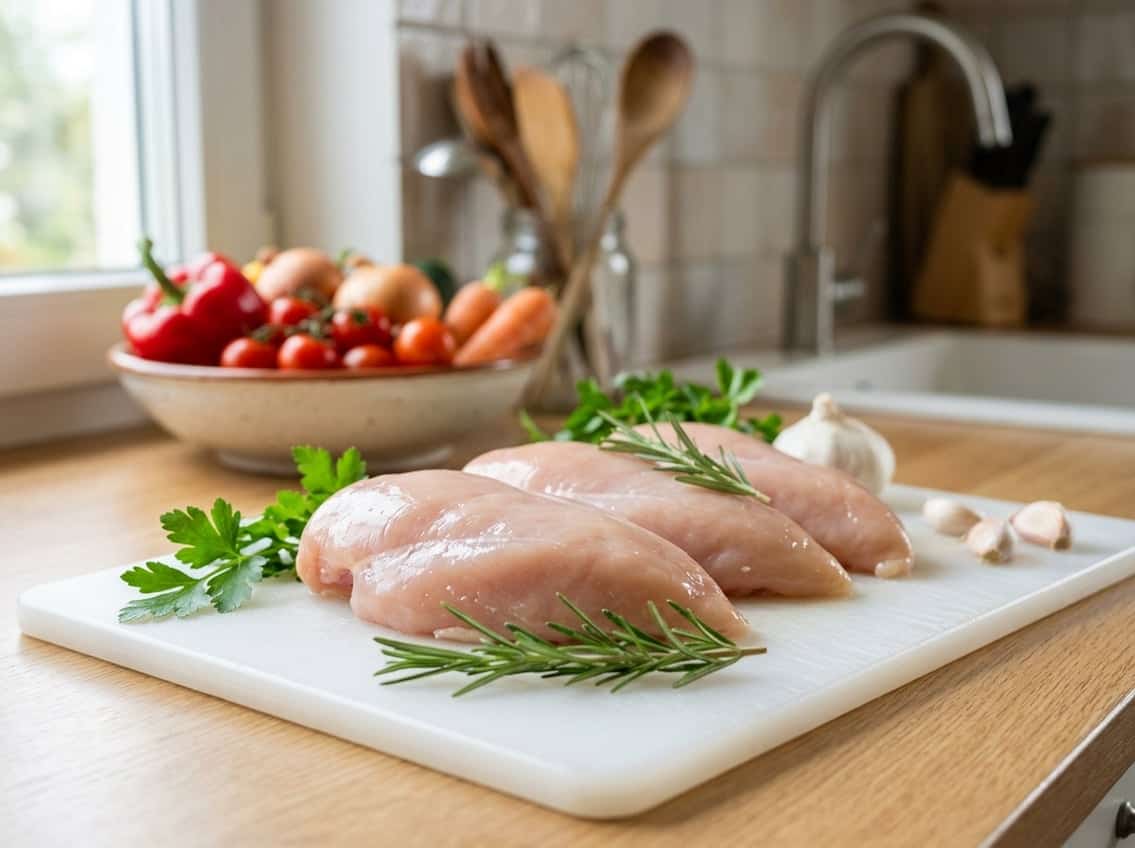
The label tells you what to expect. A package marked boneless chicken breast should not have a full bone.
Bone-in chicken breast or split breast usually has the bone attached.
How Boneless, Bone-In, and Split Breast Differ
A boneless chicken breast has the main bone removed. A bone-in chicken breast keeps the breastbone attached.
A split breast is often a half breast cut through the center with the bone still in place.
A boneless skinless chicken breast has no bone and no skin. This makes it the most common quick-cook option in U.S. stores.
A skin-on chicken breast still has the skin attached. A skinless chicken breast may be boneless or bone-in, depending on the label.
What Chicken Breast With Rib Meat Means
If you see chicken breast with rib meat, the package may include small pieces from near the rib area. That does not always mean there is a full bone in the pack, but the meat was trimmed less tightly.
The term rib meat can explain why a package looks a little less uniform than a standard boneless breast. A chicken tender is different, since it comes from a separate strip of muscle under the breast, not from the breast itself.
How Skin-On and Skinless Cuts Change the Product
Skin changes texture, browning, and flavor. It does not decide whether a breast has bones.
You can buy skin-on chicken breast with the bone still attached. You can also buy a skinless chicken breast that is fully boneless.
The key is the combination of labels, not just the word “skin.” When you want a fast, easy cut for slicing or dicing, boneless skinless is usually the simplest choice.
Why Bones or Bone Fragments May Still Show Up
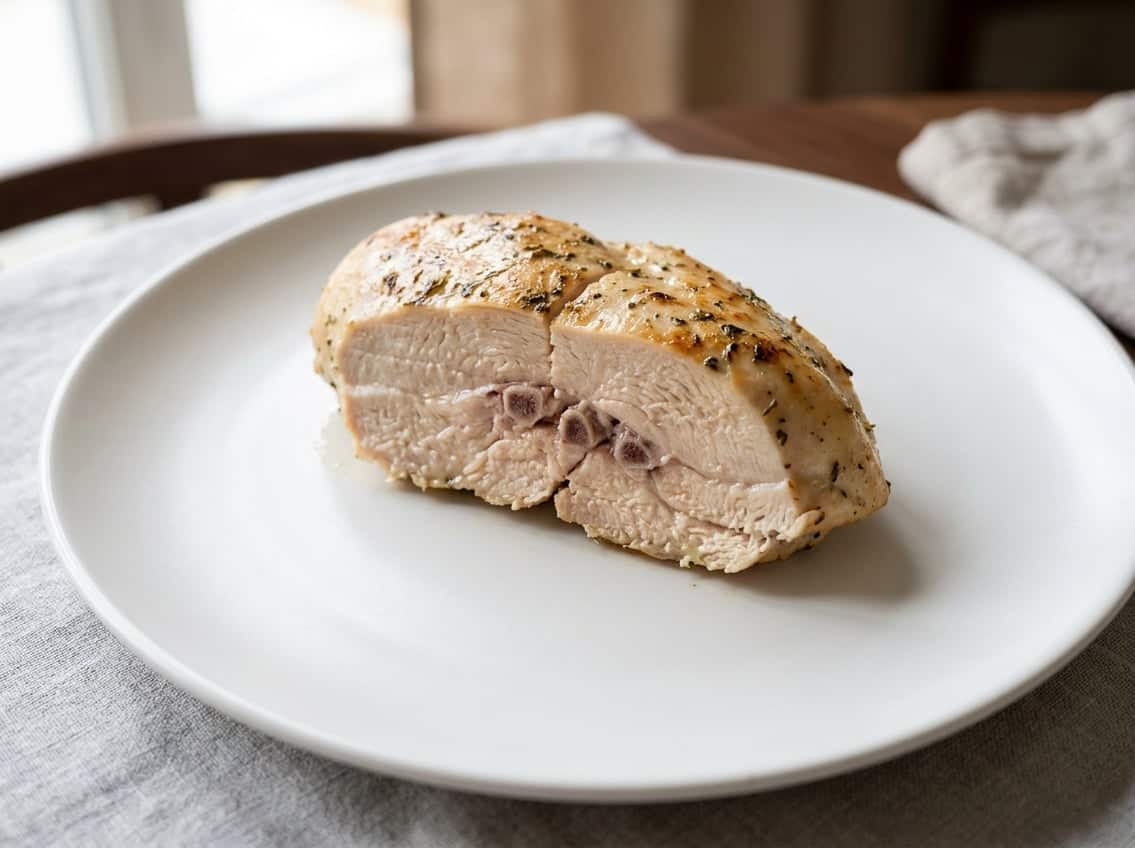
Even a boneless breast can sometimes hide a small hard piece. This can happen because of the bird’s shape, the way the breast is cut, or a miss during deboning and trimming.
How Chicken Anatomy Affects Breast Cuts
Chicken breast comes from the large chest muscles, mainly the pectoralis major and pectoralis minor. These muscles sit close to the body structure, so the cut passes near several bones.
That is why the answer to does chicken breast have bones can vary by product type. A breast is mostly muscle, but the nearby bone structure can still leave a trace behind during processing.
Where the Breastbone, Keel Bone, and Ribs Sit
The breastbone, also called the sternum or keel bone, runs down the center of a bone-in breast. The rib cage sits behind and around that area, so trimming has to be precise to remove every bone cleanly.
If the cut is not separated well, pieces from the bones in chicken breast area can remain attached. Those pieces are often tiny, which makes them harder to spot before cooking.
How Deboning and Quality Control Can Miss Small Pieces
During deboning, workers remove the main bones and trim the meat. Even with good quality control, small bone fragments can stay behind.
These bone fragments are usually rare, but they do happen. A package labeled boneless is still worth a quick check, especially if the meat looks uneven or feels unusually hard in one spot.
Safety Checks Before and After Cooking
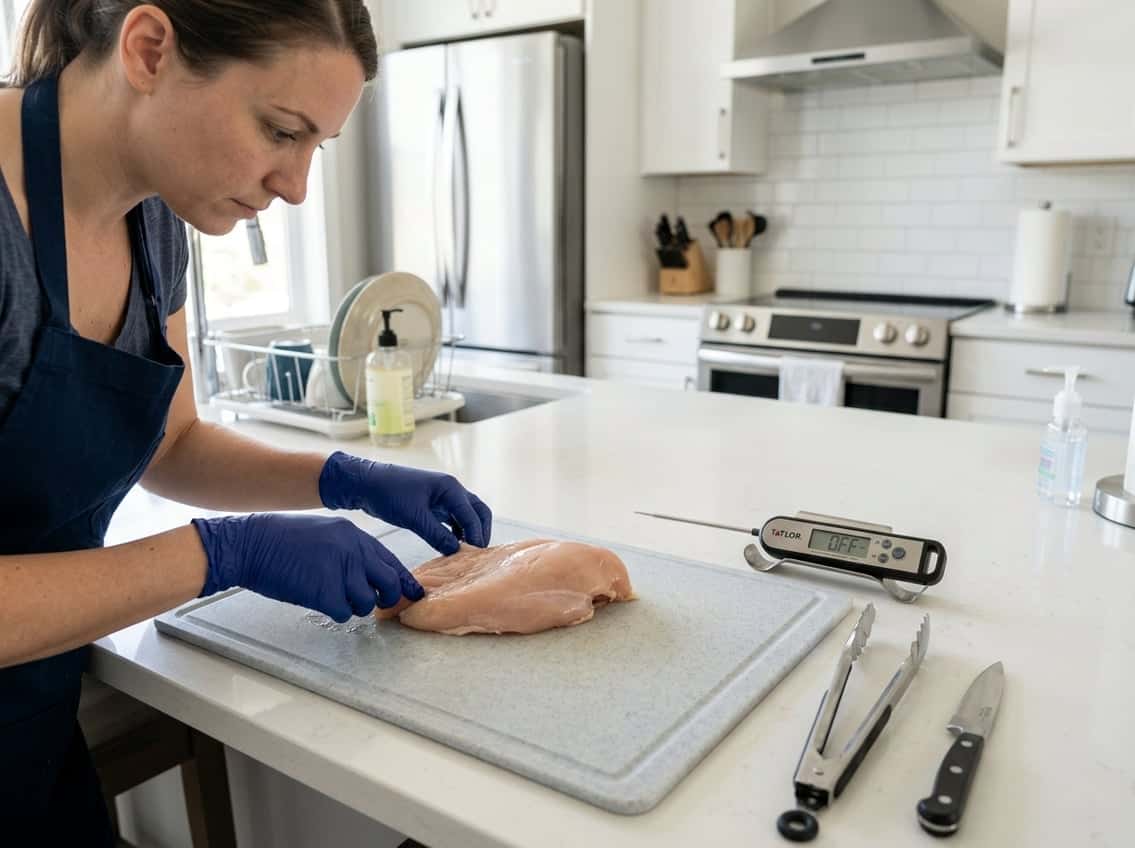
A quick inspection lowers the risk of eating a surprise fragment. It also helps protect against food safety issues tied to raw poultry handling and stray bones.
How to Inspect for Hard Spots and Bone Fragments
Run your fingers lightly over the chicken breast before cooking. You are looking for sharp points, stiff edges, or unusual hard spots that do not feel like normal meat.
If needed, make a small cut in the thickest part and check the inside. This matters even with boneless chicken breast, because a package can still contain a stray piece from trimming.
When Small Bones Become a Choking Hazard
Tiny pieces can be more dangerous than a full bone because they are easy to miss. A choking hazard is a bigger concern for children, older adults, and anyone who eats quickly.
A fragment can also damage teeth or irritate the mouth and throat. If a piece is sharp enough to poke through the meat, do not cook around it.
What to Do if You Find Bone Fragments
Remove the fragment with clean tweezers or a knife tip. Inspect the area again.
If the meat is heavily contaminated with hard bits, discard that piece. Keep raw chicken away from cooked food and wash your hands, tools, and cutting board after handling it, as the CDC recommends in its chicken food safety guidance.
Best Uses for Each Cut in the Kitchen
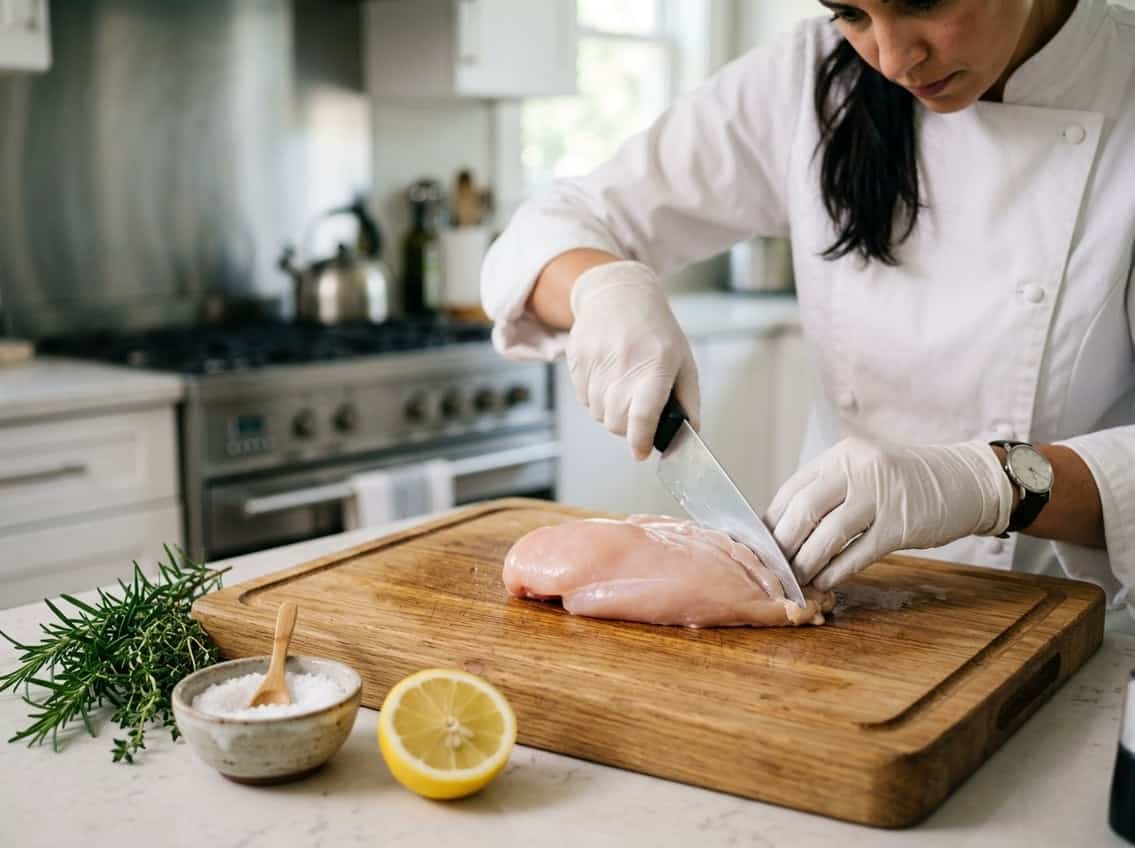
The best cut depends on how fast you need dinner and how much flavor you want. Boneless breasts work well for speed.
Bone-in cuts often give you more moisture and a richer taste.
When Boneless Breasts Are Better for Fast Meals
A boneless skinless chicken breast is ideal for cutlets, stir-fries, salads, sandwiches, and meal prep. You can slice it fast, portion it evenly, and cook it in less time.
It works well when you want to avoid dealing with any chance of bones in chicken breast during a busy meal.
When Bone-In Breasts Work Better for Flavor
A bone-in chicken breast holds moisture well and can taste fuller after roasting or braising. The bone slows heat flow, which helps the meat stay juicier.
If you like roasted chicken with crisp skin, a skin-on chicken breast can give you better browning and richer pan drippings. That extra fat also helps when you make a quick pan sauce with butter.
How Cooking Method Affects Texture and Juiciness
Faster methods like pan-searing or grilling suit boneless cuts because they cook evenly and quickly.
Slower methods like roasting suit bone-in pieces because the meat has more time to stay tender.
For example, bone-in fried chicken stays juicy longer in hot oil.
Boneless chicken breast can dry out if you cook it too long.
Choose the cut that matches your method and adjust your timing to protect texture.


