
When Is Chicken Breast Fully Cooked? Key Signs
When is chicken breast fully cooked? The clearest answer is when the internal temperature of chicken reaches the safe minimum internal temperature of 165°F in the thickest part of the meat.
At that point, the chicken is safe to eat, and you can still keep it juicy if you cook it carefully.
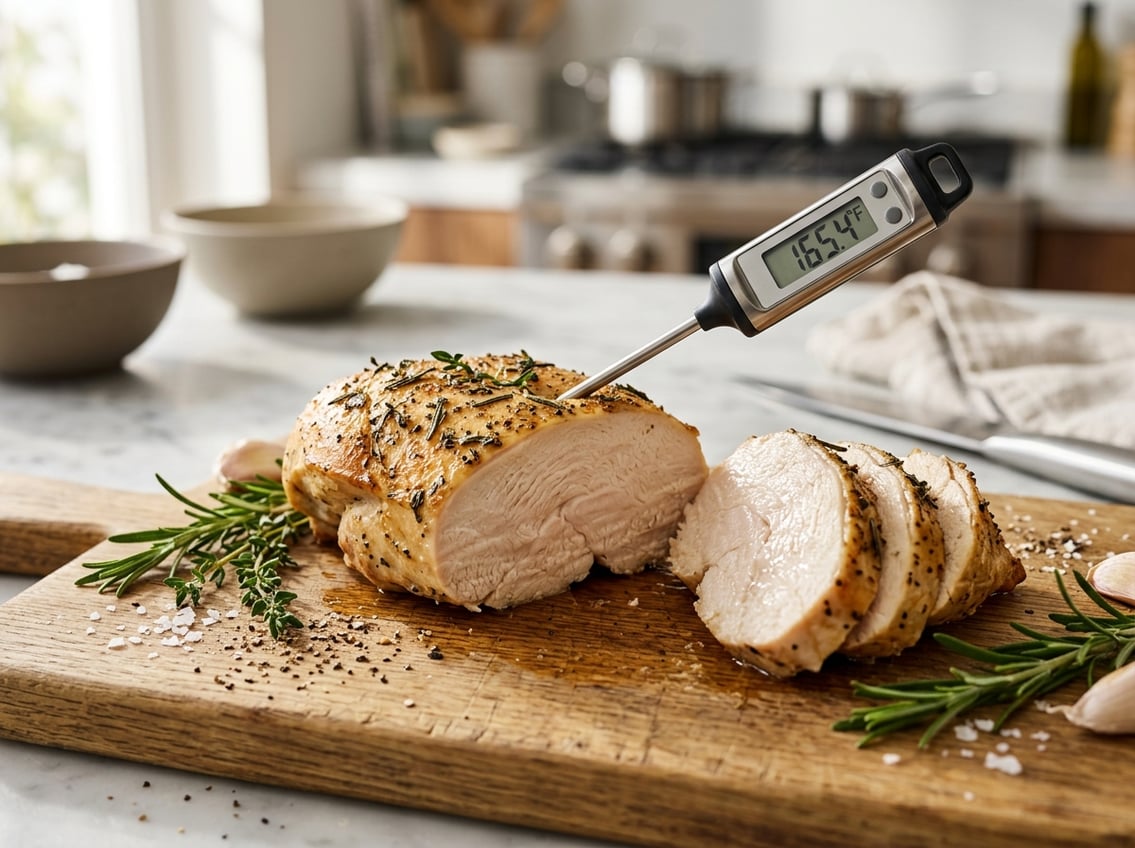
You do not need to guess based on color alone.
A chicken breast can look done before it is safe, so temperature is the most reliable sign.
A good finish depends on checking the right spot and using the right tool.
Knowing which visual cues support the reading matters more than cooking time alone.
The Exact Doneness Benchmark
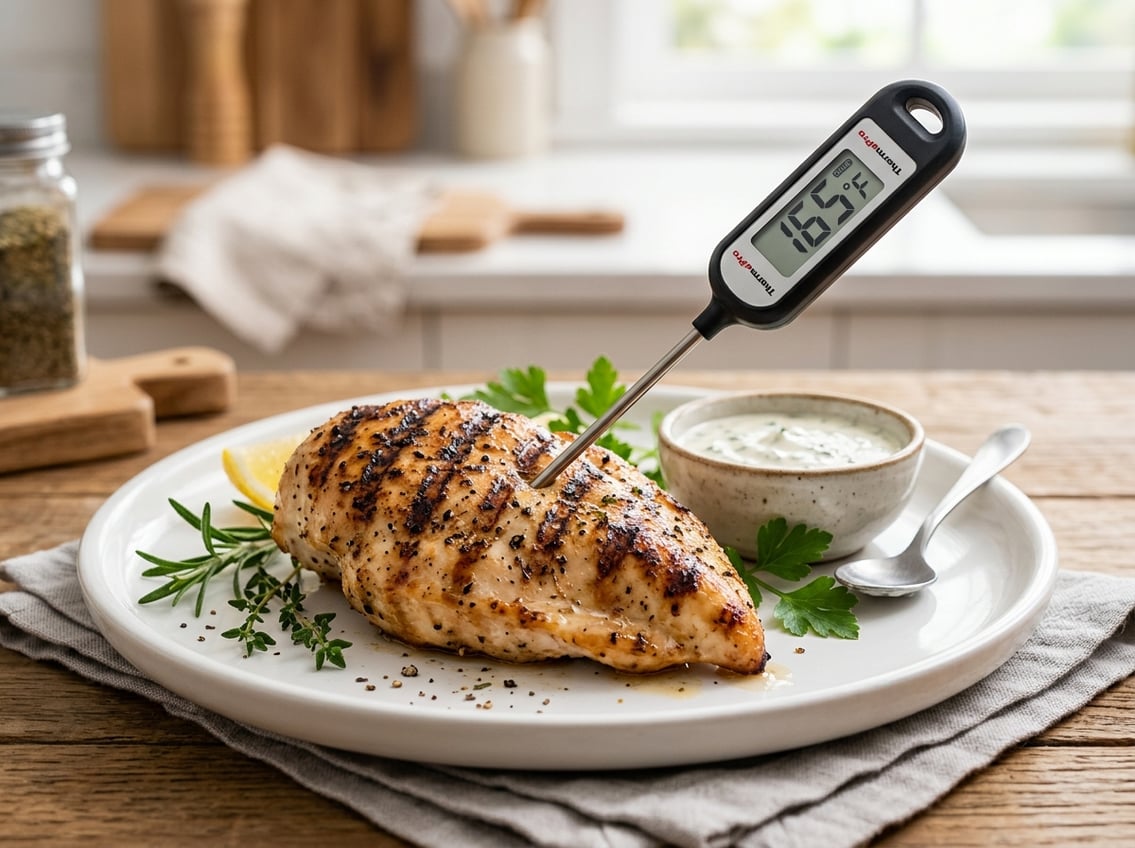
The safe minimum internal temperature for chicken breast is 165°F.
That number tells you when the internal temperature of chicken has reached a level that is safe for eating.
Why 165°F Is the Safe Minimum
The USDA food safety standard for poultry is 165°F at the center of the meat.
According to the chicken temperature guide, chicken breast is fully cooked and safe at this point.
What Counts as the Thickest Part
You want the reading from the thickest part of the breast, since that spot heats up last.
If the thick center is 165°F, thinner edges are usually done too.
Avoid measuring near the surface, since that area can read hotter than the middle.
Why Chicken Breast Can Still Be Juicy at This Point
Chicken breast is lean, so it can dry out fast.
It can still be juicy at 165°F if you cook it with steady heat and avoid overcooking.
A short rest after cooking also helps the juices settle back into the meat.
How to Check It Accurately
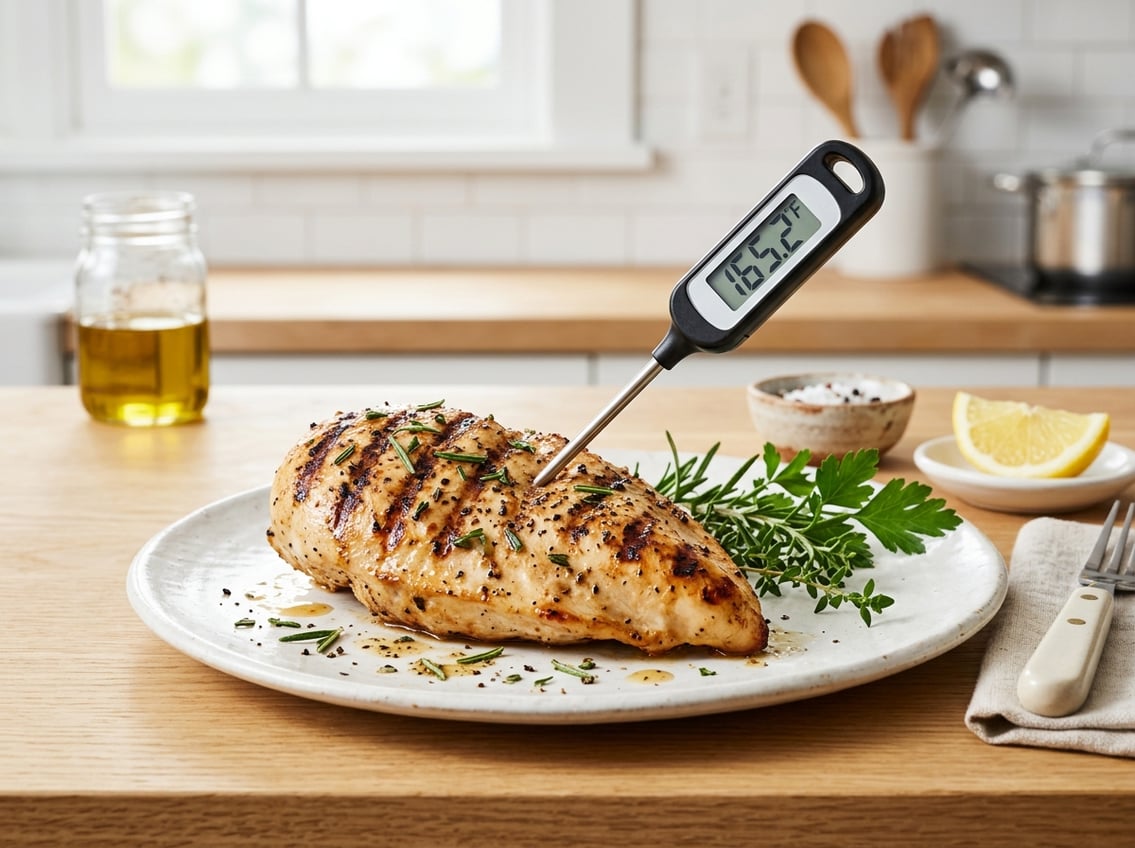
If you want to know when chicken breast is fully cooked, use a meat thermometer.
Visual checks can help, but a thermometer gives you the most reliable answer for the internal temperature of chicken.
Use a Meat Thermometer the Right Way
Insert the probe into the thickest part and wait until the reading settles.
As Eat and Geek notes, this is the most accurate way to confirm the safe minimum internal temperature.
If the reading is below 165°F, keep cooking and check again.
Where to Insert the Probe in Thin or Thick Breasts
For thick breasts, place the probe straight into the center from the side if possible.
For thin breasts, angle it so the tip still reaches the middle of the meat.
The goal is always the same: measure the coldest spot.
How to Avoid False Readings From Bone, Fat, or Air Pockets
Do not let the probe touch bone, since bone can give a false high reading.
Fat pockets can also skew the result.
If the breast is folded or uneven, check a second spot to confirm the reading is steady.
Other Signs That Support Doneness
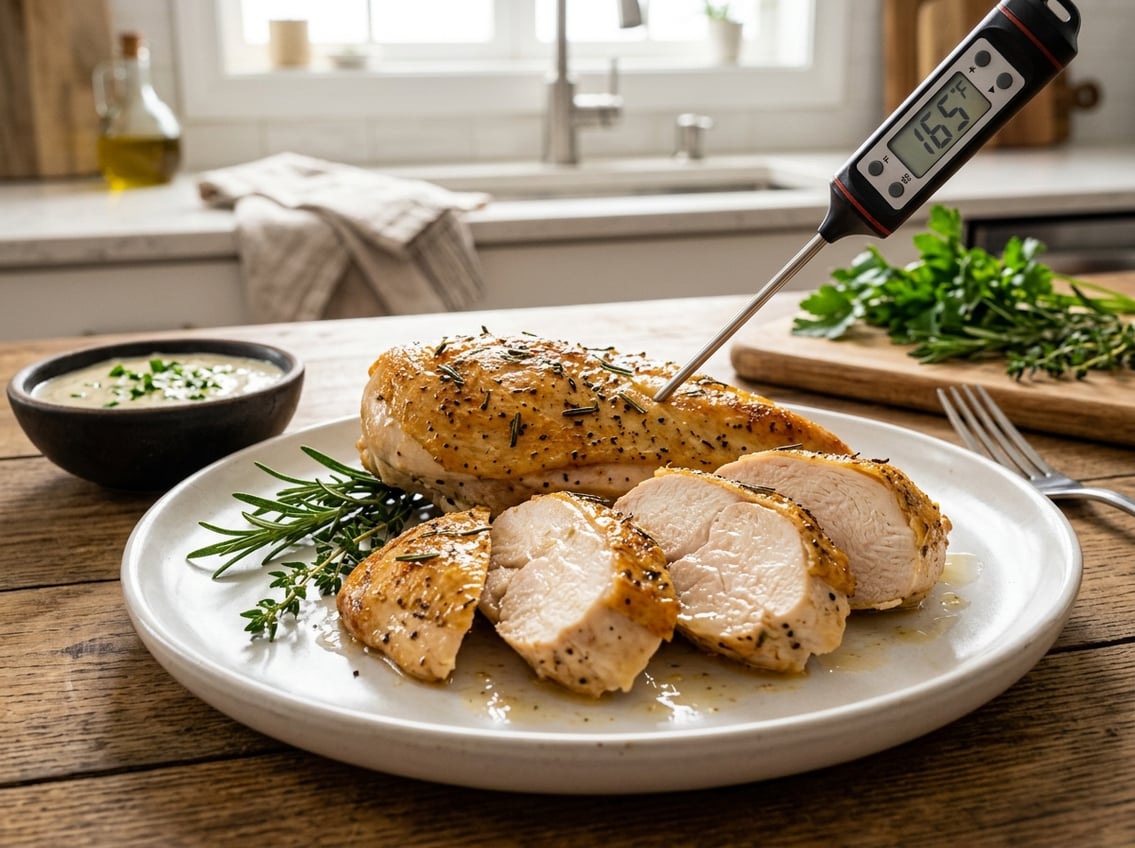
The internal temperature of chicken remains the main test, yet a few other signs can support what the thermometer tells you.
These cues help you judge whether the meat is moving in the right direction.
What Clear Juices and Meat Color Can Tell You
Cooked chicken breast usually looks opaque and white through the center.
The juices should run clear, not pink.
Even so, color alone is not enough, since chicken can look done before it reaches the safe minimum temperature.
How Texture and Firmness Change as It Cooks
Raw chicken feels soft and slippery.
As it cooks, the meat becomes firmer and springs back when pressed.
A fully cooked breast should feel firm, not mushy, and it should slice cleanly.
When Visual Checks Are Not Enough
Visual signs can mislead you, especially with thicker pieces or high-heat cooking.
According to a detailed guide on chicken doneness, color and texture help, yet they do not replace temperature.
If you want a safe result, check the thermometer first and use the visuals as backup.
Common Mistakes That Ruin Results
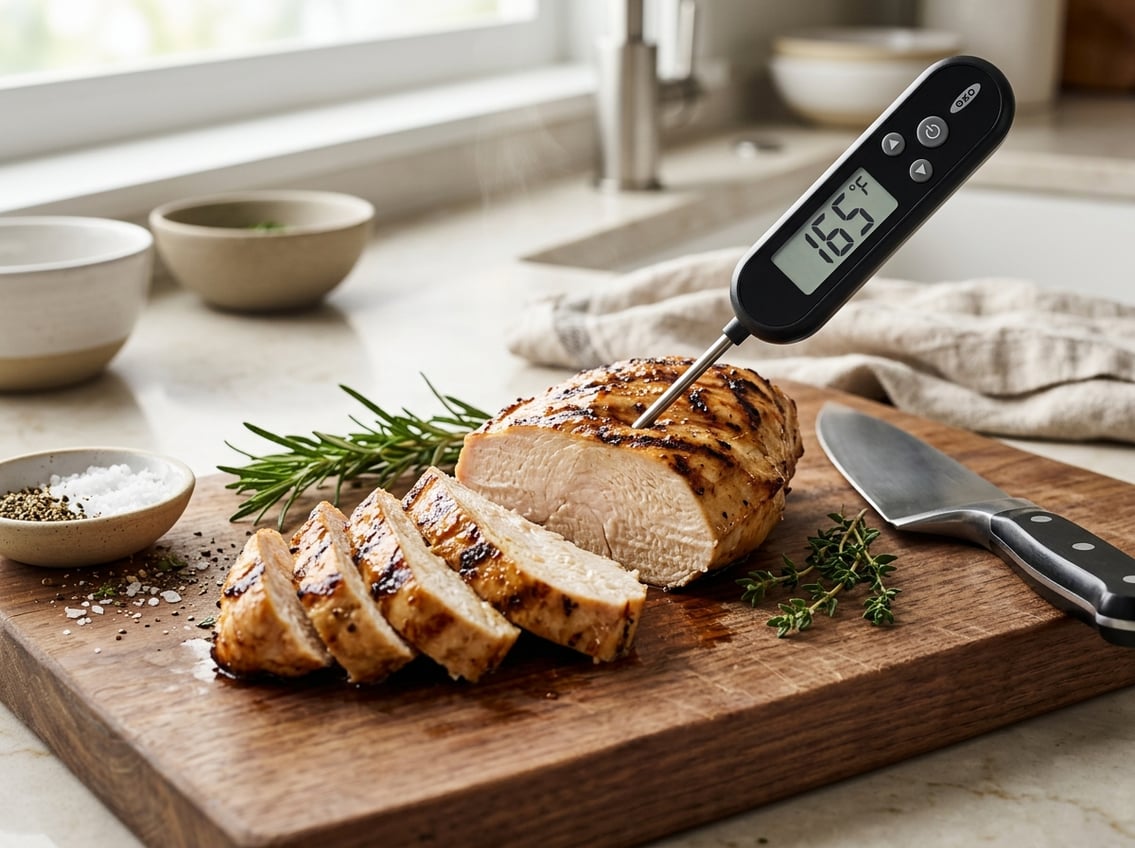
A few common mistakes can leave you with an overcooked chicken breast or one that is still underdone.
The fix is to check temperature closely and manage heat with care.
How Overcooked Chicken Breast Happens
Chicken breast dries out when it stays on the heat too long after it reaches 165°F.
This often happens when you rely on time alone or keep cooking because the meat does not look perfect yet.
A quick thermometer check helps you stop at the right point.
Why High Heat Can Brown the Outside Too Fast
Strong heat can darken the outside before the inside is safe.
That is common with grilling and pan-searing.
If the surface is browning quickly, lower the heat and keep checking with a meat thermometer.
Why Resting Time Helps Preserve Juiciness
Resting allows the juices to redistribute through the meat. If you cut too soon, the juices run out onto the board.
Let the chicken rest for a few minutes. Then slice it so the texture stays more tender and moist.


