
What Should Chicken Breast Temperature Be? Safe and Juicy Guide
You may wonder what temperature chicken breast should reach when you want food that is both safe and moist. The answer is that chicken breast should reach 165°F (74°C) at the thickest part, measured with a thermometer, to make sure it is safe to eat.
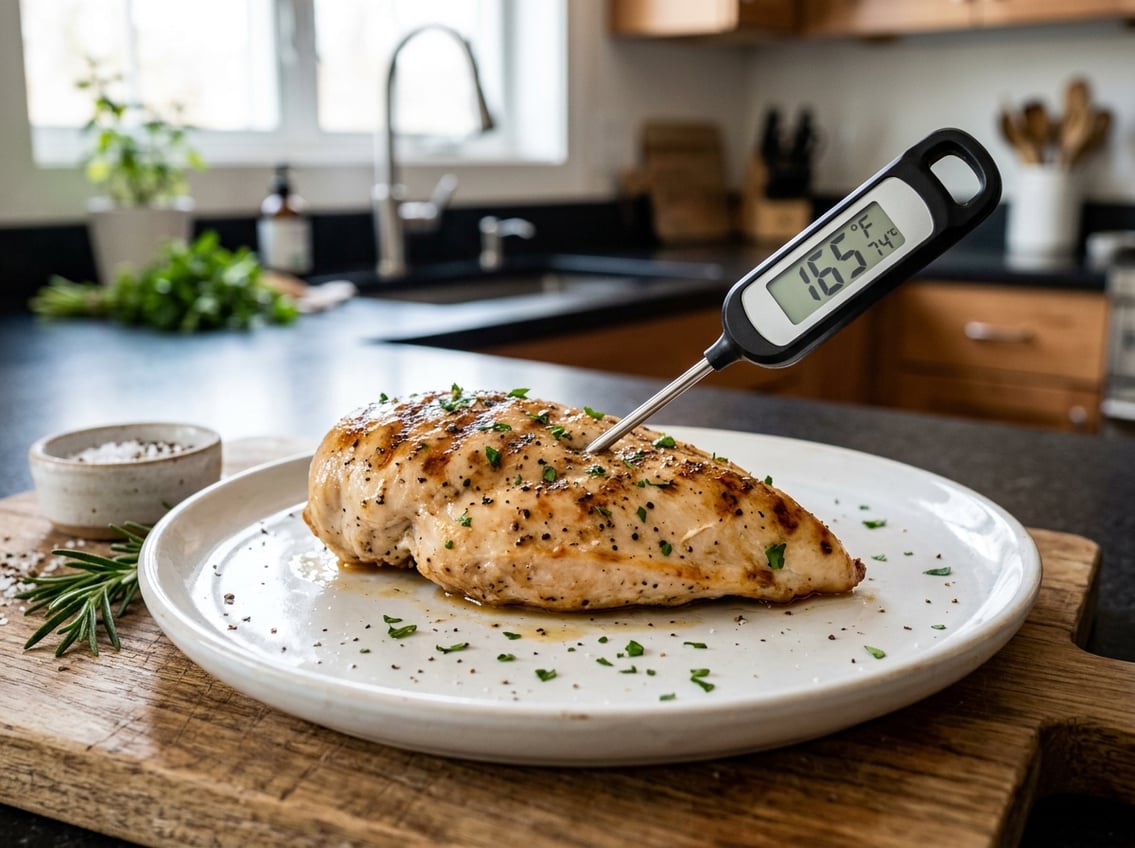
Chicken breast is lean, so it dries out fast. Temperature is the most reliable way to avoid both undercooking and overcooking.
A good temperature check protects you from foodborne illness. Using a thermometer gives you the best chance for juicy meat.
Color, firmness, and juices can mislead you. Internal temperature is the standard that works best in home kitchens.
According to Allrecipes, using the proper cooking method and not pushing the meat past its target also matters.
The Exact Doneness Number
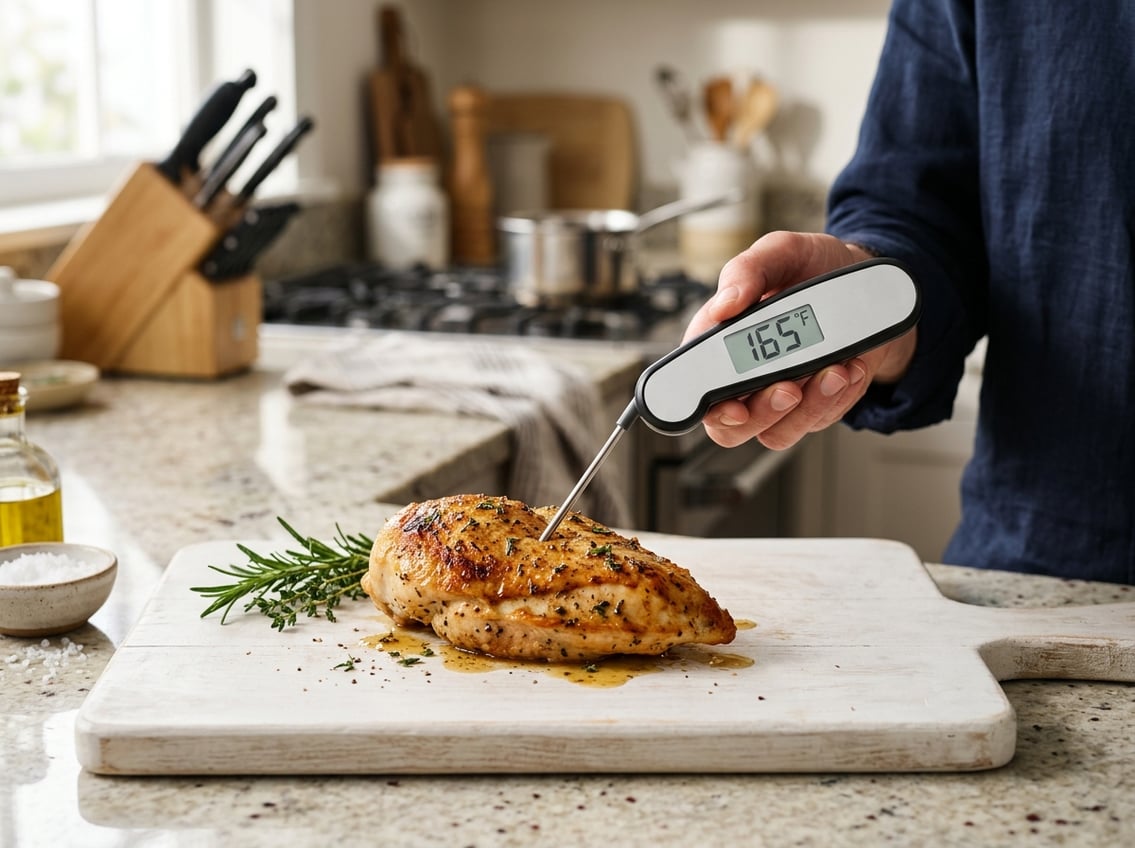
Remember this number for chicken breast: 165°F (74°C). This is the safe internal temperature in the thickest part of the meat.
This standard in the U.S. kills harmful bacteria fast enough for safe eating.
Why 165°F (74°C) Is Safe
Chicken needs to reach a temperature that destroys pathogens such as campylobacter, a main bacteria tied to poultry. At 165°F (74°C), you have a clear safety target when you check it correctly.
Use this number for the thickest point, not the surface. If your thermometer reads lower, the center still needs more time.
When to Pull Chicken Breasts for Carryover Cooking
You can pull chicken breasts a little early if you know they will rest. Some cooks remove them at 160°F to 163°F and let residual heat finish the job as the meat rests, as long as the final temperature reaches 165°F.
This works best with even-sized breasts and accurate thermometer use. If the chicken is very thick or the oven is inconsistent, wait for a full 165°F in the pan or oven.
Why Color and Juices Are Not Reliable
Chicken can look done before it is safe. It can look slightly pink even when it has reached the right temperature.
Juices can run clear while the center still falls short of the temperature you need. A thermometer gives a direct answer.
Sight and touch do not tell you the true temperature you need for safety.
How to Measure It Correctly
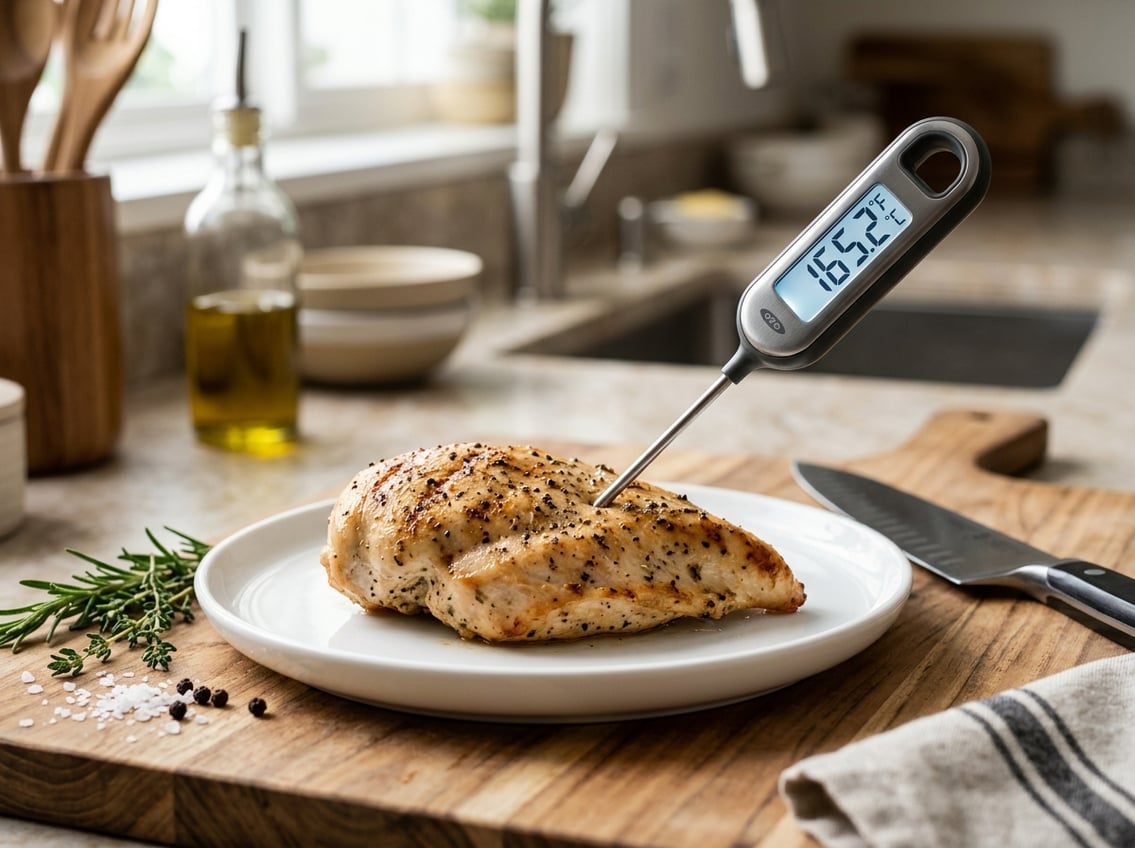
Start with the right tool and the right placement. Guesswork leads to dry or unsafe chicken.
A meat thermometer gives you the temperature you need.
Using a Meat Thermometer
An instant-read thermometer is the easiest tool for most home cooks. It shows the internal temperature in seconds and helps you avoid overcooking.
Guesswork is risky because breasts are uneven in shape and thickness. One side may be done while the other still needs time.
Where to Insert an Instant-Read Thermometer
Insert the probe into the thickest part of the breast. Avoid touching bone, pan, or gristle because those spots can give a false reading.
If the breast is very thick, test the center from the side if needed. For very large pieces, check more than one spot.
Common Temperature Reading Mistakes
Do not check too close to the edge because thin areas heat faster than the middle. Do not leave the thermometer near the surface, since it can read hotter than the true internal temperature.
Do not skip calibration if your thermometer seems off. A bad tool can make even careful cooking unreliable.
Best Cooking Methods for Tender Results
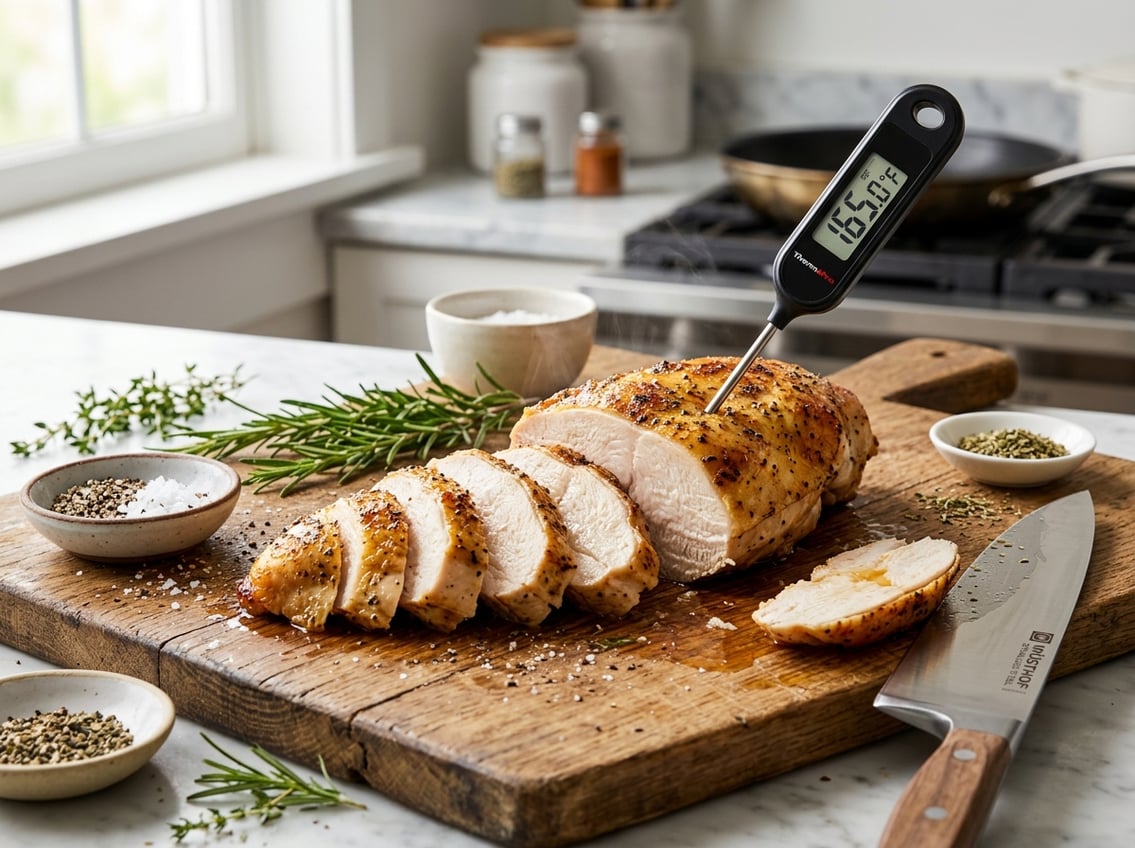
The best temperature for juicy chicken depends on the method, oven heat, and how long the meat rests. You still want the same safe endpoint, 165°F, but the path there changes the texture.
Baking Chicken Breasts at Different Oven Heats
Higher heat gives you better browning and a shorter cook time. Moderate heat gives you more control and helps smaller or thinner breasts cook more evenly.
According to Allrecipes, baking at 450°F creates a faster roast with more color, while 375°F offers a slower option. Both can work if you monitor the temperature closely.
Timing Ranges by Oven Temperature
Timing changes with thickness, oven heat, and whether the chicken is boneless or bone-in. Thinner boneless breasts may finish in under 20 minutes at high heat, while thicker pieces need longer at moderate heat.
Use time as a rough estimate only. The real target is the internal temperature, not the clock.
Resting, Brining, and Keeping Chicken Moist
Resting helps juices settle back into the meat. A few minutes covered loosely with foil can make a difference.
Brining, marinating, or lightly salting ahead of time can also help with juicy chicken breasts. These steps do not replace the thermometer, but they improve the result before you reach 165°F.
Safety and Texture Factors
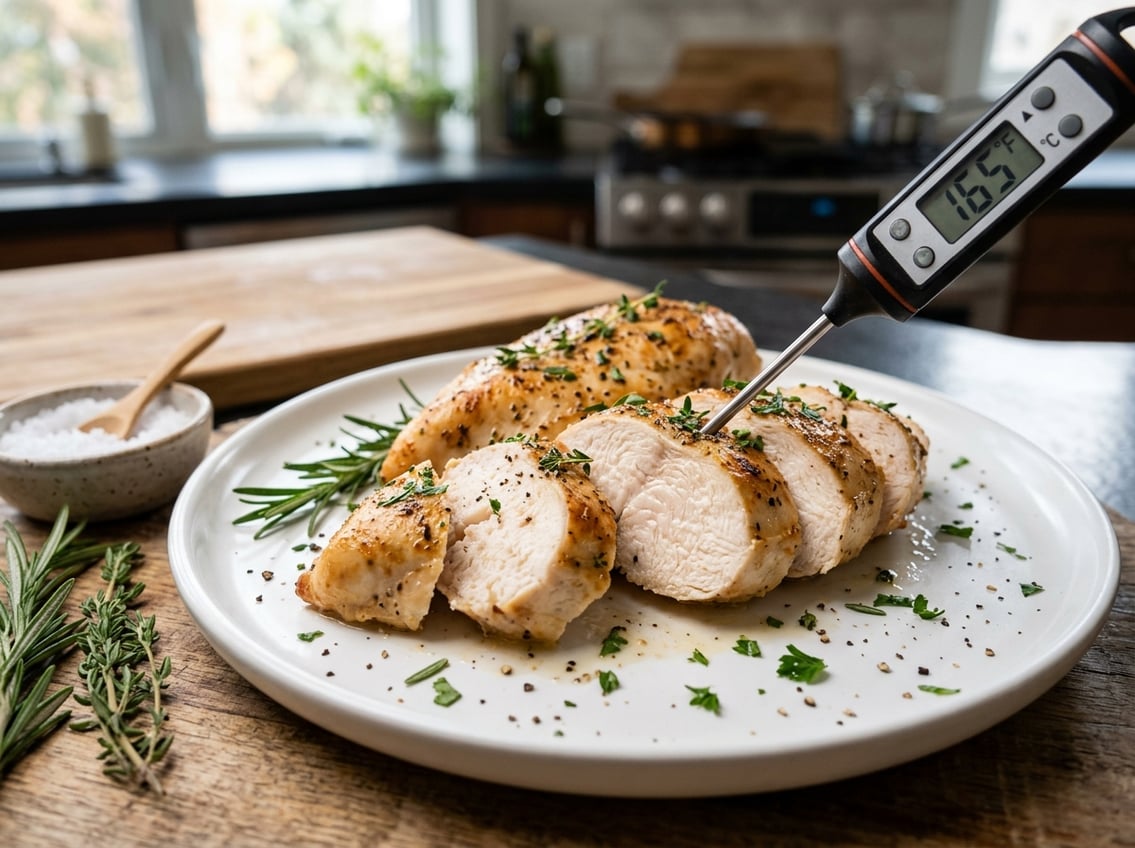
The right chicken temperature is only part of the result. Thickness, moisture loss, and extra cooking after removal all affect whether your chicken turns out juicy or dry.
Why Chicken Breasts Dry Out Fast
Chicken breast has very little fat, so it loses moisture quickly as heat rises. The difference between barely done and overdone can be small.
Even after you hit the safe temperature, extra heat can keep pushing moisture out. A thermometer matters more with breasts than with many other cuts.
How Thickness Affects Cooking Time
Thicker breasts take longer to reach the safe temperature, while thinner ones can overshoot quickly. Uneven pieces often cook unevenly, so pounding or trimming to a more even size can help.
If one end is much thicker, test that end first. The thickest spot tells you whether the whole piece is done.
When Safe Does Not Always Mean Best Texture
Safe and juicy are related, but they are not the same thing.
Chicken reaches a safe temperature at 165°F, but it can feel dry if you leave it in the heat too long.
The best temperature for juicy chicken depends on reaching the target efficiently.
Let the meat rest before slicing.


