
Where Does Chicken Breast Come From? Bird, Farm, and Labels
You may think the answer to where chicken breast comes from is simple, and in one sense it is. Chicken breast comes from the chest muscles of the chicken, and the boneless packages you buy in stores are trimmed and processed from that part of the bird.
What you see in the meat aisle is the end result of breeding, raising, processing, and labeling.
The cut starts on the bird, then moves through a poultry system that turns a live chicken into familiar chicken breasts, skinless chicken breast packs, and other chicken meat products.
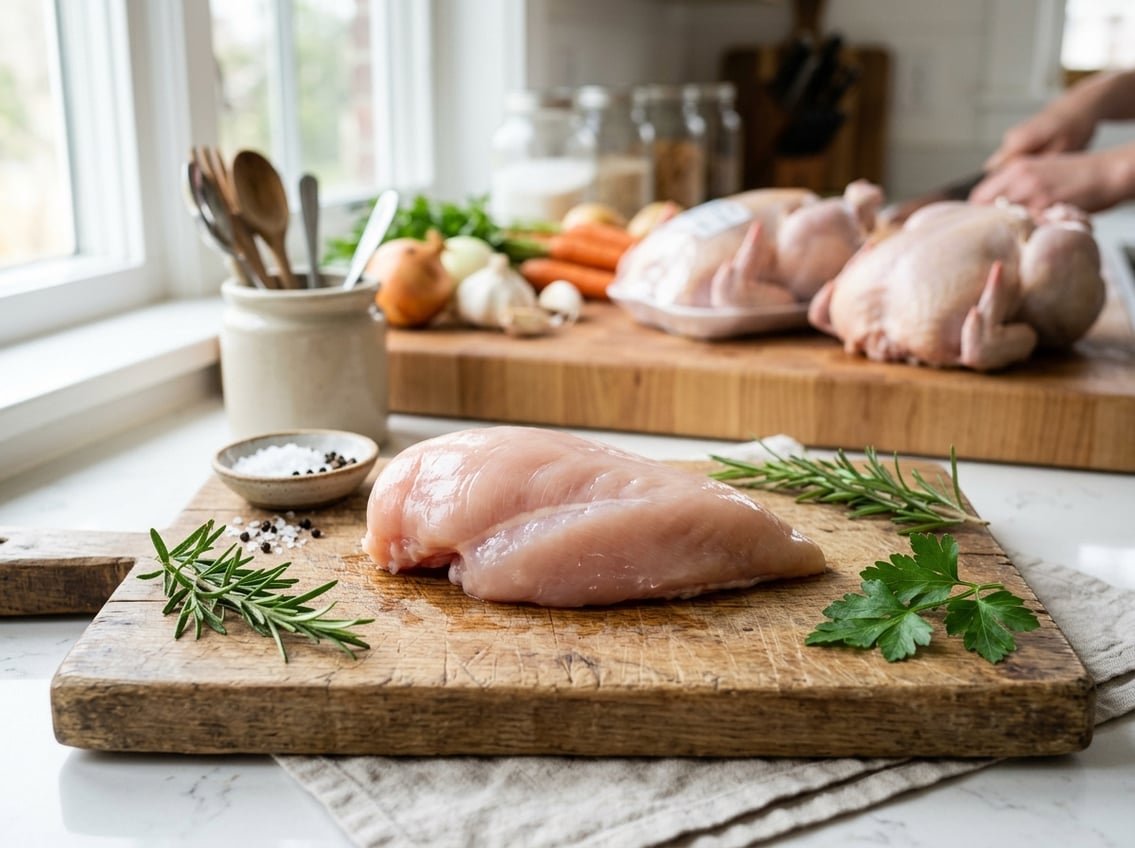
What Part of the Bird It Comes From
Chicken breast comes from the front of the bird, over the chest.
It is the thick, meaty area on both sides of the breastbone, and it is one of the main sources of white meat on chickens.
That white color comes from how the chest muscles work.
These muscles are built for steady movement, not long bursts of intense effort, so they have less of the pigment that makes darker meat look red.
The Chest Muscles and Why Breast Meat Is White
The breast area contains muscles that help the chicken move its wings.
In everyday cooking, people value those muscles as lean protein because they are low in fat compared with many other cuts.
The breast is usually sold with little visible fat, especially when you buy skinless chicken breast.
That is one reason it has a mild taste and a firm texture when cooked properly.
Pectoralis Major, Pectoralis Minor, and the Tenderloin
The two main breast muscles are the pectoralis major and pectoralis minor.
The larger pectoralis major makes up most of the chicken breast you eat, while the smaller pectoralis minor sits underneath it.
The small strip under the breast is often called the chicken tender or tenderloin.
It is a separate piece of meat, even though it comes from the same general area.
Whole Breast, Split Breast, and Chicken Tender Cuts
A whole breast is the full breast muscle left attached to the breastbone.
A split breast is one half of that cut, usually still with the bone in place.
Store packages may also say boneless breast, boneless skinless breast, or chicken tenders.
Those names tell you how much of the original cut workers removed during trimming and fabrication, not that the meat came from a different part of the bird.
How Chickens Become Store-Bought Breast Meat
The chicken breast in your kitchen starts with breeding and raising birds for meat.
Modern chicken production uses birds called broilers, which are selected to grow quickly and yield the cuts people buy most often.
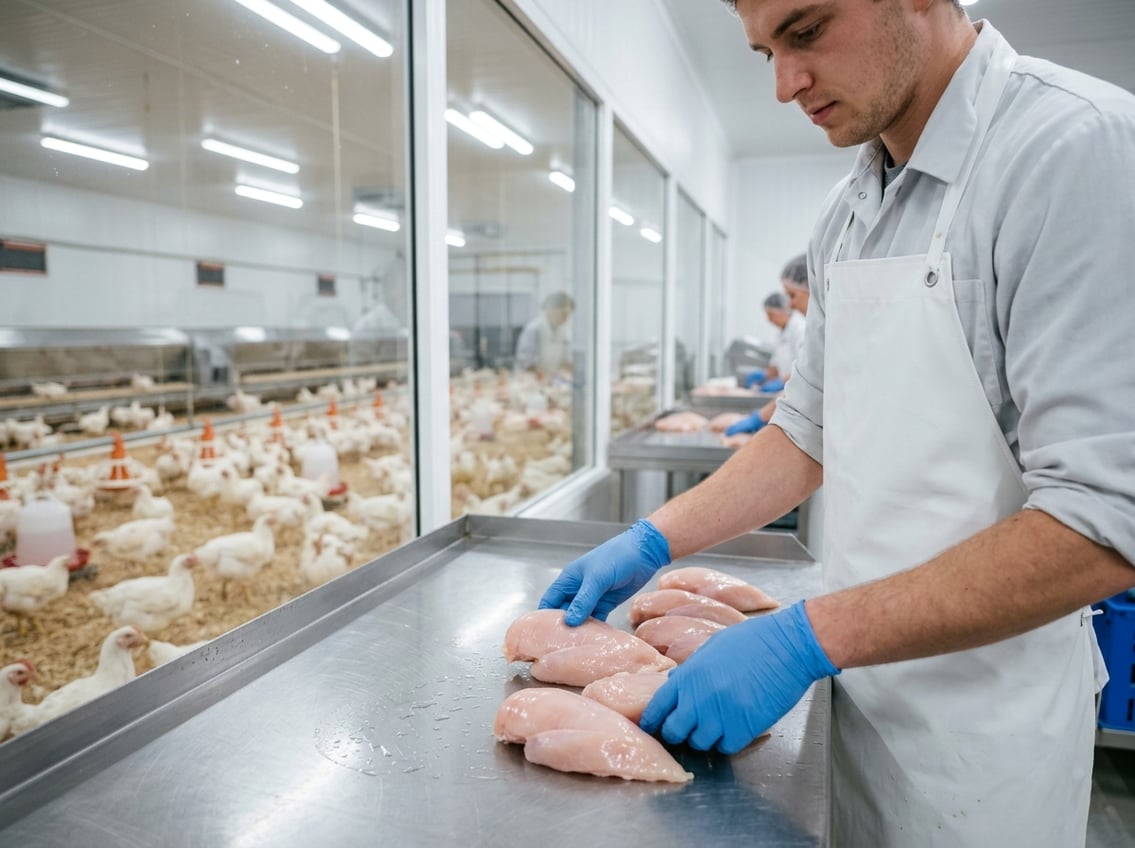
From Red Junglefowl to Modern Broilers
Domestic chickens come from the red junglefowl, a wild bird native to Southeast Asia.
Over many generations, humans bred chickens for traits such as size, growth rate, and meat yield, which led to the broilers used in modern poultry production according to the chicken’s domestication history.
That long breeding process changed chicken meat a lot.
Today’s broiler chickens are much larger and faster growing than their wild ancestors, and that makes them efficient for the poultry industry.
How Broiler Chickens Are Raised for Poultry Production
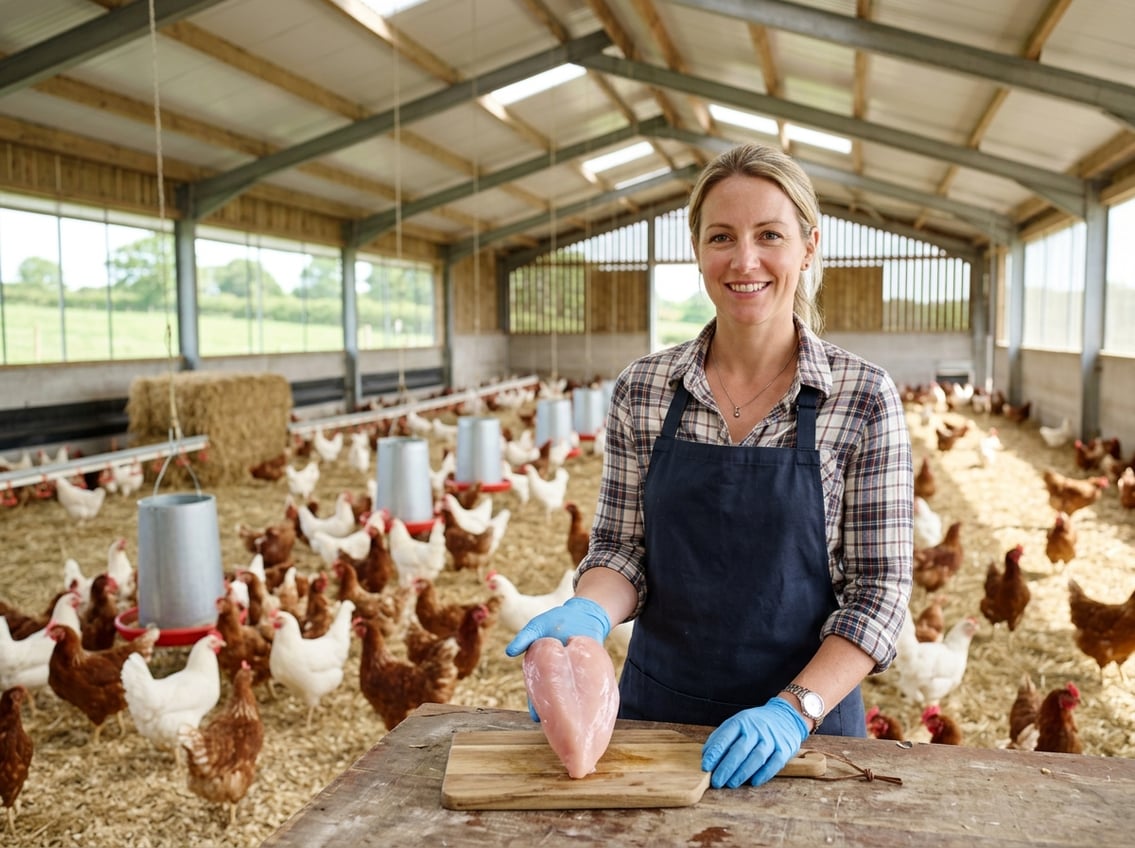
Farmers raise broiler chickens on poultry farms in large groups under controlled conditions.
In the U.S., chicken production is a major part of the poultry industry, and most chicken meat comes from conventional chicken systems rather than small backyard flocks.
Organic chicken follows different feed and living standards than conventional chicken, while conventional chicken production usually focuses on volume, speed, and cost.
Both can end up as breast meat in stores, depending on how the bird is processed.
Processing, Trimming, and Packaging at the Poultry Farm and Plant
After birds reach market weight, workers take them to a processing plant tied to the poultry farm system.
There, workers remove, trim, chill, and package the breast meat for retail or food service.
At that point, sellers may offer the product as whole breast, split breast, boneless breast, or skinless chicken breasts.
The label tells you how the cut was prepared, while the farm and plant determine how the bird was raised and processed.
What Labels and Farming Claims Really Mean
Chicken labels can help you choose the cut you want, and they can also create confusion.
Some terms describe the meat itself, while others describe how the chicken was raised or certified.
Boneless, Bone-In, Skinless, and Skin-On Explained
A boneless chicken breast has the bone removed.
A bone-in breast keeps the breastbone and sometimes part of the rib area attached.
Skinless chicken breasts have the skin removed before packaging, which lowers the fat content.
Skin-on chicken breast keeps the skin in place, which can add flavor and help the meat stay moist during cooking.
Free-Range, Organic, and Conventional Chicken Compared
The term free-range chicken does not have a precise federal definition in the same way every consumer expects.
In U.S. labeling practice, it generally means the chickens had access to the outdoors for at least part of the day, though the amount and quality of that access can vary.
Organic chicken must meet USDA organic rules for feed and production.
Conventional chicken follows standard commercial poultry farming practices.
Conventional systems are common in factory farming and intensive farming models, which aim for high output and lower cost.
Certified Humane, Animal Welfare Approved, and Global Animal Partnership
Some labels focus more on animal welfare.
Terms such as certified humane, animal welfare approved, and Global Animal Partnership point to third-party standards for living conditions, handling, and slaughter practices.
Those labels do not change where the chicken breast comes from.
They tell you more about animal welfare and farming rules than about the anatomy of the cut.
A package from a brand like beau sanspeau farm may still contain the same breast muscle, even if the farming claims differ.
Nutrition, Safety, and Common Uses
Chicken breast is popular because it is versatile and easy to cook.
It also has a reputation as a lean protein, which makes it useful for meals where you want plenty of protein with less fat.
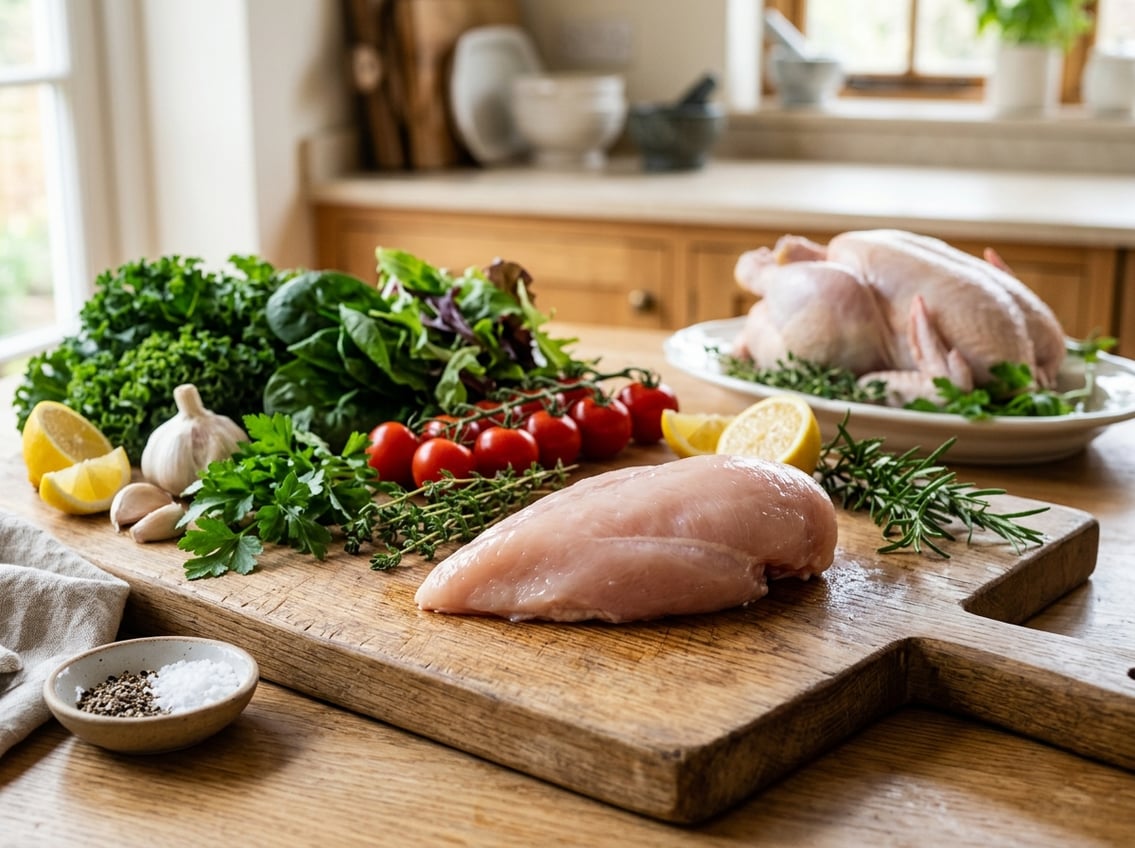
Why Chicken Breast Is Valued as a Lean Protein
Chicken breast is one of the leanest parts of chicken meat.
A skinless breast has very little saturated fat, and that is one reason it is often chosen for lower-fat meal plans according to Ohio Poultry Association nutrition facts.
You also get a high-protein food that works in many recipes.
That includes simple dishes, meal prep boxes, and mixed meals where the meat is one part of a larger plate.
Food Safety Risks, Salmonella, and Foodborne Illness Prevention
Raw poultry can carry salmonella and other germs that can cause foodborne illness.
Safe handling matters from the moment you open the package.
You should keep raw chicken cold, wash your hands after touching it, and cook it to a safe internal temperature.
You should also avoid cross-contamination by keeping raw chicken meat away from cutting boards, utensils, and ready-to-eat foods.
There is also a broader food safety concern around antibiotic resistance, which is why chicken producers, veterinarians, and regulators watch antibiotic use closely.
Popular Dishes Like Fried Chicken, Roasted Chicken, and Chicken Tikka Masala
Chicken breast fits many dishes because it absorbs seasoning well and cooks quickly. You see it in fried chicken, roasted chicken, and chicken tikka masala.
People also use chicken breast in salads, sandwiches, and stir-fries. Its mild flavor makes it easy to pair with sauces and spices.
That flexibility is a big reason chicken breast remains one of the most purchased poultry cuts in the U.S.


