
How Long Should Chicken Breast Rest? Timing Guide
The best answer to how long should chicken breast rest is usually 5 to 10 minutes. Thicker pieces need the longer end of that range.
That short pause lets the meat settle, keeps more juices inside, and makes slicing cleaner.
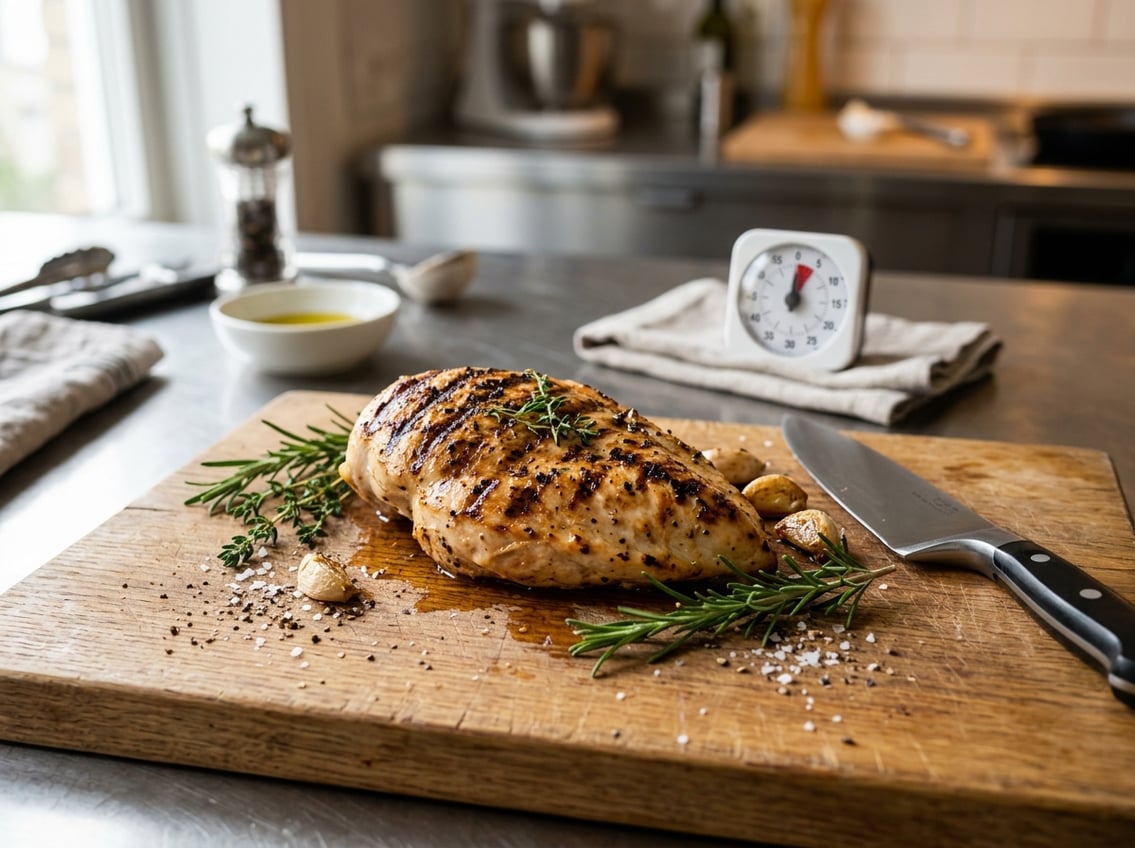
If you want juicy chicken breast, let it rest after cooking before you cut into it. The right resting time depends on size, thickness, and cooking method.
A thin cutlet does not need the same wait as a thick baked breast.
The goal is simple. You want the meat to finish relaxing without losing too much heat.
A short, well-timed rest gives you better texture and more even slices.
Best Resting Times by Breast Size and Cooking Method
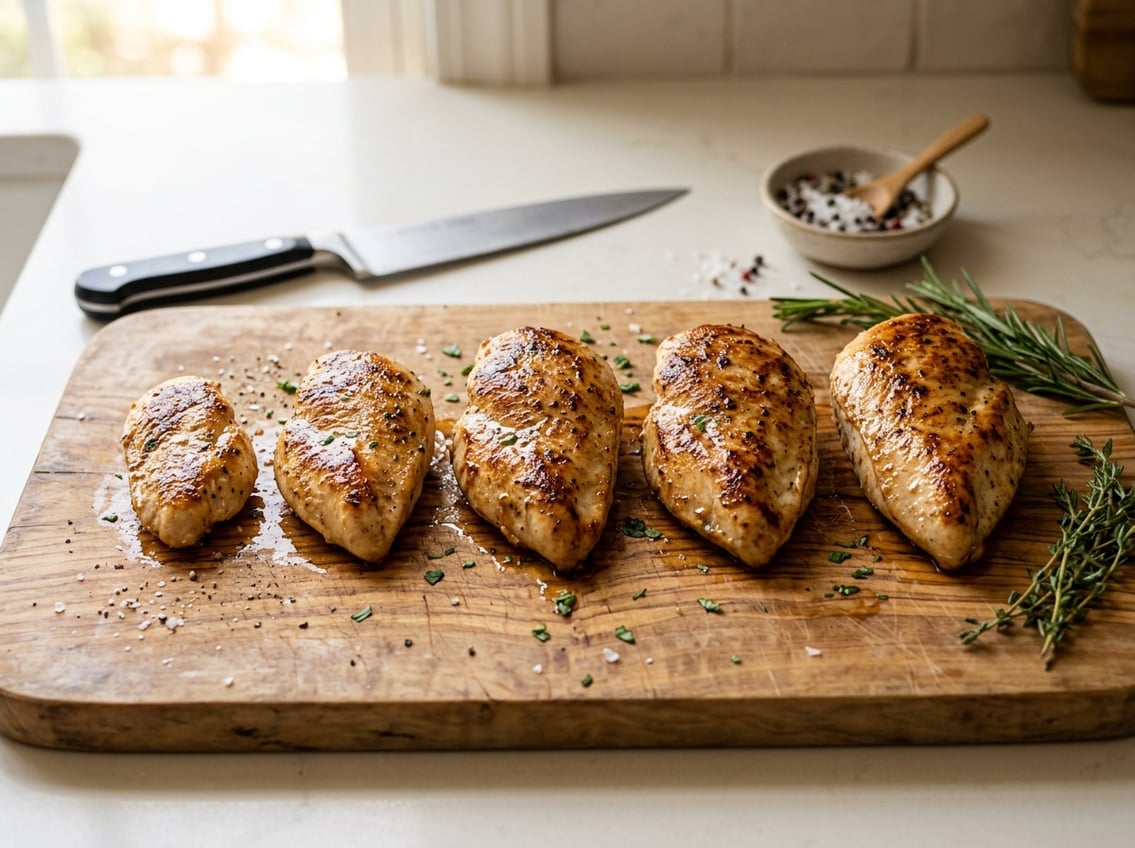
Thickness decides the right resting time for chicken breast. A small piece cools quickly and needs less time.
A larger breast holds heat longer and benefits from a longer pause. Cooking method matters because different methods leave different amounts of surface moisture and carryover heat.
According to AllRecipesBeginner’s resting guide for chicken breast, medium boneless breasts often rest 5 to 7 minutes. Thick boneless breasts rest 7 to 10 minutes, and bone-in breasts rest 10 to 12 minutes.
Typical Timing for Small, Medium, and Large Pieces
- Small, thin chicken breast: 3 to 5 minutes
- Medium boneless chicken breast: 5 to 7 minutes
- Large or thick chicken breast: 7 to 10 minutes
- Bone-in chicken breast: 10 to 12 minutes
Thicker meat needs more time because heat and juices stay active in the center longer. Smaller pieces cool faster, so long resting can make them lose serving temperature.
Resting After Baking, Grilling, Pan-Searing, or Poaching
Baked and grilled chicken breast usually rest for about 5 to 10 minutes for boneless cuts. Pan-seared pieces also do well with this range because the outside is hot and needs a short pause before slicing.
Poached chicken breast is gentler and often needs a shorter rest. A few minutes is usually enough if the piece is not very thick.
How Thickness Changes the Wait Time
Thickness matters more than weight alone. A wide but thin chicken breast may rest quickly.
A smaller-looking but very thick piece can still need extra time. If you cut the meat and see a large, dense center, plan on the longer end of the resting time.
If the piece is even and not especially thick, a shorter pause works well.
Why a Short Pause Improves Texture and Juiciness
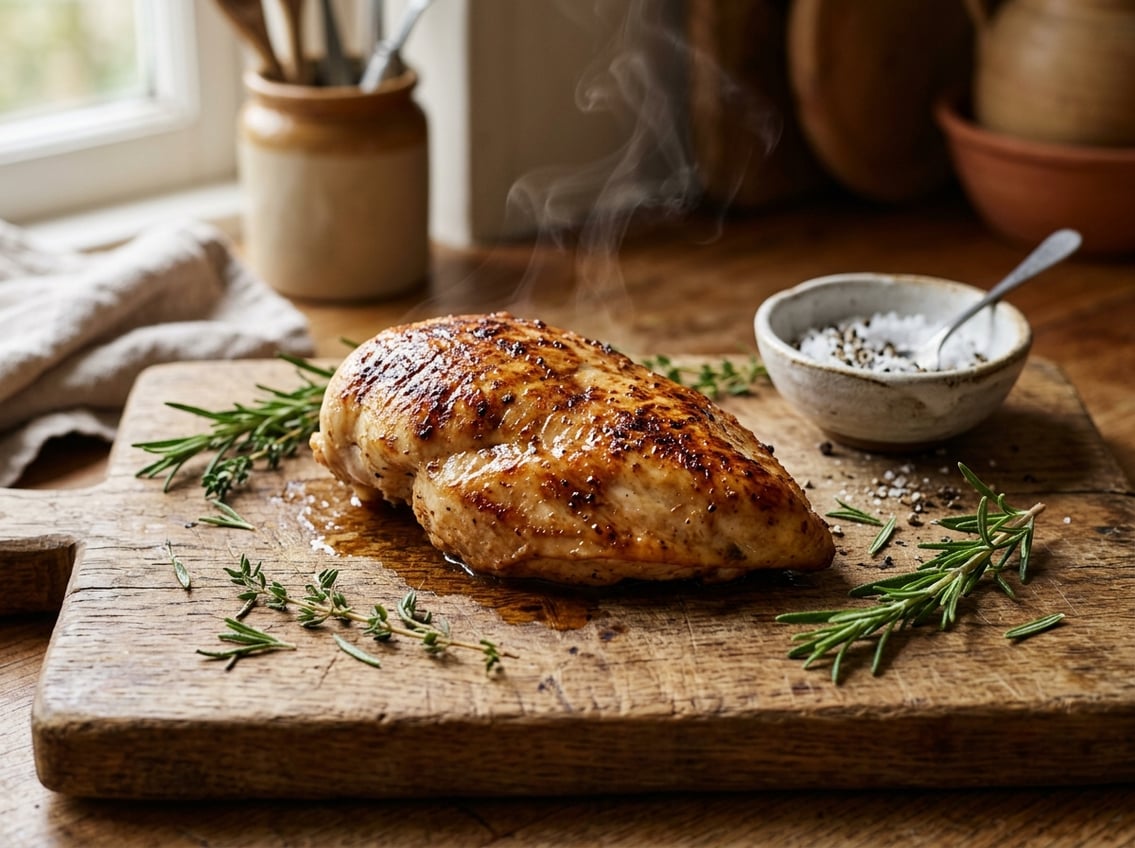
Resting helps the meat hold more moisture when you slice it. Right after cooking, the juices are still moving and the fibers are tight.
A brief pause gives those fibers time to relax and gives the juices a chance to settle.
The change comes from texture, not from adding more ingredients.
What Happens to Juices Right After Cooking
When you remove chicken breast from the heat, juices concentrate and stay active near the center. If you slice too soon, those juices flow out onto the cutting board instead of staying in the meat.
As AllRecipesBeginner explains, resting lets juices redistribute through the meat instead of spilling out at the first cut.
How Carryover Heat Affects the Final Result
Carryover heat keeps cooking the chicken for a short time after you remove it from the pan, grill, or oven. During this time, the temperature rises a little and the structure of the meat settles.
That small temperature rise can improve the final texture if you rest the chicken properly.
Benefits of Resting Chicken Before Slicing
- Cleaner slices
- Less juice loss
- More even texture
- Better serving moisture
- Less chance of dry edges
If you want chicken breast that stays tender on the plate, resting is a useful step.
How to Rest It Properly Without Losing Heat
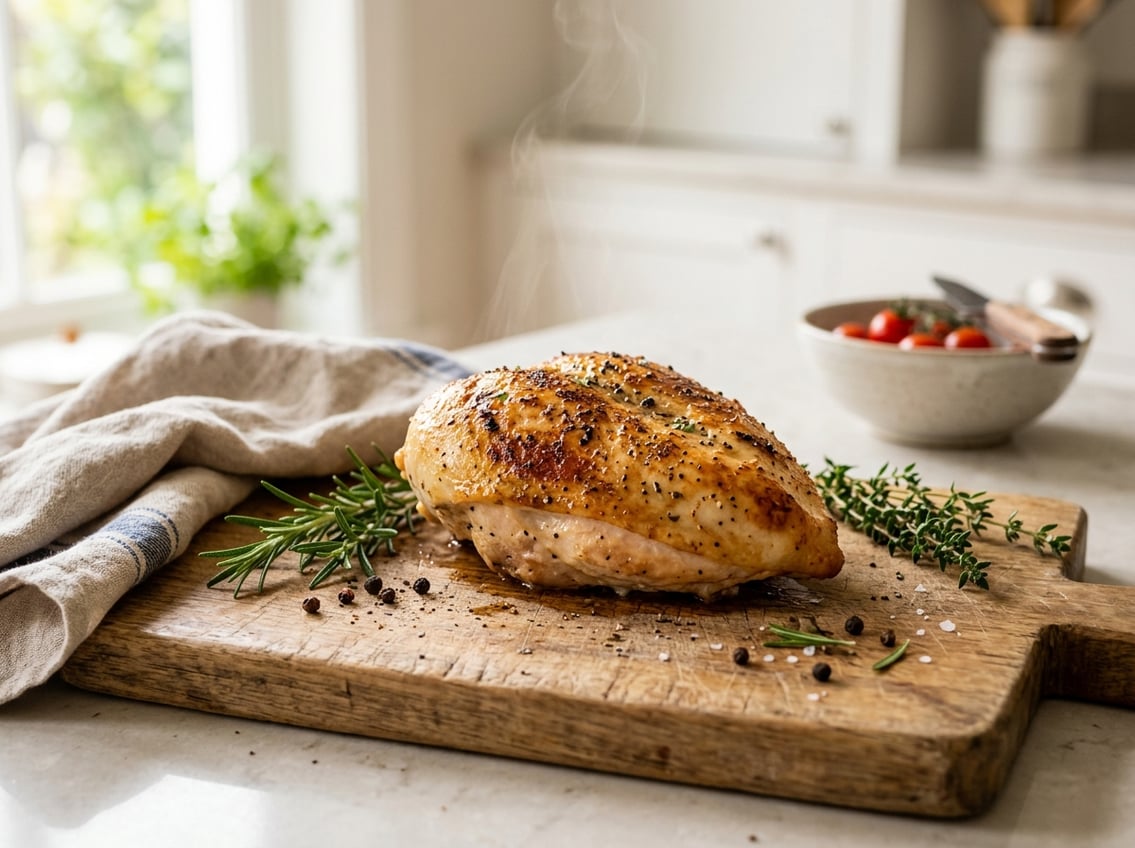
You do not need a special setup to rest chicken breast well. A clean plate, a cutting board, or a rack can work as long as the meat is not trapped in steam or left on a hot cooking surface.
The aim is to keep the meat warm enough to serve while giving the juices time to settle. A loose cover can help, but heavy wrapping can soften the surface.
Loosely Tent With Foil or Leave It Uncovered
A loose foil tent can slow heat loss, especially with thicker pieces. Keep the foil lifted so air can still move around the meat.
If the chicken has a crisp exterior, leaving it uncovered can help preserve texture. This is useful for grilled or pan-seared breasts where you want the surface to stay firm.
When to Use a Plate, Cutting Board, or Wire Rack
Use a plate when you want to keep juices contained and the chicken is ready to serve soon. Use a cutting board if you plan to slice after resting.
A wire rack helps if you want to reduce steam buildup under the meat. It is a good choice for baked chicken breast with a browned surface.
How to Slice for the Juiciest Serving
Let the chicken rest first, then slice against the grain. This shortens the muscle fibers and makes each bite feel more tender.
Use a sharp knife and make clean cuts. If juice pools on the board, that usually means the chicken was cut before it had enough time to rest.
When You Can Shorten or Skip the Wait
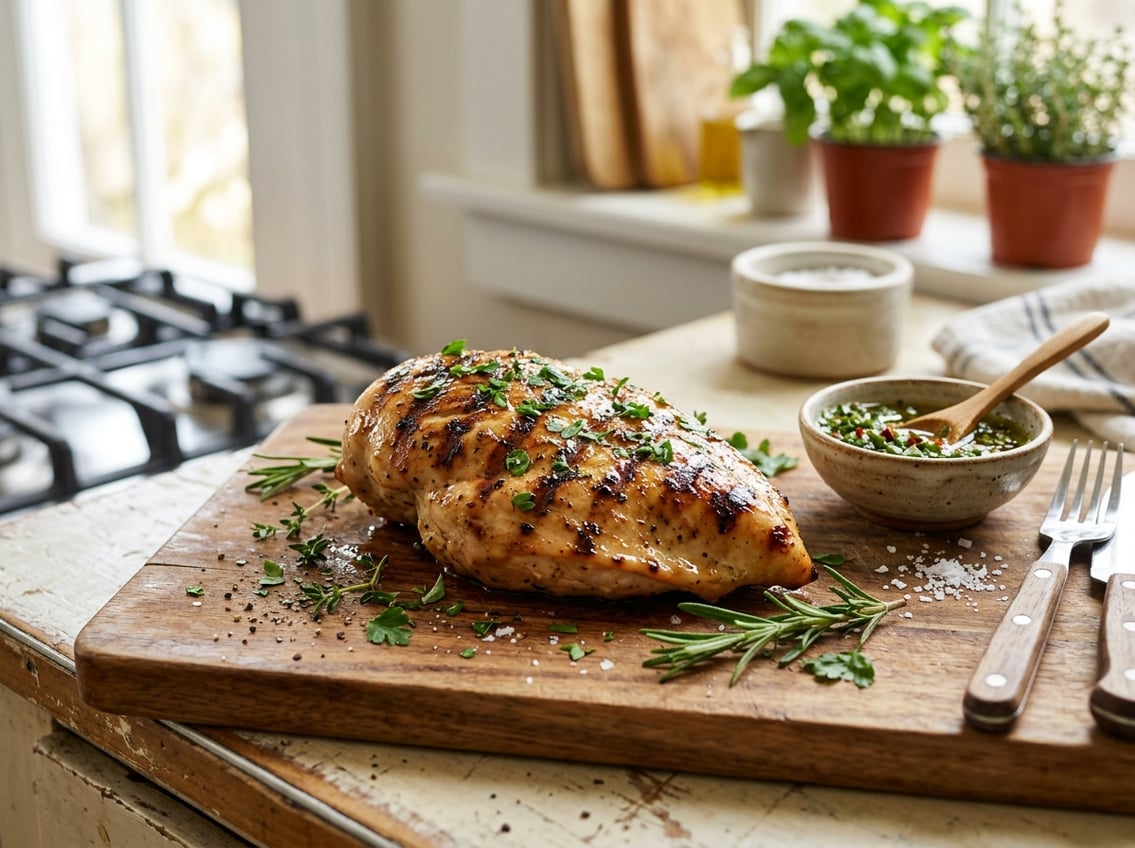
Some chicken breast cuts do not need the full resting window. Very thin pieces cool fast, and some fast-cooking portions lose quality if they sit too long before serving.
Timing matters more when the meat is delicate. You should also think about serving speed.
If the rest is too long for the cut, the chicken can lose heat and feel less appealing even if the texture is fine.
Very Thin Cutlets and Fast-Cooking Portions
Thin cutlets can rest for just 2 to 4 minutes. They cool quickly and do not hold heat the same way a thick breast does.
If you pound the chicken thin or slice it into fast-cooking pieces, a short pause is enough. The goal is to stop the juices from running out, not to hold the meat for a long time.
Cases Where Resting Too Long Hurts Quality
Resting too long can make the outside cool before you serve it. That is most noticeable with thin chicken breast or pieces served plain without sauce.
If you serve a crisp-skinned or lightly seared breast, long resting can also soften the surface. In that case, a shorter rest protects texture better.
What Happens If You Skip Resting Chicken
If you skip resting chicken breast, you can still serve safe and fully cooked meat.
You mainly lose juiciness and cleaner slicing.
The first cut often releases more liquid. The meat may seem drier.
If you are in a rush, even a short 3 to 5 minute pause helps more than cutting immediately.


