
When Can Baby Eat Chicken Breast? Age, Safety, and Serving
You may wonder when your baby can eat chicken breast. Many babies can start around 6 months, once they show signs of readiness for solid foods.
Chicken breast can be a smart early protein because it is mild, versatile, and easy to prepare in soft textures.
If your baby is ready for solids, you can offer well-cooked chicken breast as long as you serve it in an age-appropriate way. Keep it moist, soft, and safe.
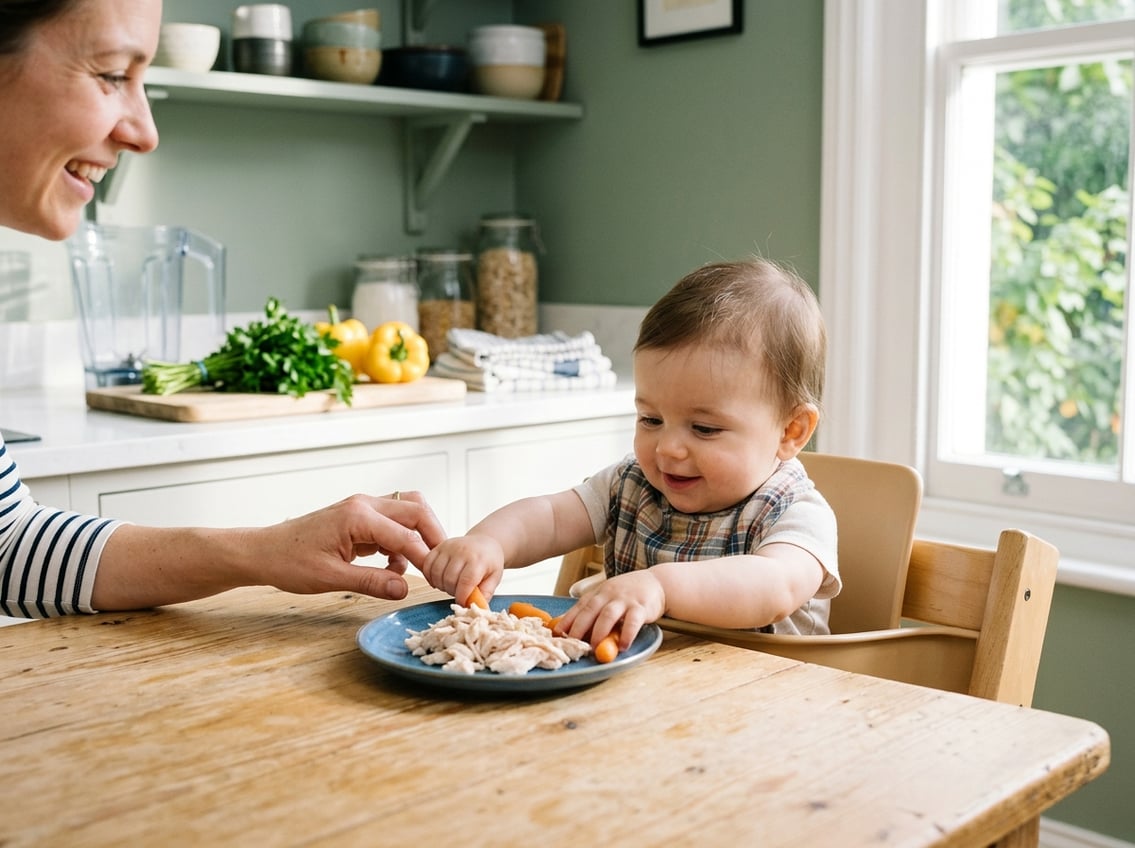
Chicken breast is not the only option for babies, and it does not need to be the first protein. It works well for spoon-fed babies and baby-led weaning when you cook it fully and match the texture to your baby’s stage.
When Chicken Breast Can Be Offered
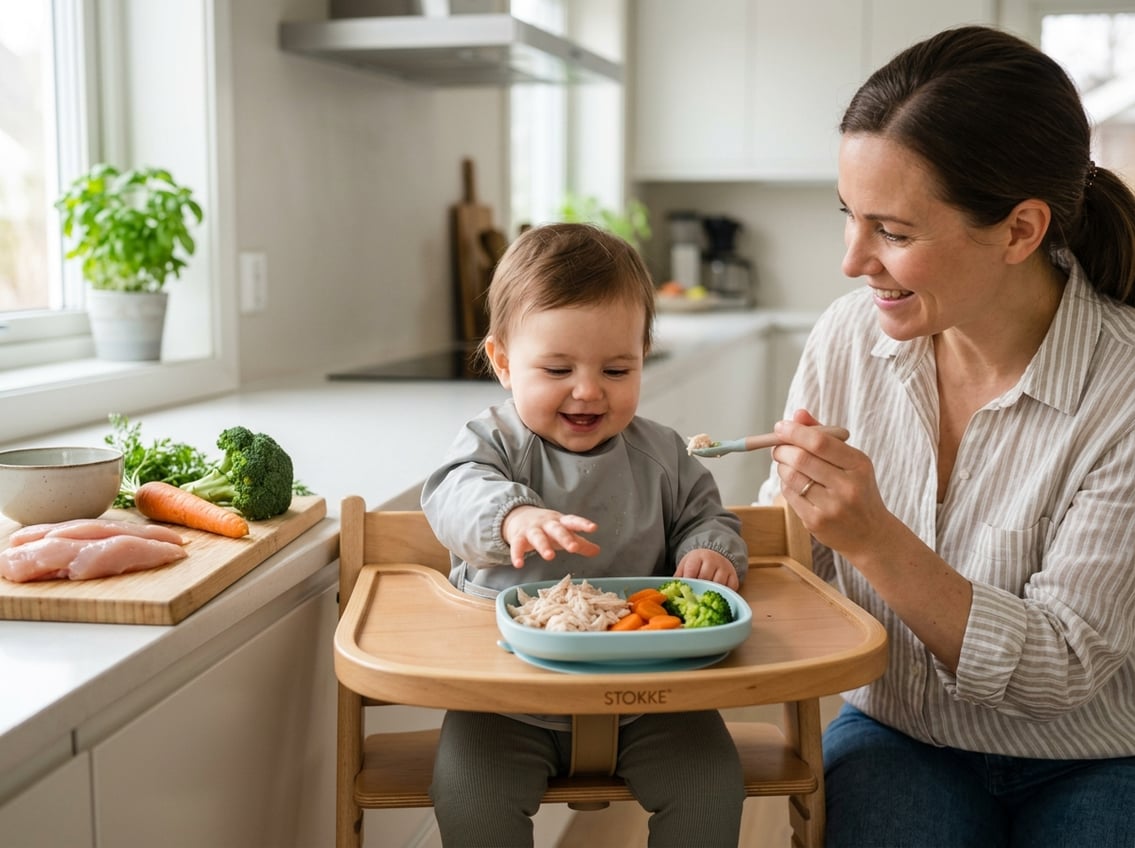
Most babies can try chicken breast around 6 months, when they are ready to start solids. According to Solid Starts on chicken for babies, you can introduce well-cooked chicken once your baby is ready for solids, which is generally around 6 months.
Chicken offers protein, iron, and zinc in a form you can puree, shred, or soften. Infant Tales explains that chicken is easy to digest and fits well into early feeding routines.
Signs Your Baby Is Ready for Solids
Your baby may be ready if they can sit upright with support and hold their head steady. Showing interest in food is another good sign.
If the tongue-thrust reflex has faded, your baby is less likely to push food back out. Readiness matters more than age alone.
A baby who is not ready for solids should not eat chicken breast, even if the food is soft.
Why Around 6 Months Is the Typical Starting Point
Around 6 months, your baby’s iron needs rise while stored iron starts to drop. Many parents look for iron-rich first foods at this stage.
Chicken breast can help meet that need, especially when paired with other nutrient-dense foods.
It also gives your baby practice with a new texture at the right time.
Whether Chicken Breast Can Be a First Protein
Chicken breast can be one of the first proteins you offer. It is mild in flavor and easy to blend or shred.
You can pair it with vegetables, grains, or puree. Serve it plain at first, then add other foods once your baby tolerates it well.
How to Prepare and Serve It Safely

Start with fully cooked chicken and the right texture. Make sure it is soft enough to mash with gentle pressure and moist enough that it does not crumble into dry bits.
The cooking method and cut size matter. For how to serve chicken to baby, age-appropriate texture is key.
Best Cooking Methods for a Soft, Moist Texture
Boiling, steaming, baking, and slow-cooking keep chicken breast tender and easier to puree or shred. Avoid dry or heavily browned chicken.
Skip added salt and strong seasonings for babies.
How to Serve Chicken to Baby by Age
At about 6 to 8 months, serve smooth puree or very soft minced chicken. At about 8 to 10 months, offer shredded chicken or tiny moist pieces.
By 10 to 12 months, many babies can manage small soft strips or bite-sized pieces if they have practiced with textures. Always match the cut to your baby’s chewing skills.
Chicken Breast for Spoon-Fed Babies
Puree cooked chicken breast with breast milk, formula, water, or low-sodium broth to create a smoother texture. This makes it easier to swallow.
You can mix in mild vegetables later, once your baby tolerates plain chicken. Starting with plain chicken helps you notice any reaction.
BLW Chicken Serving Ideas
For blw chicken, serve large, soft strips that are easy to grip and gummable. The chicken should be tender enough to shred between your fingers.
You can also offer shredded chicken in a shallow pile so your baby can pinch up small amounts. Keep the pieces moist with broth, puree, or a soft vegetable mash.
Choking and Food Safety Basics
Always cook chicken to 165°F, which is the safe internal temperature for poultry. Serve your baby while they sit upright and you watch closely.
Avoid hard, dry chunks, skin, bones, and stringy pieces. Store cooked chicken safely in the fridge and reheat it until it is steaming hot before serving.
Simple Serving Ideas and Easy Combinations
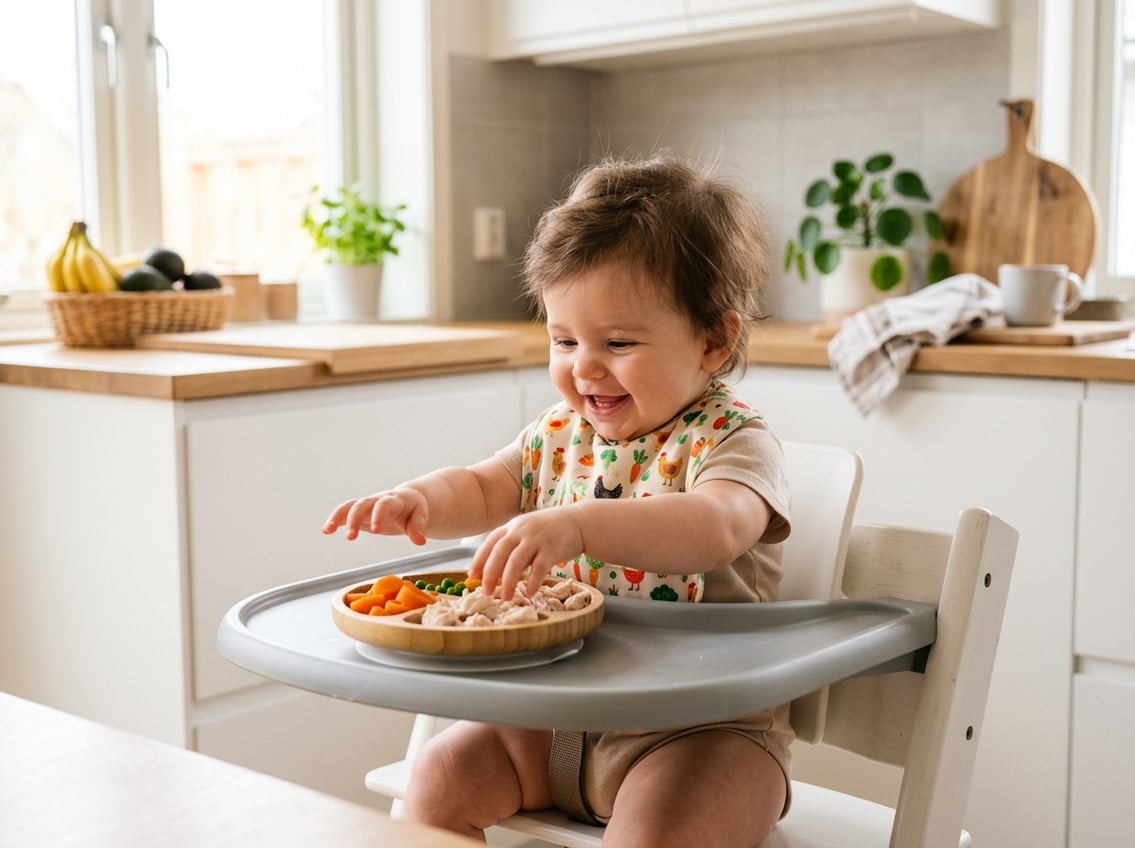
Once you know how to serve chicken to your baby, you can make it easy to eat. Simple combinations work best, especially when you want familiar textures and mild flavors.
You can keep chicken breast plain or pair it with soft foods that add moisture. That helps chicken stay tender and easier for your baby to handle.
Chicken Puree Recipe
For a simple chicken puree recipe, cook chicken breast fully, then blend it with water, breast milk, formula, or low-sodium broth until smooth. Start with a small amount so the puree stays thin and easy to swallow.
You can freeze extra puree in small portions for later use. Keep the flavor plain at first so your baby gets used to the taste of chicken.
Chicken and Sweet Potato Puree
Chicken and sweet potato puree is a good starter mix because sweet potato adds natural moisture and a soft texture. Steam or bake the sweet potato until very tender, then blend it with cooked chicken breast.
This combination is mild and easy to spoon-feed. It also gives you a simple way to make chicken more appealing without adding salt.
Shredded Chicken With Soft Sides
Shredded chicken works well with mashed avocado, soft peas, cooked carrots, or very soft rice. These sides add moisture and make the meal easier to manage.
If the chicken seems dry, mix in a spoonful of veggie puree or broth. That small step can make a big difference in how well your baby accepts it.
Ways to Keep Chicken Breast From Drying Out
Use moist cooking methods and avoid overcooking.
Slow-cooking, steaming, and poaching usually give you the softest result.
Slice chicken against the grain and mix it with a sauce your baby already eats, such as vegetable puree or a little breast milk-based puree.
That keeps each bite softer and easier to chew.


