
Should Chicken Breast Be Chewy? Causes and Fixes
You may wonder, should chicken breast be chewy when it comes off the stove. In most cases, it should not be chewy.
A properly cooked breast feels firm, moist, and easy to bite through. The texture should be tender rather than tough or rubbery.
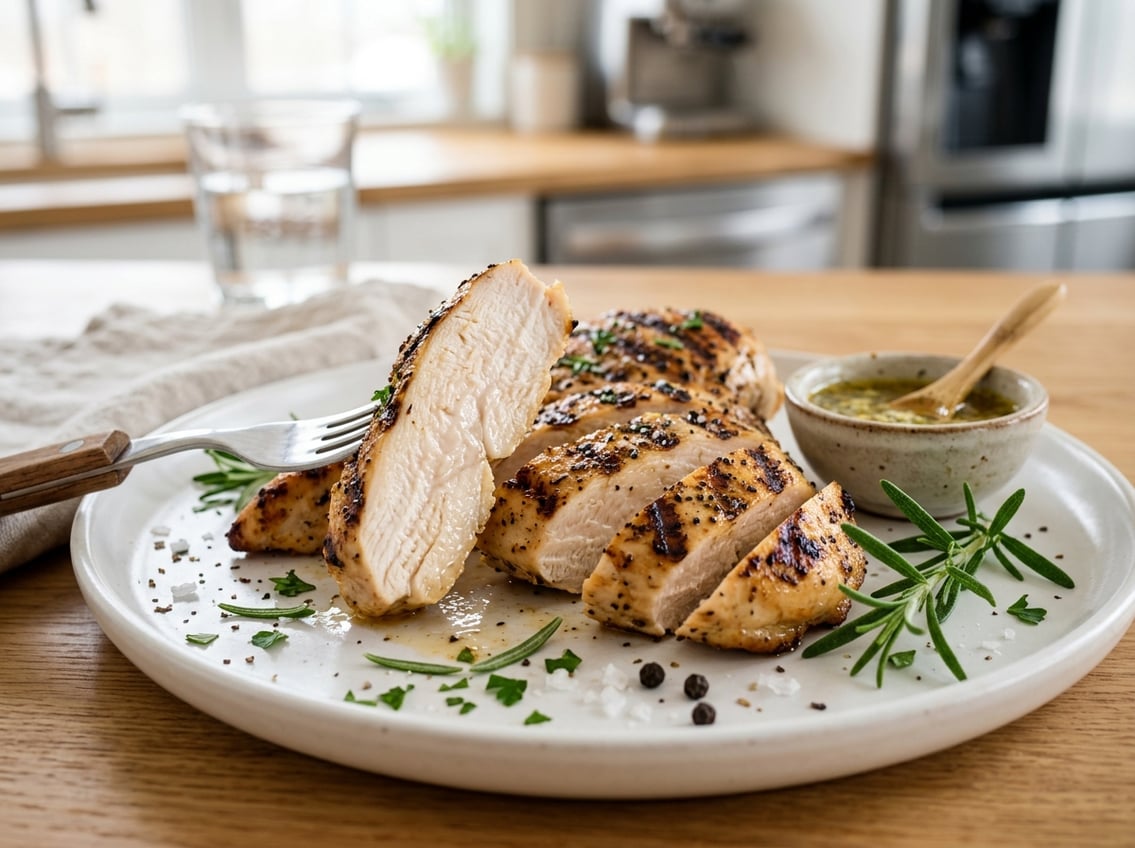
Chewy chicken usually signals a cooking or quality problem, not a normal result. You can often spot the cause easily, and many tough pieces can still work well with the right fix.
If you understand what the texture means, you can decide if the chicken is safe, salvage it if needed, and keep the next batch moist and tender.
What Chewy Texture Usually Means
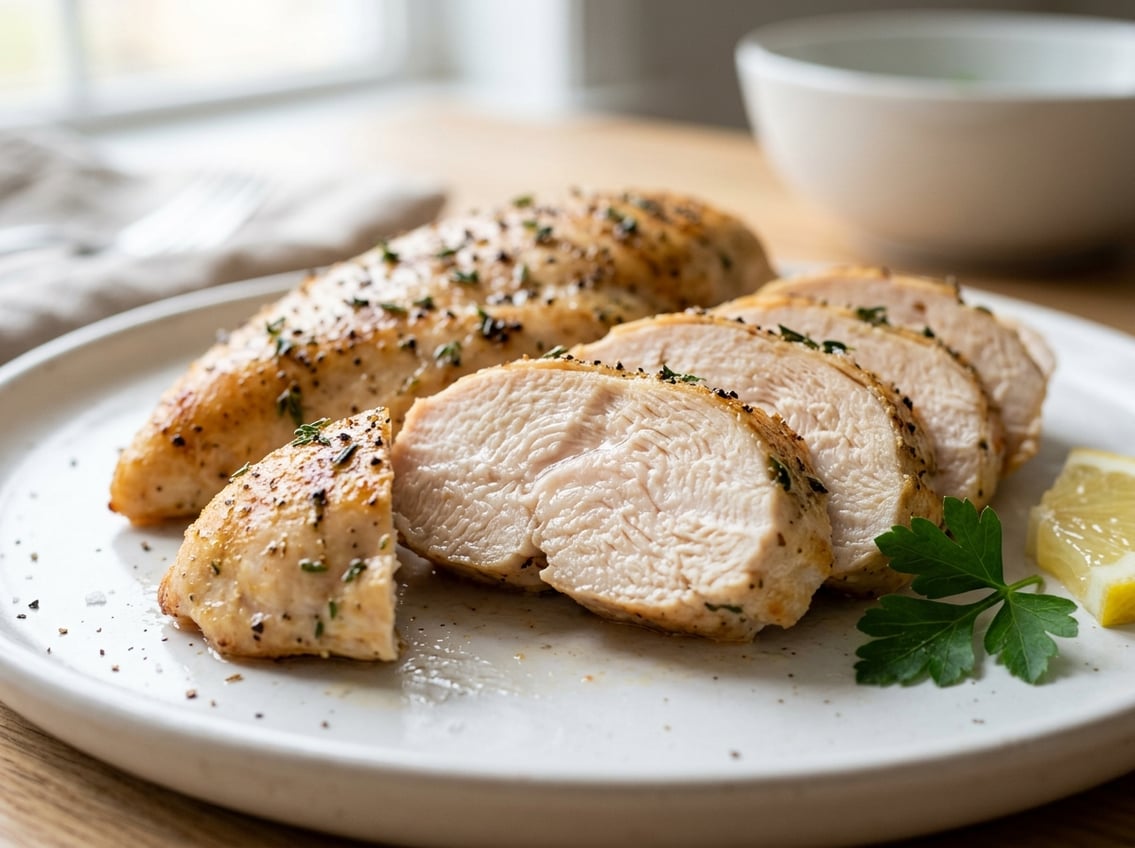
When you get a chewy chicken breast, it usually means you have cooked the meat too long, cooked it unevenly, or started with a tougher piece. A normal chicken breast should be firm, moist, and easy to slice.
Texture changes can also happen because of handling, storage, or a muscle condition called woody breast. The exact feel gives you clues about what went wrong.
What Normal Chicken Breast Texture Should Be Like
A good chicken breast feels tender when you cut into it and stays juicy when you chew. It should separate with some resistance, not fight back like rubber.
If you cook the meat correctly, the texture stays smooth and even. You should not need to tear it apart with your teeth.
When Chewiness Points to Overcooking
When you overcook chicken breast, it often turns dry, tight, and stringy. The muscle fibers contract as the heat rises too far, which makes the meat feel tough.
This happens often with thin breasts, high oven heat, or a pan that stays on the burner too long. If the outside looks dry and the inside feels dense, overcooking is a likely cause.
When a Rubbery Bite Can Mean Undercooking
If you undercook chicken, it can feel soft, slick, or rubbery in a way that is different from dry chewiness. The meat may seem spongy and resist clean slicing.
That texture alone does not confirm doneness. You still need a thermometer, since some undercooked chicken can look nearly normal at first bite.
How Woody Breast Changes the Texture
Woody breast is a muscle condition that can make chicken breast feel hard, tight, and oddly dense. The meat may look normal before cooking, then turn unpleasantly firm during heating.
It is not a safety issue by itself, but it can make the breast hard to enjoy. If you keep getting chewy chicken from the same brand or store, woody breast may be part of the problem.
How to Tell if It Is Safe to Eat
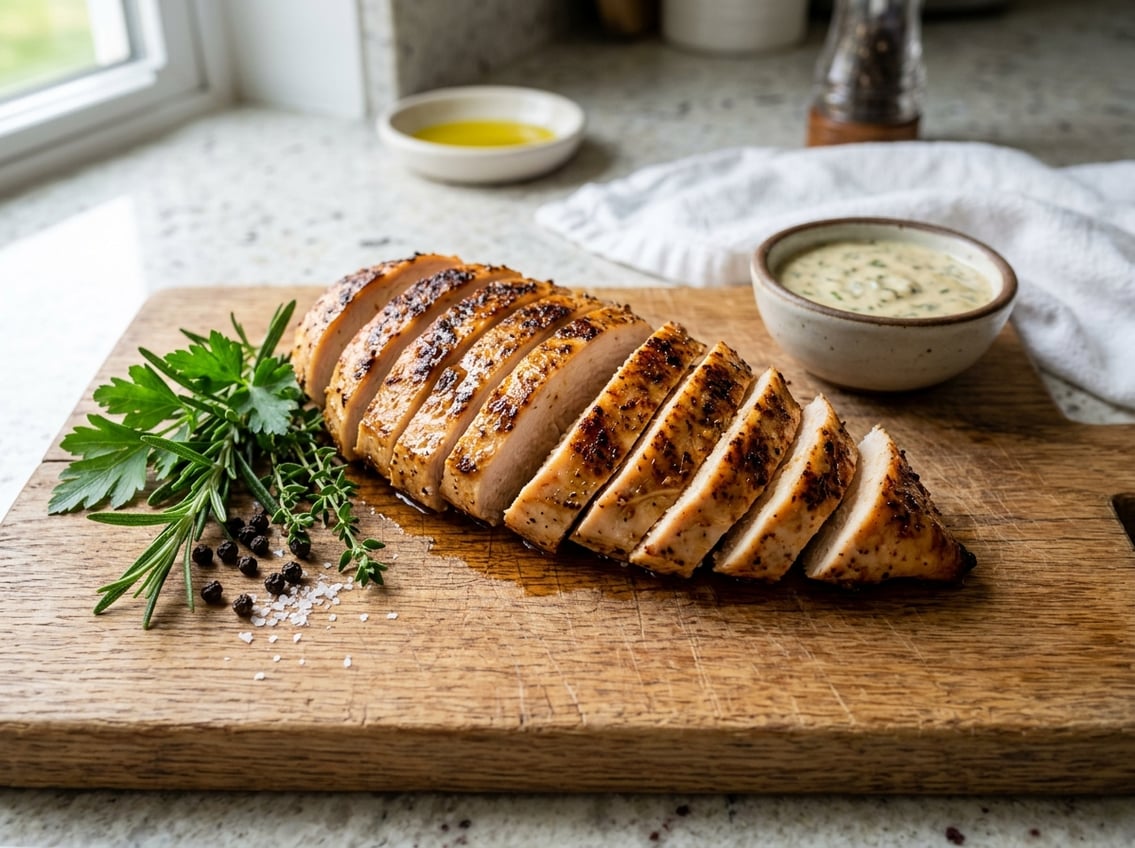
Texture alone does not give you a reliable safety test. You need to check color, juices, and especially internal temperature before you decide if the chicken is safe.
The goal is to tell the difference between a juicy chicken breast that is simply firm and chicken that may still be undercooked.
Signs to Check Before Taking Another Bite
Look for opaque meat with no raw pink center near the thickest part. The juices should run clear, not pink or red.
If the breast feels slick, translucent, or very soft in the middle, stop eating it until you check the temperature. When in doubt, treat it as undercooked chicken.
How to Use Temperature to Confirm Doneness
Use a food thermometer in the thickest part of the breast. Chicken breast should reach 165°F for safe eating.
If the temperature is below that, keep cooking it and check again. If it is already at 165°F but still chewy, the problem is more likely overcooking, poor quality, or woody breast rather than safety.
Why Texture Alone Is Not a Safety Test
A breast can feel tough and still be fully cooked. It can also feel rubbery and still be undercooked.
Chewiness does not tell you enough on its own. A thermometer gives you the clearest answer, especially with lean cuts like breast meat.
How to Fix a Tough or Rubbery Breast
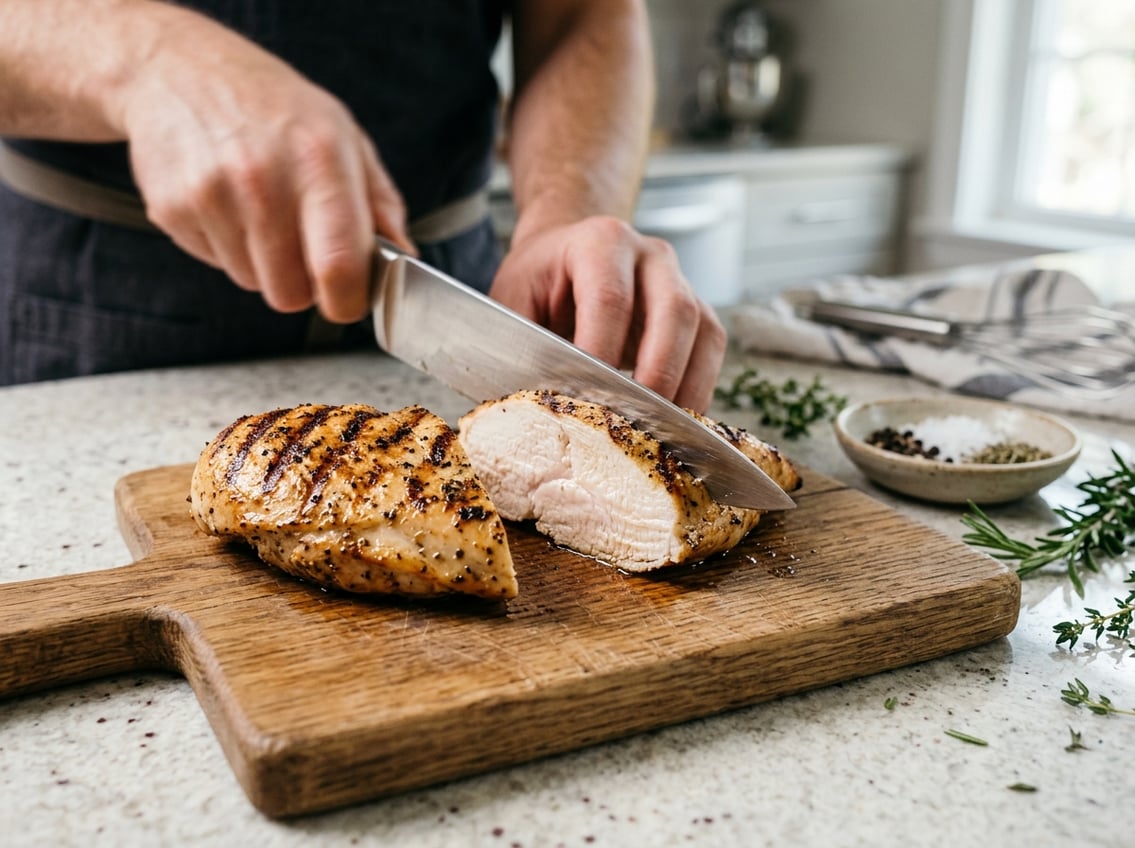
You cannot fully reverse a badly cooked breast, but you can improve it. The best way to fix chewy chicken is by adding moisture, cutting it correctly, or using it in a dish where texture matters less.
Small changes can make the meat easier to eat and more useful at the table.
How to Fix Chewy Chicken After Cooking
If the chicken is dry, warm it gently in broth, pan juices, or a sauce. Low heat helps keep it from getting tougher.
If it is only a little firm, slice it thinly across the grain. That shortens the muscle fibers and makes each bite feel softer.
Best Ways to Add Moisture Back
A spoonful of gravy, pan sauce, or vinaigrette can help dry chicken feel less harsh. You can also chop it and mix it with a moist ingredient.
Good options include yogurt-based sauce, mayonnaise, salsa, or a light cream sauce. The chicken will still need flavor, not just moisture, to feel better in your mouth.
When to Slice, Shred, or Use It in Chicken Salad
Slice firm chicken breast for sandwiches, grain bowls, or wraps. Shredding works well when the meat is dry but still fully cooked.
For very firm pieces, turn them into chicken salad with mayo, celery, herbs, and seasoning. A moist mix covers chewiness and makes the most of meat that would feel tough on its own.
How to Keep It Tender Next Time
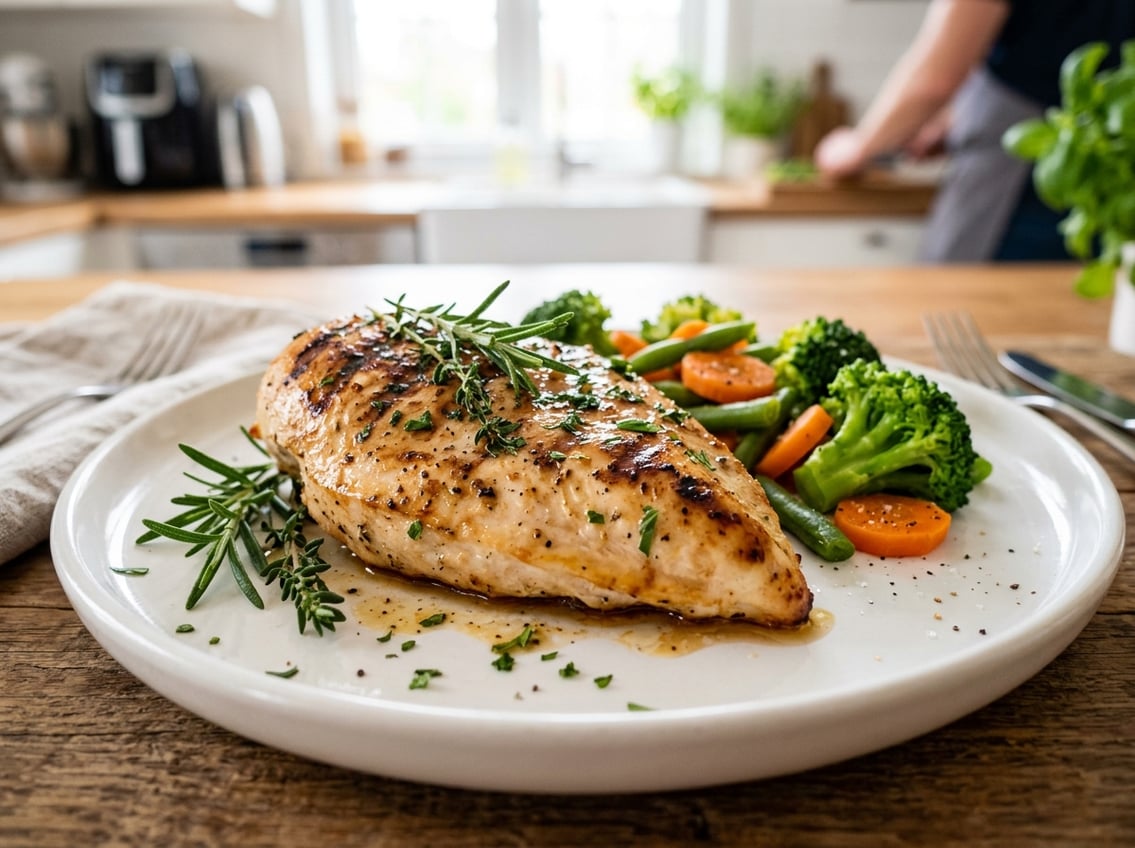
To prevent chewy chicken, start with good meat and use cooking habits that protect moisture. Even a lean cut like breast can stay tender if you manage heat, shape, and resting time well.
Choose Better Chicken and Watch for Woody Breast
Pick chicken breasts that look even in size and color. Very thick or oddly rigid pieces can cook unevenly.
If a package has breasts that feel unusually hard before cooking, woody breast may be present. Buying from a reliable brand and checking texture before cooking can help you avoid a bad batch.
Use Even Thickness, Brining, and Resting Time
Pound thick ends so the breast cooks evenly. This lowers the chance that one part dries out while another part is still cooking.
A simple brine can help the meat hold moisture. After cooking, let the breast rest for a few minutes so the juices stay inside instead of running out when you cut it.
Cooking Habits That Prevent Dry, Chewy Results
Use controlled heat when you cook chicken breast, not guesswork. Pull the chicken from the heat as soon as it reaches 165°F.
Let carryover heat finish the job. Avoid leaving the chicken on high heat for too long.
Always let the chicken rest after cooking. These habits help keep chicken breast tender instead of dry and stringy.


