
Good Marinade for Chicken Breast That Stays Juicy
A good marinade for chicken breast starts with a balanced mix of oil, acid, salt, and seasoning. When you get that balance right, you turn plain boneless skinless chicken breasts into juicy chicken with flavor in every bite.
The goal is not just taste; it is also helping the meat stay moist while it cooks.
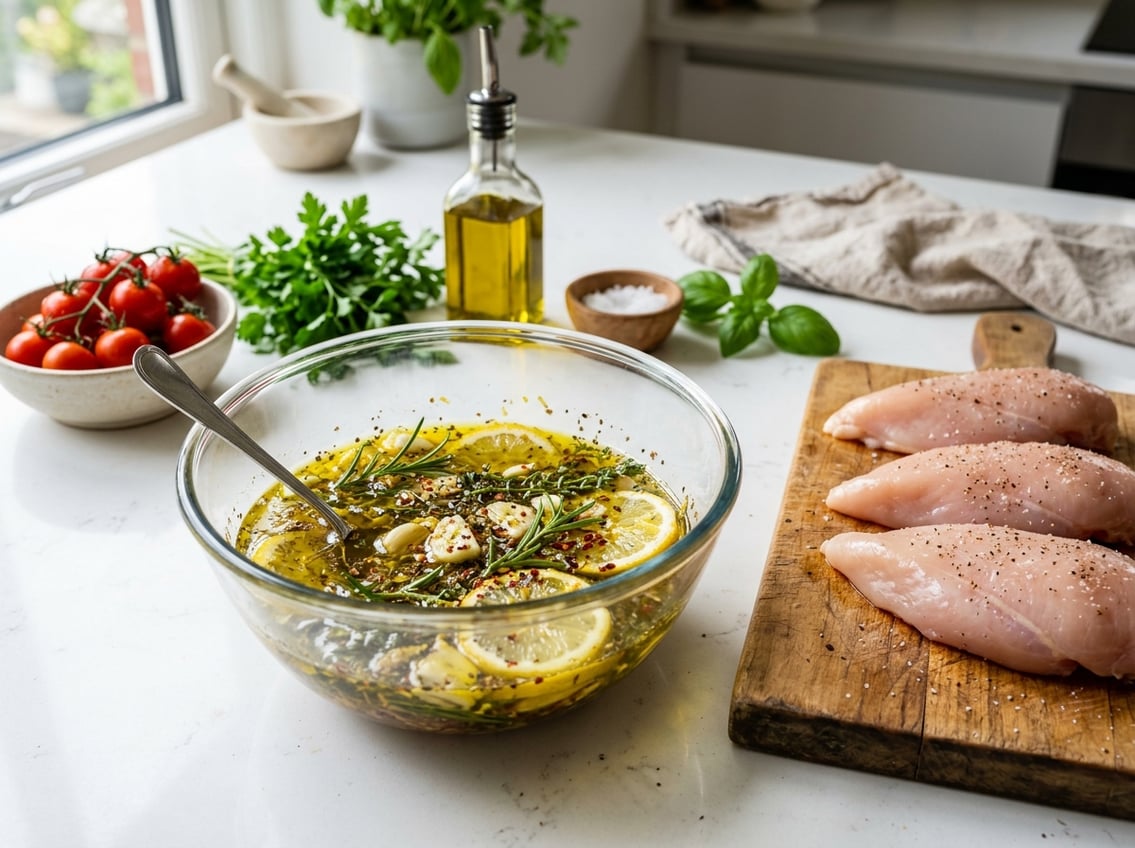
A strong chicken marinade does not need a long ingredient list. The best chicken marinade gives you enough flavor to stand up to grilling, baking, or pan-searing without making the meat tough.
With the right chicken breast marinade, you can make weeknight dinner feel simple and reliable.
What Makes a Marinade Work
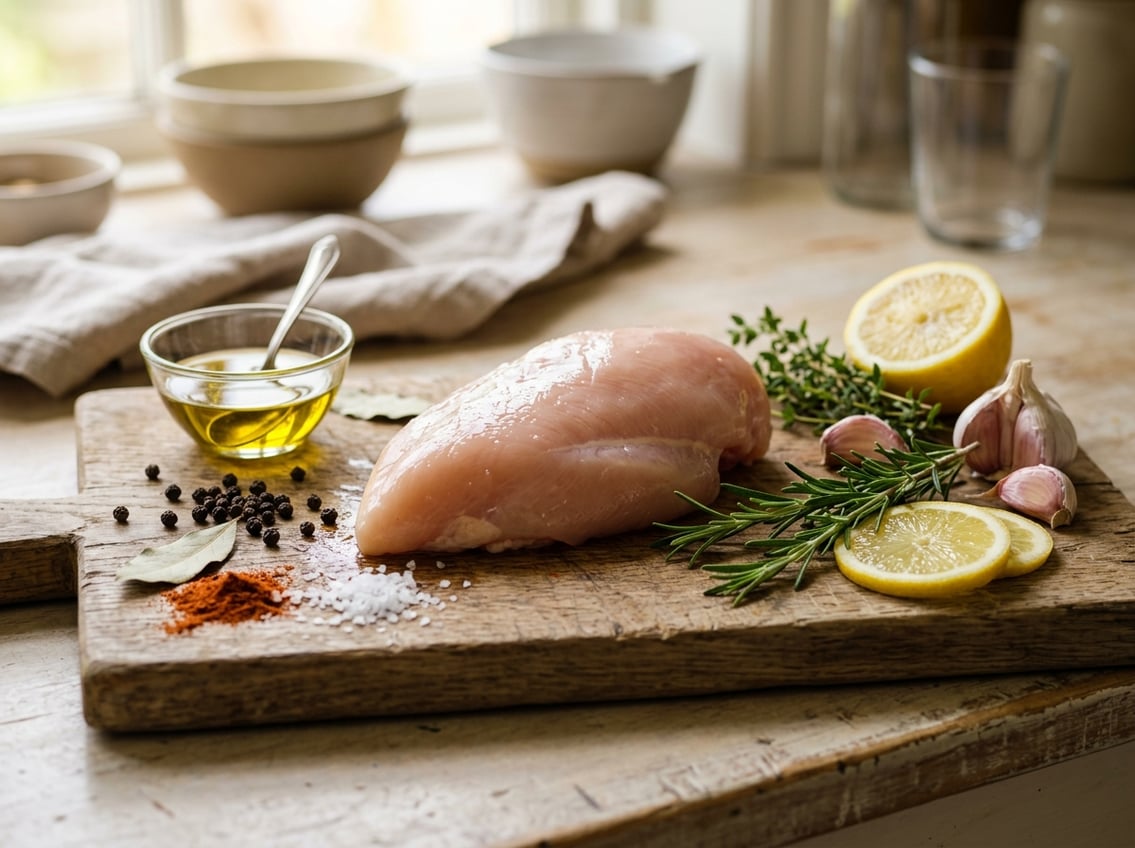
A useful marinade recipe adds flavor, helps season the meat, and can improve texture when you use it correctly. The best chicken marinade usually uses a few basic ingredients rather than a long list of extras.
The Basic Marinade Formula: Oil, Acid, Salt, and Aromatics
Oil helps the marinade coat the surface of the chicken evenly. Acid, such as lemon juice, vinegar, or yogurt, adds brightness and can help the surface of the meat soften a little.
Salt is key because it seasons the meat more deeply than spices alone. Aromatics like garlic, onion powder, black pepper, herbs, ginger, or mustard shape the final flavor.
In many chicken marinade recipes, a small amount of sweetness from honey or brown sugar helps round out sharp flavors and improves browning.
Best Marinade Ingredients for Chicken Breast
Chicken breast has a mild flavor, so it works well with many marinade ingredients. Olive oil, lemon juice, garlic, Dijon mustard, soy sauce, balsamic vinegar, yogurt, and fresh herbs are all strong choices.
Ingredients like olive oil, balsamic vinegar, soy sauce, lemon juice, brown sugar, rosemary, and Dijon mustard can create a balanced chicken breast marinade. For easy chicken marinades, keep the list short and use ingredients you already trust.
That makes it easier to repeat a recipe and adjust the flavor to match grilled chicken, baked chicken, or pan-seared chicken.
How Marinades Affect Flavor, Tenderness, and Moisture
A marinade mostly seasons the outside of the meat, while salt and time help the flavor move inward. Acid can make the surface feel more tender, and oil helps carry flavor and reduce sticking during cooking.
A good chicken breast marinade can also make the chicken taste richer and less dry when cooked properly. Marinades support juicy chicken by improving seasoning and helping the surface stay protected, which matters most with lean boneless skinless chicken breasts.
How to Marinate Chicken Breast Properly
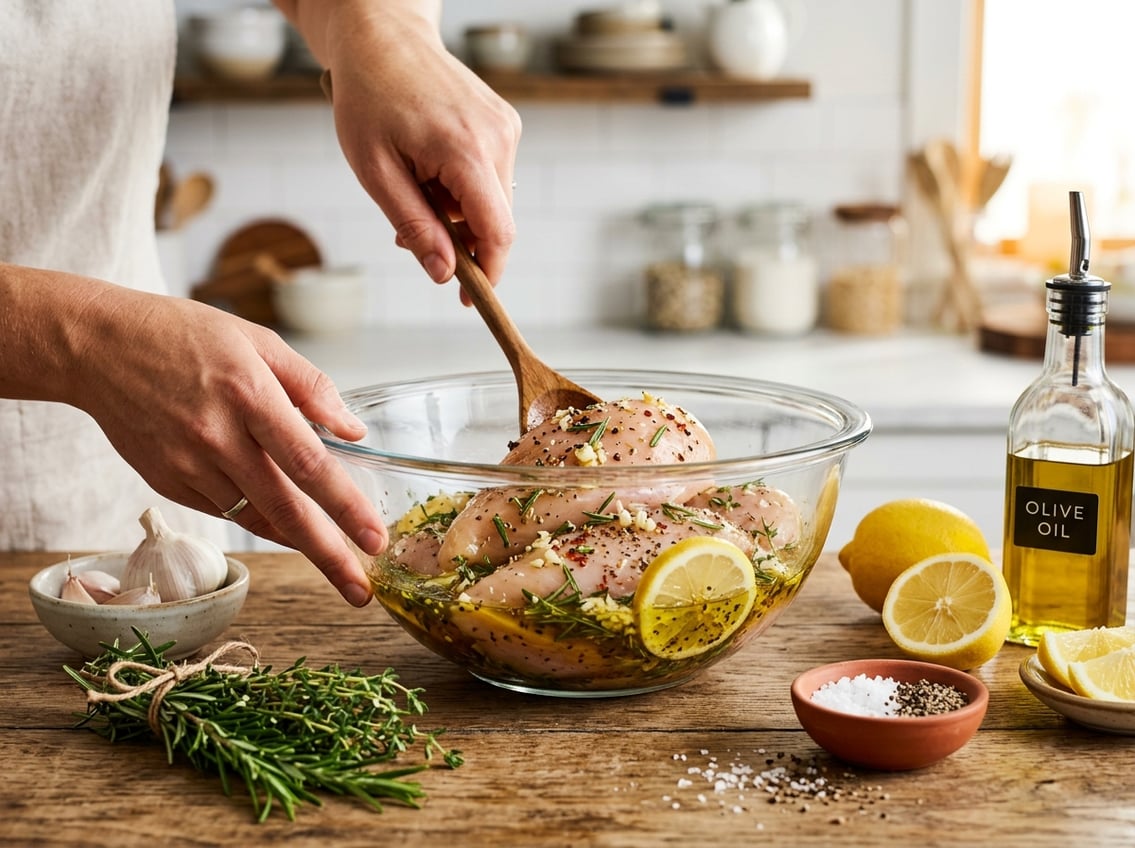
Even coverage and the right timing are important for good marinating. You want every piece coated well, stored cold, and cooked before the texture turns mushy.
The details matter most when you work with lean chicken breast.
How to Marinate Chicken Evenly
Use a resealable bag or a shallow dish so the marinade reaches as much of the chicken as possible. If the pieces are thick, pound them to an even thickness first so they cook at the same rate.
Flip the bag once or twice during marinating so both sides pick up flavor. For a fast option, make sure the marinade fully surrounds the meat.
That gives you more even results than brushing it on right before cooking.
How Long to Marinate Chicken Without Ruining Texture
For boneless skinless chicken breasts, 30 minutes is the shortest useful marinating time. Four to six hours usually gives you the best balance of flavor and texture, and overnight works for many chicken marinade recipes if the acid level is moderate.
If your marinade is heavy on lemon juice, vinegar, or other acidic ingredients, keep the marinating time shorter. Strong acid can make the outside of the chicken feel soft or slightly stringy.
Containers, Food Safety, and When to Freeze
Marinate chicken in the refrigerator, never on the counter. Use glass, food-safe plastic, or a sealed bag, and discard any marinade that touched raw chicken unless you boil it first.
You can also freeze marinated chicken if you need a make-ahead meal. Freeze marinated chicken in a freezer-safe bag, label it, and thaw it in the refrigerator before cooking.
Best Flavor Profiles to Try
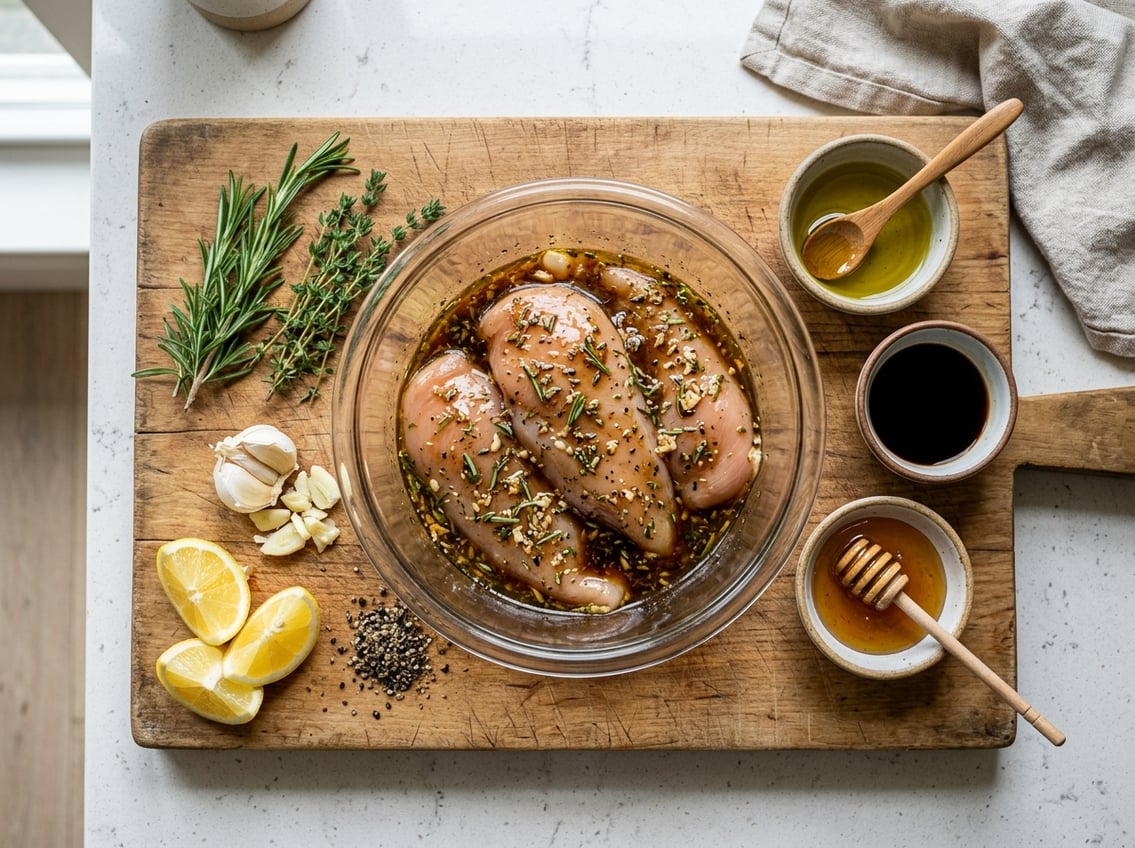
Once you know the basics, you can shape the marinade recipe around the meal you want. Bright, savory, sweet, smoky, and spicy profiles all work well with chicken breast.
You can also match the marinade to the way you plan to cook it.
Lemon Herb and Greek-Style Options
A Greek chicken marinade usually uses lemon, garlic, oregano, olive oil, and salt. That profile works well when you want a fresh, clean flavor for salads, bowls, or pita wraps.
Yogurt marinated chicken is another smart choice because yogurt adds tang and helps the surface stay tender. A lime chicken marinade or cilantro lime chicken marinade brings a brighter taste and works especially well for chicken served with rice, beans, or tacos.
These styles pair well with a simple grilled chicken marinade because the citrus keeps the flavor sharp and fresh.
Sweet-Savory Soy and Teriyaki Variations
A teriyaki marinade brings sweet and savory notes together with soy sauce, sugar or honey, ginger, and garlic. It is a natural fit for dinner with rice and vegetables.
Soy-based chicken marinade recipes also work well for quick pan cooking. If you like a richer taste, balsamic chicken adds depth with vinegar, garlic, and herbs.
This kind of marinade recipe gives you a darker, more savory finish that works well in the oven or on the grill.
Smoky, Spicy, and Tex-Mex Inspired Ideas
For more heat, try a chicken fajita marinade with lime juice, chili powder, cumin, garlic, and oil. That profile gives you a clear path to chicken fajitas with peppers and onions.
Chipotle chicken uses smoky heat, while tandoori chicken leans on warm spices and a yogurt base. A chipotle style mix works well when you want bold flavor without a long ingredient list.
For deeper browning and a stronger grill taste, a grilled chicken marinade with a little sugar and spice can be a strong choice.
Cooking Marinated Chicken Without Drying It Out
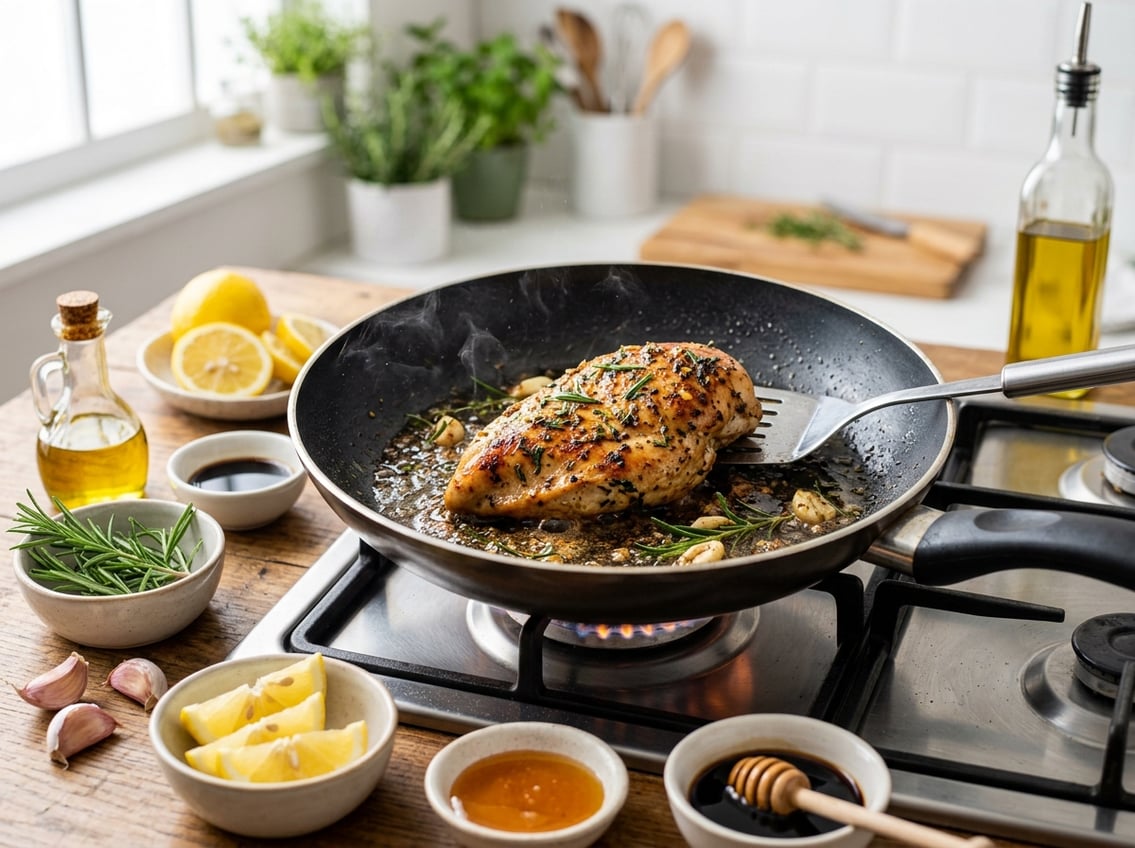
Even the best marinade will not save chicken that is overcooked. Use the marinade for flavor, then cook the meat gently enough to keep the juices in place.
That matters for grilled chicken breast, baked chicken, broiled chicken, and pan-seared chicken.
How to Cook Marinated Chicken on the Grill
For a grilled chicken recipe, preheat the grill and oil the grates so the meat does not stick. Let excess marinade drip off before you place the chicken on the heat.
Cook over medium to medium-high heat so the outside does not burn before the center cooks through. A grilled chicken marinade often has a little sugar, so watch for fast browning.
Turn the chicken only once if you can, which helps it cook evenly and stay tender.
Baking, Broiling, and Pan-Searing Tips
For baking, place marinated chicken breasts in a hot oven and use a thermometer so you do not overcook them. Broiling works well for thinner pieces, but you need to watch the distance from the heat.
Pan-searing gives you good control and a nice crust. Dry the chicken lightly before it hits the pan so it browns instead of steaming.
That helps keep your chicken recipes juicy and clean-tasting.
When Chicken Breast Is Done and Ready to Rest
Check the internal temperature to know when marinated chicken is cooked. Chicken breast reaches doneness at 165°F in the thickest part.
Let the chicken rest for several minutes after cooking. This allows the juices to settle back into the meat.
If you cut into marinated chicken breasts too soon, the moisture will run out. Resting helps your chicken stay juicy and improves the final texture.


