
Which Is Better: Chicken Thighs or Breast? Nutrition, Taste, and Cooking Compared
You won’t find a single answer that fits every situation. The right choice depends on what you want from the meal.
If you prioritize lean protein and fewer calories, chicken breast serves you best. If you want richer flavor, more fat, and greater meal satisfaction, chicken thigh will deliver.
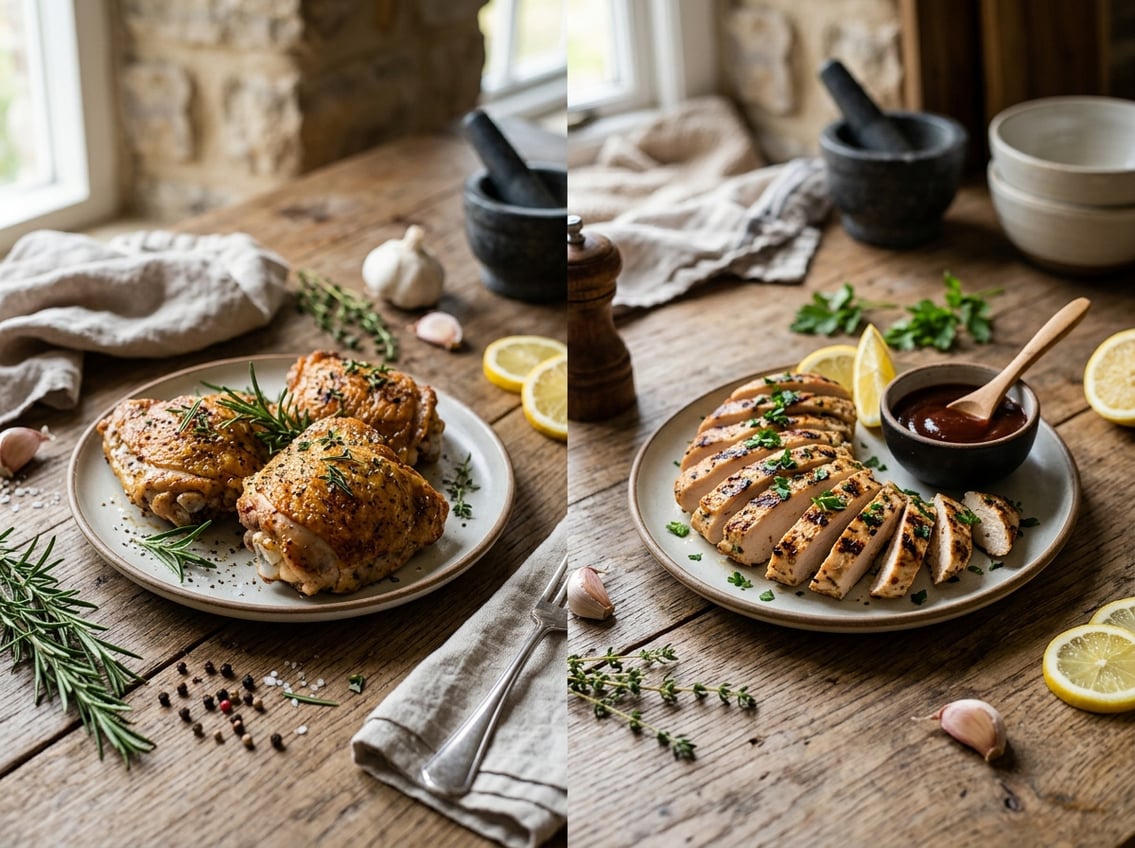
Choose chicken breast when you need higher protein per calorie and a lighter, quicker-cooking option. Choose chicken thigh when you want juiciness, extra iron and zinc, and meals that keep you full longer.
This post breaks down the key differences between white meat and dark meat. It compares nutrition and calories, explains how cooking method and skin change the picture, and helps you match each cut to your needs.
Key Differences: White Meat vs. Dark Meat
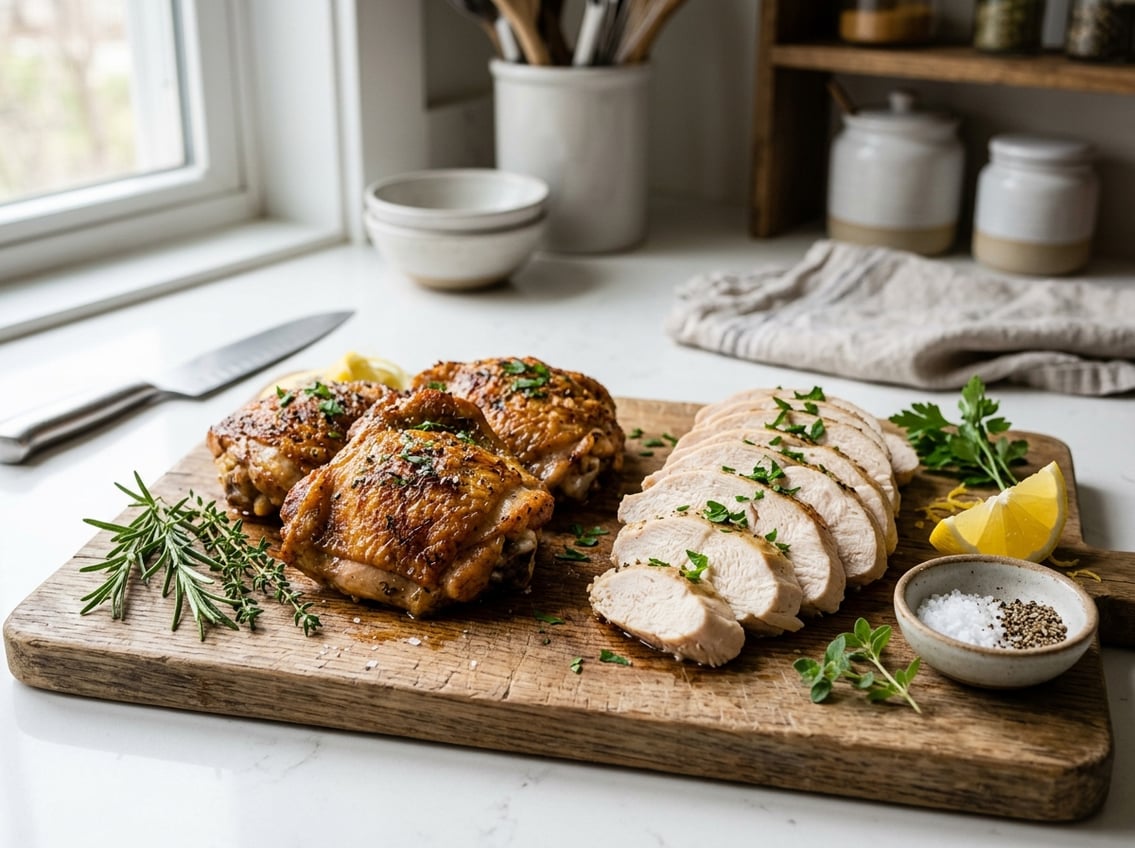
White meat, which comes from the breast, is leaner and higher in protein per ounce. Dark meat from the thighs and drumsticks contains more fat and micronutrients and stays moister in many cooking methods.
These differences affect flavor, cooking times, nutritional choices, and cost.
Anatomy and Muscle Fiber Types
The pectoral muscles provide white meat. These muscles do short bursts of activity, so they contain fast-twitch fibers with less myoglobin.
That lowers fat and iron content and gives breast its pale color and relatively dense, dry-prone texture when overcooked.
The legs and thighs provide dark meat. These muscles work constantly, so they have slow-twitch fibers rich in myoglobin and intramuscular fat.
That gives a darker color, higher iron and zinc, and greater tolerance for longer, moist cooking methods.
Skin-on chicken thighs add surface fat and collagen. Skinless chicken thigh still retains more internal fat than skinless chicken breast.
These anatomical and fiber differences explain why breasts and thighs respond differently to grilling, roasting, and braising.
Flavor and Texture Profiles
Chicken breast tastes milder and has a firm, lean bite. It picks up marinades and spice blends quickly but dries out at internal temperatures above 160–165°F.
For tender results, use brining, quick sears, or low-and-slow sous-vide.
Chicken thighs deliver richer, more savory flavor from higher fat and connective tissue. Thighs stay juicier at higher temperatures and shred easily after braising or slow roasting.
The skin crisps and adds flavor on roasted or pan-fried thighs. Removed skin reduces surface fat but keeps the moist texture.
Choose breasts for clean protein and quick cooking. Choose thighs for resilience to longer cooking, more savory depth, or effortless shredding for tacos, stews, and curries.
Cost and Accessibility
Chicken breasts usually cost more per pound than chicken thighs. Supermarket promotions and bulk packs often make skinless chicken breast a premium, lean option for meal prep and fitness-focused shoppers.
Chicken thighs and whole legs tend to be cheaper and more available year-round. Bone-in, skin-on chicken thighs often provide the best value for slow-cooking or roasting because the bone and skin improve flavor and yield.
Skinless chicken thighs offer a middle ground: lower cost than breasts with better moisture retention.
If budget or feeding a crowd matters, thighs give more yield and forgiving cooking. If you prioritize lean macros or need uniform portioning for recipes, skinless chicken breast remains convenient despite higher cost.
Nutrition Facts and Calorie Comparison
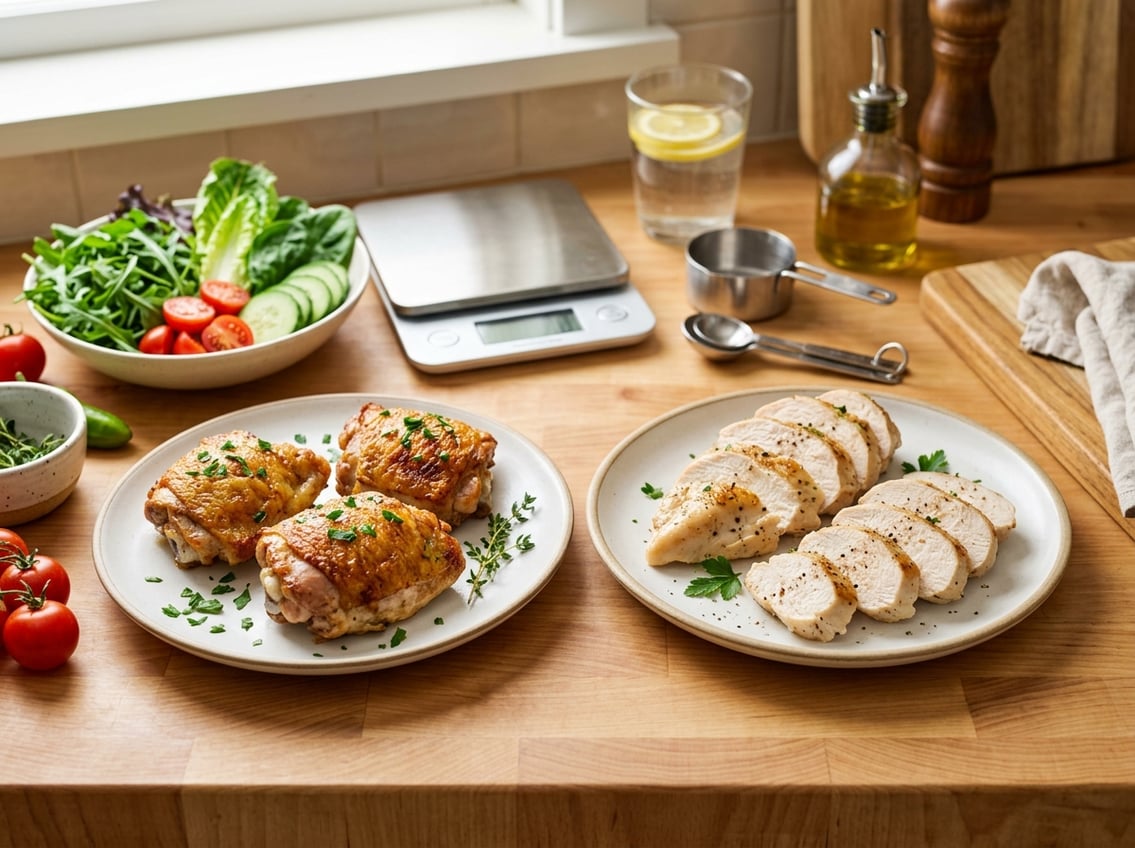
Breast meat gives more protein for each calorie you eat. Thighs supply more fat and slightly more iron and zinc.
Skin and cooking method change calories and fat significantly, so pick the cut and preparation that match your goals.
Protein Per Calorie: Lean Protein Sources
If you prioritize protein per calorie, skinless chicken breast stands out. A typical 100 g cooked, skinless chicken breast provides roughly 30–31 g protein and about 165 kcal.
That makes breast meat a strong choice when you want to maximize lean protein while limiting calories.
Skinless chicken thighs deliver less protein per calorie—around 24–25 g protein for roughly 175–180 kcal per 100 g cooked.
You still get quality complete protein from thighs, but each calorie buys a bit less protein than with breast meat.
Use breasts for calorie-restricted or high-protein plans. Choose thighs when flavor and satiety matter more than squeezing every calorie for protein.
Fat and Calorie Differences
Fat content diverges most between cuts. Skinless chicken breast averages about 3–4 g total fat per 100 g cooked.
Skinless thighs contain roughly 8 g fat per 100 g cooked, nearly double the breast’s fat.
Leaving skin on increases calories and saturated fat substantially. Skin-on chicken thighs can add about 25–30% more calories than the skinless version, depending on cooking method.
Frying or heavy breading multiplies that effect.
The extra fat in thighs brings more monounsaturated and some polyunsaturated fats, which add flavor and juiciness. If you aim to lower saturated fat or total calories, remove the skin and use grilling, baking, or roasting.
Micronutrients: Vitamins and Minerals
Thighs tend to contain higher amounts of iron, zinc, and vitamin B12 per 100 g compared with breast meat.
Breasts usually supply more choline and certain B vitamins like vitamin B6 in slightly higher amounts per serving.
Selenium levels are similar between cuts, so either will contribute to your selenium needs.
Cooking method and portion size affect micronutrient density. Highly processed or pre-seasoned products may add sodium, while roasting or boiling preserves most minerals.
Balance your choice of breast or thigh with other foods to cover nutrients you need most.
How Cooking Method and Skin Affect Nutrition
Cooking method and whether you keep the skin change calories, fat type, and nutrient absorption. Choosing skin-on or skinless and a dry-heat or fried preparation will directly affect how much fat and sodium end up on your plate.
Skin-On vs. Skinless Options
Keeping the skin adds visible fat and calories. A skin-on chicken thigh contains more saturated and total fat than a skinless chicken thigh or skinless chicken breast.
Choosing skinless chicken breast or skinless chicken thighs lowers calorie and saturated-fat intake per serving.
The skin also helps retain moisture during cooking, so skin-on chicken thighs often stay juicier than skinless chicken breast. If you remove the skin after cooking, some fat remains absorbed into the meat.
Discarding raw skin before cooking reduces added fat more effectively.
For micronutrient absorption, the fat in skin can improve uptake of fat-soluble vitamins in a mixed meal. If you’re watching saturated fat or total calories, prioritize skinless chicken breast or skinless chicken thigh and add a small, controlled source of healthy fat like olive oil or avocado.
Baking, Grilling, and Roasting
Baking, grilling, and roasting use dry heat and generally preserve protein while allowing fat to render away from the meat. When you roast skin-on chicken thighs on a rack, much of the rendered fat drips off, lowering the final fat content versus leaving pieces sitting in their drippings.
Grilling gives a charred flavor without adding fat, but high direct heat can dry out lean cuts. Skinless chicken breast benefits from brines, marinades, or lower grill heat to stay moist.
Baking covered at moderate temperature keeps skinless chicken thighs and breasts juicier without needing added fats.
Use a rack, trim visible fat, and avoid basting with butter-heavy sauces to keep calories lower. Season boldly with herbs, citrus, and vinegar instead of relying on oil-heavy finishes.
Impact of Frying, Marinades, and Breaded Coatings
Frying and breaded coatings raise calories and fat compared with unbreaded, dry-heat methods. Breaded skinless chicken breast or skin-on chicken thighs absorb oil during frying, increasing total fat and often saturated fat depending on the frying oil and breading ingredients.
Marinades that include oil, sugar, or high-sodium sauces can add hidden calories and sodium. An oil-heavy marinade on skinless chicken thighs will contribute more fat than a vinegar- or citrus-based one.
Sweet or soy-based marinades can boost sodium and simple sugars.
If you want crunch without large calorie increases, use a thin whole-grain breadcrumb, an air-fryer, or a high-heat oven to crisp skinless chicken breast or skinless chicken thighs with minimal added oil.
When frying, choose high-stability oils like refined avocado or peanut and drain on paper to reduce surface oil.
Taste, Satiation, and Meal Satisfaction
Texture, flavor intensity, and how long a meal keeps you full differ between cuts. Those differences influence cooking choices, portion size, and which cut fits your appetite or occasion.
Juiciness and Mouthfeel
Chicken thighs contain more intramuscular fat than chicken breasts, which keeps them moist during cooking. That fat melts and coats fibers, producing a tender, slightly gelatinous mouthfeel that many people perceive as juicier and more satisfying.
Skinless chicken breast is much leaner and can dry quickly if overcooked. When cooked properly—brined, poached, or cooked to exact temperature—it can still be tender, but you’ll notice a firmer, denser texture compared with thighs.
For crisp-skinned preparations, thighs tolerate high heat better without drying.
If you want a reliably moist bite with less precision, choose skinless chicken thigh. If you prefer a lean, firmer texture and control over fat content, choose skinless chicken breast and use gentle cooking methods.
Flavor Absorption and Versatility
Thighs have stronger intrinsic flavor due to higher fat and myoglobin content. They carry bold spices, marinades, and sauces well.
Their flavor stands up to long braises, rich sauces, and intense spice blends without being overwhelmed.
Breasts have a milder profile and act like a neutral canvas. They absorb delicate herbs, citrus, and light marinades cleanly, making them ideal for quick sautés, salads, and dishes where other ingredients should dominate.
For recipes requiring long cooking or heavy seasoning, chicken thighs perform better. For lighter preparations, grilled salads, or meals where you want low fat, skinless chicken breast gives predictable results and pairs well with strong accompaniments.
Satiety and Fullness Factors
Fat slows gastric emptying, so the higher fat content of chicken thighs generally increases post-meal fullness compared with lean protein from chicken breasts. You may feel satisfied longer after a thigh-based meal, which can reduce snacking later in the day.
Protein itself contributes to satiety; a 3–4 ounce serving of either cut supplies a substantial protein dose. If you eat skinless chicken breast and find hunger returns quickly, add a small healthy fat or fiber-rich sides to extend fullness without adding many calories.
If weight control is your priority, portion control and overall meal composition matter more than the cut alone. Choose skinless chicken breast for lower calories per ounce, or pick skinless chicken thigh when you need a meal that keeps you fuller with fewer additions.
Best Uses for Chicken Thighs and Breast in Cooking
Choose breast when you need lean, quick-cooking protein. Choose thighs when you want forgiving, flavor-forward meat that stands up to long cooking or bold sauces.
Quick Meals and Meal Prep
For fast weeknight dinners and meal prep, use skinless chicken breast or boneless skinless chicken thighs depending on your goals.
If you want lower calories and higher protein per ounce, cook skinless chicken breast with even thickness—slice, pound, or butterfly to ensure uniform doneness. Pan-sear 3–5 minutes per side or grill 6–8 minutes, then slice over salads, grain bowls, or sandwiches.
If you prioritize juiciness and flavor with less risk of drying, choose skinless chicken thighs or skinless chicken breast left slightly thicker.
Thighs hold up better to reheating and shredded-thigh recipes like tacos, curries, or pasta. For meal prep, roast a tray of bone-in, skin-on chicken thighs to render fat and crisp skin, then remove skin for portioned meals.
Grilling, Roasting, and Slow Cooking
Match cut to method for best texture and flavor.
For grilling and roasting, skin-on chicken thighs crisp and caramelize, giving you a browned crust and moist interior. Cook over medium heat until internal temperature reaches 165–175°F.
Chicken breasts grill well if pounded even and removed from heat at 160–165°F to avoid dryness.
Slow cooking and braises favor chicken thighs—bone-in or boneless—because connective tissue breaks down and fat keeps the meat tender. Use thighs in stews, coq au vin, or slow-cooker curries.
If you use skinless chicken breast in slow, moist heat, add acid or a short braise time to prevent a mealy texture.
Global Cuisines and Recipe Pairings
Match cuts to the dish’s flavor profile and cooking length.
Choose chicken thighs for Southeast Asian curries, Mexican adobo, Korean braises, and Southern fried chicken. Their higher fat and darker meat complement bold spices and long cooking.
Skin-on chicken thighs give mouthfeel and crispiness to roasted Mediterranean dishes.
Use chicken breasts for Japanese teriyaki, Italian chicken piccata, and lighter salads. Their mild flavor and lean texture let sauces and herbs stand out.
For stuffed or rolled preparations like ballotine and saltimbocca, use whole chicken breasts. They are easy to shape and cook evenly.
Which Cut Aligns With Your Health and Fitness Goals?
Select based on calorie needs, protein goals, and taste.
Breasts provide more protein per calorie and lower fat. Thighs offer more calories, iron, and flavor.
Weight Loss and Lean Eating
If you want to lose weight, choose skinless chicken breast as a lean protein.
A 100 g cooked skinless chicken breast gives about 31 g protein and around 165 kcal. This helps preserve muscle while you cut calories.
Grill, bake, or roast without added oil to keep calories low. Avoid breading and frying, which can double calories.
If you prefer thighs, pick skinless chicken thigh and trim visible fat.
Thighs have more fat and about 179 kcal per 100 g cooked. Portion control becomes important.
Use measured servings, such as 85–100 g, and pair with low-calorie vegetables.
Muscle Building and Protein Intake
To build muscle, focus on total daily protein.
Chicken breasts give a higher protein-per-calorie ratio, making them efficient for large protein intakes without excess calories.
A typical 100 g serving of skinless breast supplies about 31 g protein.
Chicken thighs also provide quality protein and add extra calories helpful for bulking.
Their higher fat content supplies energy and supports a calorie surplus.
Use breasts for lean protein density. Choose thighs when you need extra calories or more flavorful meals.
Balancing Nutrition With Taste Preferences
Taste and adherence matter for long-term success. Chicken thighs have more fat and flavor, which improves meal satisfaction and reduces reliance on high-calorie sauces.
If you find skinless chicken breast too dry, try brines, marinades, or cooking techniques such as sous-vide or gentle roasting. These methods help preserve juiciness without adding much fat.
Combine cuts in the same meal to balance protein per calorie and flavor. Use breast for lean protein and thigh for mouthfeel.
Consider micronutrients as well. Thighs provide slightly more iron, zinc, and B12, which can help if you have low iron or higher micronutrient needs.
Track portions and cooking method to keep your approach aligned with your goals.


