
Best Chicken Thigh Marinade: Essential Ingredients, Methods, and Tips
You want juicy, flavorful chicken thighs without overcomplicating dinner. Start with a balanced marinade using acid to tenderize, oil to carry flavors, and seasonings like garlic, herbs, soy, honey, or spices to define the profile.
When you balance acid, oil, and seasoning, the marinade penetrates the meat and complements your cooking method.
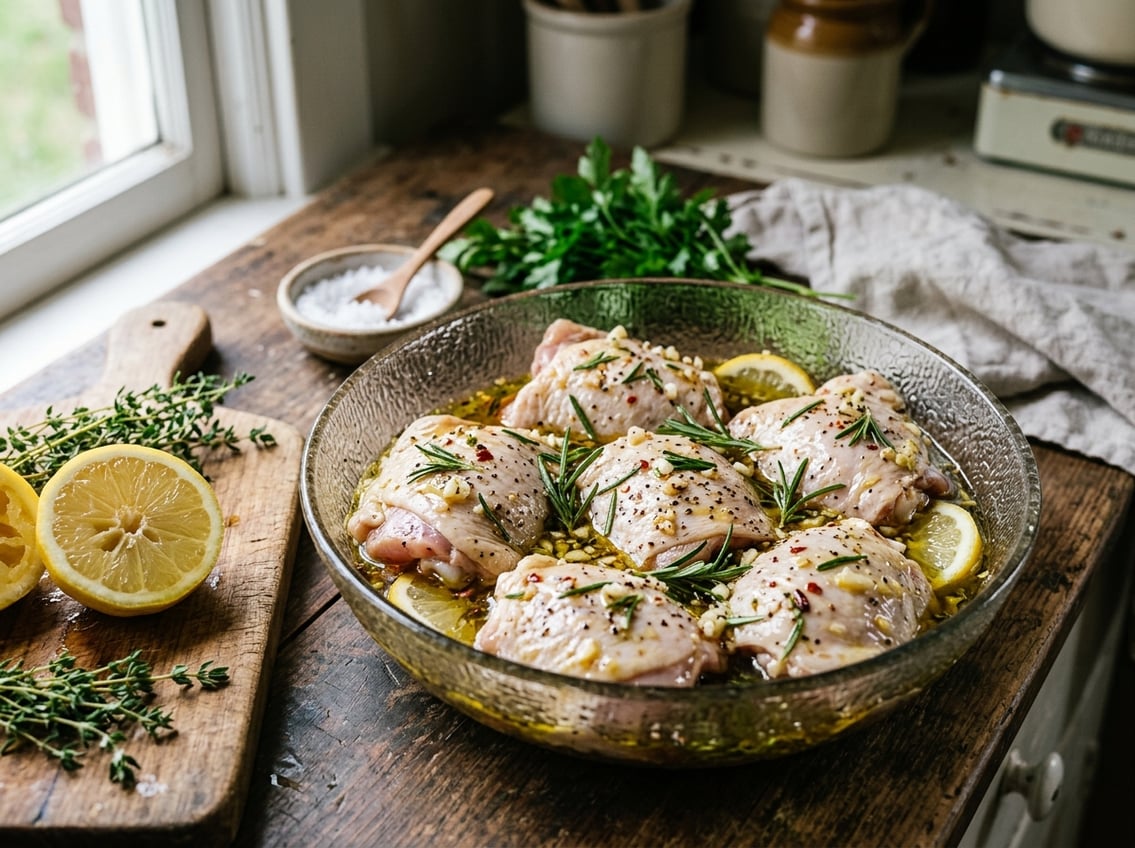
This guide explains which marinade ingredients work best and how different thigh cuts respond to flavors. You’ll also find practical tips for marinating time and safety.
Expect clear recipes and pairing ideas that make it easy to match marinades to grilling, baking, or pan-searing.
Key Ingredients for Flavorful Marinades
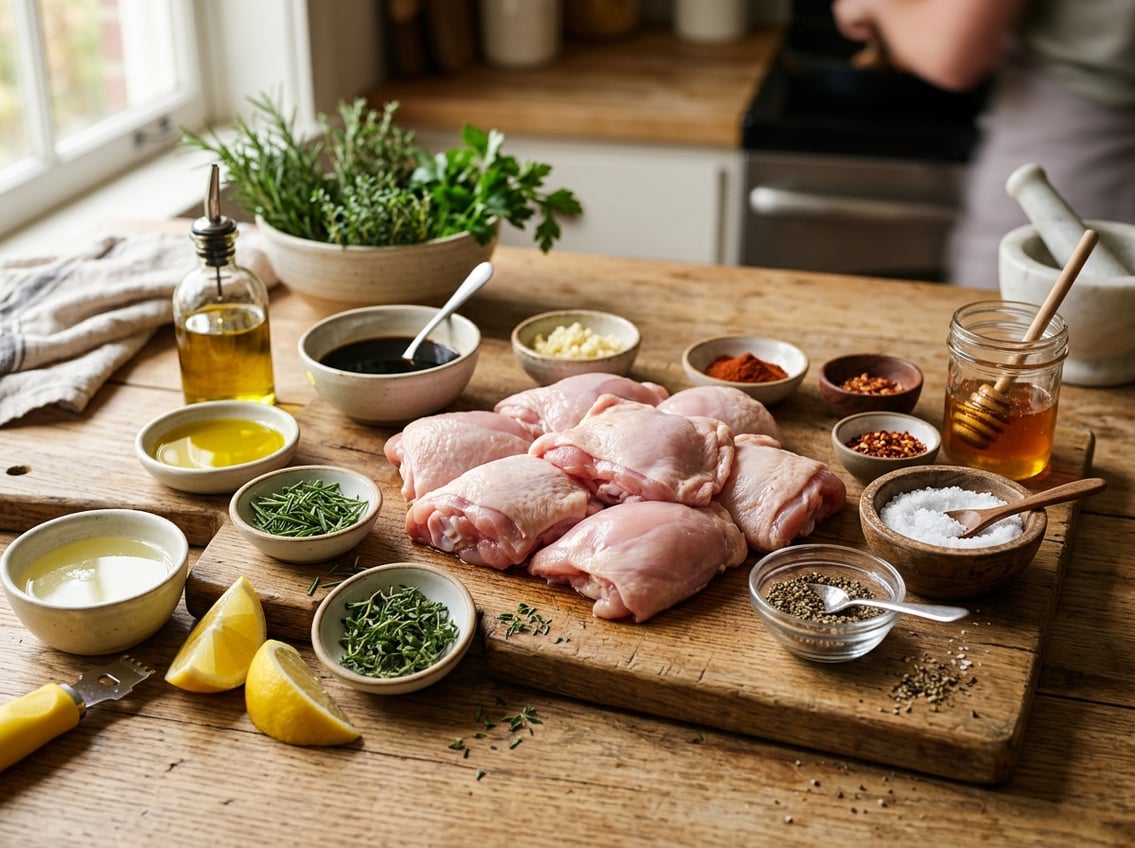
A strong marinade balances acid, fat, and seasonings to tenderize and flavor thighs quickly. Use concentrated umami, a touch of sweetness, and fragrant herbs or spices to round out the profile.
Balancing Acidity, Sweetness, and Umami
Acid loosens proteins and lets flavors penetrate. Use lemon or lime juice for bright citrus notes, or apple cider, rice wine, red wine, or balsamic vinegar for tang and depth.
Keep acid to about 10–20% of the mix to avoid mushy meat when marinating more than a few hours. Sweeteners control caramelization and temper acidity.
Honey, maple syrup, or brown sugar give golden color and balance soy or vinegar. For sticky grilled thighs, brush additional honey or maple during the last minutes of cooking.
Umami anchors the marinade. Use soy sauce, tamari, or a splash of mirin for savory depth.
Combine soy with minced garlic and a pinch of black pepper or cayenne to create a savory-sweet backbone.
Best Oils and Fats for Marinades
Oil carries fat-soluble flavors and helps the chicken brown. Choose avocado oil for high-heat grilling and a neutral taste.
Olive oil works well for pan-roasting and Mediterranean profiles, but use it lightly for high-heat cooking. Fats also moderate acid.
Use a 2:1 oil-to-acid ratio for less aggressive tenderizing. For low-fat marinades, increase aromatic liquid components and shorten marinating time.
Emulsifiers like Dijon mustard help bind oil and acid, creating an even coating that adheres to skin and crevices. A tablespoon of mustard adds subtle tang and improves browning and texture.
Optimal Herbs and Seasonings
Aromatics define the final flavor. Mince fresh garlic for immediate punch or use garlic powder for even distribution.
Black pepper pairs with most styles; add cayenne sparingly to control heat. Kosher salt is essential—use ¾ to 1 teaspoon per pound of meat if your marinade contains salty elements like soy sauce or tamari.
If using soy sauce as your main salt, reduce added salt. Match herbs and condiments to your cuisine.
Try thyme, oregano, and lemon for Mediterranean; cilantro and lime for Mexican; ginger, scallion, and mirin for Asian. Small amounts of mirin or rice wine vinegar brighten flavors.
Balsamic or red wine vinegar adds richer, slightly sweet notes suitable for roasted thighs.
Types of Chicken Thighs and Their Marinade Pairings
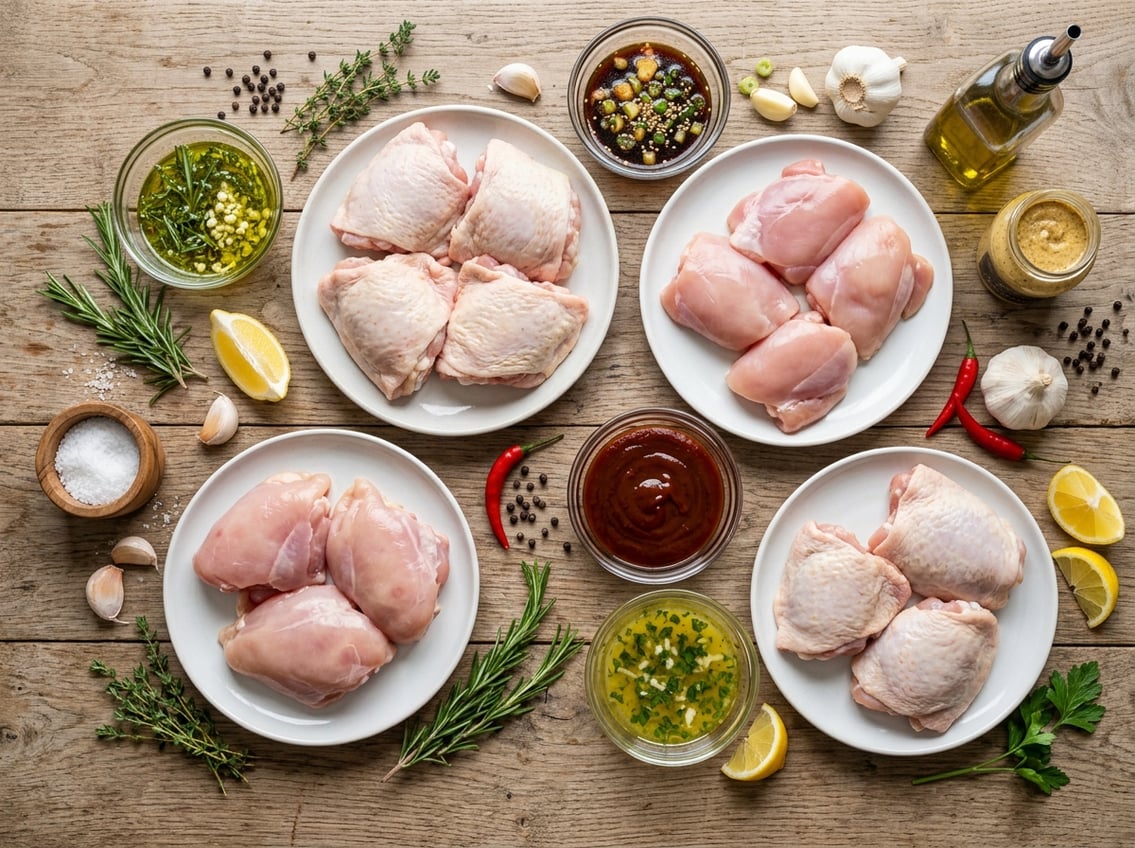
Choose the cut that matches your cooking method and flavor goals. Thigh thickness, bone presence, and skin change marinating time, heat tolerance, and final texture.
Boneless vs. Bone-In Chicken Thighs
Boneless chicken thighs absorb marinades faster. You can use high-acid blends for 30 minutes to 2 hours without risking mushy texture.
Soy-based, yogurt, or oil-forward marinades also work well and penetrate quickly. Cook boneless thighs fast on a hot grill, pan-sear, or use the oven at 400–425°F for shorter times.
Bone-in chicken thighs need longer contact with the marinade for flavor to reach around the bone. Use milder acids and marinate 4–12 hours to tenderize without breaking down proteins.
Richer, oilier marinades with herbs, garlic, or spice pastes complement the deeper flavor from bone-in pieces. Roast or grill at moderate heat to render fat and avoid drying the meat near the bone.
Using Skin-On or Skinless Thighs
Skin-on thighs hold moisture and allow for crisp, caramelized surfaces when cooked at high heat. If you plan to crisp the skin, use marinades with less surface sugar or remove excess marinade before searing to prevent burning.
Salt, oil, and aromatics under the skin infuse flavor directly into the meat while preserving crispy skin. Skinless or boneless skinless chicken thighs let marinades coat the flesh evenly for faster flavor uptake.
Use shorter marination times for high-sodium or sugary mixes to avoid overly salty or charred exteriors. Acidic dairy like yogurt or buttermilk gives tender results without long marinating.
Lighter herb-oil mixes produce bright, quick-grilled or pan-seared marinated chicken thighs suitable for bowls and sandwiches.
Creating the Perfect Chicken Thigh Marinade
Balance acid, oil, salt, and aromatics for tender, flavorful thighs. Marinate 2–4 hours for most marinades, score thicker pieces, and always marinate in the fridge.
Classic Chicken Thigh Marinade Recipe
Combine 1/4 cup soy sauce, 1/4 cup olive oil, 2 tbsp lemon juice, 2 cloves minced garlic, 1 tbsp honey, and 1 tsp coarse salt. This blend gives you savory umami, moisture from oil, bright acidity, and a touch of sweetness for caramelization.
For two pounds of bone-in thighs, rinse and pat dry, then place in a resealable bag with the marinade. Massage to coat, refrigerate 2–4 hours, and remove 20 minutes before cooking so the meat reaches room temperature.
If using boneless, reduce acid to 1 tbsp to avoid toughening. Always discard used marinade or boil it for at least one minute before using as a sauce.
Popular Variations: Honey Garlic, Greek, and BBQ
Honey Garlic: Mix 3 tbsp honey, 3 cloves garlic (minced), 2 tbsp soy sauce, 2 tbsp rice vinegar, and 1 tbsp oil. Marinate 1–3 hours; honey aids browning but can burn over high heat, so watch the grill.
Greek: Combine 1/3 cup olive oil, 3 tbsp lemon juice, 2 tsp dried oregano, 2 cloves garlic, 1 tsp salt, and 1/4 tsp black pepper. Marinate 2–6 hours for classic Greek chicken thigh flavor.
BBQ: Whisk 1/4 cup ketchup, 2 tbsp brown sugar, 2 tbsp apple cider vinegar, 1 tbsp Worcestershire, and 1 tbsp oil. Marinate 1–4 hours. Reserve a separate batch of sauce for basting during grilling.
Substituting Flavors for Dietary Needs
Gluten-free: Swap soy sauce for tamari or coconut aminos one-to-one. These keep umami without gluten.
Low-sodium: Reduce added salt and use lemon zest, garlic, and smoked paprika for flavor. Replace 1/4 cup soy sauce with 2 tbsp low-sodium tamari plus 2 tbsp water.
Dairy-free/vegetarian-friendly: Use yogurt or buttermilk alternatives like coconut yogurt diluted with lemon if you want the tenderizing benefits of dairy-free acids. For vegan marinades on plant-based substitutes, keep the same acid-to-oil ratio and increase herbs.
Maintain the basic ratio: about one part acid, one part oil, plus aromatics and seasonings for moisture, flavor, and proper texture.
How to Marinate Chicken Thighs for Best Results
Balance acid, oil, salt, and aromatics and give the thighs enough time to absorb flavor. Store and handle the marinated chicken safely.
Best Practices for Marinating
Pat the thighs dry with paper towels before adding the marinade. This helps the marinade cling and prevents dilution.
If using thicker boneless thighs, score them shallowly to allow deeper penetration. Use a resealable plastic bag or a shallow nonreactive container so the marinade surrounds the chicken.
Remove excess air from the bag and massage the marinade into the thighs for 30–60 seconds to distribute flavors evenly. Keep the ratio close to 1:1 oil to acid for balanced results.
Reserve a small portion of the marinade before adding raw chicken if you want a sauce. If using the marinade as a sauce after marinating, bring it to a boil for at least one minute.
Recommended Marinating Time
Short marinating times of 20–30 minutes give good surface flavor for quick meals. For deeper flavor and gentle tenderizing, aim for 2–4 hours.
If your marinade uses yogurt or buttermilk, you can extend to 6–12 hours because these are milder and tenderize without becoming harsh. Avoid marinating strong citrus- or vinegar-heavy blends for more than 6–8 hours, and never exceed 12–24 hours.
Always refrigerate while marinating and set a timer to avoid over-marinating.
Marinating Safety and Storage Tips
Always marinate in the refrigerator at 40°F (4°C) or below. Never leave raw chicken in marinade at room temperature.
Use separate utensils and cutting boards for raw and cooked chicken to prevent cross-contamination. If you want to use the marinade as a sauce, reserve an unused portion or bring the used marinade to a rolling boil for at least one minute before serving.
Store marinated chicken in its sealed bag or covered container and cook within the recommended marinating window. Discard any leftover marinade that contacted raw chicken and was not boiled.
Cooking Methods for Marinated Thighs
Choose a high-heat, quick sear for surface caramelization and char, or use steady oven heat for juicy chicken. Both methods reach safe internal temperature while highlighting different texture and flavor outcomes.
Grilling for Caramelization and Flavor
Preheat your gas or charcoal grill to medium-high, about 400°F. Oil the grates and shake off excess marinade before placing the thighs skin-side down or smooth-side down for boneless pieces.
Sear 4–6 minutes per side for boneless thighs, or 6–8 minutes per side for bone-in, until a good crust forms and an instant-read thermometer reads 165–175°F.
Control flare-ups by trimming excess fat and moving pieces to indirect heat if charring becomes too aggressive. Keep the lid down between flips and rest the meat 5–10 minutes before serving so juices redistribute.
Watch timing to avoid burning, especially if using marinades with sugar or honey.
Baking for Tender, Juicy Thighs
Preheat the oven to 400–425°F and arrange thighs in a single layer on a parchment-lined baking sheet or shallow baking dish. Bake boneless thighs 15–20 minutes and bone-in 25–35 minutes, checking internal temperature with an instant-read thermometer.
Flip once halfway for even browning if you want a crisper exterior. Use a wire rack over the baking sheet for better air circulation and crisper skin.
If your marinade contains honey or sugar, tent loosely with foil if the surface browns too quickly. Let the baked chicken thighs rest 5–10 minutes before serving to lock in juices.
Serving Suggestions and Pairings
Pair the marinated chicken thighs with sides that balance richness and echo key flavors. Acidic elements, a fresh green, and a starchy component work well.
Think char, crunch, and a bright sauce or condiment to cut through the meat’s fat.
Recommended Sides: Vegetables, Zucchini, and Grains
Grill zucchini alongside chicken thighs for a smoky, tender contrast. Slice zucchini lengthwise, brush with olive oil, salt, and pepper, and grill each side for 3–4 minutes until charred and soft.
The mild flavor of zucchini pairs well with soy, honey, or citrus-based marinades. Roast carrots, red onion, and bell pepper at 425°F (220°C) for 20–25 minutes until caramelized.
Serve long-grain rice, couscous, or farro tossed with lemon zest and chopped parsley for added brightness. Try a quick tabbouleh or herbed quinoa for meal balance.
Offer a sauce or relish, such as chimichurri with herb marinades or tzatziki with yogurt-based ones. Use a simple lemon-garlic vinaigrette to add freshness to the dish.
Ideas for Leftovers and Meal Prep
Shred leftover thighs for easy bowls. Layer with warmed farro or rice, grilled zucchini, chopped cucumber, and a spoonful of tzatziki or tahini.
Store components separately in airtight containers for 3–4 days. This helps preserve texture and flavor.
Use cold sliced thighs in sandwiches or wraps. Add crisp romaine, roasted pepper strips, and a smear of garlic mayo or harissa for heat.
Place warm chicken over mixed greens with cherry tomatoes and a squeeze of lemon for salad meal-prep. Dress only before eating.
Freeze fully cooked thighs in portions for up to 3 months. Thaw overnight in the fridge and reheat in a 325°F (160°C) oven for 10–15 minutes to prevent drying.


