
Which Is Better: Chicken Thigh or Drumstick? Flavor, Nutrition, and Cooking Compared
Pick chicken thighs when you want more meat, richer flavor, and forgiving cooking. Choose drumsticks when you want a bargain, crispy skin, and easy handheld servings.
Bold choice depends on your goal: portion and juiciness versus cost and crispness. The “better” cut changes with the dish you plan to make.
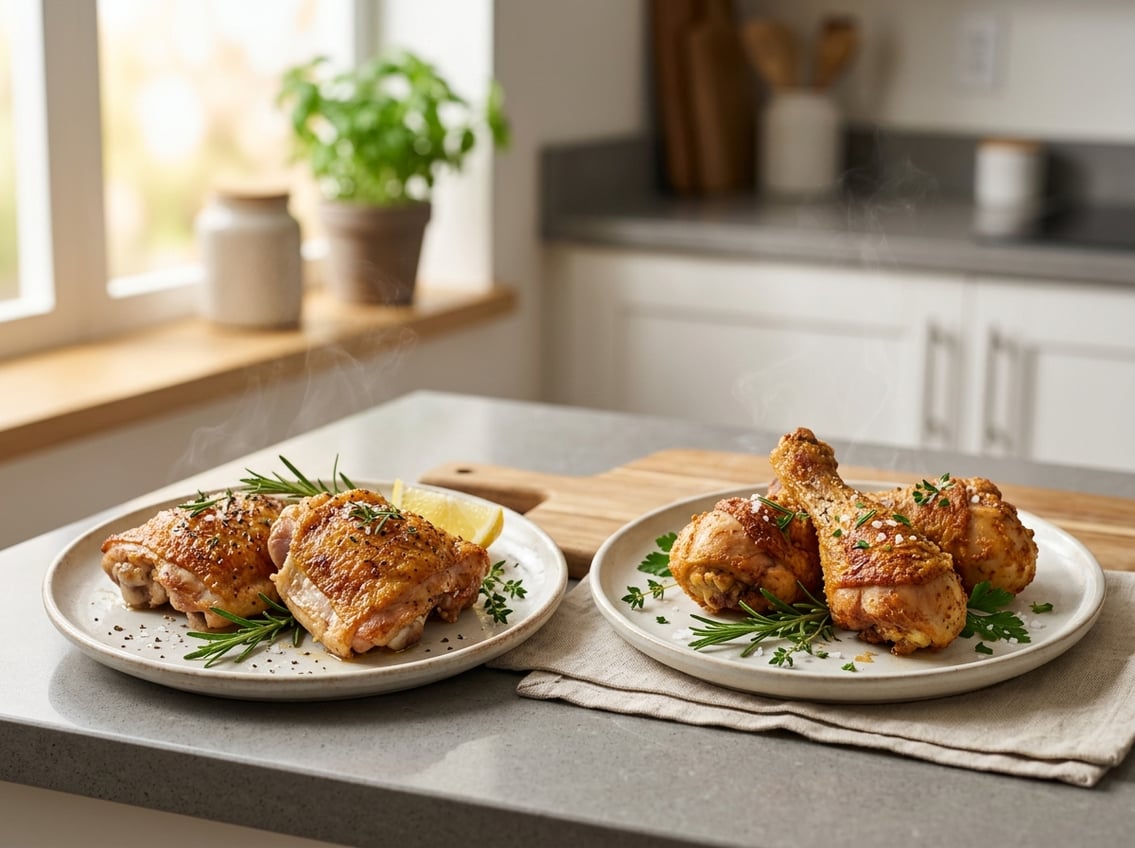
This post explores anatomy and meat-to-bone ratio, flavor and texture differences, nutrition, best cooking methods, cost, and meal planning. Your personal preference should guide your choice.
Anatomy and Meat-to-Bone Ratio
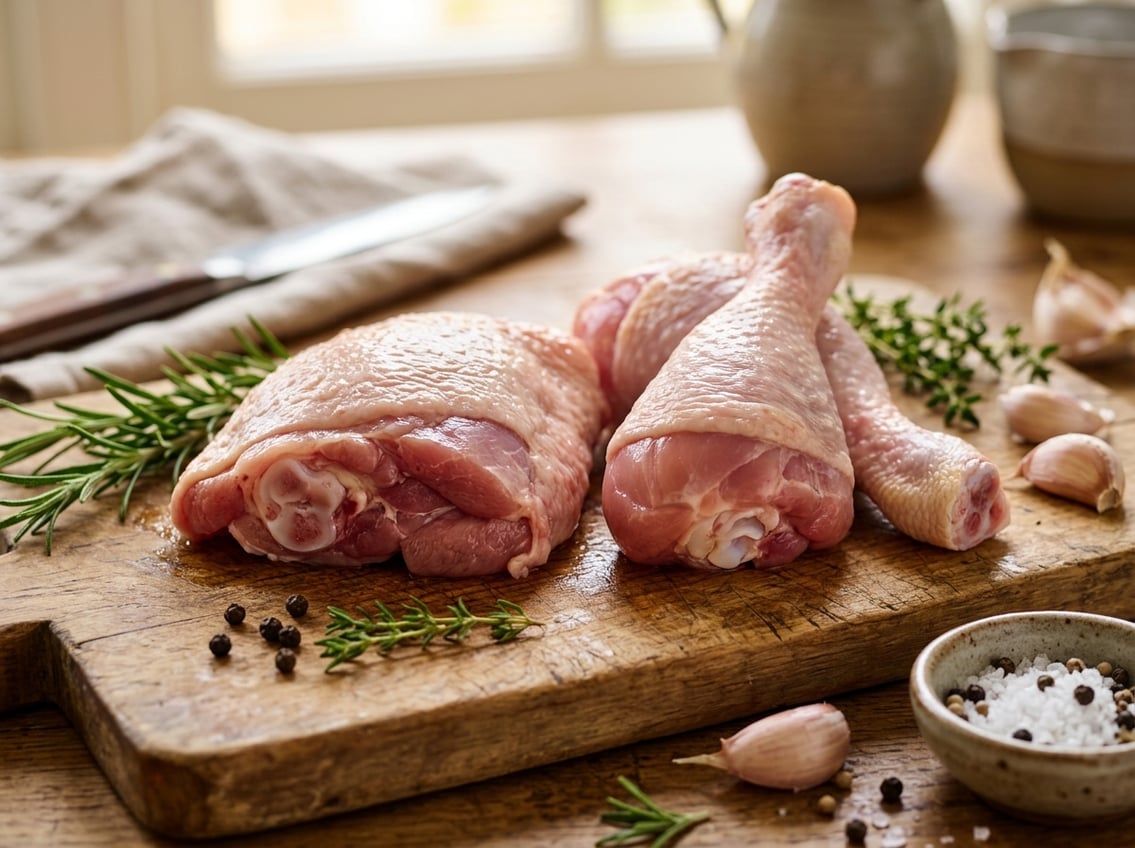
Each cut comes from a specific part of the chicken and offers different amounts of edible meat. Bone or skin choices change cooking and yield.
Focus on location, typical portion weight, and how bone-in or skinless options affect meat-to-bone ratio and cooking behavior.
Cut Location and Structure
The drumstick is the lower portion of the leg, below the knee joint, containing one long central bone and a tapered shape. The thigh sits above the knee and includes a flatter, wider muscle with a shorter bone or sometimes no exposed bone when deboned.
Structure affects texture. Thighs have broader muscle fibers and more intramuscular fat, which keeps them moist during slow cooking. Drumsticks concentrate meat around a single bone, so bites near the bone feel juicier, but overall muscle mass is smaller.
When you buy bone-in chicken thighs, you get a chunkier piece with irregular shape. Drumsticks are uniform and easy to portion.
Meat Yield and Portion Size
A typical bone-in chicken thigh yields more meat per piece than a drumstick. Expect about 80–120 g cooked meat from a bone-in thigh versus roughly 50–80 g from a drumstick, depending on size and cooking loss.
Thighs usually weigh more raw because they contain both upper-leg muscle mass and slightly higher fat content. Meat-to-bone ratio favors thighs, providing a higher meat-to-bone percentage.
Drumsticks have a lower meat-to-bone ratio but can appear meatier at the bite because the meat clusters around the single bone. For hearty servings, use one thigh per adult or two drumsticks if you prefer them.
Bone-In vs. Skinless Options
Bone-in chicken thigh keeps moisture and flavor during roasting, braising, or grilling due to bone conduction and surrounding fat. If you choose bone-in chicken thigh, allow extra cook time and expect slight yield loss from trimming around the bone.
Bone-in drumsticks behave similarly but give less total meat. Skinless chicken thighs and skinless chicken drumsticks reduce calories and fat but increase the risk of drying out.
Skinless chicken thighs still retain more fat than skinless drumsticks, so they tolerate higher-heat methods better. For best results, use brines or marinades with skinless cuts to improve juiciness.
Flavor and Texture Differences
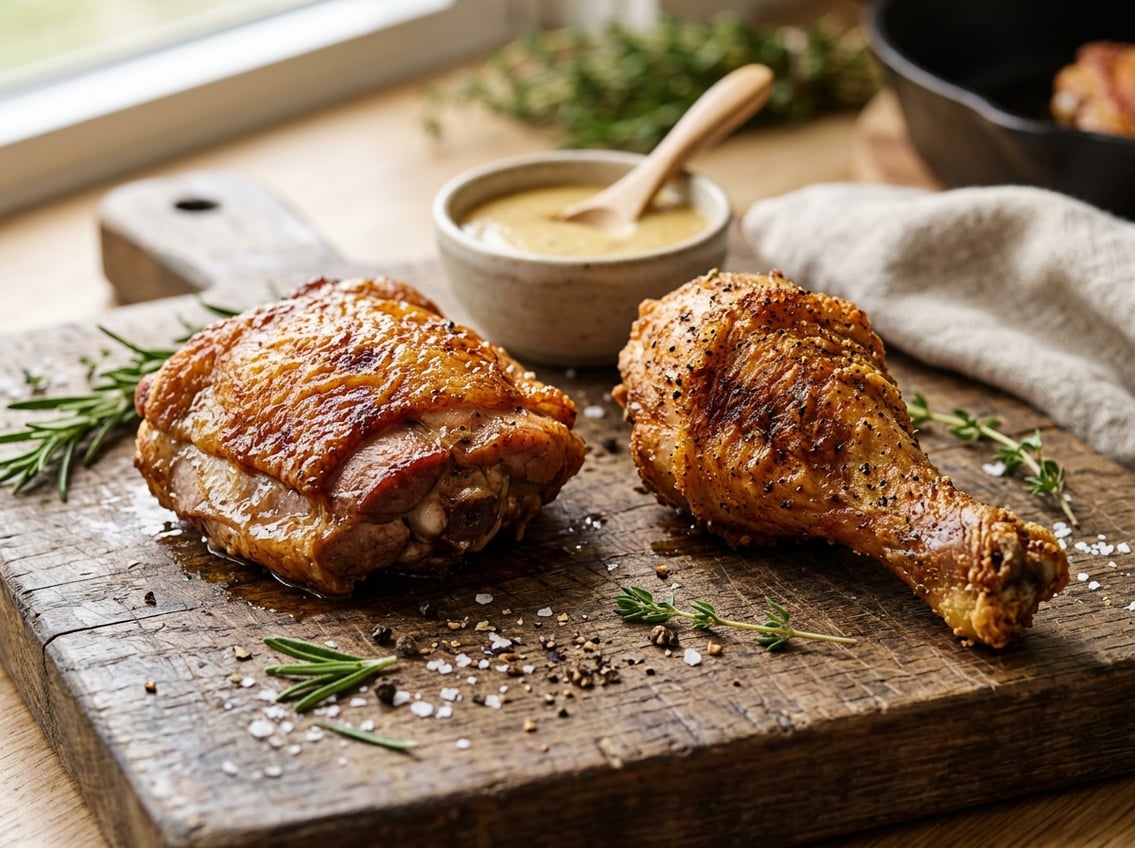
Thighs and drumsticks both deliver richer taste and firmer textures than breast. They behave differently when cooked and when you bite into them.
Thighs give deeper, fattier flavor and more tender pull-apart meat. Drumsticks offer a slightly firmer chew and concentrated bone-driven savor.
Dark Meat vs. White Meat Characteristics
Dark meat (thigh and drumstick) contains more myoglobin and intramuscular fat than white meat, making it more flavorful. The chicken thigh has broader muscle bundles and more connective tissue than the drumstick.
You get a rounder, beefier flavor and softer fibers when you cook thighs low and slow. The drumstick’s muscles are denser and hinge around the tibia, producing a more focused “chicken” taste that registers as slightly leaner.
Compared to breast, both cuts retain moisture better. Thighs show richer umami notes while drumsticks emphasize pure, bone-adjacent savor.
Juiciness and Mouthfeel
If you want succulent, shreddable meat, choose thighs. Fat marbling in the thigh melts during cooking and gives a silky mouthfeel that coats sauces and fills tacos or stews nicely.
When you bite a properly cooked thigh, the fibers separate easily and feel plush rather than stringy. Drumsticks stay juicier than breast but firmer than thighs.
The single large bone concentrates juices and warmth, so short, high-heat methods (grilling, frying) produce a satisfying snap of skin and a toothsome interior. Drumsticks excel for hand-held eating and texture contrast between crisp skin and meat.
Influence of Skin and Fat Content
Skin-on pieces add perceived juiciness and a crisp factor when roasted or fried. Skinless chicken thigh still offers significant fat and flavor because of intramuscular fat, so you lose less taste when you remove skin than you do on the breast.
Skinless drumstick becomes leaner and chewier, but retains more flavor than skinless breast due to its dark-meat makeup. Fat distribution matters for your cooking choices.
Thighs render more fat into sauces and braises, enriching the dish. Drumsticks give localized richness near the bone and crisp up faster.
If you remove skin to cut calories, prefer skinless drumsticks for lower fat or skinless chicken thigh when you want richer texture without skin.
Nutritional Comparison
Thighs and drumsticks both come from dark meat and supply substantial protein. They differ in calories, fat, and specific micronutrients.
Your choice will depend on whether you prioritize protein density, iron/zinc content, or lowering calories by removing the skin.
Calories, Fat, and Protein
A 100 g cooked, skinless drumstick typically contains about 170–180 calories, roughly 28 g protein, and 6–7 g total fat. A 100 g cooked, skinless thigh is higher in calories—about 200–210—and contains about 21–22 g protein with 12–13 g total fat.
The drumstick gives a better protein-to-calorie ratio, while the thigh supplies more fat and slightly fewer grams of protein per 100 g. If you track macros, pick drumsticks for higher protein density and thighs when you want more fat for satiety or flavor during higher-calorie meals.
Key practical points:
- Per 100 g, drumstick: about 175 kcal / 28 g protein / 6 g fat.
- Per 100 g, thigh: about 209 kcal / 21 g protein / 13 g fat.
- Cooking method and added oil can change these numbers significantly.
Micronutrients: Iron, Zinc, and More
Dark meat contains more iron and zinc than white meat. The thigh tends to have the highest concentrations.
If you need dietary iron (heme iron) or zinc for immune and metabolic functions, a skinless thigh delivers slightly more per serving than a drumstick. Both cuts provide B vitamins—particularly niacin (B3), B6, and B12—which support energy metabolism and red blood cell formation.
You’ll also get phosphorus and small amounts of selenium from either cut. These micronutrients vary with animal diet and cooking loss, but choosing dark meat over white meat generally raises your iron and zinc intake.
Practical note:
- Choose thigh when iron or zinc content matters.
- Choose drumstick if your priority is protein with moderate micronutrient benefits.
Skinless vs. Skin-On Choices
Keeping the skin increases calories and fat sharply. Removing the skin reduces total fat by roughly 25–35% and lowers calories by about the same proportion.
For example, a skin-on roasted thigh can exceed 230–300 kcal per 100 g depending on cooking fat. A skinless roasted thigh sits near 180–210 kcal.
The skin carries most of the saturated and monounsaturated fat. Removing it brings the dark meat’s fat profile closer to white meat.
If you want lower calories without losing dark-meat micronutrients, use skinless chicken thighs or skinless drumsticks and prefer dry-heat cooking (roast, grill, air-fry) over deep frying.
Quick guidance:
- Skinless drumstick: leanest dark-meat option.
- Skin-on thigh: most flavorful but highest in added fat and calories.
Best Uses and Popular Cooking Methods
Choose the cut that matches your cooking method and the texture you want. Thighs hold moisture and tolerate long cooking. Drumsticks crisp and work well for single-portion, hands-on eating.
Roasting, Grilling, and Frying
For high-heat methods, drumsticks and bone-in chicken thighs both perform well, but they behave differently. Drumsticks heat through faster because the meat is thinner around the bone, so watch for overcooking.
They develop a crisp skin ideal for grilling and frying. Thighs take a bit longer but reward you with richer, juicier bites thanks to higher fat content.
If you want crispy fried chicken or grilled chicken legs, brine or dry-brine first to improve moisture retention. Use a thermometer: 165°F (74°C) for safe doneness, but thighs can be removed slightly earlier and rested for carryover heat.
For even browning on the grill, sear over high heat then move to indirect heat to finish.
Seasoning and coating tips:
- For fried chicken or buffalo-style wings, dredge in seasoned flour or batter and maintain oil at 350–375°F.
- For grilling, brush with oil and high-heat marinades. Avoid sugary sauces until the end to prevent burning.
- For oven roasting, place skin-side up and start at high heat (425°F) for 15–20 minutes, then lower to finish.
Braising and Slow Cooking
Thighs work best for braises and stews because their connective tissue breaks down into gelatin, adding body to the sauce. Use bone-in chicken thighs when you want deeper flavor in soups, curries, or coq au vin.
The fat and collagen keep the meat tender even after hours of cooking. Drumsticks can braise successfully but may lose some crispness and can be slightly less tender than thighs after long simmers.
If you braise drumsticks, brown them first to render fat and develop flavor. Cook low and slow (simmer or 275–300°F in the oven) until the meat pulls easily from the bone.
Practical pairings:
- Thighs: slow-cooked curries, braised tomato-sauce dishes, confit-style preparations.
- Drumsticks: one-pot stews or slow-cooker meals where portioned, single-serve pieces are helpful.
Finger Foods and Entertaining
Drumsticks excel as finger food at casual gatherings. Serve glazed drumsticks or buffalo drumettes with dipping sauces and they become a natural centerpiece for parties.
Thighs work well for buffets when boneless or shredded. You can offer boneless thigh sliders, pulled chicken for tacos, or skewered thigh pieces for kebabs.
Bone-in thighs also make attractive plated mains when you want a richer presentation.
Tips for service and prep:
- For large groups, roast a mix of thighs and drumsticks to give guests choices.
- Keep fried chicken warm in low oven (200–225°F) on a wire rack to retain crispness.
- Label trays (for example, “buffalo drumsticks” or “herbed thighs”) so guests with preferences or dietary needs can choose easily.
Cost, Availability, and Meal Planning
You’ll find thighs and drumsticks priced differently and sold in various pack sizes. Consider price-per-pound, bone-to-meat ratio, and how many servings you need when planning shopping and menus.
Price Differences in Stores
Prices vary by region and cut. Bone-in drumsticks typically cost less per pound than bone-in thighs because drumsticks have a higher bone-to-meat ratio.
Boneless, skinless chicken thighs usually cost more than bone-in thighs and drumsticks due to processing and convenience. Watch for sales and bulk packs.
Grocery chains often discount family packs of drumsticks or leg quarters. Buying thighs on sale and freezing portions can lower cost per serving.
Farmers’ markets and butcher shops may charge more but offer different trimming or portion sizes. Compare unit pricing, not just package price.
If a 5-lb bag of drumsticks costs less per pound than a 2-lb tray of boneless thighs, the drumsticks are more budget-friendly even if you need extra prep time.
Portioning and Serving Suggestions
Plan servings by weight and bone presence. For bone-in drumsticks, serve about 1 drumstick per adult (6–8 oz raw) for casual meals or 1.5–2 drumsticks if they’re the main protein and appetites are large.
For bone-in thighs, allow 1 thigh per adult (5–7 oz raw), or 2 if appetites are high.
Use thighs when you need predictable, even portions. Boneless thighs slice uniformly for bowls, salads, or skewers.
Choose drumsticks for informal, hand-held meals, barbecues, or kid-friendly plates.
Portion both cuts before cooking. Separate into meal-sized packs and label with dates for freezing.
Account for shrinkage and bones when scaling recipes. If a recipe calls for 1 lb of boneless thigh, use roughly 1.5–1.7 lb of bone-in thighs or drumsticks to get equivalent cooked meat.
Choosing for Recipe Needs
Match the cut to the cooking method. Choose chicken thighs for braises and stews, as their higher fat and connective tissue stay moist and add flavor.
Pick drumsticks for grilling, roasting, and frying where the skin crisps and portions are convenient.
Consider prep time and convenience. Boneless thighs save time for weeknight stir-fries and tacos.
Drumsticks require less trimming but need longer bone-proximal cooking checks. They work well when you want simple seasoning and hands-on eating.
Think about presentation and audience. Use drumsticks for casual gatherings and kids.
Choose thighs when you want plated entrees with slices or shredded meat for bowls and casseroles.
Personal Preference and Dietary Considerations
Your choice between thigh and drumstick depends on taste, texture, fat content, and how the piece fits your meal plan and cooking method.
Taste Preferences and Eating Experience
If you prefer richer, more succulent meat, chicken thighs provide higher fat and connective tissue, creating a tender, juicy bite in braises or slow roasting.
Thighs hold marinades and spices well, offering bold flavor with both skin-on and skinless preparations.
If you like a meatier chew and the tactile experience of holding food, choose chicken drumsticks. Drumsticks offer a firmer texture and a pronounced “meat-on-bone” feel.
Drumsticks brown nicely on the grill and make convenient finger food for casual dinners.
Skin presence changes the experience. Skinless chicken thigh softens the richness but keeps tenderness.
Skinless drumstick reduces crispiness but keeps a leaner profile.
Decide if you want sauce absorption with thigh or a handheld piece with bite when choosing drumstick.
Health Goals and Lifestyle
Match the cut to your calorie and macronutrient targets. Thighs usually contain more fat and calories than drumsticks.
Choose skinless chicken thighs to increase healthy fats without excess saturated fat.
Skinless drumstick typically offers fewer calories and slightly less fat, which works for calorie-controlled meals.
If you follow a higher-fat plan like keto or low-carb, pick chicken thighs for extra calories from fat.
If you track protein and want lower fat, choose skinless drumstick or trim visible fat from thighs.
Grilled or roasted options keep both cuts healthier than frying.
For family meals, budget, and meal prep, thighs often stay moist when reheated and tolerate longer cook times.
Drumsticks portion easily for individual servings. Factor in these needs when choosing between thigh and drumstick.
Swapping Thighs for Drumsticks in Recipes
You can substitute thighs and drumsticks in many recipes. Expect small changes in cook time and texture.
For braises and stews, you can use both. Use thighs for creamier mouthfeel and drumsticks for firmer bites.
Adjust cooking time because drumsticks may require slightly longer to reach a safe internal temperature if they are larger. When grilling or roasting, reduce cook time or flatten thighs for even cooking.
Check drumstick doneness with a thermometer. For skinless swaps, increase cooking moisture or lower heat to prevent drying.
Thighs tolerate low and slow cooking better than drumsticks.
Use this quick swap checklist:
- Swap ratio: 1 thigh ≈ 1 drumstick by weight, but adjust cooking time.
- Thermometer target: 165°F (74°C) internal temp for both.
- Texture tweak: add a short braise for drumsticks if you want thigh-like tenderness.


