
What Temperature Should Chicken Thighs Be Cooked To? Expert Guidance for Juicy, Safe Results
You want chicken thighs that are safe and juicy, not dry or rubbery. Cook thighs until their internal temperature reaches at least 165°F (74°C). For an even more tender result, many cooks aim for 175–195°F depending on the method and your texture preference.
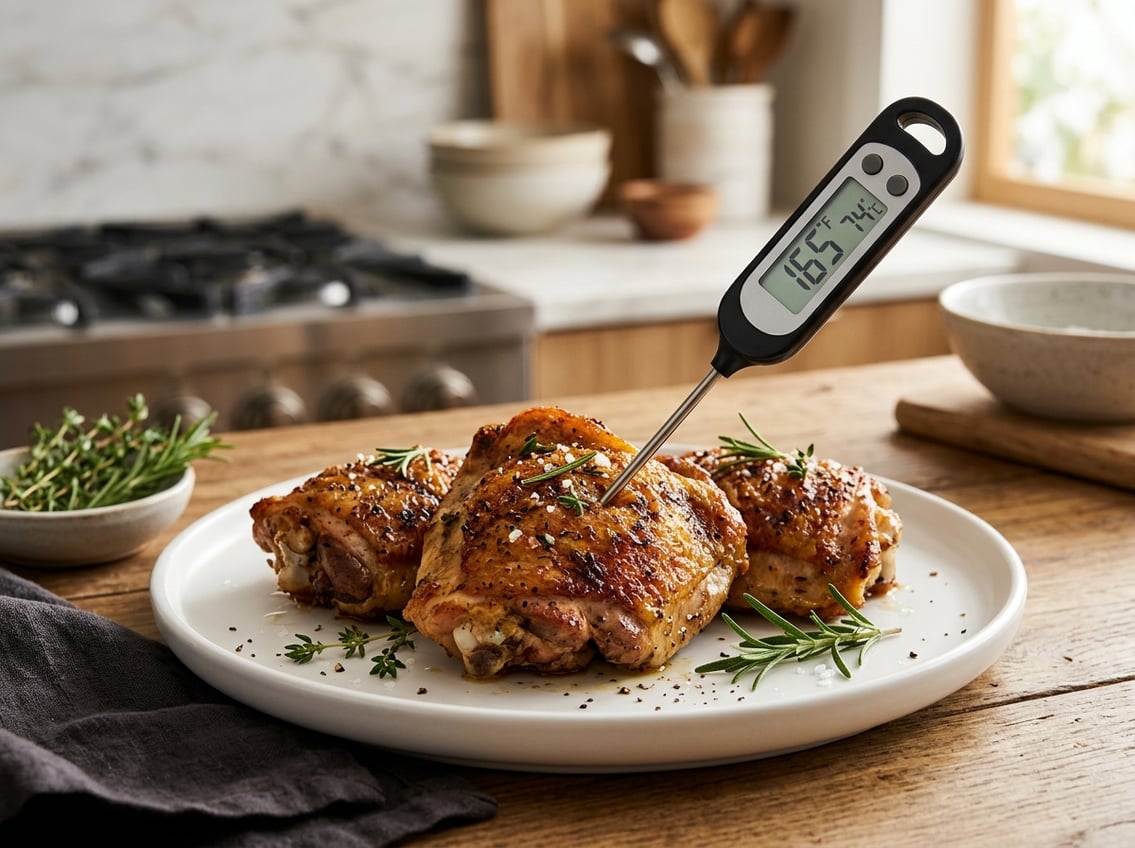
This guide explains how temperatures differ for bone-in and boneless thighs, various cooking methods, and how to test doneness. You’ll find practical tips for seasoning, temp checks, and timing so your next batch of thighs comes out perfect.
Essential Internal Temperatures for Chicken Thighs
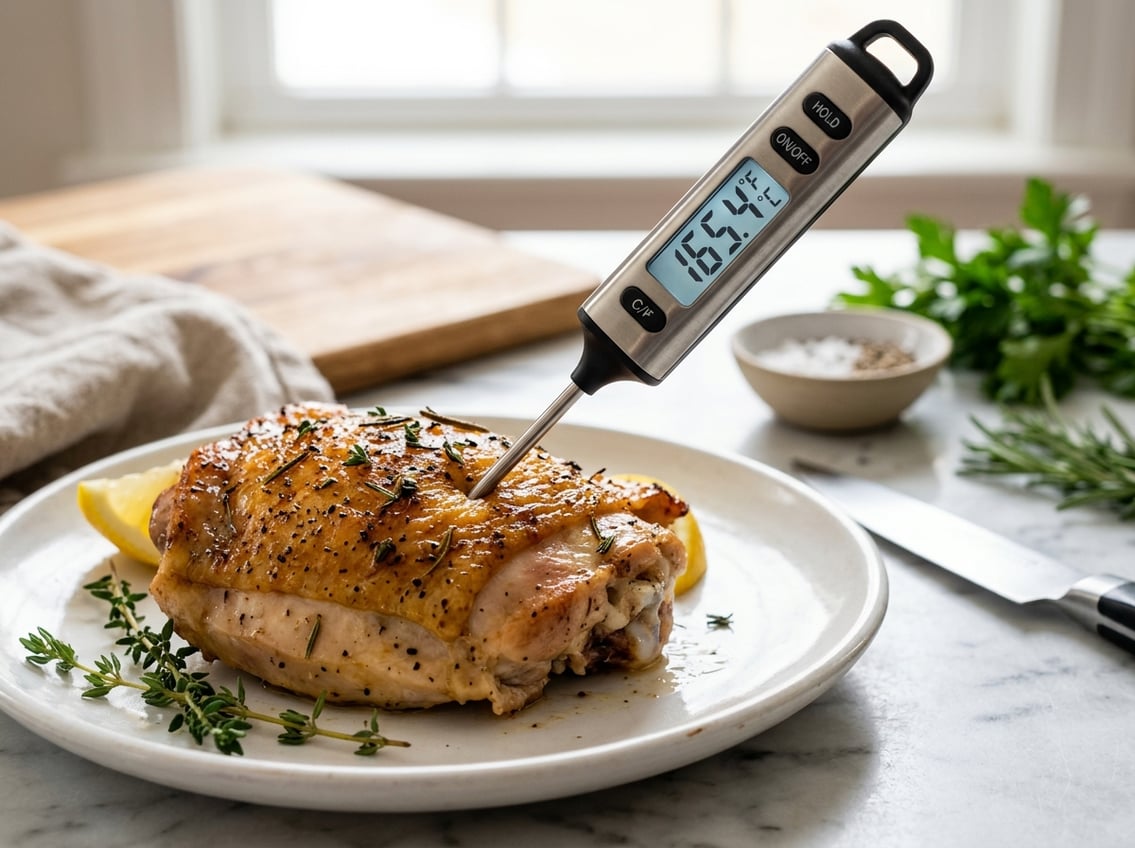
Aim for internal temperatures that guarantee safety and bring out the best texture in dark meat. The numbers below show when thigh meat is safe and how higher temps affect tenderness.
Safe Minimum Temperature Standards
Cook chicken thighs to at least 165°F (74°C) as measured with an instant-read thermometer in the thickest part of the meat, avoiding bone contact. This temperature meets USDA guidelines for immediate safety and applies to both bone-in and boneless thighs.
Insert the thermometer at least ¼ inch away from bone for bone-in thighs. Check multiple spots on larger pieces or batches. Allow a brief resting period; carryover heat can raise the internal temp a few degrees.
Temperature Ranges for Juicy and Tender Thighs
Chicken thighs benefit from higher internal temperatures than breasts because dark meat contains more connective tissue. Aim for 175°F (79°C) for reliably tender, fully cooked thighs that still cling to the bone.
For a meltingly tender, falling-apart texture, cook to 190–195°F (88–91°C). This works well for braises and slow roasting.
Boneless thighs reach these targets faster, so monitor them closely to avoid overcooking. Bone-in thighs take longer; the bone slows heat transfer, which helps the collagen convert to gelatin without drying the meat.
Roast or grill indirect for a slow rise through 140–195°F to maximize collagen breakdown. Use 175°F as a compromise for everyday roasting. Choose 190–195°F for braises or pulled-thigh recipes.
Impact of Higher Temperatures on Texture
When you go past 175°F toward 190–195°F, collagen breaks down into gelatin, increasing juiciness and giving a tender, silky mouthfeel. Both bone-in and boneless thighs benefit from this transformation, though timing differs.
If you cook thighs beyond 205–210°F (96–99°C), muscle fibers can become stringy and lose chicken flavor. Higher temps also dry out the skin and exterior unless you use wet cooking methods or protect the surface with fat or sauce.
For crispy skin and a tender interior, sear first, then finish at a lower oven temperature until the thigh hits your target. For shreddable thighs, braise to 190–195°F and rest briefly before pulling.
Differences Among Chicken Thigh Types
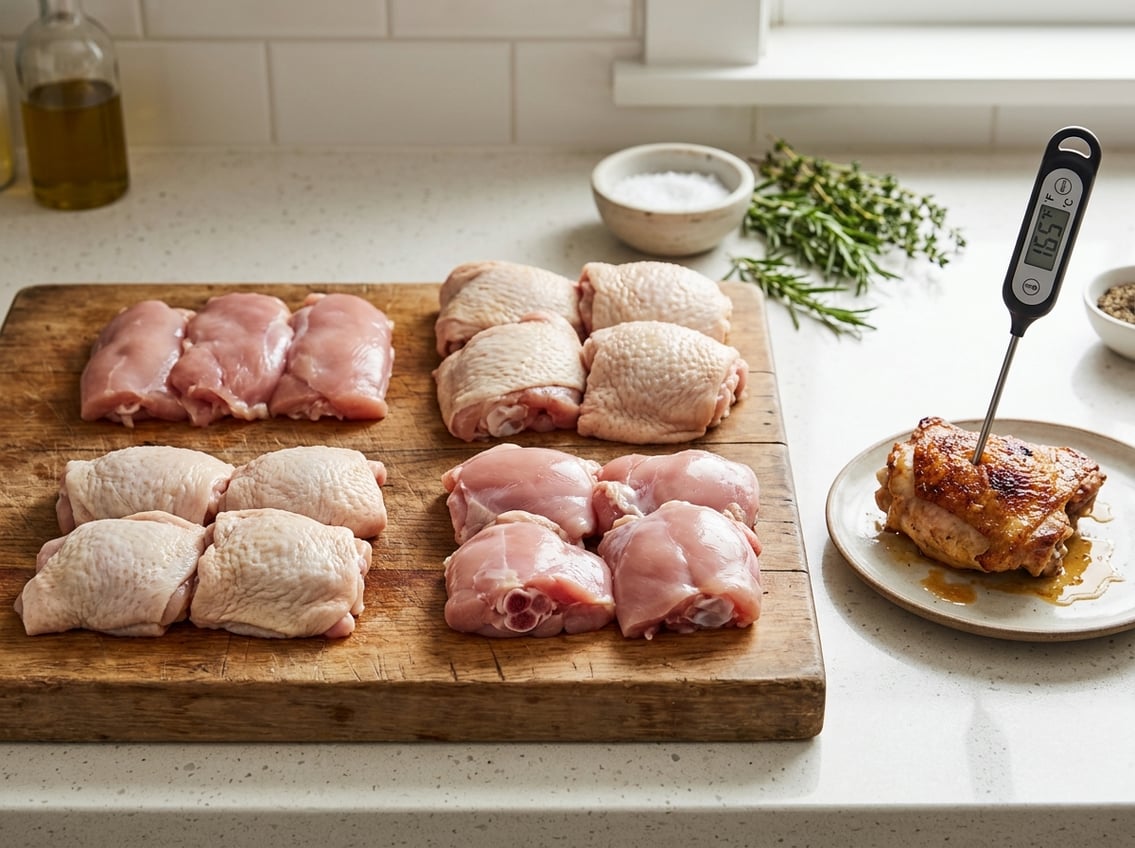
Cook time, texture, and handling differ between bone-in and boneless thighs and between skin-on and skinless thighs. Pay attention to those differences when timing, seasoning, and checking internal temperature.
Bone-In vs. Boneless Chicken Thighs
Bone-in chicken thighs take longer to reach the target internal temperature because the bone slows heat transfer. Expect roughly 10–15 minutes more oven or grill time than a similarly sized boneless thigh. Always measure temperature at the thickest part of the meat, not touching bone.
The bone helps the meat stay juicier during long, slow cooking and adds flavor when braising or roasting. Boneless chicken thighs cook faster and more evenly, making them better for quick pan-searing, stir-fries, and baking.
They’re easier to butterfly or pound for uniform thickness, helping you hit an accurate final internal temperature. For safety and tenderness, check temperature in the center of the meat and allow a short rest so juices redistribute.
Skin-On vs. Skinless Chicken Thighs
Skin-on chicken thighs develop crispy, flavorful skin when cooked at higher heat or finished under a broiler. The skin acts as a barrier, slowing moisture loss so you can cook skin-on thighs to higher internal temperatures (175–195°F) for more collagen breakdown without drying the meat.
For crisp skin, start skin-side down in a hot pan or roast at 425°F, then check internal temp at the thickest point. Skinless chicken thighs cook more quickly and give direct contact between heat and meat, which can make them drier if overcooked.
They work well in saucy dishes, kebabs, and recipes where you want seasoning to penetrate the meat. Because they lack the protective fat layer, monitor internal temperature closely and remove at your chosen endpoint—commonly 165–175°F—then rest briefly to preserve juiciness.
Cooking Methods and Their Ideal Temperatures
Aim for an internal temperature of 165°F (74°C) for safety, but target 175–185°F (79–85°C) for bone-in thighs to break down connective tissue and increase tenderness. Use an instant-read thermometer inserted into the thickest part, avoiding bone.
Bake Chicken Thighs
Roast bone-in thighs at 400–425°F (204–218°C) for 30–45 minutes depending on size. High oven heat crisps skin while the meat approaches 175–185°F (79–85°C), yielding tender, pull-apart texture.
For boneless thighs, bake at 375–400°F (190–204°C) for 20–30 minutes until the center reads 165°F (74°C). Rest for 5–10 minutes to allow carryover cooking and redistribute juices.
To maximize crispiness, pat skin dry, oil lightly, and place on a wire rack so air circulates.
Grill Chicken Thighs
Preheat to medium-high: about 375–450°F (190–232°C) surface temp. Sear skin-side down over direct heat for 3–5 minutes to render fat and crisp skin, then move to indirect heat to finish cooking.
Target 175–185°F (79–85°C) for bone-in thighs for tender meat; 165°F (74°C) is acceptable for boneless. Use two-zone grilling: direct heat for browning, indirect for gentle finishing.
Close the lid when finishing to maintain even temperature. Flip only once or twice to preserve crust and prevent flare-ups from dripping fat.
Alternative Cooking Techniques
Pan-fry thighs skin-side down in a hot skillet for 6–8 minutes, then finish in a 375°F (190°C) oven or reduce stovetop heat. Aim for 165°F (74°C) for boneless and 175–185°F (79–85°C) for bone-in.
For braising, brown thighs, then simmer in liquid at a low steady simmer (about 180–200°F/82–93°C) until meat reaches 175–185°F and pulls away from bone, usually 30–60 minutes. For sous vide, cook boneless thighs at 145–150°F (63–66°C) for 1–4 hours for consistent juiciness, then finish with a hot pan or grill to crisp skin.
Tips for Achieving Crispy and Tender Chicken Thighs
Dry the skin well and control heat. Use direct high heat to render and crisp skin, then finish at a moderate oven temperature to bring the internal temperature to 165°F (74°C) without overcooking.
How to Make Chicken Thighs Crispy
Pat skin-on chicken thighs completely dry with paper towels. Moisture prevents crispness.
Sprinkle kosher salt onto the skin and let the thighs sit uncovered in the refrigerator for 30–60 minutes to draw out extra moisture.
Use a hot, oven-safe skillet or a rimmed baking sheet preheated at 425°F (218°C). Start skin-side down in a preheated pan with a tablespoon of oil or place thighs on a hot sheet tray so the skin contacts high heat immediately.
Sear until deep golden, usually 6–10 minutes depending on thickness. Finish in the oven at 375–425°F until the internal temp reaches 165°F (74°C).
For extra crisping, broil 1–2 minutes while watching closely. Avoid overcrowding; air needs to circulate around each thigh for even browning.
Maintaining Moisture for Tender Results
Bring thighs to room temperature for 15–20 minutes before cooking to promote even doneness. Season under the skin or add a thin glaze to the meat side to protect and flavor the flesh during cooking.
Use bone-in thighs when possible; the bone and skin help insulate and retain juices. If you sear to crisp the skin, lower oven temperature to 375–400°F and finish there so the interior gently reaches 165°F without drying.
Rest cooked thighs 5–7 minutes tented loosely with foil so juices redistribute. Slice against the grain when serving to preserve tenderness and present juicier pieces.
How to Check Doneness Accurately
Use a reliable thermometer and learn a few visual and textural cues to confirm doneness. Place the probe precisely and watch for clear juices and tender texture.
Using a Meat Thermometer Correctly
Insert an instant-read thermometer into the thickest part of the thigh, avoiding bone and large pockets of fat. Bone can give a falsely high reading, so probe the center of the meat instead.
Look for 165°F (74°C) as the minimum safe internal temperature for chicken thighs. If you prefer slightly more tender dark meat, remove thighs at 165°F and allow carryover heating during a 5–10 minute rest, which can raise the internal temperature a few degrees.
Use a digital instant-read or leave-in probe for consistency. Calibrate inexpensive thermometers periodically by testing in ice water (32°F / 0°C) and boiling water (212°F / 100°C at sea level).
Visual and Textural Signs to Watch For
Juices should run clear when you cut into the thickest part. Pink or rosy juices suggest more cooking is needed.
A slight pink tinge near the bone can persist even when the internal temperature is safe. The meat should feel tender and yield easily to a fork.
Skin and surface should be evenly cooked—golden and crisp if roasted or seared, with no gummy or raw-looking areas. Combine visual checks with temperature readings for best results.
Preparation Techniques for Flavor and Safety
Proper seasoning and temperature control make chicken thighs flavorful and safe. Use an effective marinade to tenderize and season, then rest the meat to finish carryover cooking and retain juices.
Marinating Chicken Thighs
Marinate thighs for at least 30 minutes and up to 24 hours depending on the ingredients. Use a basic ratio of 1 tablespoon salt per cup of liquid for a short brine-style soak, or a balanced marinade with acid (vinegar, lemon, yogurt) plus oil and aromatics to both tenderize and carry flavor.
Limit citrus or vinegar-based marinades to 2–4 hours for thin pieces and 6–12 hours for bone-in thighs. Always marinate in the refrigerator in a non-reactive container or sealed bag.
Pat thighs dry before cooking to promote browning. If you plan to use marinade as a sauce, boil it for at least 1 minute, or set aside a portion before adding raw meat.
Resting and Serving Chicken Thighs
Remove thighs from heat when the thickest part reads 5°F (about 3°C) below your target internal temperature.
Aim for 165°F (74°C) as the minimum for safety and texture. Many chefs prefer 175°F (79°C) for thighs to break down collagen.
Carryover heat will raise the temperature during resting.
Loosely tent thighs with foil. Rest them for 5–10 minutes on a warm surface to let juices redistribute.
Slice against the grain for clean bites. Check the temperature again in the thickest part if serving immediately.
If you need a quick reference:
- Remove at 160°F (71°C) and rest to reach 165°F for white-meat targets.
- Remove at 170–175°F (77–79°C) for tender dark meat textures.


