
Can You Use Chicken Thighs for Shredded Chicken? Best Methods & Tips
You can use chicken thighs for shredded chicken. Chicken thighs give more flavor and juiciness than breasts and tolerate longer cooking without drying out.
If you want tender, flavorful shredded chicken, choose bone-in or boneless thighs. Their higher fat and connective tissue break down into moist, easy-to-shred meat.
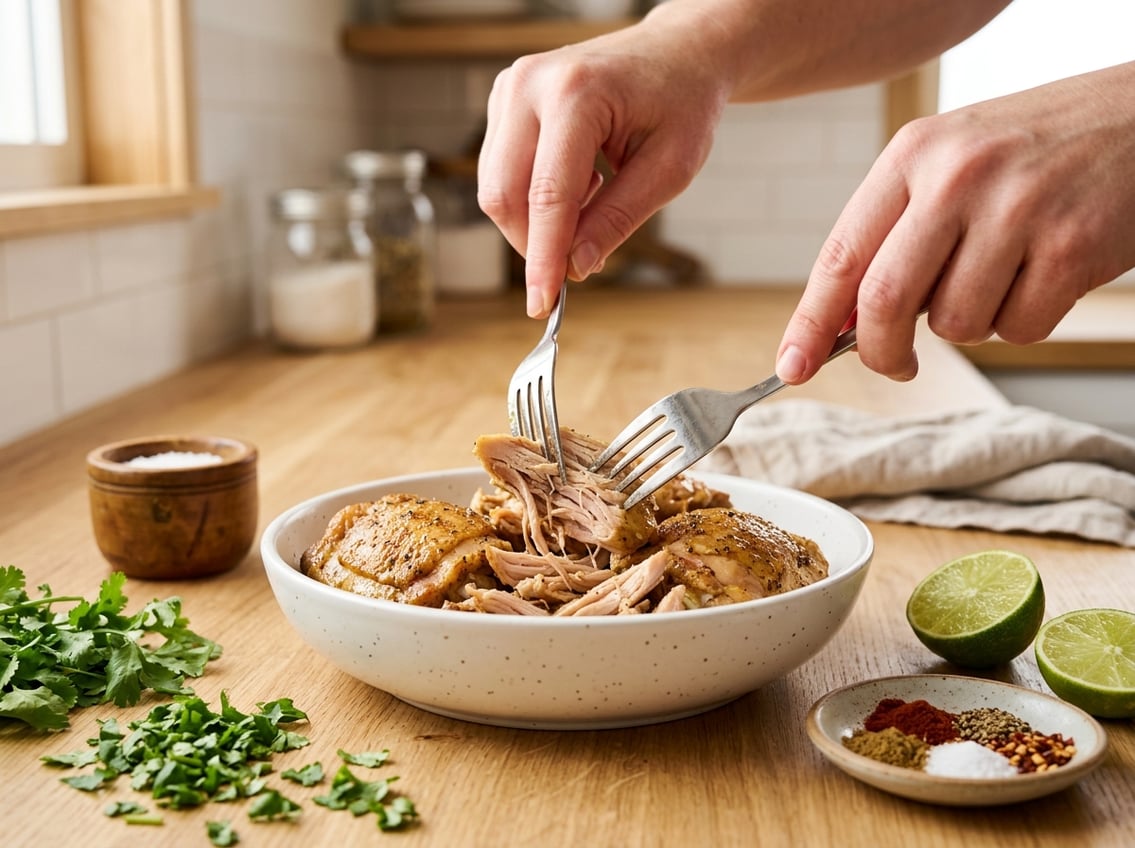
This post explains which types of thighs work best, simple prep steps, and the cooking methods that produce shreddable results. You’ll also get tips for efficient shredding, keeping the meat juicy, and how to store or repurpose shredded chicken thighs in tacos, salads, soups, and more.
Why Chicken Thighs Are Ideal for Shredded Chicken
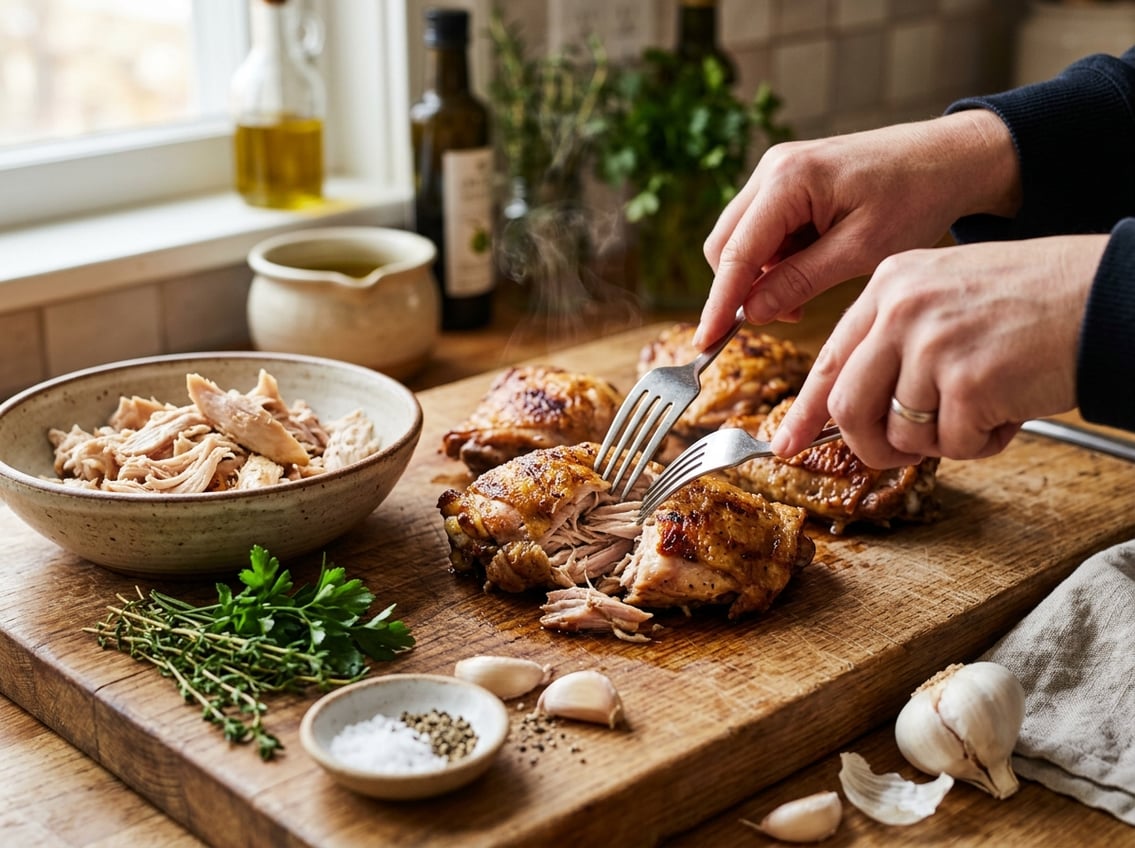
Chicken thighs give consistently moist, flavorful results and tolerate a range of cooking methods without drying out. You’ll get tender meat that pulls into long, juicy strands and stands up well to sauces and reheating.
Flavor and Texture Advantages
Thighs contain more intramuscular fat than breasts. This fat keeps shredded chicken thighs juicy even after extended cooking or reheating.
The fat also carries and amplifies seasoning, so tacos, soups, or sandwiches taste richer with less added sauce. The darker meat fibers in thighs break down into softer, more pliable strands when cooked to 165°F (75°C) and rested.
You’ll notice the texture pulls apart into thick, succulent shreds rather than dry, stringy pieces. For the juiciest shredded chicken, reserve a bit of cooking liquid and toss it with the pulled meat to restore moisture and glossy mouthfeel.
Comparing Chicken Thighs to Other Cuts
Thighs deliver more forgiving results compared to boneless, skinless breasts. Breasts can become dry and fibrous if overcooked, but thighs remain tender across a wider temperature window.
If you want leaner protein, breasts have fewer calories, but you sacrifice moisture and depth of flavor. Bone-in thighs add even more flavor during cooking, though you’ll remove bones before shredding.
Legs and wings can be shredded but are less convenient for large batches. For most recipes that call for juicy shredded chicken, boneless, skinless chicken thighs offer the best balance of ease, flavor, and texture.
Types of Chicken Thighs to Use
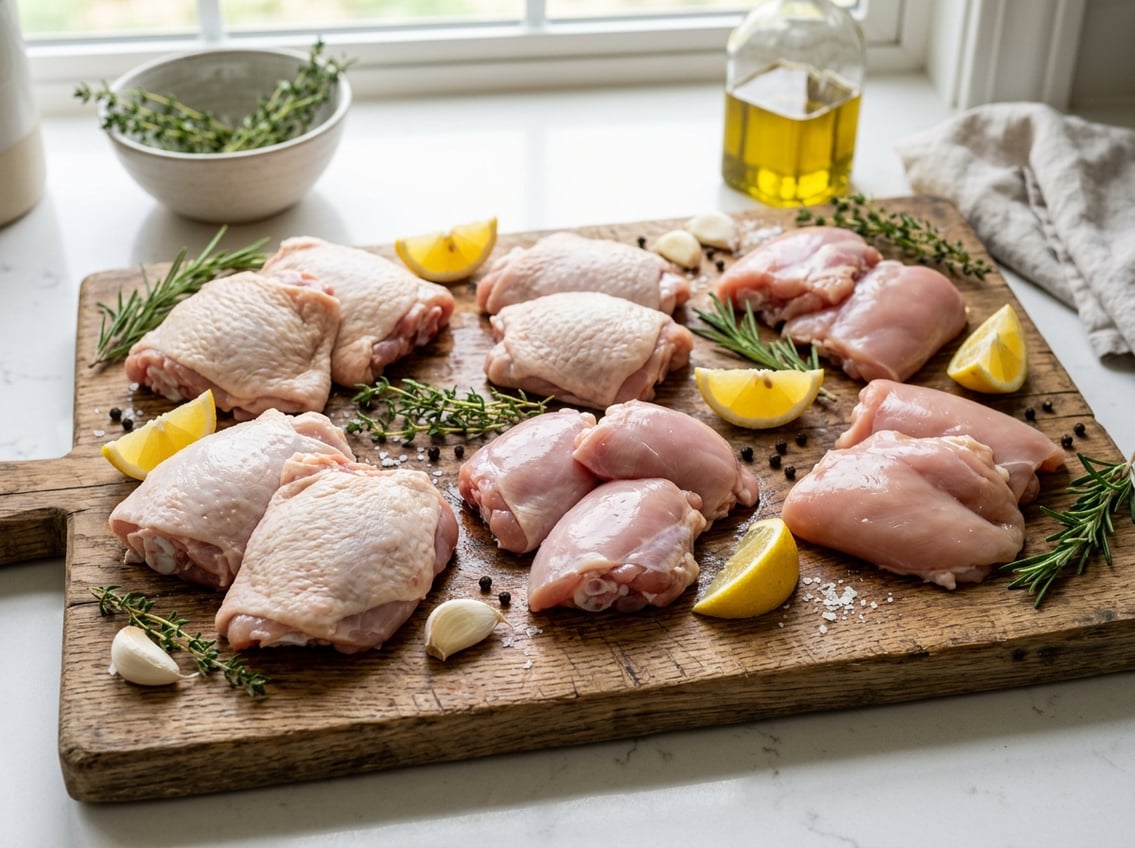
Choose thighs that match your time, flavor, and texture goals. Fat content, bone presence, and skin change cooking time, shredability, and final taste.
Boneless vs Bone-In
Boneless chicken thighs make shredding easiest. They cook faster and you can shred them straight from the pan or oven with two forks or a stand mixer.
Use boneless if you need quick, uniform strands for tacos, salads, or batch meal prep. Bone-in chicken thighs deliver more flavor because the bone and connective tissue release gelatin during cooking.
They take longer to cook. Remove the bones before shredding or shred around them and pick the meat free.
Choose bone-in when you want richer stock or deeper taste for soups and stews. Here’s a quick comparison:
- Boneless: faster cook, easy shred, consistent texture.
- Bone-in: slower cook, more flavor, yields better homemade stock.
Skin-On vs Skinless
Skin-on thighs add fat and flavor during cooking, producing richer shredded meat. If you roast or braise with skin, remove the skin before shredding to avoid chewy strips.
Save the skin to crisp separately or simmer into stock for extra body. Skinless thighs let seasonings penetrate the meat more evenly and reduce cooking fat.
They’re simpler for wet methods like poaching or slow-cooking where you want clean, shred-ready pieces. Use skinless for lighter salads, sandwiches, or when you plan to reheat without rendering excess grease.
If you start with skin-on and want less fat, remove skin after cooking and blot the shredded meat with paper towels before saucing.
Selecting High-Quality Thighs
Look for thighs that are pink with minimal dark spots and firm to the touch. Avoid any sour smell.
Prefer refrigerated over previously frozen if you plan to cook within 1–2 days. For longer storage, buy vacuum-packed or frozen boneless thighs and thaw safely in the fridge.
Check labels: “fresh” or “previously frozen” affects texture. “Antibiotic-free” or “organic” indicates farming practices but not necessarily better shred quality.
If you plan to use bones for stock, buy bone-in or save bones from boneless packs. Buy slightly more weight than your recipe calls for, as shredding yields about 75–80% usable meat after trimming and bone removal.
Preparing Chicken Thighs for Shredding
Start by choosing boneless, skinless or bone-in thighs. Decide whether you want a richer flavor (bone-in, skin-on) or faster cooking (boneless).
Trim excess fat, season deliberately, and plan a cooking method that keeps the meat moist for easy shredding.
Seasoning for Maximum Flavor
Salt early to let the thighs absorb seasoning. Sprinkle ¾–1 teaspoon kosher salt per pound and rest in the fridge for 30 minutes to overnight.
Add black pepper and garlic powder for a basic base. For Mexican-style shredded chicken, use 1 tsp cumin, 1 tsp smoked paprika, and ½ tsp onion powder per pound.
For Asian-inspired dishes, rub with 1 tbsp soy sauce and 1 tsp grated ginger; pour a splash of low-sodium broth when cooking. If you plan to shred and freeze, season slightly stronger because freezing dulls flavors.
Taste the cooking liquid or a small piece of finished chicken and adjust sauces after shredding rather than overseasoning before cooking.
Trimming and Prepping Thighs
Pat thighs dry with paper towels to help seasonings stick and promote even browning if roasting. Remove large visible fat deposits.
If using bone-in thighs, tuck the skin under or leave it on for roasting and remove after cooking if you want less fat in the shredded meat. If you choose frozen thighs, thaw in the fridge 24 hours for even cooking.
You can cook from frozen in a slow cooker but expect longer cook times. Arrange thighs in a single layer in a pot, slow cooker, or baking tray so heat penetrates evenly.
Add ½–1 cup broth per pound when braising or slow-cooking to keep the meat moist and easy to shred.
Best Cooking Methods for Shreddable Chicken Thighs
Choose a method that preserves moisture, breaks down connective tissue, and fits your schedule. Focus on internal temperature, cooking liquid, and resting time to get tender, easily shredded meat for tacos, salad, soup, or casseroles.
Poaching and Simmering
Poaching keeps thighs moist by cooking them gently in a simmering liquid. Place boneless, skinless thighs in a pot with enough low-sodium chicken broth to cover by 1 inch.
Add aromatics like onion, garlic, bay leaf, and peppercorns for immediate flavor. Bring to a gentle simmer (not a rolling boil) and maintain 165–175°F (74–80°C) for 18–25 minutes depending on thickness.
Remove thighs and rest 5–10 minutes. Use two forks or a mixer to shred.
Reserve some poaching liquid to moisten shredded chicken for chicken salad, chicken noodle soup, or tacos.
Oven Baking Techniques
Baking offers a hands-off option with optional browning for flavor. Preheat to 375°F (190°C).
Arrange boneless thighs in a baking dish, add 1/4–1/2 cup broth or salsa to keep steam, and season or rub as desired. Cover tightly with foil for the first 20 minutes to trap moisture.
Bake uncovered for the final 10–15 minutes to concentrate flavor and reach 165°F (74°C). Let rest 5–10 minutes before shredding.
Use this method when you want batch-ready shredded chicken for tacos or casserole fillings. The short roast time preserves juiciness better than high-temperature roasting.
Slow Cooking and Instant Pot
Use slow cooker or pressure-cooker methods for fall-apart texture without constant attention. In a slow cooker, combine thighs, 1 cup broth or sauce, and seasonings; cook on low 4–6 hours.
Cooking low and long breaks down collagen and yields shreddable meat for pulled chicken or soup. With an Instant Pot, use high pressure for 10–12 minutes with natural release for 10 minutes.
Quick pressure cook time reduces moisture loss compared to prolonged oven heat. Remove thighs to shred, then mix with reserved cooking liquid to keep meat tender for tacos, salads, or chicken noodle soup.
Pan-Searing and Braising
Pan-searing followed by braising builds flavor while keeping thighs shreddable. Sear thighs skin-side down in a hot skillet to render fat and develop color.
Transfer to a pot or keep in the skillet and add 1–1½ cups liquid (stock, tomatoes, or a sauce) to come about halfway up the meat. Cover and simmer gently for 30–40 minutes until connective tissue softens and internal temperature is well above 165°F but the meat remains juicy.
Rest briefly, then shred and toss with braising liquid to coat. This method gives a richer flavor, ideal for tacos or robust chicken salads.
How to Shred Chicken Thighs Efficiently
Shred thighs cleanly by cooking them until tender, keeping them slightly warm, and choosing a tool that matches the quantity and desired shred size. Use forks for small batches and coarse shreds, or an electric tool for speed and uniformity.
Two Fork Technique
Use this method for 1–4 thighs or when you want larger, rustic shreds. Place the cooked, rested thigh on a cutting board and hold it steady with one fork near the bone or thickest part.
With the other fork, pull the meat away in long, even strokes along the grain to produce ribbon-like shreds. Work while the meat is warm; it pulls apart far more easily than cold chicken.
If the thigh is bone-in, remove bones first. If skin is left on, pull it off before shredding for a cleaner texture.
Stand Mixer or Hand Mixer Method
Use a stand mixer with the paddle attachment for 4 or more thighs or when you want consistently fine shreds. Transfer warm, boneless thighs to the mixer bowl, start on low speed, and mix 10–20 seconds until the chicken reaches your preferred size.
Stop and scrape the bowl once or twice to ensure even shredding. If you have only a hand mixer, place thighs in a deep bowl to avoid splatter and use the same low-speed approach.
Avoid over-mixing; too long on high speed turns the meat past shredded into mush. This method saves time and produces uniform shredded chicken thighs for tacos, salads, or casseroles.
Using a Blender or Food Processor
A blender or food processor works for very fine shreds or when prepping a sauce-ready texture. Cut thighs into 1–2 inch pieces and pulse in short 1–2 second bursts, checking frequently to avoid pureeing.
Use the pulse setting and stop as soon as you see small, consistent pieces. Use a food processor over a blender when possible; the wide feeding tube and shallower bowl give better control.
Keep portions small—work in batches of 2–3 thighs—to avoid clumping. If you need a slightly coarser result, finish by hand with two forks after processing.
Tips for Perfect Juicy Shredded Chicken Thighs
Focus on precise temperature control, short resting time, and immediate moisture preservation so your shredded thighs stay tender and flavorful. Use a thermometer, add fat or sauce after shredding, and store properly to retain juiciness.
Cooking Temperature and Resting
Cook bone-in or boneless chicken thighs until the thickest part reaches 165°F (74°C). Use an instant-read thermometer inserted into the thickest spot; avoid touching bone on bone-in pieces.
If you prefer slightly more tender connective-tissue breakdown, pull them at 170–175°F (77–79°C) for thighs and expect more collagen to melt without drying. Remove the thighs from heat the moment they hit target temperature.
Tent loosely with foil and let them rest 5–10 minutes. That short rest lets juices redistribute but keeps the meat warm enough to shred easily.
Shred while still warm for larger, more cohesive strands. Wait longer only if you need completely cool chicken for salads.
Keeping Shredded Chicken Moist
Right after shredding, toss the strands with 1–2 tablespoons of olive oil, melted butter, or reserved cooking liquid per pound to coat and seal in moisture. If you braised, reserve 1/4–1/2 cup of the braising liquid per pound and stir it in gradually until the texture feels juicy but not soupy.
When reheating, add a splash of broth or sauce and heat gently on low to avoid drying. Store cooled shredded chicken in an airtight container with a teaspoon of oil or a tablespoon of sauce per cup of chicken.
Refrigerate up to 4 days or freeze in portioned bags with a bit of liquid for up to 2 months.
Storing and Freezing Shredded Chicken Thighs
Cool cooked shredded thighs quickly. Portion them for recipes and keep air out to preserve moisture and flavor.
Use airtight containers or vacuum bags. Label with dates and follow safe reheating and refreezing methods.
How to Store for Meal Prep
Let shredded thighs cool to room temperature for no more than 1 hour. Refrigerate within 2 hours of cooking.
Store in shallow, airtight containers or zip-top bags flattened to an even layer. This helps them chill fast and stack neatly.
Portion by recipe: 1–2 cups per serving for tacos or salads, 3–4 cups for casseroles. Add a spoonful of chicken broth or sauce to each container to keep the meat moist.
Label each container with the date. Use within 3–4 days.
When reheating, heat to 165°F (74°C). Reheat gently on the stovetop with a splash of liquid or in the microwave, stirring every 30–60 seconds.
Freezing Guidelines and Best Practices
Divide shredded chicken thighs into meal-sized portions before freezing. This way, you only thaw what you need.
Use heavy-duty freezer bags or vacuum-seal bags. Remove as much air as possible to reduce freezer burn.
Lay bags flat in the freezer. This saves space and speeds thawing.
For extra protection, place parchment between portions or freeze in a thin layer of sauce or broth. Liquid helps maintain texture.
Label each package with contents and freeze date. Use within 4 months for best quality.
To thaw, move a package to the fridge 24 hours ahead. For faster thawing, submerge a sealed bag in cold water and change the water every 30 minutes.
You can also reheat from frozen on the stovetop. Break up the chicken and heat slowly with liquid until it reaches 165°F.
Popular Dishes Using Shredded Chicken Thighs
Shredded chicken thighs add rich flavor and moist texture to many meals. They enhance tacos, salads, dips, and slow-cooked dishes.
Chicken Tacos and Wraps
Use shredded chicken thighs as the filling for tacos, burritos, and wraps. The meat stays moist and flavorful and stands up to sauces and toppings.
Season with cumin, chili powder, smoked paprika, and lime juice. The fat in thighs keeps the meat tender and prevents dryness when reheating.
Top tacos with chopped onion, cilantro, sliced radish, and lime juice. For wraps, mix the chicken with chipotle mayo or salsa verde, then add lettuce and pickled vegetables.
Warm the meat in a skillet with a little chicken broth before assembling to refresh the texture.
Chicken Salad Variations
Shredded thighs make chicken salad creamier and more flavorful. Combine with Greek yogurt or mayo, celery, diced apple or grapes, and lemon juice.
For a Mediterranean version, toss with cucumber, kalamata olives, feta, oregano, and vinaigrette. For curried chicken salad, add curry powder, raisins, and toasted almonds.
Chill the mixture for at least 30 minutes. Serve on greens, in a sandwich, or stuffed into pita pockets.
Buffalo Chicken Dip
Shredded chicken thighs create a richer buffalo chicken dip. The meat stays moist and holds up with cheese and hot sauce.
Mix shredded thighs with cream cheese, shredded cheddar or Monterey Jack, hot sauce, and ranch or blue cheese dressing.
Bake until bubbly and golden on top or heat in a slow cooker. Serve with celery sticks, carrot sticks, tortilla chips, or toasted baguette slices.
For a lighter dip, swap half the cheese for Greek yogurt and roast the thighs briefly to concentrate flavor before mixing.
Soups, Stews, and Casseroles
Shredded chicken thighs work well for long-simmered dishes because they stay tender and add savory depth to broths and sauces.
Add the meat to chicken noodle soup, tortilla soup, or a white bean stew near the end of cooking so it warms through without breaking down.
In casseroles such as enchilada bakes, chicken and rice, or creamy pasta bakes, fold shredded thighs into the sauce.
Top with cheese and bake until bubbling.
For slow-cooker recipes, add thighs early, shred in the pot, and return the meat to the liquid so it soaks up spices and stays succulent.


