
Can You Cook Chicken Thighs Ahead of Time? Best Methods & Safe Storage
You can cook chicken thighs ahead of time and keep them tender, flavorful, and safe to eat when you use the right methods for cooking, cooling, and storing.
Cooked chicken thighs last 3–4 days in the fridge and 2–3 months in the freezer. Prepping them in batches can save you hours on busy nights.
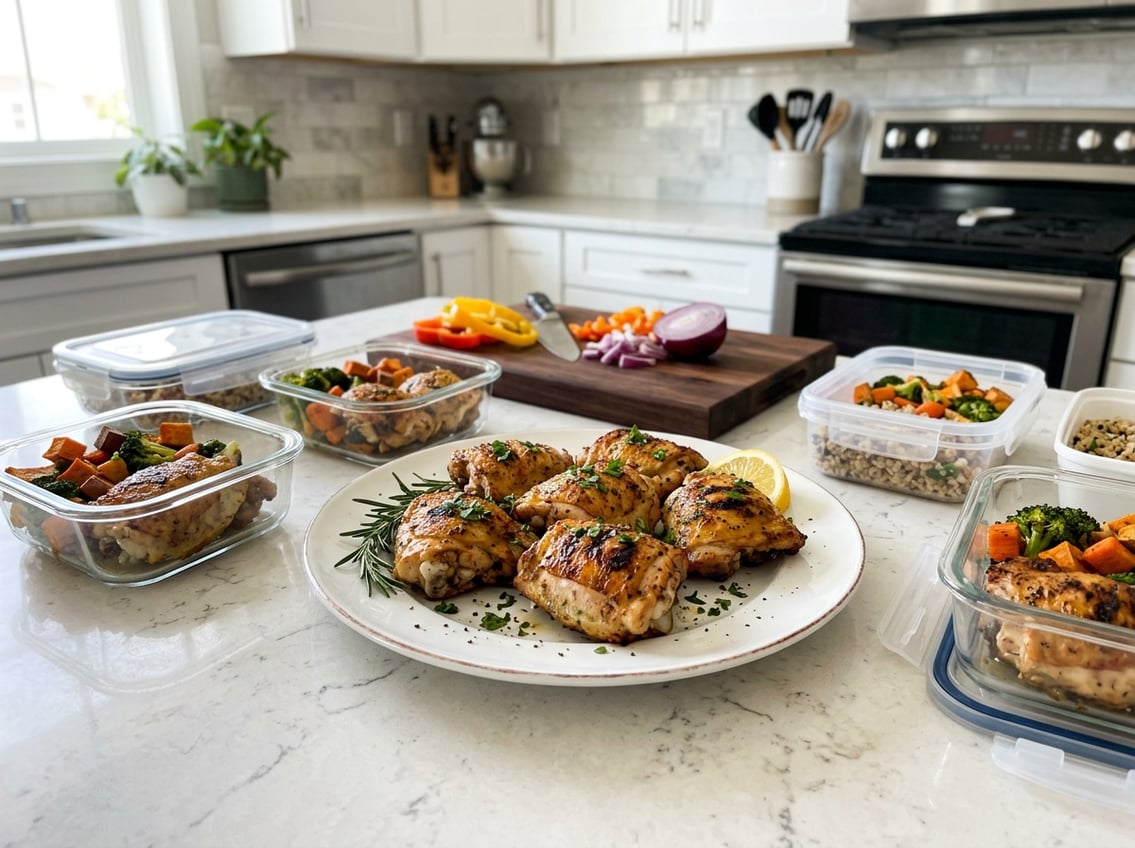
Make-ahead thighs work well because darker meat holds moisture and flavor better than lean breast. You can reheat them without drying them out.
This guide covers why prepping is useful, how to pick and prep thighs, which cooking methods work best for leftovers, safe storage and reheating, and quick meal ideas with pre-cooked chicken.
Why Prepare Chicken Thighs in Advance
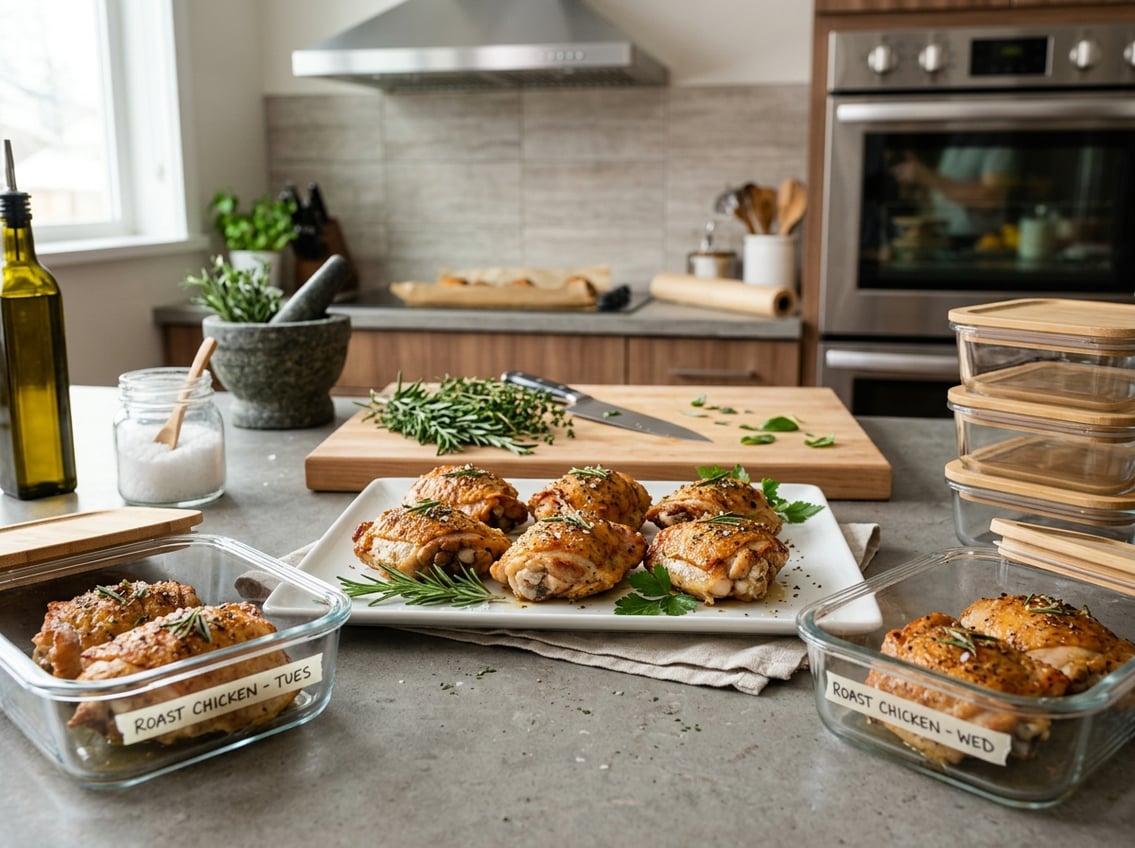
Pre-cooking chicken thighs saves you time during busy evenings. You get ready-to-use protein for varied meals and can use leftovers efficiently.
You gain control over seasoning, doneness, and portioning.
Time-Saving Benefits
Preparing chicken thighs ahead shortens weeknight cook time. Roast, braise, or poach a batch of boneless, skinless chicken thighs and store them sliced or shredded.
Dinner assembly often takes just 5–10 minutes. You can reheat for tacos, salads, or pasta quickly.
Batch-cooking reduces decision fatigue. Portion cooked chicken into meal-sized containers, label them, and pull one out each day.
Reheat in the oven, microwave, or skillet and aim for 165°F (74°C) when reheating.
Versatility for Meal Prep
Pre-cooked chicken thighs adapt to many dishes. Use shredded thighs in enchiladas, diced thighs in grain bowls, or whole thighs over greens.
Marinate before cooking for a consistent flavor, or cook plain and add sauces later for variety. Store portions in the fridge for 3–4 days or freeze up to 2–3 months.
Reducing Food Waste
Cooking chicken thighs in controlled batches helps you match portions to actual consumption. Freeze single-serving packets of pre-cooked chicken instead of throwing away half-used packages of raw meat.
Use cooked chicken trimmings and small amounts in soups, omelets, and stir-fries. Label with dates and rotate older cooked chicken to the front of the fridge or freezer.
Selecting and Prepping Chicken Thighs
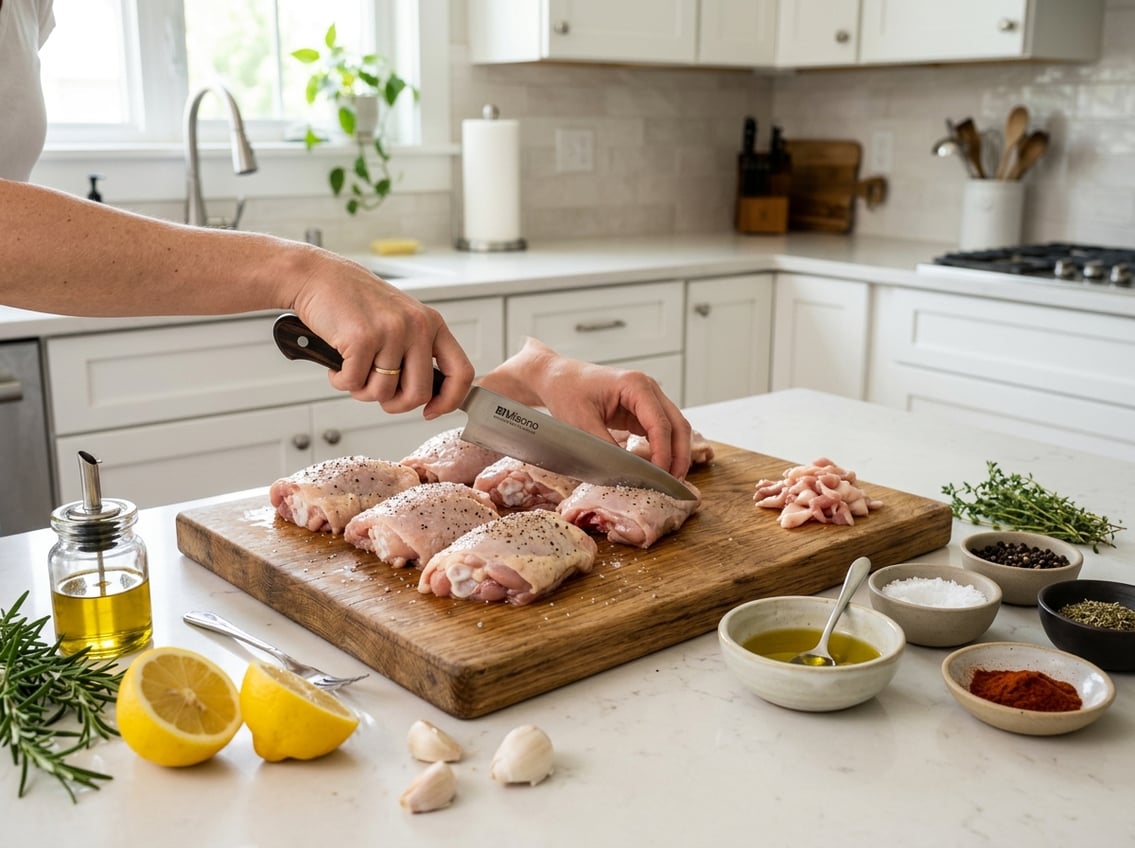
Choose thighs that match your plan—bone-in for slow cooking and deep flavor, boneless for quick searing or slicing.
Trim excess fat, dry the skin thoroughly, and decide whether to marinate or season just before cooking.
Choosing Bone-In vs. Boneless
Bone-in, skin-on thighs hold moisture and tolerate longer cooking. Pull them at higher internal temps (175–185°F) to convert collagen to gelatin, which gives shreddable, silky texture.
Use bone-in for braises, slow cookers, or shredded chicken. Expect longer cook times and better flavor depth.
Boneless, skinless thighs cook faster and are easier to reheat evenly. They work best if you plan to sear, grill quickly, or slice for salads and bowls.
Pull boneless thighs around 165–170°F to avoid drying. For batch-cooking, boneless thighs save time and space.
Trimming and Marinating Tips
Trim loose fat and excess skin folds to improve browning and reduce splatter. Pat each thigh dry with paper towels before seasoning.
For marinades, use oil plus acid and aromatics. Limit acidic contact to 2–8 hours to avoid mushy texture.
If you need a longer hold, use a yogurt- or buttermilk-based marinade. Salt ahead of time—either a dry brine of 30 minutes to overnight—or add salt into the marinade.
Arrange thighs in a single layer if refrigerating before cooking, or vacuum-seal or wrap cooked thighs to prevent moisture loss and freezer burn. Label with date and cooking method.
Best Cooking Methods for Make-Ahead Chicken Thighs
Choose methods that reach 165°F internal temperature while preserving moisture and flavor for reheating. Focus on even cooking and minimal drying.
Baking for Juicy Results
Baking gives you predictable, hands-off results for pre-cooked chicken thighs. Preheat oven to 375–425°F depending on skin crispness desired.
Pat thighs dry, season, and arrange skin-side up with space between pieces. Use a rimmed sheet pan or shallow baking dish.
A sheet pan lets fat render and brown, adding flavor. A dish with higher sides retains juices and yields moister, less-crispy skin.
Cook until the thickest part reaches 165°F. Let rest 5–10 minutes before cooling for storage.
Cool quickly, store in airtight containers, and reheat gently (covered in oven at 300–325°F or in a skillet).
Grilling for Depth of Flavor
Grilling adds smoky flavor and good browning. Set up two-zone heat: sear thighs skin-side down over direct heat for 5–7 minutes, then move to indirect heat to finish until 165°F.
Let grilled thighs cool uncovered briefly, then refrigerate within two hours. Reheat on a hot grill for 3–5 minutes per side.
For shredded or sliced uses, remove skin before storing to reduce sogginess.
Slow Cooking and Sautéing
Slow cooking and braising give you very tender, pull-apart chicken. Brown thighs in a skillet, then transfer to a slow cooker with 1/2–1 cup liquid and cook 3–4 hours on low.
This method yields moist, shreddable meat for bowls and casseroles. Sautéing suits boneless skinless thighs: sear in a hot skillet with oil, then finish in a covered pan over medium-low heat until 165°F.
Strain and reserve cooking juices if you plan to reheat. Add a splash of those juices during reheating to prevent dryness.
Proper Storage of Cooked Chicken Thighs
Store cooked chicken promptly, cool it quickly, and label containers with dates. Keep the fridge at or below 40°F (4°C) and the freezer at 0°F (-18°C).
How to Refrigerate Cooked Chicken
Place hot chicken thighs in shallow, airtight containers within 2 hours of cooking. If pieces are large, cut into smaller portions so the center cools faster.
Seal containers tightly to prevent odor transfer and moisture loss. Use rigid plastic or glass containers with tight lids, or wrap thighs in foil or plastic wrap and place them in a zip-top bag.
Store cooked chicken on a middle or back shelf, not the door. Label with the cooking date and consume within 3–4 days.
Freezing Guidelines and Tips
Portion cooked chicken thighs into meal-sized servings before freezing. Wrap each portion tightly in plastic wrap or freezer paper, then place in a freezer bag and remove as much air as possible.
Label each bag with the date and contents. For best quality, use within 3–4 months.
Thaw frozen pre-cooked chicken in the refrigerator overnight or use the defrost setting on a microwave if you’ll reheat immediately. Reheat to an internal temperature of 165°F (74°C) before serving.
Reheating and Food Safety Considerations
Reheat pre-cooked chicken so it stays moist and reaches a safe temperature quickly. Store leftovers promptly and avoid repeated long reheats.
Reheat Chicken Without Drying Out
Use moisture and gentle, even heat to prevent drying when you reheat cooked chicken thighs. Add 1–2 tablespoons of chicken broth, water, or sauce per portion and cover the dish.
Oven: preheat to 325–350°F (160–175°C), place thighs in a baking dish with liquid, cover, and heat 15–25 minutes.
Stovetop: warm over medium-low in a covered skillet with a splash of broth. Flip once for even heating.
Microwave: cover with a damp paper towel or vented lid and heat in 30–45 second bursts, flipping between intervals.
Air fryer: reheat at 350–375°F for 4–8 minutes.
Safe Internal Temperatures
Use an instant-read meat thermometer in the thickest part of the thigh, avoiding bone. The safe minimum internal temperature for poultry is 165°F (74°C).
If reheating bone-in thighs, check near the bone. Let the meat rest 2–5 minutes after reheating.
Best Practices for Leftovers
Refrigerate pre-cooked chicken within 2 hours of cooking, or within 1 hour if ambient temperature exceeds 90°F (32°C). Store in shallow, airtight containers and use within 3–4 days.
If you won’t eat it within that time, freeze portions in airtight packaging. Label with date and use within 2–6 months for best quality.
Reheat only the portion you plan to eat. When thawing frozen pre-cooked chicken, do so in the refrigerator overnight or reheat directly from frozen, always confirming an internal temperature of 165°F.
Utilizing Pre-Cooked Chicken Thighs in Meals
Pre-cooked chicken thighs save time and let you build fast, satisfying meals with minimal fuss. Use simple reheating techniques and a few fresh ingredients for tacos, sandwiches, or hearty salads and bowls.
Chicken Tacos and Wraps
Shred or chop warm pre-cooked chicken thighs for juicy tacos. Toss the chicken with lime juice, taco seasoning, and a splash of pan juices or broth.
Heat in a skillet over medium for 2–3 minutes until steaming. Assemble with warm tortillas, red onion, cilantro, and a quick slaw.
Add queso fresco or sliced radishes for texture. If you want saucier tacos, warm the chicken in salsa verde or chipotle sauce before filling.
Easy Chicken Sandwiches
Slice or shred chilled pre-cooked thighs and toss with mayo, Greek yogurt, or BBQ sauce. For a hot sandwich, reheat sliced thighs in a skillet with butter, then pile on toasted brioche with pickles and lettuce.
Try these formats:
- Hot BBQ: tossed with warmed BBQ sauce, served with coleslaw on a bun.
- Cold chicken salad: chopped thighs, celery, apple, and light mayo on whole-grain bread.
- Melt: shredded thigh meat with provolone or cheddar under a broiler on an open-faced roll.
Press or toast the sandwich briefly to meld flavors. Aim for a balance of fat, acid, and crunch.
Incorporating Into Salads and Bowls
Chopped pre-cooked chicken thighs add protein and richness to cold salads. Slice the chicken thinly and serve it over mixed greens with roasted sweet potato, avocado, cherry tomatoes, and a vinaigrette made with two parts oil and one part acid.
The thigh’s fat helps the dressing cling to the ingredients. For bowls, start with a base like rice, quinoa, or farro.
Add warmed chicken, roasted vegetables, and a legume such as black beans or chickpeas. Top with a finishing sauce like tahini-lemon, chimichurri, or soy-ginger dressing.
Store components separately when meal prepping. Quickly combine portions and reheat the chicken gently to avoid drying.


