
How Long Do Chicken Thighs Take to Bake: Temperatures, Tips, and Variations
You can roast boneless chicken thighs at about 425°F for roughly 20–30 minutes. Bake bone-in, skin-on thighs at 400–450°F for about 30–40 minutes, until the thickest part reaches 165°F.
Aim for an internal temperature of 165°F—that’s the clearest signal your chicken thighs are safely cooked and still juicy.
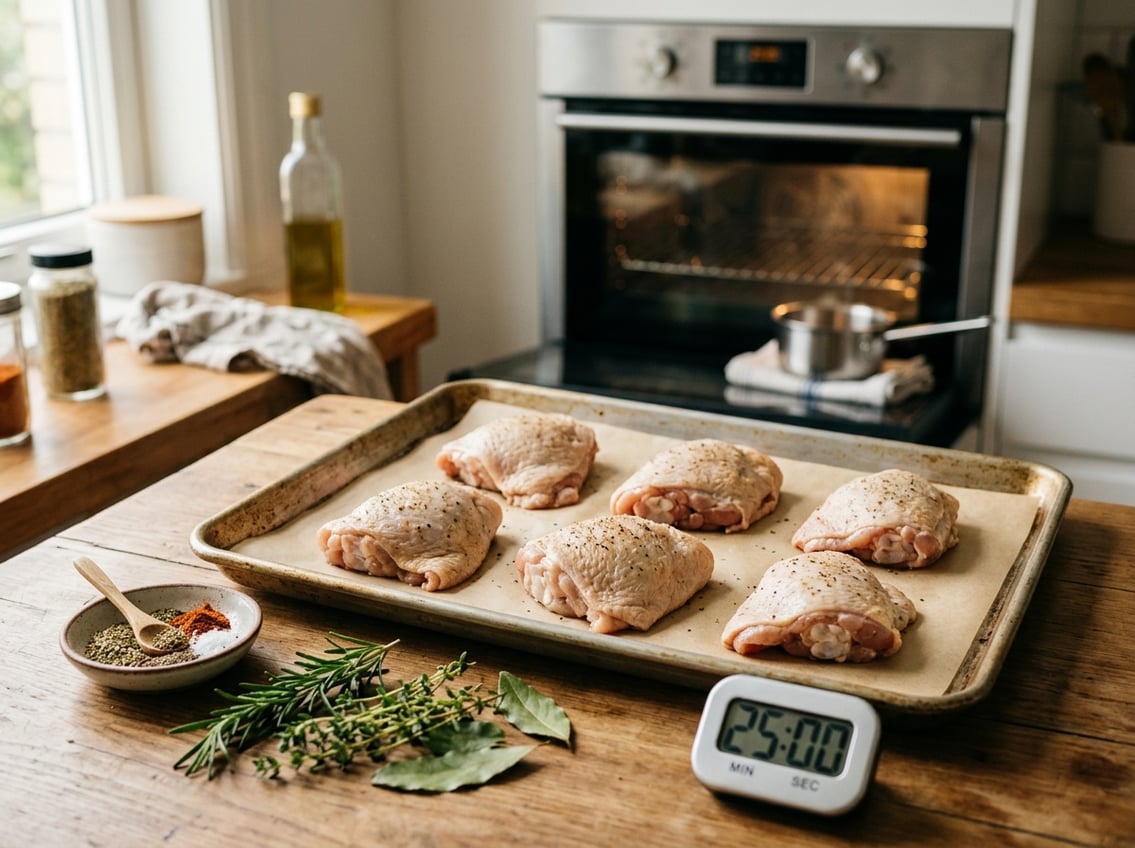
You’ll learn exact oven temps and timing for bone-in versus boneless and skin-on versus skinless. Try simple prep and seasoning tips that turn oven baked chicken thighs into an easy dinner or reliable weeknight meal.
Expect guidance on achieving crispy skin and even cooking. You can also adapt these tips for batch-cooking or one-pan meals.
Core Baking Times and Temperatures
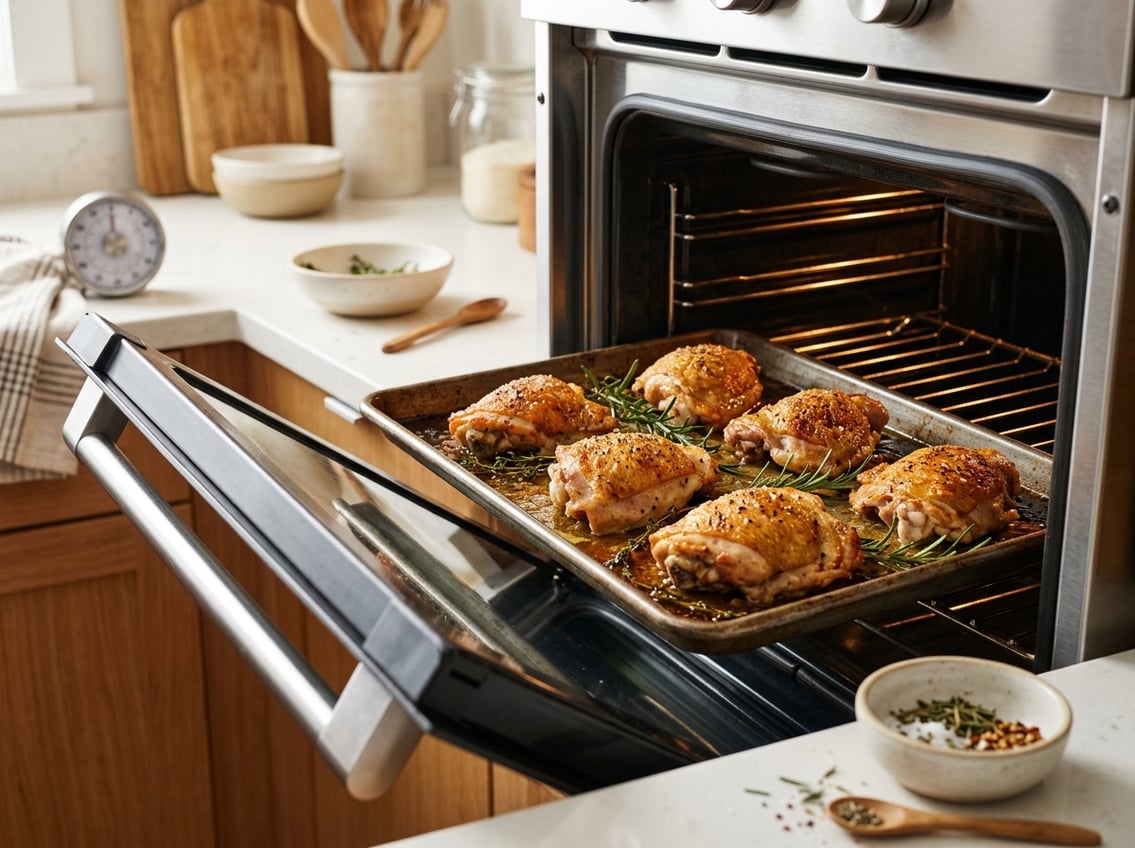
Below are oven temperatures and bake times for common chicken thigh formats. You’ll also see how oven placement and settings change cooking speed and skin crisping.
Essential Time and Temperature Cheatsheet
Use these targets for typical oven-baked chicken thighs. Times assume a preheated oven and a single layer in a rimmed baking sheet or shallow pan.
- Bone-in, skin-on: 40–45 minutes at 400°F (200°C). Expect crisp skin and juicy meat.
- Boneless, skinless: 20–30 minutes at 400°F (200°C). Thinner pieces finish closer to 20 minutes.
- Higher-temp method: 425°F (220°C) for 30–35 minutes (bone-in) gives faster browning; check early.
- Lower-temp, slow-cook: 350°F (175°C) for 50–60 minutes for very tender meat but less crisp skin.
Let the thighs rest 5–10 minutes off heat before serving. If you sear skin first, reduce oven time by 5–7 minutes.
How to Check Doneness
Check doneness with an instant-read thermometer in the thickest part, avoiding bone.
- Safe internal temp: 165°F (74°C) is the minimum for poultry safety.
- Preferred finish for thighs: 170–175°F (77–79°C) often yields more tender, pull-apart dark meat while still safe.
- Other checks: Juices should run clear, not pink. Meat near the bone should not be red.
Calibrate your thermometer occasionally by testing in ice water (32°F/0°C) and simmering water (212°F/100°C at sea level).
Effect of Oven Position and Settings
Where you place the pan changes time and skin result. Use the top third of the oven for faster browning.
Middle rack gives more even cooking.
- Convection vs. conventional: Convection (fan) reduces time by about 10–15% and promotes crisper skin; lower listed times and drop temperature by ~25°F (15°C).
- Rack height: Top rack yields more direct heat to skin for crisping.
- Pan type: Dark, heavy pans absorb heat and speed browning; shiny pans reflect heat and slow it.
- Crowding: Keep thighs spaced so hot air circulates. Overcrowding increases bake time and prevents crisp skin.
Bone-In vs. Boneless Chicken Thighs
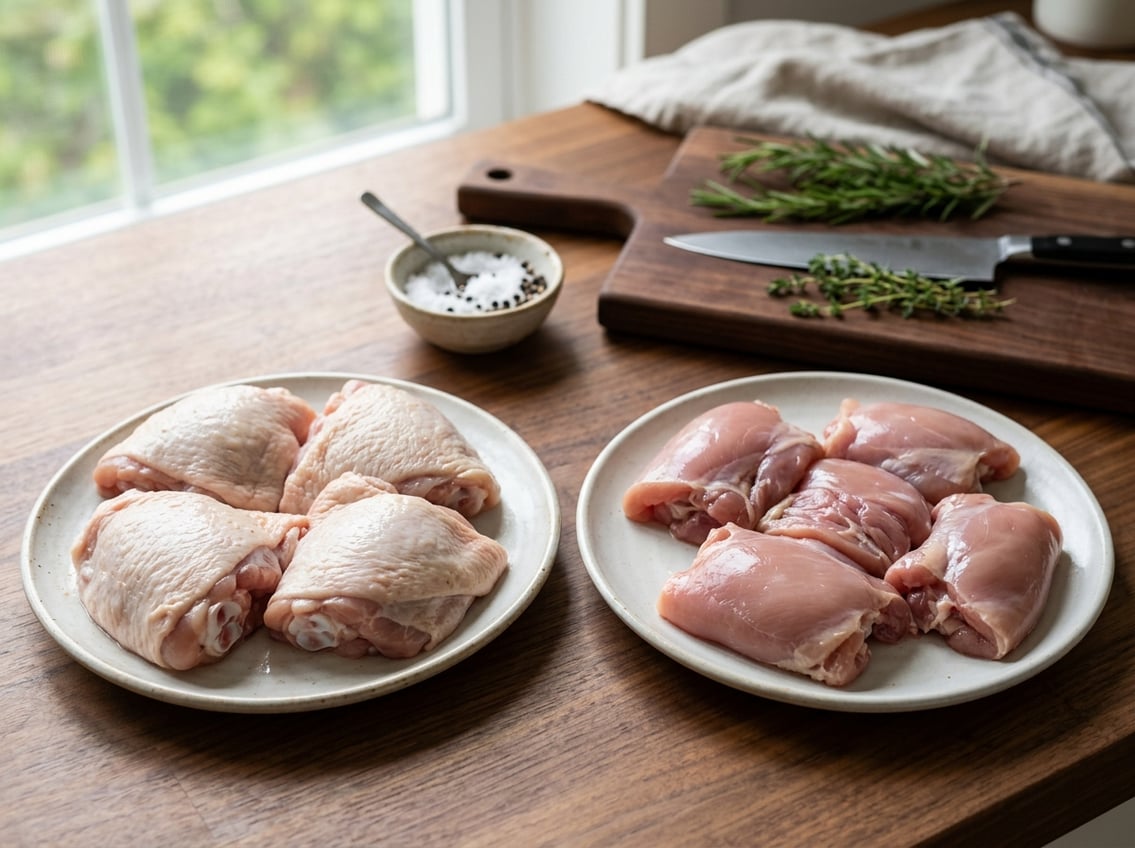
Bone-in thighs take longer to reach safe internal temperature but give more flavor and retain moisture. Boneless thighs cook faster and are easier to cut and serve.
Adjust timing, oven temperature, and resting time based on whether the bone is present and on thickness.
Adjusting for Bone-In Chicken Thighs
Bone-in chicken thighs usually need more time in the oven because the bone slows heat transfer. At 375–400°F, bake for about 35–45 minutes for average-sized bone-in thighs.
Check with an instant-read thermometer and aim for 165°F at the thickest part. Use a slightly higher temperature or a brief finish under the broiler if you want crisper skin.
Place thighs skin-side up on a rimmed baking sheet or in a shallow roasting pan. Let bone-in thighs rest 5–10 minutes after baking so juices redistribute.
Tips for Boneless Chicken Thighs
Boneless chicken thighs bake faster because there’s no bone to insulate the center. At 375–400°F, bake for 25–35 minutes depending on thickness.
Use an instant-read thermometer and remove from the oven when the internal temperature reaches 165°F. Flatten uneven pieces to uniform thickness so they cook evenly.
Arrange boneless thighs with a little space between pieces for even browning. If you want very crispy edges, finish with 1–2 minutes under a hot broiler.
Texture and Flavor Differences
Bone-in thighs deliver juicier meat and a deeper flavor because marrow and connective tissue exchange flavor during cooking. The bone also helps protect meat from drying when you push cooking times for better skin crispness.
Boneless thighs yield more uniform slices and are easier to marinate and season. They absorb marinades faster because the surface area is greater relative to volume.
Expect boneless meat to be a bit firmer when fully cooked. Remove promptly at 165°F and let the meat rest for a few minutes.
Choosing Between Skin-On and Skinless Thighs
Pick skin-on if you want crispy, richer flavor and slightly longer bake time. Choose skinless to reduce fat and speed cooking while relying on seasoning or marinades for moisture.
Skin-On for Crispness and Flavor
Skin-on chicken thighs give the best texture contrast when you roast at higher heat. The skin renders fat and crisps at 425–500°F.
Place thighs skin-side up on a preheated rimmed baking sheet or oven-safe pan. Expect bone-in, skin-on thighs to take about 30–40 minutes at 400–425°F depending on size.
Season simply: salt the skin well and pat it dry before baking to encourage browning. Rest the thighs 5–10 minutes after baking so juices redistribute and the skin stays crisp.
Skinless for Leaner Baking
Skinless chicken thighs bake faster and contain less surface fat, so they won’t crisp the same way. Roast boneless, skinless thighs at 400–425°F for roughly 20–30 minutes until the internal temperature hits 165°F.
Smaller or thinner pieces may finish closer to 18–22 minutes. Thicker pieces can take up to 30.
To keep meat moist, marinate for at least 30 minutes or coat with oil and a salty rub. Tent loosely with foil if the exterior dries before the center reaches temperature.
Oiling and Browning Tips
Use oil to promote even browning without excess fat. Lightly coat skinless thighs with 1–2 teaspoons of oil each.
For skin-on, a brush of oil can help the skin brown evenly but isn’t always necessary if the skin is dry and well-salted. High-smoke-point oils like avocado, canola, or grapeseed work best at oven temperatures above 425°F.
For best browning, preheat the baking sheet or use a roasting rack so air circulates under the thighs. If using skinless thighs, finish under the broiler for 1–3 minutes to develop color.
Always verify doneness with an instant-read thermometer.
Best Practices for Prepping and Seasoning
Trim excess fat, pat thighs very dry, and salt them ahead of time for better texture and deeper seasoning. Use a light oil to help rubs adhere and choose marinades or rubs that complement the skin.
Seasoning Chicken Thighs the Right Way
Pat skin-on thighs dry with paper towels. If you use boneless thighs, remove visible fat and any loose connective tissue for even cooking.
Salt early: sprinkle kosher salt (about 1½ teaspoons per pound) and let sit uncovered in the fridge for 30 minutes to 12 hours. This firms the meat and seasons it through.
Add ground black pepper right before cooking to avoid bitterness. Rub zest, minced garlic, or chopped fresh herbs under the skin when possible.
Light oil helps spices adhere and promotes a browned surface during baking.
Marinades, Rubs, and Flavor Options
Choose a simple marinade when you want tender, seasoned meat. A basic mix: ¼ cup oil, 1–2 tablespoons acid (lemon juice or yogurt), 1–2 cloves minced garlic, and 1 teaspoon salt per pound.
Marinate 30 minutes to 6 hours. Dry rubs work best for crisp skin.
Combine 1–2 teaspoons each of smoked paprika, garlic powder, and onion powder with ½–1 teaspoon salt per pound. Pat the rub onto the dry skin.
For quick weeknight baking, toss thighs with olive oil, kosher salt, pepper, and a teaspoon of dried thyme or Italian seasoning. Finish baked thighs with a squeeze of lemon or a sprinkle of fresh parsley.
Arranging for Even Cooking
Use a rimmed sheet pan or shallow baking dish so air circulates under and around thighs. Arrange skin-side up, spaced at least 1 inch apart.
If you bake at high heat (400–425°F / 200–220°C), preheat the oven and let thighs sit at room temperature 15–20 minutes before baking. For bone-in thighs, place thicker pieces toward the center of the pan.
Use a wire rack set inside a sheet pan for maximum crispness and even browning. Check doneness with an instant-read thermometer: aim for 165–175°F (74–79°C) in the thickest part.
Tips for Juicy, Evenly Cooked Thighs
Control oven temp, spacing, and resting time to keep thighs juicy and cook them through without overbrowning. Use a shallow pan with airflow and check internal temp for reliable results.
Crowding, Airflow, and Pan Type
Place thighs skin-side up on a rimmed baking sheet or in a shallow roasting pan so air circulates around each piece. Leave at least 1 inch between thighs.
Use a wire rack set inside a rimmed sheet for the crispiest skin and even browning. The rack lifts juices away, so heat surrounds the meat.
Choose metal pans over glass for quicker, more even browning. Dark-sheet pans brown faster—reduce oven temp by 25°F if using them to avoid overbrowning.
For easy cleanup, line the pan with foil or parchment, but don’t block airflow under the thighs.
Resting After Baking
Remove baked chicken thighs when the thickest part registers 165°F to 170°F with an instant-read thermometer. Tent loosely with foil and rest 5–10 minutes.
Carryover heat finishes cooking and juices redistribute. Cutting immediately causes juices to run out and leaves meat drier, so resting is essential.
For bone-in thighs, aim for 175°F during cooking then rest to reach a comfortable serving temperature.
Use this short rest time to reheat sides or finish a sauce.
Avoiding Common Pitfalls
Avoid baking at very low temperatures for long periods; that can dry the meat despite reaching safe temp. Extremely high heat can char skin before the interior reaches 165°F.
Pat thighs dry with paper towels before seasoning to promote crisp skin. Salt early or just before baking.
Check multiple pieces with a thermometer; size varies. For boneless, skinless thighs, reduce bake time (about 20–30 minutes at 400°F). For bone-in, skin-on, plan 35–45 minutes.
Adapting Baking for Easy Dinners and Weeknight Meals
You can turn baked chicken thighs into fast, reliable weeknight meals by adjusting bake time, prep steps, and how you store leftovers.
Focus on timing, simple seasonings, and one-pan or sheet-pan methods to cut hands-on work.
Quick-Bake Strategies
When you need dinner fast, use boneless skinless thighs or small bone-in pieces. Boneless thighs at 400°F (205°C) usually bake in 30–35 minutes, while bone-in skin-on pieces need 40–45 minutes.
Cut larger thighs in half or flatten them slightly to reduce cook time by 5–10 minutes and keep them juicy.
Use a single baking tray with vegetables to create a one-pan meal. Toss root vegetables or quick-cooking veggies like broccoli or green beans in oil and seasonings so they roast with the chicken.
Place chicken skin-side up to crisp the skin. If vegetables finish earlier, remove them and broil the chicken for 2–3 minutes to restore crispness.
Season with salt, pepper, garlic powder, and paprika for minimal prep and versatile flavor. For a quick glaze, brush on mustard and honey or olive oil and lemon during the last 5–10 minutes.
Reheating and Storing Leftovers
Cool cooked thighs to room temperature within 2 hours after baking. Refrigerate them in airtight containers.
Store bone-in or boneless thighs for 3–4 days. Freeze them for up to 3 months in freezer-safe bags with excess air removed.
Reheat gently to keep the meat juicy. Use the oven at 325°F (160°C) on a baking sheet covered loosely with foil for 10–15 minutes, then finish uncovered for 2–3 minutes to crisp the skin.
Microwave for quick reheats. Cover and use medium power in 30–60 second bursts, flipping once.
For meal prep, slice cold thighs and add them to salads, grain bowls, or wraps. Reheat only the portion you plan to eat to avoid drying out the meat.


