
Can You Use Chicken Thighs for Chicken Soup? Cooking Tips & Recipe Guidance
You can use chicken thighs for chicken soup. They give richer flavor, tender meat, and a forgiving texture that holds up during simmering.
If you want a deeper chicken noodle soup or a heartier chicken thigh soup with silky broth, choose thighs. Use bone-in thighs for a gelatinous stock, or boneless thighs for quicker shredding.
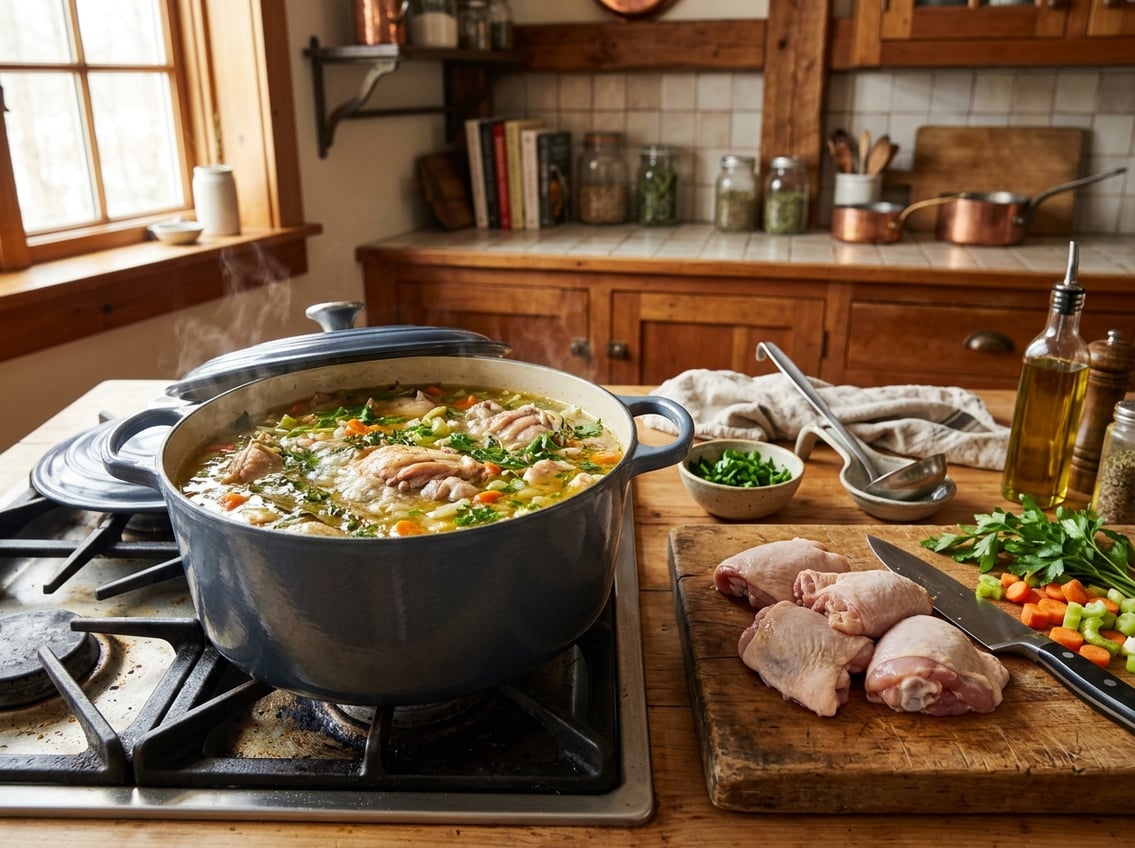
You can pick the right thighs, choose whether to brown or simmer them, and select aromatics and liquids to build the best broth. Simple steps help you get consistent results.
You’ll also find tips for classic and creative variations, plus storage and reheating advice.
Why Chicken Thighs Are Ideal for Soup
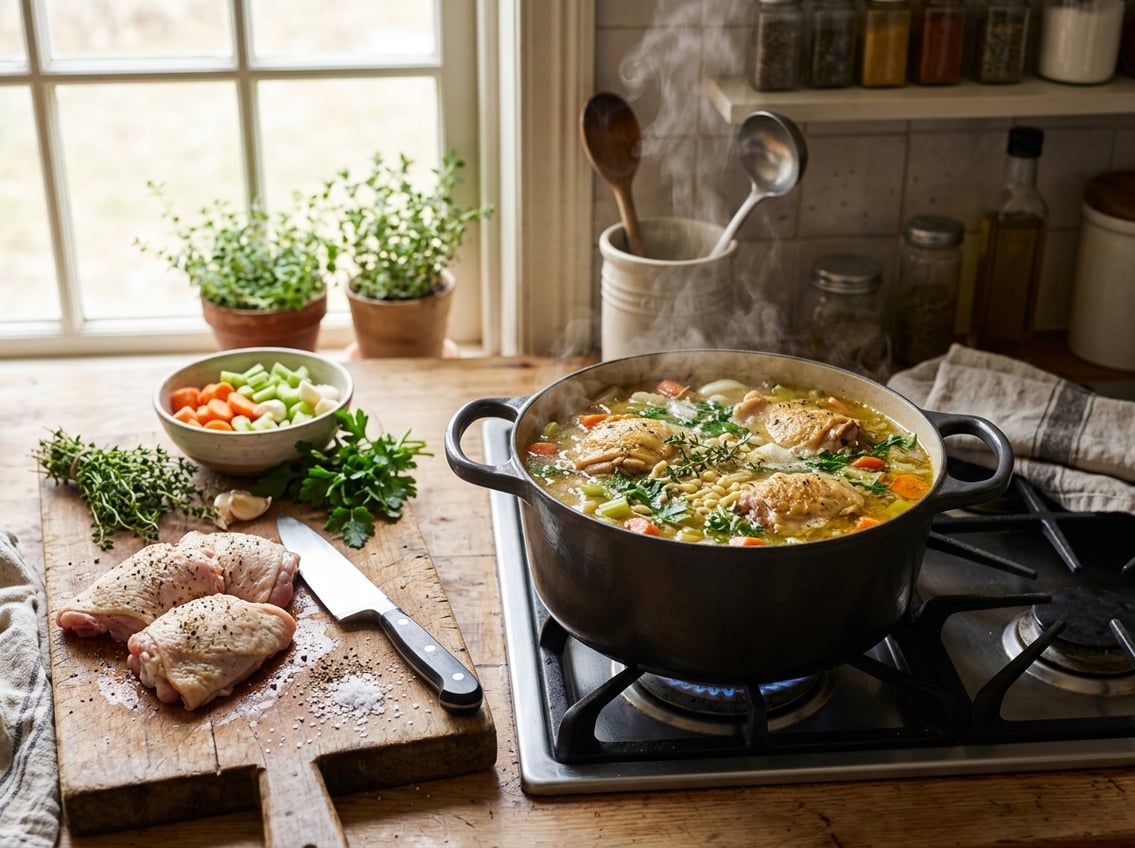
Chicken thighs give richer flavor, flexible cooking times, and collagen that improves mouthfeel. You get tender meat that holds up in long simmers and a deeper stock base.
Flavor and Texture Benefits
Thighs, as dark meat, contain more fat and connective tissue than breasts. They deliver savory notes and a silky texture when cooked.
As the collagen breaks down, the meat becomes tender and the broth turns glossy and satisfying.
When you brown skin-on thighs first, the Maillard reaction creates fond that deepens flavor. Boneless, skinless thighs stay juicy and shred easily, making them great for noodle bowls or comforting chicken soup.
You can keep or remove the skin to control richness. Leave skin on for a heartier soup; remove it or skim fat for a lighter result that still benefits from thigh meat’s tenderness.
Comparison With Chicken Breasts
Breasts cook quickly but dry out and become stringy if simmered too long. Thighs handle long simmering and maintain a pleasant bite.
In soups where tenderness and mouthfeel matter, thighs outperform breasts. Use breasts only for fast, clear broths with a mild chicken flavor.
You can combine both: use bone-in thighs to build stock, then add diced breast for a leaner texture.
Broth Enrichment and Nutrition
Bone-in, skin-on thighs add collagen and rendered fat that turn into gelatin and flavor compounds during simmering. Gelatin thickens the broth slightly and creates a satisfying soup base.
Thighs deliver more iron and B vitamins than breasts. Their fat carries flavors and aromatics into the liquid.
Trim skin or skim cooled broth to reduce calories or fat. The soup still benefits from the collagen extracted during cooking.
Thighs let you make larger batches without sacrificing taste. Use a mix of bone-in for stock and boneless for easy shredding.
Selecting and Preparing Chicken Thighs
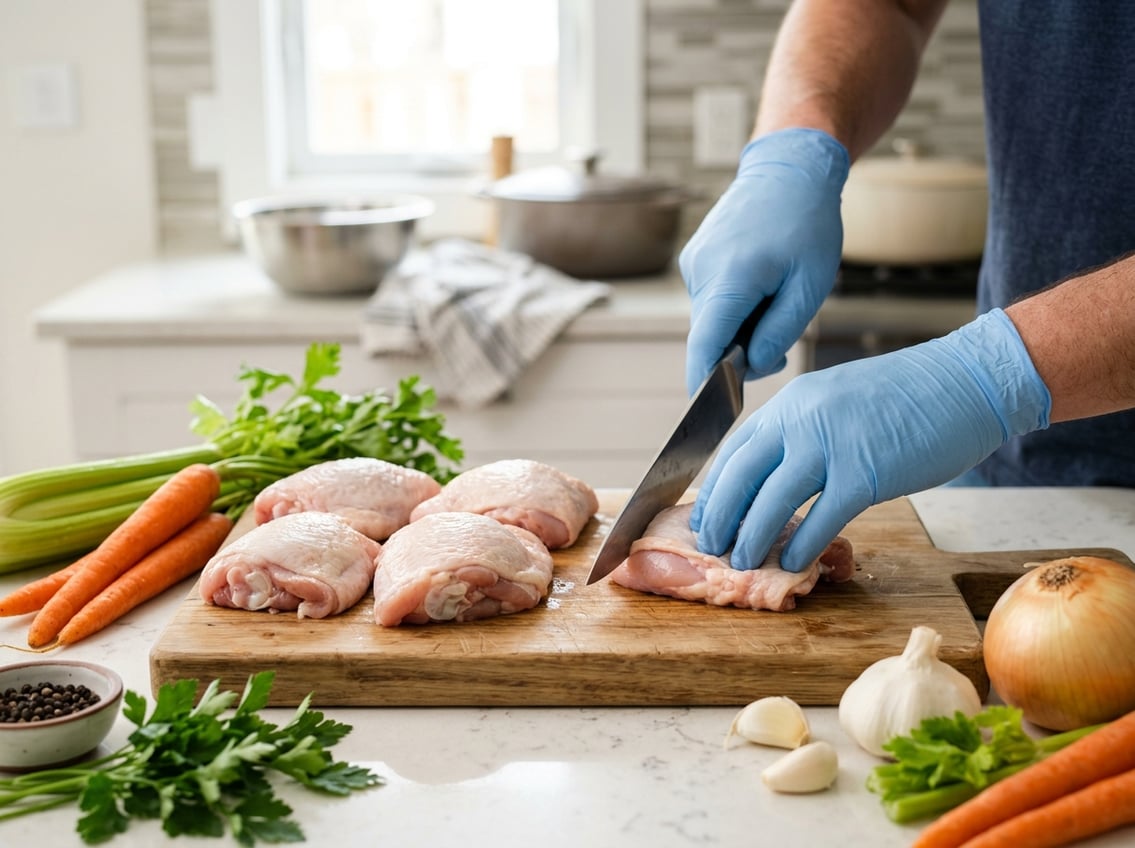
Choose thighs for flavor and ease of use. Prepare them to promote tender meat and a clean, flavorful broth.
Choosing Bone-In vs. Boneless
Bone-in thighs give richer flavor and a deeper, more gelatinous broth. Use bone-in if you plan to simmer 45–90 minutes and want moist meat during long cooking.
Boneless thighs save prep and make eating simpler. They cook faster—often 20–30 minutes—and shred easily, but don’t add as much body to the stock.
Try using bone-in for the broth and adding boneless pieces near the end for shredding. Store leftovers separately to keep texture intact.
Trimming and Prepping the Meat
Trim excess fat and visible glands to prevent greasy broth and off-flavors. Use a sharp knife to remove large fat deposits; leave some surface fat for flavor.
Pat thighs dry before searing to promote browning. Sear them in batches for color and extra depth, then deglaze the pan with water or stock.
Bring cold thighs closer to room temperature for 15–20 minutes for even cooking. Season lightly with salt and pepper before cooking.
Skin-On or Skinless Options
Skin-on thighs add richness and mouthfeel. The skin releases gelatin and fat that improve texture and flavor.
Skinless thighs reduce fat and produce a clearer broth. They also shred and portion easily into bowls.
Simmer with skin-on, then remove the skin before serving or chill the soup and skim solidified fat for clarity.
Essential Ingredients for Flavorful Broth
Use aromatic vegetables for sweetness and savory backbone. Chicken thighs or stock add body, and a few optional add-ins finish texture and brightness.
Building Aromatics: Garlic, Onion, Carrots, and Celery
Start with diced onions, carrots, and celery—mirepoix—for a balanced base. Sauté onions until translucent, then add carrots and celery to soften.
Crush or thinly slice 2–4 garlic cloves and add them near the end of the sauté step. Use larger pieces for long-simmered broth; strain them out later for a clearer broth.
Season lightly with salt during the sauté to pull more moisture and flavor from the vegetables.
Choosing the Right Chicken Broth
If you cook thighs in the pot, use bone-in thighs for the richest broth. Simmer gently for 30–60 minutes to extract collagen and flavor.
If you use store-bought broth, pick a low-sodium option so you control final seasoning. Combine broth and water for a lighter flavor or to increase volume.
Skim foam and excess fat early in the simmer to keep the broth cleaner. Taste at intervals and adjust salt, pepper, and herbs like thyme or bay leaf.
Cool, skim the fat, then reheat before adding final ingredients for a silkier mouthfeel.
Optional Add-Ins: Spinach, Egg Noodles, Parmesan Cheese
Add egg noodles in the last 8–10 minutes of cooking. Cook them directly in the soup for immediate serving, or keep them separate if storing leftovers.
Wilt fresh spinach in the hot broth for the last 1–2 minutes to retain color and nutrients.
Finish bowls with a light grating of Parmesan cheese for umami and saltiness. Add cheese to individual servings to avoid grainy residue.
Add lemon or chopped parsley for brightness when using rich thighs.
Step-by-Step Method for Chicken Thigh Soup
Use bone-in or boneless thighs based on the broth richness you want. Trim excess fat but keep some for flavor, and season well.
Brown the thighs first, then gently simmer in a seasoned liquid until tender. Shred the meat and return it to the pot to finish your chicken thigh soup or chicken noodle soup.
Searing for Richness
Pat the thighs dry and season with salt and pepper. Heat oil in a heavy-bottomed pot or Dutch oven over medium-high heat.
Sear skin-side down if using skin-on thighs until the skin is deep golden, about 4–6 minutes, then turn to brown the other side for 2–3 minutes.
Remove the thighs and reserve rendered fat. Sauté your mirepoix—onion, carrot, and celery—in the fat. Deglaze with white wine or broth, scraping browned bits from the pan.
Simmering for Tenderness
Return the browned thighs to the pot and add enough chicken broth or water to cover by about 1 inch. Add bay leaf, peppercorns, and a sprig of thyme.
Bring to a gentle simmer to prevent toughening the meat and clouding the broth. Cook boneless thighs 20–25 minutes; bone-in thighs 30–40 minutes, until the meat pulls easily from the bone.
Add firmer vegetables with the thighs and delicate items like peas, spinach, or noodles in the last 5–10 minutes.
For a creamier soup, remove the thighs before finishing and stir in cream or a cornstarch slurry to thicken the broth, then return the shredded meat.
Shredding and Returning Chicken
Remove thighs to a cutting board and let rest for 5 minutes. For bone-in thighs, use two forks to pull meat from the bone, or cut away bones and chop the meat.
For boneless thighs, shred with forks or slice against the grain for a firmer texture.
Return the shredded or chopped chicken to the simmering broth and cook 3–5 minutes to marry flavors. Adjust seasoning with salt, pepper, and fresh herbs.
If adding starch like rice, noodles, or potatoes, add those separately and time them so they finish tender but not mushy.
Popular Variations and Serving Suggestions
You can turn chicken thighs into a range of soups, from light and brothy to rich and velvety. These variations focus on textures, key additions, and finishing touches that guarantee flavor.
Classic Chicken Noodle Soup
Use bone-in chicken thighs for the deepest flavor. Simmer them gently to extract gelatin and a savory mouthfeel.
Remove thighs after cooking, shred the meat, then return it to the pot. Choose egg noodles, wide ribbon pasta, or small shapes; add them toward the end so they stay tender.
Sauté onion, carrot, and celery first for a caramelized base, then deglaze with white wine or water for extra depth. Finish with chopped parsley and a squeeze of lemon.
Serve with crusty bread or saltine crackers. For faster meals, use boneless thighs cut into chunks and reduce simmer time.
Creamy and Hearty Twists
For creamy chicken soup, brown boneless skin-on thighs for extra fat and flavor, then use the pan fond to make a roux or slurry. Add cream, half-and-half, or milk with grated Parmesan cheese to thicken and enrich the broth.
Include starchy vegetables like potatoes or pearl barley for a more filling soup. Purée part of the soup for a silkier texture while leaving shredded chicken and vegetables intact.
Season with thyme, bay leaf, and black pepper; finish with Parmesan and freshly cracked pepper.
Pair with a green salad or garlic toast for a complete meal.
Spinach and Vegetable Enhancements
Add spinach in the last 2–3 minutes so leaves wilt but keep color. Use baby spinach, chopped mature spinach, or a mix of greens.
Combine spinach with aromatics like garlic, lemon zest, and white wine, or add creamy elements like mascarpone or Parmesan. Toss in diced tomatoes, zucchini, or green beans for extra nutrients and color.
Include shredded chicken thighs and finish with toasted pine nuts or croutons for crunch. Adjust salt late if using Parmesan, since it adds salinity.
Storage, Reheating, and Freezing Tips
Cool hot soup quickly, refrigerate it within two hours, and use airtight containers. For freezing, remove noodles or dumplings before storing and label with the date and contents.
How to Store and Reheat
Transfer chicken thigh soup to shallow, airtight containers to cool it to 40°F (4°C) within two hours. Store it in the refrigerator for up to 3–4 days.
If you added egg noodles or starches, plan to eat the soup sooner for best texture.
To reheat, bring the soup to a rolling simmer on the stove for at least one minute so it reaches 165°F (74°C) throughout. Only reheat the portion you plan to eat.
If you use a microwave, cover the bowl, heat in 60–90 second bursts, and stir between intervals to eliminate cold spots. Taste and adjust seasoning after reheating, as chicken thigh soup may need a splash of broth or a pinch of salt to brighten flavors.
Freezer-Friendly Preparation
Cool the soup completely before freezing to prevent ice crystals and texture loss.
Remove pasta or rice and freeze them separately in small bags. This helps your chicken noodle soup stay firm after thawing.
Use heavy-duty freezer bags or rigid containers. Leave 1 to 1.5 inches of headspace for expansion.
Label with the date and contents. Frozen soup keeps best for 3 months and remains acceptable for up to 4 to 6 months.
Thaw the soup in the refrigerator overnight or use the defrost setting on your microwave. Reheat on the stove until it simmers.
If the broth separates after thawing, whisk or blend it briefly. Chicken thighs maintain good flavor and texture when you handle them this way.


