
What Temperature Should the Chicken Thighs Be: Expert Guide to Juicy, Safe Cooking
You want juicy, safe chicken thighs with the right texture every time. Cook chicken thighs to at least 165°F for safety, but for tender, fall-apart dark meat aim for 190–195°F. If you like meat that clings to the bone, 175°F gives a reliably tender result.
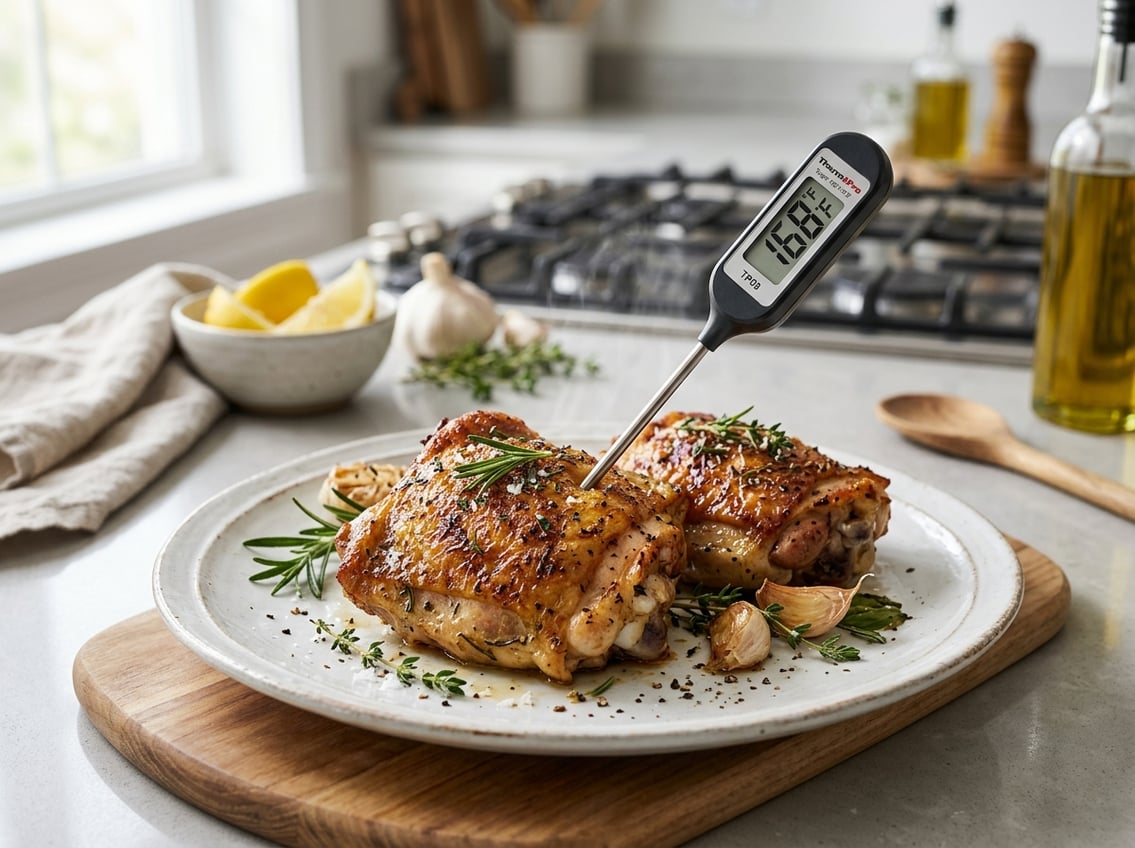
Use a reliable instant-read thermometer in the thickest part of the thigh, avoiding bone, and let the meat rest for a few minutes so the temperature evens out. This guide covers key temperatures, how to measure them, how temperature affects texture, and simple cooking methods for crispy skin and flavor.
Key Temperatures for Chicken Thighs
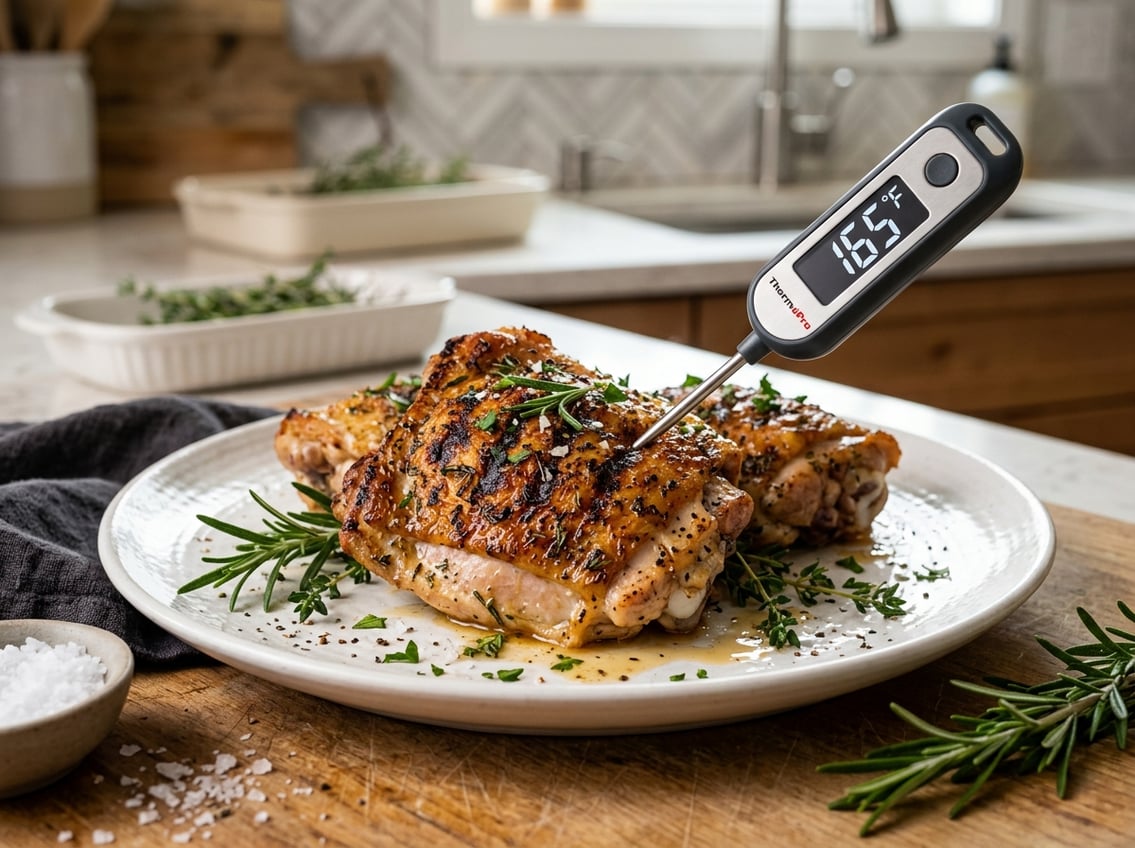
You need clear target temperatures to balance safety and texture. Know the minimum safe internal temperature and the higher ranges that yield more tender, gelatin-rich meat.
USDA Recommendations and Food Safety
The USDA sets the safe minimum internal temperature for all poultry at 165°F (74°C). Measure with an instant-read thermometer inserted into the thickest part of the thigh, avoiding bone for an accurate reading.
Reaching 165°F instantly makes the chicken safe because that temperature kills common pathogens throughout the meat. If you hold the meat at slightly lower temperatures, you must extend the time at that temp to achieve the same level of pathogen reduction, but that requires precise control and is less practical for most home cooks.
Check multiple pieces when cooking a batch. Your thermometer placement and reading technique determine whether the temperature reflects the true internal temp of the thigh.
Optimal Temperature Range for Taste and Texture
Many cooks aim higher than the USDA minimum for better eating quality. Targeting 175°F (79°C) gives a balance of tender meat that still clings to the bone and a juicy mouthfeel.
If you want very tender, shreddable thighs, let the internal temperature reach 190–195°F (88–91°C). At these temps, collagen converts to gelatin, producing a melt-in-your-mouth texture. Avoid exceeding about 210°F, which can make the meat stringy and dry.
Roast or braise slowly so the thigh stays longer between 140–195°F. This maximizes collagen breakdown and prevents surface overcooking.
Why Dark Meat Benefits From Higher Cooking Temps
Dark meat contains more connective tissue and fat than white meat. As collagen heats, it dissolves into gelatin; this process needs extended time at higher internal temperatures, so thighs improve when cooked beyond 165°F.
Higher internal temps (175–195°F) break down collagen and release intramuscular fat, increasing succulence and flavor. If you stop at the USDA minimum, some collagen remains intact at 165°F.
Slow-roast, braise, or use indirect grilling to let thighs reach those higher internal temps without drying the exterior. Use a thermometer to hit the specific internal temperature you want.
Proper Use of Thermometers
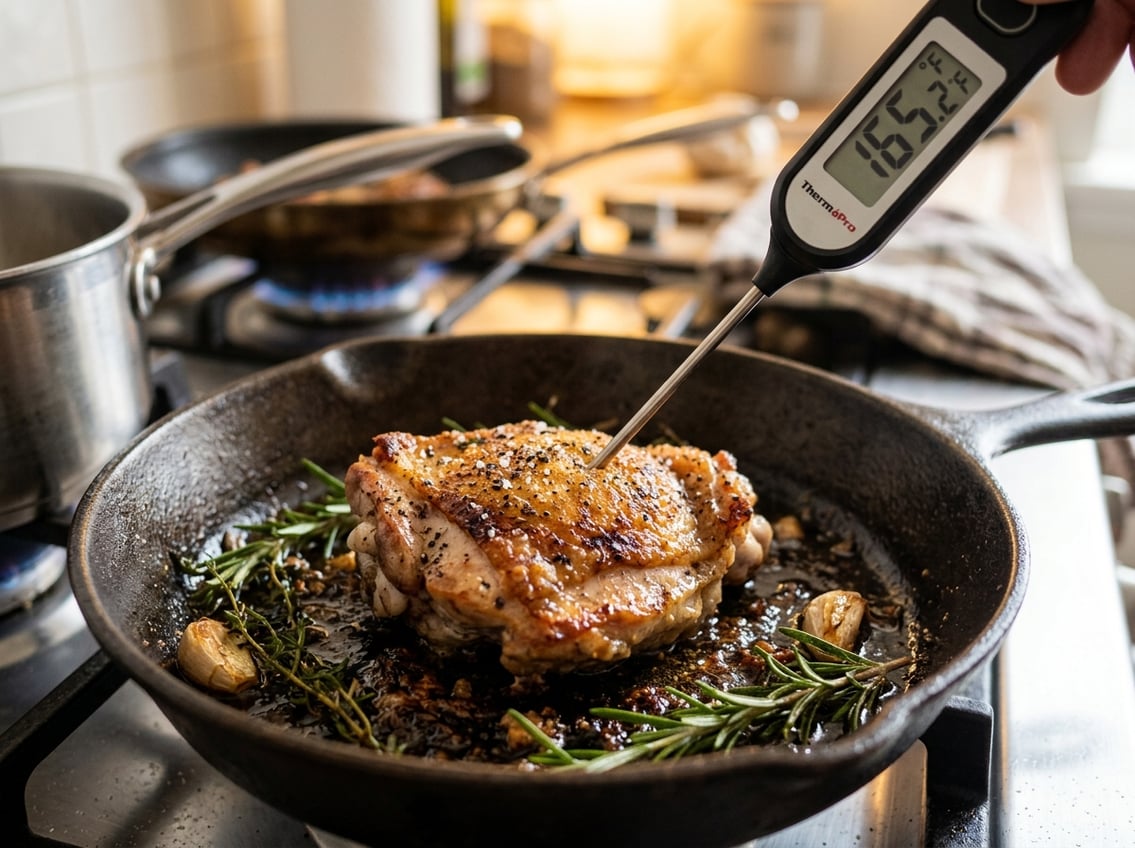
Use a reliable thermometer and measure at the thickest part of the thigh without touching bone. Choose a thermometer suited to your cooking method and insert it correctly for an accurate internal temperature reading.
Choosing Between Meat Thermometers and Instant-Read Thermometers
You can use either a leave-in meat thermometer or an instant-read thermometer, depending on how you cook. A leave-in probe works well for long roasts or braises because it stays in place and monitors temp continuously.
An instant-read thermometer works best for quick checks and finishing times. It gives a fast, accurate read when you insert the probe into the thickest part of the thigh. Look for ±1–2°F accuracy and a probe long enough to reach the center without touching bone.
Choose a thermometer with a waterproof housing, a rotating display for awkward angles, and a fast response time. If you grill or smoke, pick a thermometer rated for higher ambient temps. Calibrate it periodically using an ice bath or boiling water.
How to Accurately Measure Internal Temperature
Insert the probe into the thickest part of the thigh, at least ¼ inch away from bone and fat. Bone conducts heat and gives false highs, so avoid it and aim for the center of the meat.
Hold the probe until the display stabilizes—usually a few seconds for instant-read units. If you use a leave-in thermometer, position the probe before cooking starts to track carryover heating during rest. Thighs often rise 5–10°F during resting, so pull them when they reach your target minus the expected carryover.
Use the thermometer reading, not cooking time, as your doneness indicator.
Common Thermometer Mistakes to Avoid
Keep the probe away from bone or gristle. That error can read several degrees too high and lead you to undercook the surrounding meat. Reinsert the probe in a new spot if the first reading seems inconsistent.
Test probe placement visually on a cut piece until you consistently hit the thickest meat. Don’t leave a non-heat-resistant instant-read in the oven; it can melt or give false readings. Clean probes between uses and recalibrate if readings drift.
Don’t rush the reading; let the number stabilize. Always use the same target area (center of the thigh) so your readings are comparable across batches.
Effect of Temperature on Chicken Thigh Texture
Temperature determines how the thigh’s connective tissue breaks down, how much gelatin is produced, and whether the meat stays juicy or becomes dry. Target internal temperatures change texture dramatically; small differences between 165°F and 195°F alter tenderness and mouthfeel.
Connective Tissue and Gelatin Conversion
Connective tissue in thighs (mainly collagen) begins to denature and turn into gelatin as internal temperature rises and time accumulates. Around 160–170°F, collagen starts to soften. By 175–185°F, you get substantial conversion, which yields silkier, more lubricated meat.
Longer time at moderate heat (like a 300°F oven or low braise) lets collagen convert without over-drying muscle fibers. If you want pull-apart thighs, aim for the 185–195°F range and use a gentle method like braise, slow roast, or sous vide.
Risks of Overcooking and Undercooking
Undercooking (below 165°F) risks bacterial survival and gives rubbery, slightly translucent meat. You must reach at least 165°F for safety, but texture at that point can still be firmer than ideal.
Overcooking muscle fibers at high, rapid heat (pushing beyond 200°F quickly) squeezes out moisture and makes meat stringy. Even when collagen has converted, excessive drying reduces juiciness.
Control both peak internal temperature and time-in-temperature. Use a probe thermometer and avoid relying on visual cues alone.
Impact on Juiciness and Tenderness
Juiciness depends on rendered fat, gelatin from collagen, and intact muscle fibers. At 165°F, the meat is safe and retains much moisture, but connective tissue hasn’t fully converted, so tenderness can be moderate.
Between 175–195°F, you trade some muscle juiciness for gelatin-rich tenderness. The meat feels moister when you bite into it because gelatin lubricates and binds juices.
Sous vide or slow braises let you hit higher internal temps while keeping juices. Finish with a quick high-heat sear if you want crispy skin.
Cooking Methods and Time Considerations
You need clear targets for internal temperature and realistic cooking times based on cut, method, and oven or pan temperature. Use an instant-read thermometer and adjust heat and time when working with bone-in vs. boneless thighs.
Baking and Roasting Chicken Thighs
Preheat your oven to 400–425°F (205–220°C) for a good balance of crispy skin and juicy meat. Arrange thighs skin-side up on a rimmed baking sheet or in a shallow roasting pan with space between pieces.
For bone-in, roast about 30–40 minutes at 425°F. For boneless, roast 20–30 minutes. Check the thickest part with an instant-read thermometer. The USDA minimum is 165°F (74°C), but many chefs pull thighs at 175°F (79°C) for better texture or cook to 190–195°F (88–91°C) for very tender, falling-apart dark meat.
Rest the thighs 5–10 minutes to let juices redistribute.
Season and pat skin dry before roasting to help crispness. For extra-crispy skin, broil for 1–3 minutes at the end, watching closely.
Grilling and Sautéing Techniques
For direct grilling over medium-high heat (about 375–450°F grate temp), grill boneless thighs 4–6 minutes per side and bone-in 6–9 minutes per side, finishing over indirect heat if needed. Use medium heat to avoid burning marinades while letting the interior reach safe temps.
When sautéing in a skillet, heat a thin film of oil over medium-high. Boneless thighs take 6–10 minutes total, turning once. Bone-in thighs need more time and may finish in a 350°F oven for 10–15 minutes.
Always insert the thermometer into the thickest part, avoiding bone. Rest briefly after cooking.
Use a two-zone grill or cover the skillet with a lid to cook through without charring the exterior.
Adjusting Cooking Time for Bone-In vs. Boneless
Bone-in thighs take longer because the bone slows heat penetration. Plan 10–15 extra minutes compared with boneless at the same oven temp.
Size matters: small boneless pieces finish faster than large bone-in pieces. When calculating time, use thickness rather than weight alone. If you cook mixed cuts together, remove boneless first when they reach the target temp and continue cooking bone-in until they reach theirs.
If you prefer a single-timing method, raise oven temp slightly and monitor with a thermometer so you remove each piece at the correct internal temperature.
Determining How Long to Cook Chicken Thighs
Rely on internal temperature, not clock time, as your primary doneness indicator. Aim for 165°F (74°C) minimum. 175°F (79°C) gives firmer but still juicy meat. 190–195°F (88–91°C) produces very tender, gelatin-rich dark meat.
Use an instant-read thermometer inserted ¼ inch from the bone.
Estimate times as starting points: boneless pan or oven-cooked thighs — 20–30 minutes at 400–425°F; bone-in oven-roasted — 30–45 minutes at 400–425°F. Grilled times vary but plan for 6–10 minutes per side depending on heat.
Always confirm with temperature and rest 5–10 minutes before serving.
Achieving Crispy Skin and Maximum Flavor
Focus on drying the skin, using high, even heat, and adding flavor through an acid-plus-oil marinade. Let the cooked thighs rest so juices redistribute and the skin stays crisp.
Tips for Crispy Skin in the Oven
Pat each thigh thoroughly with paper towels. Dry skin crisps, wet skin steams.
Salt the skin at least 30 minutes before cooking or right before roasting to pull moisture out and promote browning.
Preheat the oven to 400–425°F (200–220°C). Use 425°F for faster crisping and a darker crust, or 400°F for gentler cooking that still crisps if the skin is very dry.
Place thighs on a wire rack set over a rimmed baking sheet so hot air circulates under and around each piece. Arrange skin-side up with space between pieces.
Finish under the broiler for 1–2 minutes if needed, watching closely to avoid burning. Use an instant-read thermometer and remove thighs at 160–162°F, since carryover will reach the safe 165°F while resting.
Benefits of Marinating Chicken Thighs
Marinating adds flavor and helps keep thighs moist during high-heat cooking.
Use a simple mix of oil (1–2 tbsp per cup), acid (vinegar or lemon juice), aromatics (garlic, herbs), and salt.
Oil transfers heat and encourages browning. Acid tenderizes surface proteins without making the meat mushy if you limit the marinating time.
Marinate skin-on thighs for 30 minutes to 4 hours. If you marinate longer, acids can start to break down the texture.
For maximum skin crisp, remove excess marinade and pat the skin dry before roasting.
If you prefer a dry-brine, apply salt and aromatics, then refrigerate the thighs uncovered for several hours. This seasons the meat and dries the skin for superior crisping.
Incorporating Resting Period After Cooking
Resting is essential for juicy thighs and crisp skin. After you remove the thighs from the oven, transfer them to a warm plate or cutting board.
Loosely tent the thighs with foil for 5–10 minutes. This rest lets the internal temperature reach 165°F and helps the juices redistribute.
Avoid wrapping tightly or using heavy foil, because trapped steam softens the skin. If you need to hold the thighs longer, place them on a wire rack in a low oven at about 200°F for up to 15 minutes.
Slice after the short rest so the first cut keeps juices inside. This also helps the skin remain crisp when served.


