
Is the Chicken Thigh or Breast Better? Nutrition, Taste, and Cooking Explained
If you want lower calories and less fat for leaner meals, choose chicken breast. If you want richer flavor, more iron and zinc, and forgiving cooking, choose chicken thigh.
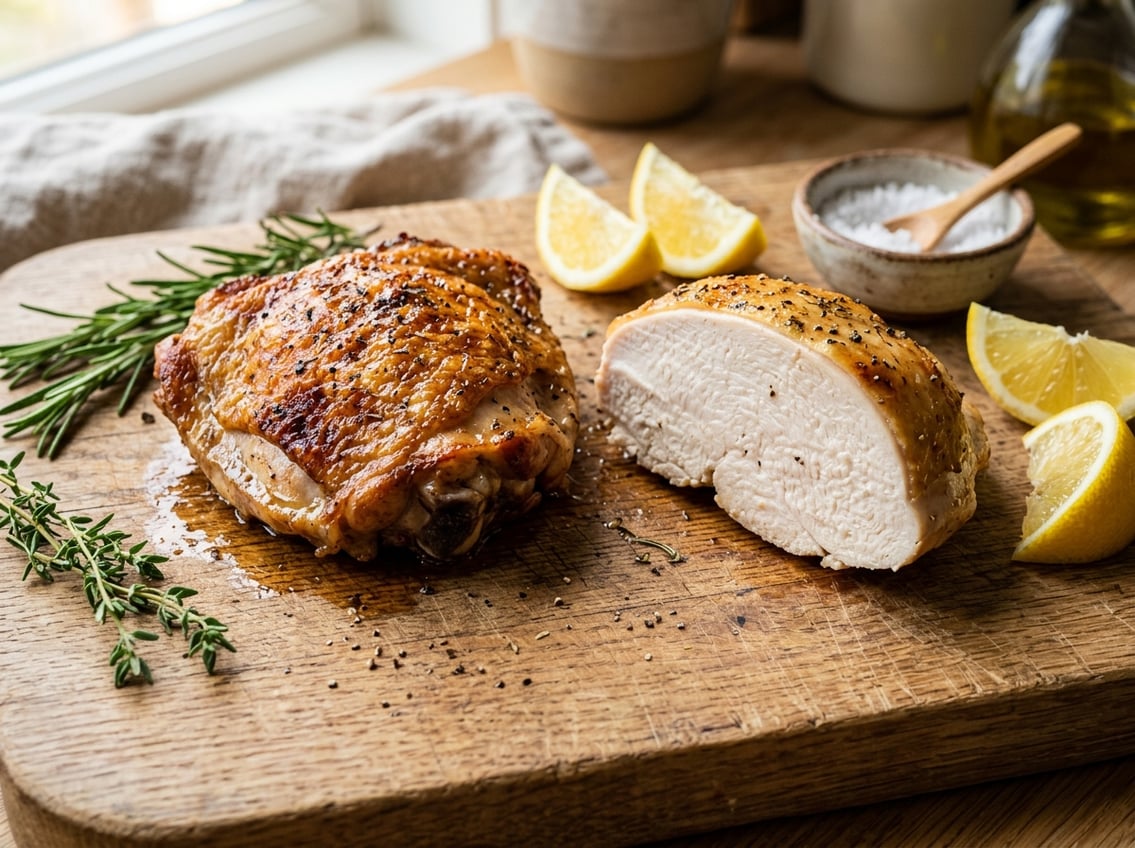
In this post you’ll compare nutrition, weight-management effects, cooking performance, and how skin and preparation change the equation. Use those points to pick the cut that fits your goals, whether that’s trimming calories, maximizing protein, or getting the juiciest, most flavorful result.
Key Nutritional Differences
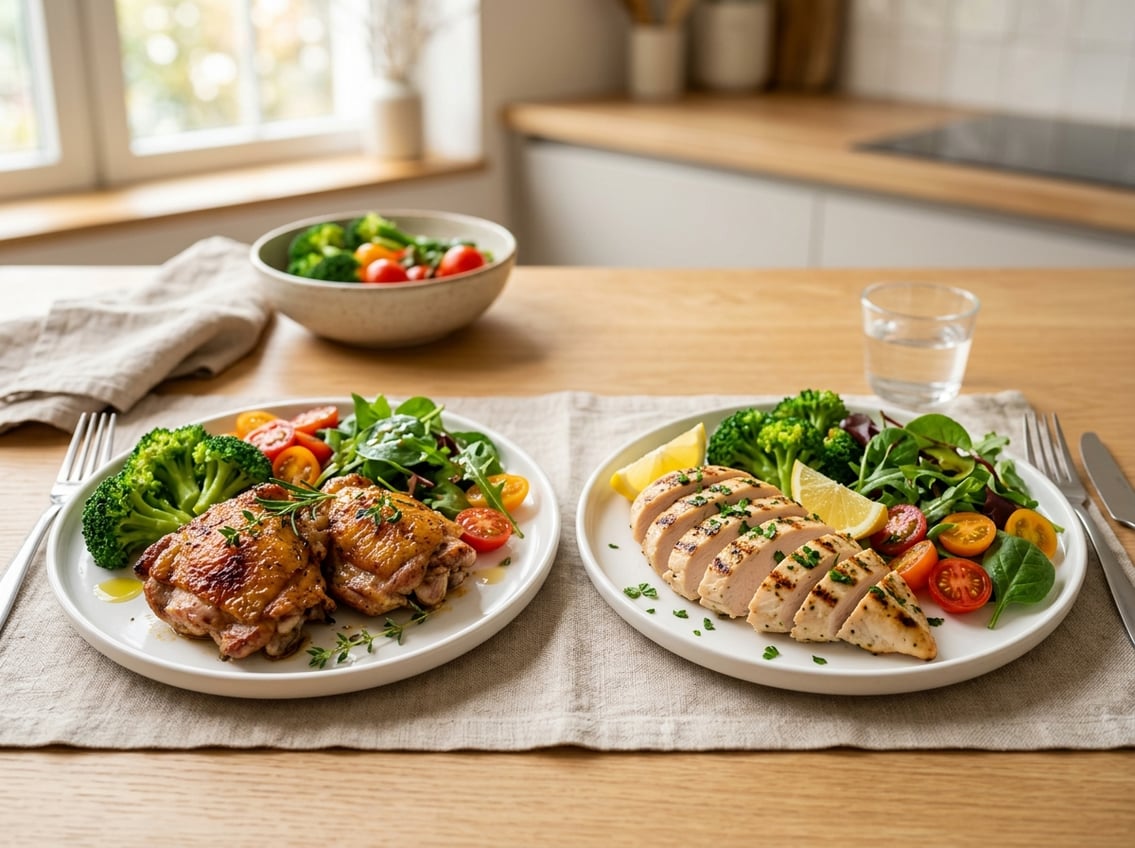
You’ll find meaningful differences in calories, fat, protein, and several minerals between chicken breast and thigh. Those differences affect calorie targets, satiety, cooking tolerance, and specific nutrient needs like iron and zinc.
Calorie and Macronutrient Comparison
Skinless chicken breast generally provides fewer calories per serving than skinless chicken thigh. For a 100 g cooked portion, expect roughly 130 kcal from breast versus about 160 kcal from thigh.
The breast is much leaner, with about 2–3 g total fat per 100 g, while thighs contain around 8–10 g. That extra fat raises calories and helps thighs stay moist during cooking.
Carbohydrates are negligible in both cuts. If you track macronutrients, choose breasts to lower fat intake and calories, or thighs when you want higher fat for flavor and satiety.
Micronutrients in Each Cut
Thighs provide more iron and zinc than breasts, which can matter if you’re addressing iron status or zinc intake. A 100 g skinless thigh typically supplies modestly higher iron and zinc amounts compared with the same amount of breast.
Breast delivers more niacin (vitamin B3), vitamin B6, selenium, and phosphorus per 100 g in many standard nutrient tables. Those nutrients support energy metabolism and antioxidant systems.
If you need extra iron or zinc, favor skinless chicken thighs. If you prioritize B vitamins, selenium, or phosphorus—or if you follow a low-fat plan—skinless chicken breast is the better match.
Protein Content and Fat Content
Chicken breast offers more protein per gram than thigh. Per 100 g cooked, breasts commonly provide about 24–26 g protein, while thighs give roughly 20–22 g.
Fat content differs substantially. Thighs contain about three to four times the total fat of breasts, with higher monounsaturated and polyunsaturated fat fractions as well as slightly more saturated fat.
Fat in thighs contributes flavor and prevents drying during cooking. Choose breasts to hit higher protein targets with minimal fat. Choose thighs when you want richer flavor, a bit more dietary fat, and the additional minerals thighs supply.
Impact on Weight Management and Diet Goals
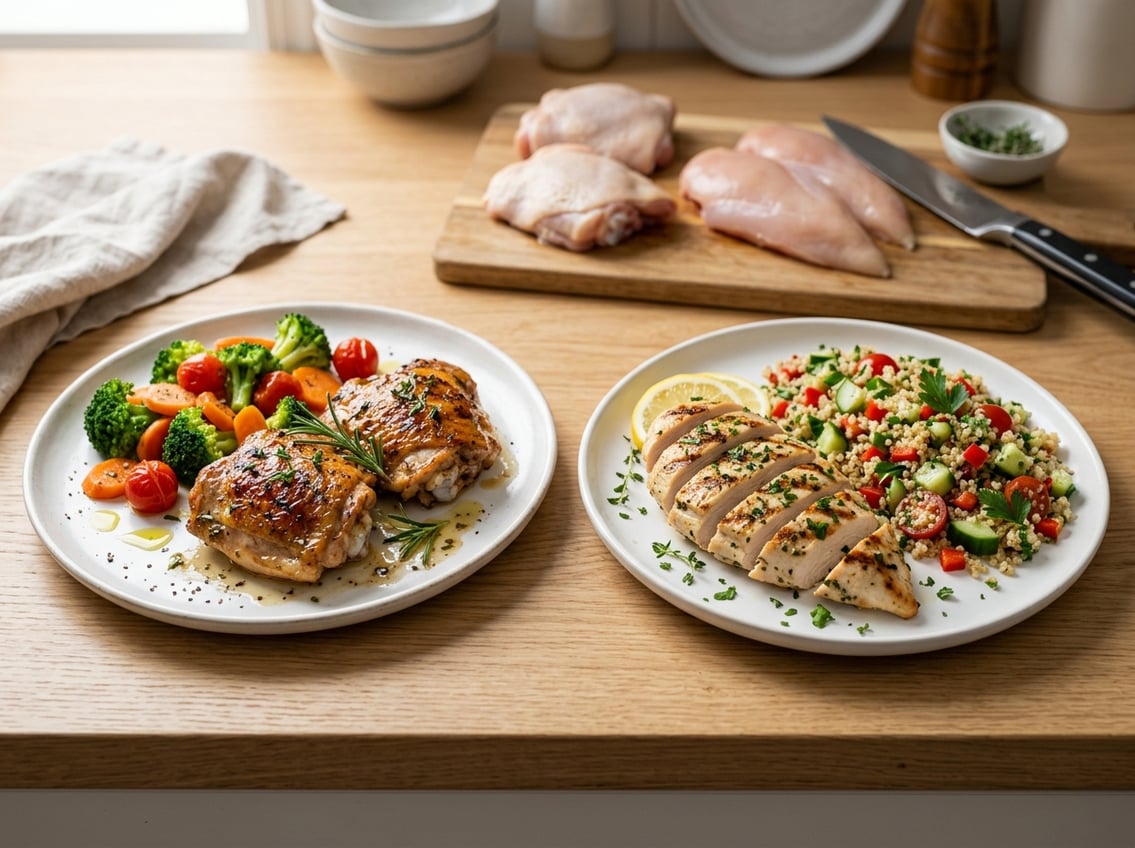
Chicken breast and thigh affect calories, fat, and satiety differently. Choose the cut based on your calorie goal, need for dietary fat, and how long you want meals to keep you full.
Lean Protein for Weight Loss
Chicken breast is a lean protein. 100 g of boneless, skinless breast gives roughly 100–120 calories and about 22–30 g protein depending on cooking, while thigh provides more fat and about 140–180 calories per 100 g with about 18–26 g protein.
If you aim for a calorie deficit, breast helps you reach protein targets without large calorie cost. A 120–150 g cooked breast yields roughly 25–35 g protein, which suits most single-meal needs for muscle preservation.
Thighs can fit weight-loss plans too, but you must account for the extra 4–8 g fat per 100 g that raises calories.
Role in Keto and Paleo Diets
Keto emphasizes very low carbs and higher fat. Chicken thighs align better with keto because their higher fat content reduces the need to add external fats to hit macro targets.
If you follow paleo, both cuts are acceptable; paleo focuses on whole foods rather than specific macros. Thighs provide more iron and zinc, which can matter if you limit red meat.
On keto, prioritize thighs or add skin to breast to reach fat targets without extra processed oils. On paleo, rotate breast and thigh to balance lean protein with micronutrients while keeping meals minimally processed.
Portion Control and Meal Planning
Use a food scale and plan portions by cooked weight for accuracy. Aim for 100–150 g cooked breast or 120–170 g cooked thigh depending on your calorie and protein needs.
If you track macros, log the exact cut and cooking method. Grilling vs. frying changes added fats and calories.
For satiety, pair breast with fiber and healthy fats such as vegetables, avocado, or olive oil to slow digestion. If you prefer thighs for flavor, reduce portion size slightly or trim visible fat to control calories.
Batch-cook mixed portions, for example, 2 parts breast to 1 part thigh, to combine lean protein with satisfying fat while simplifying meal prep.
Flavor, Texture, and Cooking Performance
You’ll find clear trade-offs between flavor intensity, how the meat feels when you bite into it, and which cooking methods produce the best results. Choose based on whether you prioritize rich taste and juiciness or lean protein and quick, clean flavors.
Flavor Profile: White vs. Dark Meat
Chicken breast offers a mild, clean flavor that takes seasoning and sauces well. If you want the seasoning to be the star, breast acts like a neutral canvas that highlights those notes.
Chicken thigh delivers a deeper, more savory taste because of higher fat and myoglobin content. That fattier profile amplifies browning and carries strong spices and long-simmered sauces better than breast.
You’ll notice more umami and a fuller mouthfeel in thighs, which often makes them a better choice for bold-flavored dishes.
Texture and Moisture Differences
Breast is composed of lean muscle fibers that tighten quickly as they cook. If overcooked by even a few minutes, breast becomes dry and stringy, so you must control temperature and cook time precisely to keep it tender.
Thigh contains more intramuscular fat and connective tissue, which breaks down into gelatin when cooked properly. That gives thigh a silkier, juicier bite and a forgiving margin for temperature.
For texture contrast, sear thighs to render fat and crisp the exterior while keeping the interior moist.
Suitability for Different Cooking Methods
Use quick, high-heat methods for breast such as pan-searing, grilling over direct heat, or flash-roasting at high temperature. Pound or butterfly thicker breasts to ensure even cooking and finish with a brief rest to redistribute juices.
Use thighs for slow or moist-heat methods such as braising, stewing, roasting low-and-slow, or grilling with indirect heat. The extra fat and connective tissue stand up to long cooks and produce tender, flavorful results.
For crispy skin and juicy meat, roast thighs at moderate heat then finish under high heat to crisp the exterior while preserving internal moisture.
Best Cooking Methods by Cut
Choose high-heat, quick methods for lean breast meat and gentler, longer methods for fattier thighs to match each cut’s texture and fat content. Pay attention to internal temperature (165°F) and timing so breasts don’t dry and thighs stay tender.
Grilling, Roasting, and Baking Applications
Grill boneless thighs and breasts over medium-high heat. Thighs tolerate 5–7 minutes per side, while breasts need closer monitoring to avoid overcooking.
Use direct heat for sear marks, then move breasts to indirect heat or a cooler part of the grill if they reach 145–150°F to finish to 165°F without drying.
Roast bone-in, skin-on thighs at 425°F to crisp skin while rendering fat; expect 35–40 minutes. Roast whole or bone-in breasts at 375–400°F and aim for 165°F internal temp at the thickest point.
Tent with foil if the skin browns too fast. For baked chicken, arrange pieces on a wire rack so air circulates and skin crisps evenly.
Use a thermometer. Let meat rest 5–10 minutes after cooking to redistribute juices.
Pat skin dry and oil lightly to improve browning whether grilling, roasting, or baking.
Braising, Poaching, and Slow Cooking
Braising suits thighs because the higher fat and connective tissue break down into silky, flavorful meat during long, moist cooks. Brown thighs first, then simmer in 1–2 cups of broth, wine, or tomato sauce at low heat, or transfer to a 325°F oven for 45–60 minutes until tender.
Poaching works best for breasts when you need shred-able, moist meat for salads or sandwiches. Submerge breasts in gently simmering liquid with aromatics and maintain a low simmer until the internal temp reaches 165°F, usually 10–15 minutes depending on thickness.
Use a slow cooker for both cuts when you want hands-off results. Thighs become fall-apart tender on low for 6–8 hours.
Breasts can dry in prolonged high-heat slow cooking. Protect them by cooking with liquid and checking earlier, or use thighs if the recipe needs long braise times.
Seasoning, Brining, and Marinades
Brine breasts for 20–30 minutes in a basic solution (1/4 cup salt per quart of water) to boost juiciness. Brine thighs for 30–60 minutes if you want deeper seasoning without losing texture.
Rinse and pat dry before cooking to ensure proper browning. Marinades add flavor and help tenderize thighs; include oil, acid (vinegar or citrus), and aromatics.
Limit acidic marinades on breasts to 15–30 minutes to avoid a mealy texture. For grilling, reserve a portion of marinade before cooking if you plan to baste or serve as sauce.
Season simply and confidently. Salt, pepper, and one bold element such as smoked paprika, soy, or garlic often outperform complex blends.
Use a thermometer to confirm 165°F and rest the meat so your seasoning and technique deliver the intended texture and juiciness.
Nutritional Impact of Skin and Preparation
Skin greatly changes calories, fat, and some micronutrients. Preparation methods and added ingredients like salt or marinades also shift sodium, moisture, and perceived satisfaction, so pick cuts and cooking styles to match your goals.
Skin-On vs. Skinless Options
Skin adds fat and calories. A 100 g serving of skin-on chicken thigh can contain roughly 30–50% more calories than the same skinless thigh, mostly from added fat.
If you’re watching saturated fat or total calories, skinless chicken breast is the leanest choice, offering the highest protein per calorie. Skinless chicken thighs still provide more iron, zinc, and a richer mouthfeel due to intramuscular fat.
Keeping skin during roasting or grilling preserves moisture and flavor, which can reduce the need for added sauces or oils. Pan-frying with skin increases surface fat absorption, raising calorie content further.
If vitamin D intake matters, thigh with skin offers modestly higher vitamin D than breast, though amounts remain small compared with fortified foods.
Additives, Salt, and Pre-Marinated Cuts
Pre-marinated or processed chicken breasts and skinless chicken thighs often contain added salt, sugar, phosphates, or oil. Read labels because sodium can double or triple compared with plain cuts.
Phosphates and brines increase water retention and weight, which raises cooked moisture and apparent juiciness but also boosts sodium and may alter texture.
Sugary or oil-heavy marinades add calories without improving protein content. If you need lower sodium, buy plain skinless chicken breast or thigh and control seasoning yourself.
When you want convenience, rinse excess surface brine when safe, or choose “no salt added” and verify the sodium per serving on the package.
Choosing the Right Cut for Your Needs
Pick the cut that fits your calorie, protein, and flavor goals. Match cooking methods to each cut’s strengths, and consider portion size, fat preference, and the texture or moisture you want for your dish.
Personalized Nutrition and Health Considerations
Set your daily protein target and calorie goals before choosing. If you want leaner protein for weight control or higher protein-per-calorie meals, chicken breast gives more protein and fewer calories per ounce than thigh.
If you track saturated fat or cholesterol, skinless breasts usually contain less. Consider micronutrients and satiety as well.
Thighs provide more iron and zinc. They also contain more fat, which slows digestion and keeps you fuller longer.
That can help if you struggle with mid-afternoon hunger or need sustained energy between meals. If you manage heart disease risk, choose skinless breasts more often and watch portion sizes of thighs.
Use this quick checklist:
- Want low calories and high protein density → chicken breast (skinless).
- Need longer fullness, iron, or flavor for slow-cooked meals → chicken thigh.
- Need to limit saturated fat → choose breast or remove skin from thighs.
Adapting to Taste Preferences and Recipe Demands
Match texture and cooking method to the cut. Breasts dry out quickly with high heat and short times, so try quick sears, thin slices, or brining.
Thighs handle longer braises, roasts, and grills well because their higher fat keeps them moist and forgiving.
Let your recipe guide your choice. Use breasts for grilled salads, stir-fries, or meals where lean protein matters.
Choose thighs for curries, stews, tacos, and dishes that need richer flavor and tenderness.
Practical tips:
- Swap proportionally: 1 large breast is about equal to 2 small thighs by weight.
- Combine cuts in casseroles or mixed grills if you want both benefits.
- Adjust cooking time. Thighs need longer to render fat, while breasts need gentler heat.


