
Why Do Chicken Thighs Always Look Undercooked? Understanding Appearance, Safety, and Prevention
You pull a batch of chicken thighs from the oven and notice they still look pink near the bone. That doesn’t automatically mean they’re unsafe.
Dark meat contains more myoglobin and fat. Bones release pigments, and connective tissue can give thighs a pink or glossy appearance even after they reach a safe temperature.
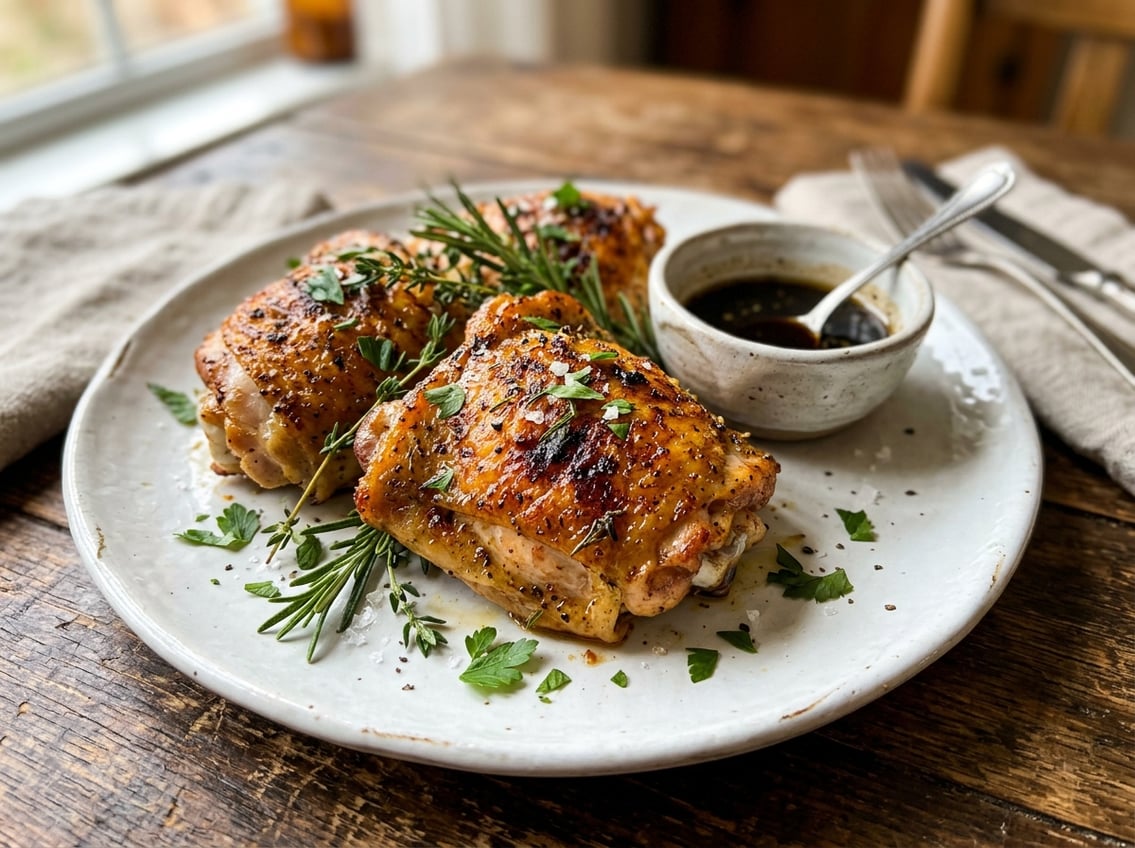
Trust temperature and texture over color. Use an instant-read thermometer (165°F / 74°C in the thickest part) and check for clear juices and meat that pulls away from the bone.
Why Chicken Thighs Can Appear Undercooked
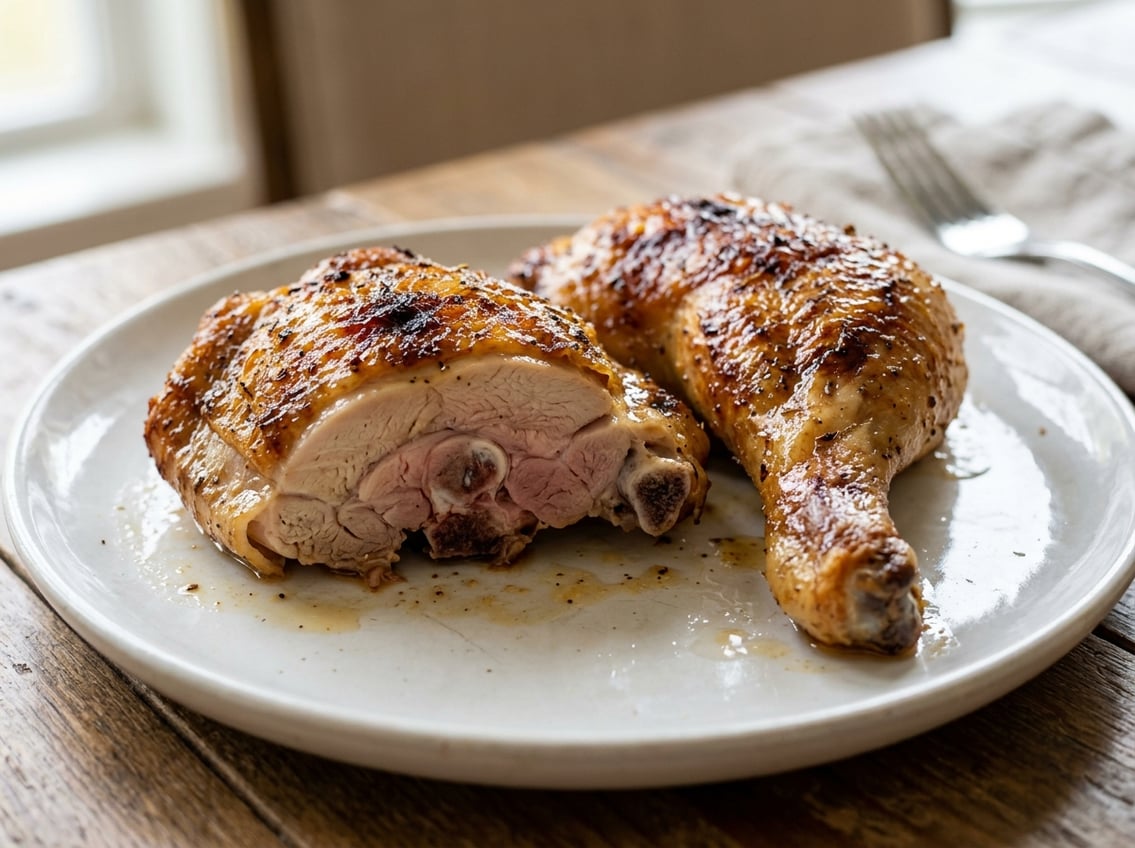
You may see pink flesh, glossy juices, or a reddish ring near the bone and worry the thighs are raw. Biological and cooking factors explain these visuals and how to check doneness reliably.
Natural Color Differences in Dark Meat
Dark meat contains more myoglobin and fat than white breast meat. Chicken thighs often retain a deeper, sometimes pinkish hue after cooking.
That color does not mean undercooked chicken. Myoglobin can remain lightly tinted even when the internal temperature is safe.
Expect thighs to stay moister and less uniformly pale than breast meat. Texture helps more than color.
Properly cooked thighs pull away from the bone and shred easily, while raw chicken feels rubbery and resists separation.
Focus on internal temperature (165°F/74°C minimum) and clear juices rather than color alone. If you lack a thermometer, cut into the thickest part: opaque, fiber-separated meat with clear juices means the thigh is cooked.
Bone Marrow and Myoglobin Effects
Bones and nearby marrow release pigments during cooking that can tint the meat close to the bone. That near-bone redness is often marrow or concentrated myoglobin.
Bone-in thighs are more likely to show this ring because bone conducts heat differently and can protect adjacent muscle from direct heat.
The visible pink zone can persist even when a probe thermometer reads the safe temperature in the meat.
Insert an instant-read thermometer into the thickest portion of the muscle, avoiding contact with bone. If the probe reads 165°F (74°C) or higher and the meat texture is tender, the thigh is safe despite localized pinking.
Cooking Methods and Their Impact on Appearance
High-heat searing, rapid grilling, or crowded pans can brown exterior surfaces while leaving thicker interior sections cooler and pink. Uneven heat distribution creates a contrast between a well-browned surface and meat that looks undercooked when sliced.
Slow, moist methods like braising or roasting at moderate oven temperatures convert collagen to gelatin and produce glossy juices. Those shiny juices often indicate properly rendered fat and gelatin.
Use a thermometer, finish bone-in thighs in the oven after searing, or allow a 5 to 10 minute rest to let carryover cooking and juice redistribution occur. These steps help ensure your chicken thighs reach safe doneness.
Common Visual and Physical Signs of Undercooked Chicken
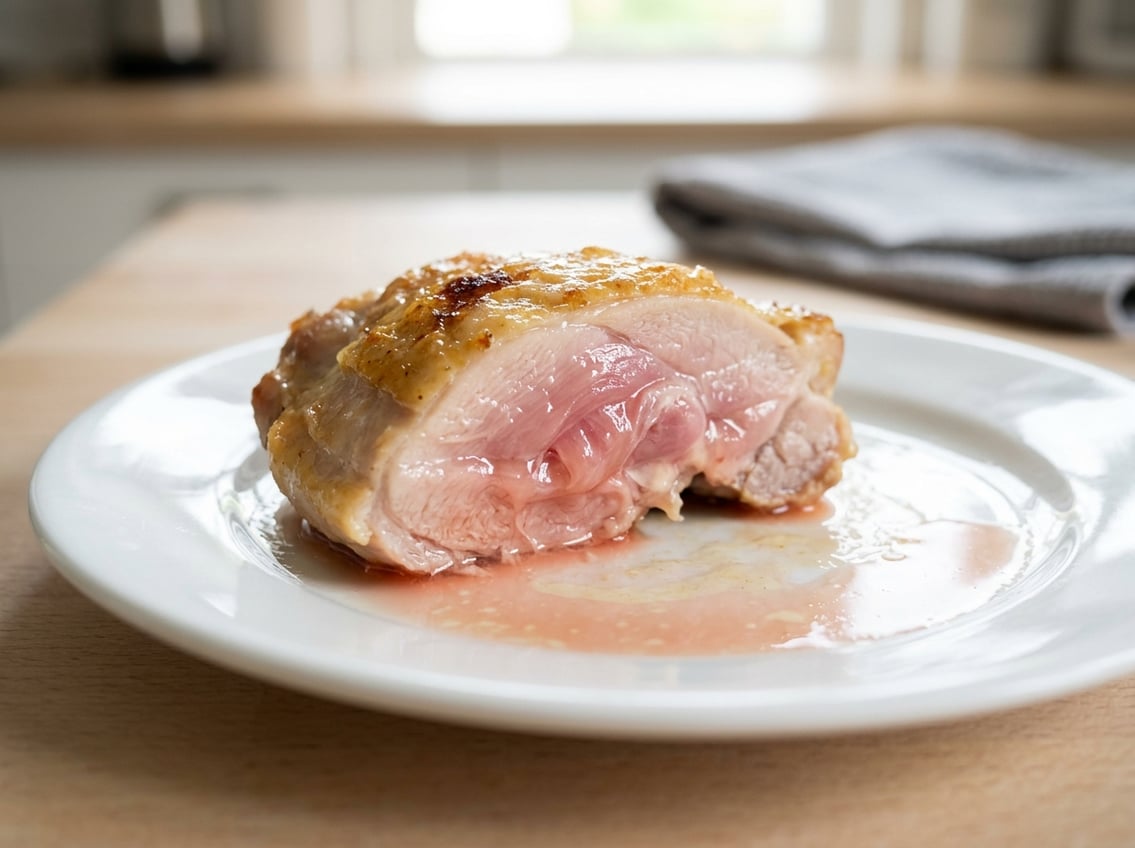
Check three things: color and juices near the bone, the meat’s texture and firmness, and how the piece changed in size during cooking.
Color and Juices Near the Bone
Look closely at the meat where it meets the bone. Undercooked chicken thighs often show a persistent pink or reddish tint at the bone even when the outer meat looks done.
Heat conduction is slower near bone. A pink ring or streak within 0.5 to 1 inch of the bone indicates incomplete cooking.
Cut into the thickest part and observe the juices. Clear or slightly white juices generally mean the meat is cooked.
If juices run pink, red, or cloudy, cook longer. Marinades, smoking, or curing can sometimes tint juices, so use this test with others.
Texture and Consistency
Press the thickest part with a finger or fork. Cooked thigh meat feels firm and gives slight resistance.
Undercooked chicken feels soft, gelatinous, or rubbery and may not spring back when released. When you pull the meat with a fork, fully cooked thigh fibers separate easily into strands.
Undercooked fibers resist tearing and appear more translucent. Also check the surface texture.
Properly cooked thigh surfaces are matte and slightly fibrous. If the surface still looks glossy, overly moist, or slimy, the meat needs more time.
Use touch plus color and juices for a reliable assessment.
Interpreting Size and Shrinkage During Cooking
Measure before and after cooking when possible. Chicken thighs shrink as muscle proteins contract and moisture evaporates.
Typical shrinkage ranges from about 10 to 20% by width or length depending on heat and duration. If a thigh barely shrunk at all, heat may have been too low or uneven, risking undercooking inside.
Excessive shrinkage or very tight, dry meat usually means overcooking. Use shrinkage as a clue: minimal shrinkage plus pink near the bone and soft texture strongly suggests the thighs are undercooked.
When in doubt, verify with an instant-read thermometer at the thickest point. You want 165°F (74°C).
Using Thermometers for Accurate Chicken Doneness
Use a thermometer to remove guesswork. Insert it into the thickest part of the thigh away from bone, aim for the correct target temperature, and allow for a short rest so carryover cooking completes the process.
Meat Thermometer vs. Instant-Read Thermometer
A meat thermometer is a probe-style unit that stays in the chicken while it cooks. An instant-read thermometer is handheld and gives a quick reading when you check.
Use a leave-in probe if you roast whole thighs for long periods or use an oven or smoker. It monitors temperature without opening the oven and lets you track rise over time.
Choose an instant-read for pan-frying, grilling, or quick checks. Look for digital models with a fast response.
Both types help you avoid relying on color or touch.
Where and How to Measure Temperature
Insert the probe into the thickest part of the thigh muscle, perpendicular to the bone. Avoid touching bone, gristle, or the pan surface.
For bone-in thighs, angle the probe so the tip sits mid-muscle, not against the bone. For boneless thighs, aim for the geometric center.
If you use a leave-in probe, place its cable through a small oven vent or hole to keep the seal intact. Read the display at eye level and wait for the number to stabilize before deciding.
Check several pieces when cooking multiple thighs. Heat can vary between pieces on the same tray or grill.
Safe Internal Temperature Guidelines
Target 175°F (79°C) for chicken thighs (dark meat) to ensure safety and proper texture. This is higher than the 165°F recommended for white meat because thigh collagen breaks down at higher temperatures for tenderness.
Remove the thighs a few degrees below target if you expect significant carryover cooking. Otherwise remove at the exact target and rest 5 to 10 minutes.
Resting lets juices redistribute and can raise the internal temperature slightly. If juices run clear and the probe reads 175°F across multiple positions, the meat is safe even if a slight pink hue remains near the bone.
Always use the thermometer reading over appearance.
Health Risks of Eating Undercooked Chicken Thighs
Undercooked chicken thighs can harbor specific bacteria that cause foodborne illness. If contaminated, your main risks include acute gastrointestinal infection and, in rare cases, longer-term complications affecting nerves and other organs.
Bacterial Dangers: Salmonella, Campylobacter, and Clostridium perfringens
Undercooked chicken and raw chicken juices often contain Salmonella and Campylobacter. Clostridium perfringens can multiply when cooked food cools slowly.
Salmonella commonly lives on poultry skin and in meat. Campylobacter prefers the intestinal tract and is frequently present on raw chicken.
Clostridium perfringens may not be in raw meat at high levels but causes illness when cooked food sits at unsafe temperatures.
These bacteria transfer from meat to your mouth by direct ingestion or cross-contamination. You reduce risk by cooking thighs to 165°F (74°C) and avoiding contact between raw chicken and ready-to-eat foods.
Proper refrigeration, prompt cooling of leftovers, and separate cutting boards lower the chance that these pathogens will make you sick.
Symptoms of Foodborne Illness
If you eat undercooked chicken thighs, symptoms usually appear within 6 to 72 hours depending on the organism. Expect nausea, vomiting, watery or bloody diarrhea, stomach cramps, and fever.
Salmonella frequently causes fever and abdominal pain. Campylobacter often produces bloody diarrhea and intense cramps.
Clostridium perfringens tends to cause sudden, watery diarrhea and cramps without high fever.
Most healthy adults recover within a few days to a week with hydration and rest. Seek medical care if you have high fever, persistent vomiting, signs of dehydration (dizziness, decreased urination), or bloody stools.
Young children, older adults, pregnant people, and immunocompromised individuals face higher risk of severe illness and should get earlier medical assessment.
Complications: Guillain-Barré Syndrome and Beyond
Some infections from undercooked chicken can lead to complications beyond gastrointestinal symptoms. Campylobacter infection has a known association with Guillain-Barré syndrome (GBS), an autoimmune reaction that can cause progressive weakness and, rarely, respiratory failure.
The risk of GBS after Campylobacter is low but clinically significant. Early neurologic evaluation is important for new weakness following a diarrheal illness.
Other complications include reactive arthritis and bloodstream infections (sepsis), especially in people with weakened immune systems. Severe Salmonella can invade beyond the gut and require antibiotics.
If you experience prolonged fever, neurologic symptoms, or signs of systemic infection after eating undercooked chicken, seek immediate medical attention.
Preventing Foodborne Illness When Cooking Chicken Thighs
Keep raw chicken cold, handle it with clean hands and tools, and rely on a thermometer to judge doneness. Follow safe storage times, cook to the correct internal temperature, and separate raw juices from ready-to-eat foods.
Safe Handling and Storage of Raw Chicken
Store raw chicken thighs on the bottom shelf of your refrigerator at 40°F (4°C) or below to prevent juices from dripping onto other foods. If you won’t use them within 1 to 2 days, freeze them at 0°F (-18°C) and label the package with the date.
When you bring chicken home, keep it in a disposable bag or a sealed container in your cart and fridge. Wash your hands for 20 seconds after touching raw chicken and always clean any surface or utensil that contacted the meat with hot, soapy water.
Thaw frozen thighs in the refrigerator, in a sealed bag under cold running water, or in the microwave if you’ll cook them immediately. Never thaw at room temperature.
Best Practices for Cooking and Reheating
Use an instant-read thermometer inserted into the thickest part of the thigh (avoiding bone) to confirm an internal temperature of 165°F (74°C). Visual cues like pinkness or juices are unreliable.
Sear or roast thighs to develop color, then finish to temperature. For bone-in thighs, probe near the bone but not touching it.
When reheating leftovers, heat them to 165°F throughout and consume within 3 to 4 days if refrigerated.
If you cook large batches from frozen, check multiple pieces because heat distribution varies. When in doubt about even cooking, return the under-temp pieces to the oven or skillet.
Avoiding Cross-Contamination
Designate a cutting board and set of utensils for raw poultry, ideally nonporous and dishwasher-safe. After preparing chicken, wash boards, knives, and countertops with hot, soapy water and sanitize with a bleach solution (1 tablespoon bleach per gallon of water) or a commercial sanitizer.
Never place cooked chicken or salad on plates or surfaces that held raw thighs unless those surfaces have been cleaned and sanitized. Use tongs or clean utensils to move cooked meat.
Do not reuse marinades unless boiled first. Keep raw chicken away from ready-to-eat foods in shopping bags, the fridge, and on the countertop.
These steps reduce the risk that Salmonella, Campylobacter, or other pathogens from undercooked or raw chicken will contaminate foods you’ll eat without further cooking.
Troubleshooting and Correcting Undercooked Thighs
If you find thighs are undercooked, return them to the heat source and cook until the internal temperature reaches 165°F (74°C). Use a meat thermometer, control heat, and avoid cross-contamination to ensure safety.
Recooking Partially Done Chicken
If the internal temperature reads below 165°F (74°C), finish the thighs immediately. Preheat your oven to 350°F (175°C).
Place thighs on a rimmed baking sheet. Cover them loosely with foil, and roast until the thickest part (away from bone) reaches 165°F.
Use an instant-read meat thermometer for accuracy. If only the exterior is done and the center is pink, remove bone-in meat from the bone.
Cut the meat into uniform pieces. Simmer gently in sauce or broth until the thermometer reads 165°F.
This method preserves moisture while bringing the center to a safe temperature. Avoid high direct heat that chars skin before the interior cooks.
Sanitize surfaces and utensils that touched the undercooked meat to prevent cross-contamination.
Adjusting Cooking Times and Temperatures
Measure the thickest point of the thigh with a probe or instant-read thermometer. Bone-in pieces need more time near the bone.
For bone-in, skin-on thighs, cook for 35–45 minutes at 400°F (200°C) in a single-layer pan. Boneless thighs often finish in 20–25 minutes.
If skin browns too fast, lower oven temperature to 350°F (175°C) and extend the time. For seared-then-roasted thighs, sear skin-side down for 5–7 minutes.
Finish the thighs at 375°F (190°C) until the internal temperature reaches 165°F. Rest thighs for 5–10 minutes to allow carryover heating and juice redistribution.
Use this quick checklist:
- Calibrate your meat thermometer.
- Check the thickest piece, not the bone.
- Space pieces for air circulation.
- Pat skin dry before cooking.
When to Discard Instead of Recook
Discard meat immediately if it smells off, feels slimy, or stayed at room temperature for over 2 hours (1 hour above 90°F/32°C). Bacteria can produce toxins during improper storage that recooking cannot reliably remove.
Throw out food if raw juices touched ready-to-eat items and you did not refrigerate them promptly. Discard meat with an unusual odor after partial cooking, even if a thermometer later reads 165°F.
Use a thermometer to help you decide, but also trust your senses and follow time-temperature guidelines to stay safe.


