
Do You Cover Chicken Thighs When Baking: Moist vs. Crispy Results
Decide what you want from your oven: tender, moist meat or crispy, browned skin.
Cover chicken thighs during the initial bake to trap moisture and promote even cooking, then uncover near the end to let the skin brown and crisp.
This two-stage approach gives you control over texture and prevents dry interiors or soggy skin.
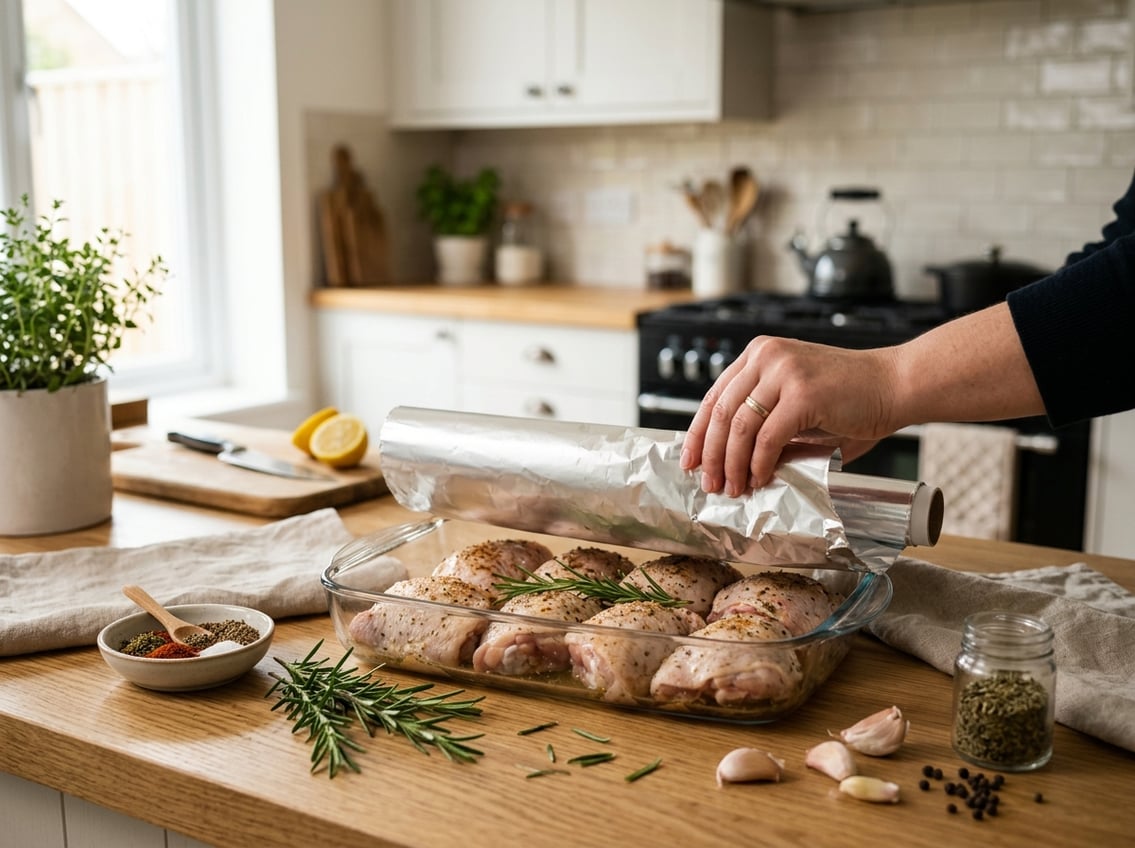
Covering changes the cooking environment, affects baking time and doneness, and different techniques suit bone-in, boneless, skin-on, or skinless thighs.
Follow practical steps for oven-baked chicken thighs so your next batch turns out juicy or crispy depending on your goal.
Understanding Covering vs. Uncovering Chicken Thighs
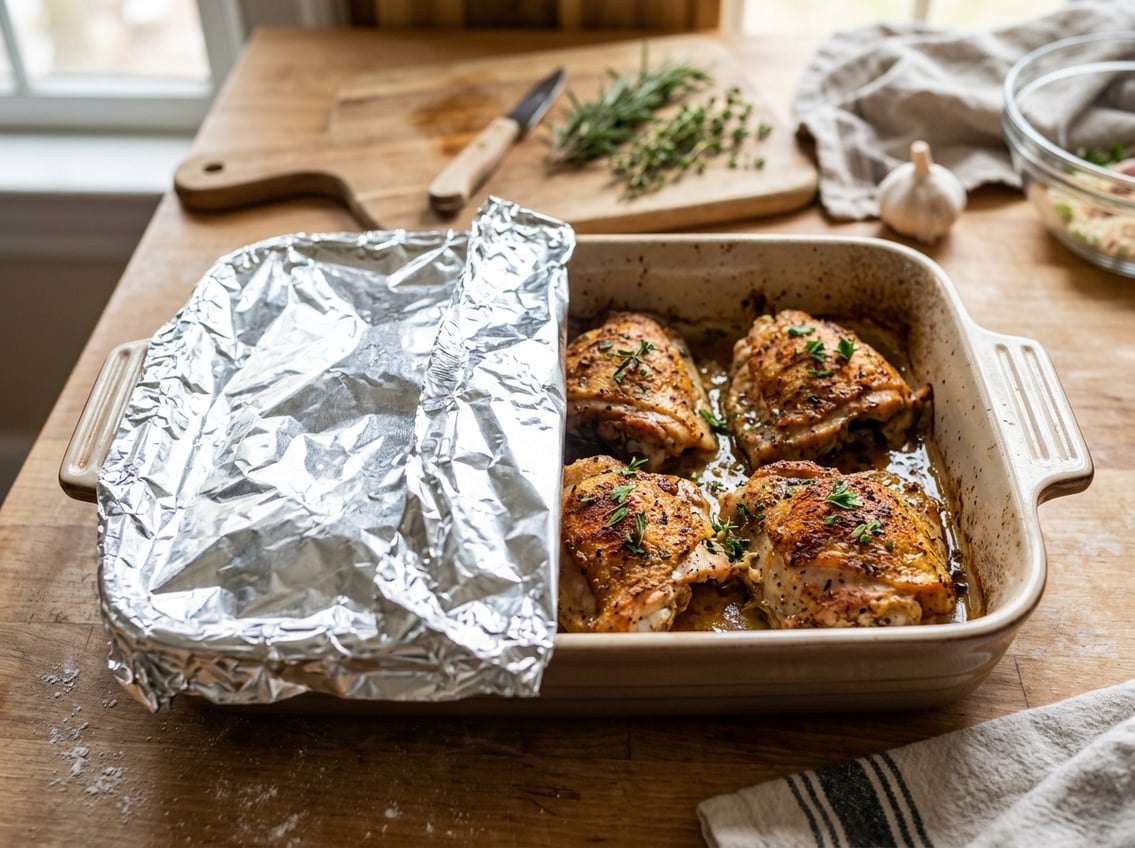
Covering traps steam and slows surface browning.
Leaving thighs uncovered promotes evaporation and crisping.
Choose based on whether you want juiciness or crispy skin and adjust timing to get both when needed.
Moisture Retention Benefits
Cover chicken thighs to trap steam and reduce direct heat on the skin.
Steam limits moisture loss, so bone-in or larger thighs finish more tender.
Use foil or a lidded pan for the first part of baking to protect the exterior while the interior reaches a safe temperature.
Covered cooking can slightly shorten baking time because trapped heat raises the internal temperature more evenly.
If you baste or cook in a sauce, covering helps flavors penetrate and prevents the sauce from evaporating.
Remove the cover near the end if you want browning on the surface.
Achieving Crispy Skin
To bake chicken thighs uncovered for crispy skin, start with dry skin.
Pat thighs with paper towels and optionally air-dry in the fridge for an hour.
High oven heat (around 400–450°F / 200–230°C) encourages fat to render and the skin to crisp.
Place thighs on a wire rack over a sheet pan so hot air circulates around the skin.
Avoid overcrowding; crowded pieces steam each other and stay soggy.
If you covered early to keep meat juicy, remove the cover for the last 10–15 minutes and switch to broil for 1–3 minutes to finish crisping.
Monitor closely to prevent burning.
Texture and Flavor Differences
Covered thighs have a softer exterior and a more uniformly tender interior.
Steam preserves juiciness and keeps seasoning from concentrating on the surface.
Uncovered thighs develop browning and a concentrated savory crust.
That crust adds textural contrast and depth of flavor from caramelized fat and spices.
Combine methods by covering for most of the bake to retain moisture, then uncovering to crisp the skin.
Step-By-Step Guide to Baking Chicken Thighs
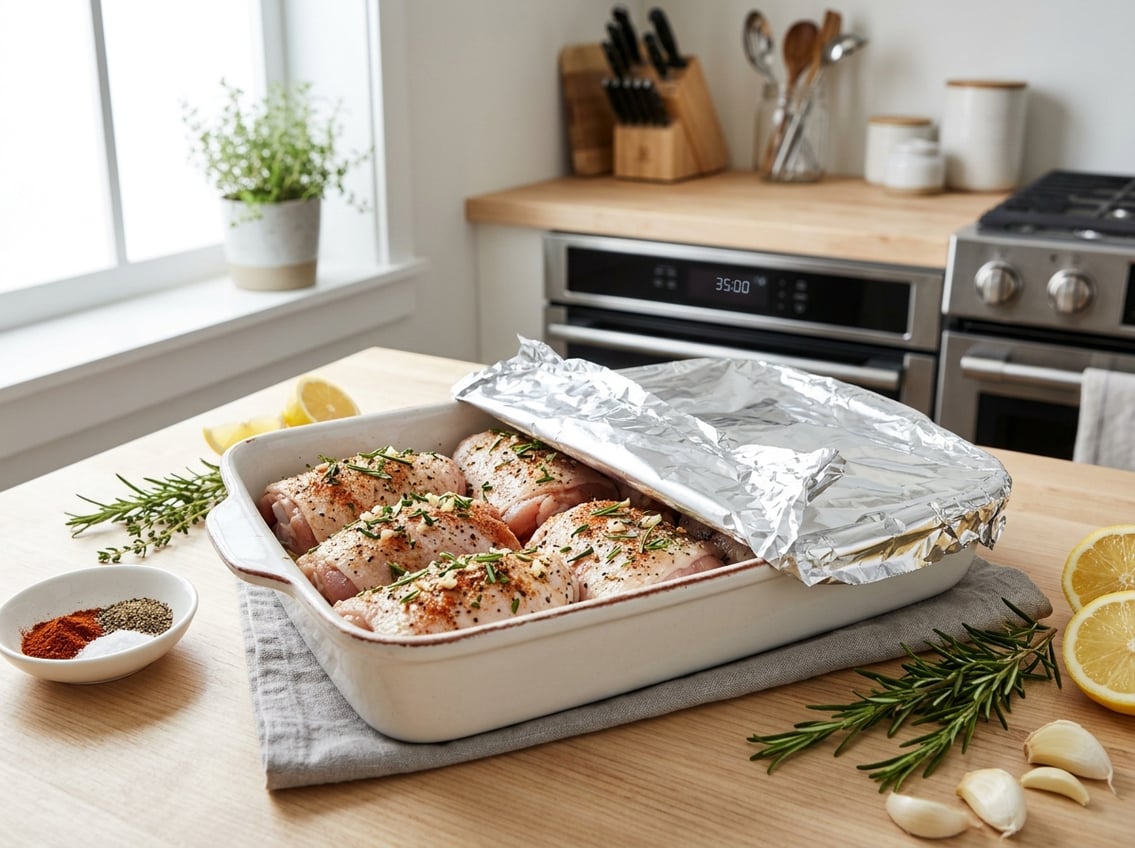
Prep the thighs for even cooking.
Pick the right oven temperature for the texture you want.
Use seasoning or a quick marinade to boost flavor.
Follow measured steps for dry skin that crisps and meat that stays juicy.
Preparing Chicken Thighs for the Oven
Pat each thigh dry with paper towels; removing surface moisture is the most important step for crispy skin.
Trim excess fat and loose bits of skin so pieces lay flat in the pan.
Arrange thighs skin-side up in a single layer on a rimmed baking sheet or shallow roasting pan.
Leave about 1/2–1 inch between pieces so hot air circulates and skin browns evenly.
If you use a rack, elevation helps crisp the underside.
Use an instant-read thermometer to verify doneness.
Target 175°F (79°C) for bone-in thighs and about 170°F (77°C) for boneless skin-on.
Rest the thighs 5–10 minutes after baking to let juices redistribute.
Optimal Oven Temperatures
Choose 400–425°F (200–220°C) for bone-in, skin-on thighs when you want crispy, browned skin within 35–45 minutes.
Higher heat promotes browning without long cook times that dry the meat.
For a gentler bake, set the oven to 375°F (190°C) and plan 40–55 minutes for bone-in pieces.
Boneless, skinless thighs need less time—typically 20–30 minutes at 400°F.
Always confirm with an internal thermometer rather than time alone.
Avoid covering thighs with foil if your goal is crispy skin.
Covering traps steam and yields softer skin; you can tent foil during a short rest only, not while cooking.
Seasoning and Marinades
Season simply and generously: 1 tsp kosher salt per pound of chicken plus freshly ground black pepper.
Apply salt at least 15–30 minutes before baking, or up to overnight in the refrigerator for deeper seasoning.
For marinades, use an acid (1–2 tbsp lemon juice or vinegar per cup), oil, and aromatics (garlic, herbs, or mustard) and marinate 30 minutes to 4 hours.
Pat thighs dry after marinating to avoid soggy skin before they go in the oven.
Finish with a quick glaze in the last 10 minutes—barbecue sauce, honey-soy, or a butter-herb mix—to add shine and concentrated flavor without burning.
Baking Techniques for Different Types of Chicken Thighs
Choose technique based on cut and skin presence.
Bone-in thighs need longer, gentler heat.
Boneless cook faster and benefit from higher temps or shorter times.
Skin-on crisps with high heat and air circulation.
Skinless stays juicier when covered or cooked with sauce.
Bone-In vs. Boneless Chicken Thighs
Bone-in chicken thighs take longer to reach safe internal temperature because the bone slows heat transfer.
Roast bone-in thighs at 375–400°F (190–200°C) for 30–45 minutes depending on size.
Check the thickest part for 160–165°F (71–74°C) and rest 5–10 minutes.
Start covered if you use a sauce or want extra tenderness, then uncover for 8–12 minutes to brown the exterior.
Boneless chicken thighs finish faster and respond well to higher heat for a shorter time.
Bake at 400–425°F (200–220°C) for 15–25 minutes, depending on thickness, to get a good crust without drying.
Use a meat thermometer and pull at about 160°F (71°C); carryover cooking will bring them to safe temp.
For one-pan meals, cut vegetables smaller to match the shorter cook time of boneless thighs.
Skin-On vs. Skinless Chicken Thighs
Skin-on chicken thighs crisp when exposed to dry, high heat and air circulation.
Bake skin-on thighs on a wire rack over a sheet pan at 425°F (220°C) for 30–40 minutes for bone-in, or 20–30 minutes for boneless.
Finish under the broiler 1–3 minutes if needed.
Leave skin uncovered for the last half of cooking; you can loosely cover early if you’re worried about over-browning.
Skinless chicken thighs lack the protective fat layer, so they dry out faster.
Cover skinless thighs with foil or cook them in a sauce to lock in moisture.
For oven-baked skinless thighs, bake at 375°F (190°C) for 25–30 minutes (bone-in) or 18–22 minutes (boneless), testing for 165°F (74°C).
Brining or marinating before baking adds moisture and improves flavor for skinless cuts.
How Covering Affects Baking Time and Doneness
Covering chicken thighs traps steam and raises the pan’s humidity, which speeds heat transfer to the meat but prevents the skin from crisping.
Leaving thighs uncovered encourages surface browning and slows internal heat buildup slightly, so you must adjust time and technique to reach safe doneness without drying.
Impact on Cooking Time
Cover chicken thighs with foil or a lid to trap steam and reduce moisture loss.
Covered bone-in thighs at 375–400°F finish a bit sooner—typically cutting total bake time by about 5–15 minutes compared with uncovered cooking.
If you start covered and remove foil for the last 10–15 minutes, you preserve juiciness while allowing skin to brown.
Uncovered baking at 400°F usually requires about 35–45 minutes for bone-in thighs; covered, plan on roughly 30–40 minutes.
Adjust for size: larger or thicker thighs need the upper end of those ranges.
Use oven temperature rather than guessing by time alone.
Ensuring Proper Internal Temperature
Aim for a safe internal temperature of 165°F (74°C) measured in the thickest part without touching bone.
Insert a digital meat thermometer toward the end of the estimated bake time to avoid overcooking.
If thighs read 160–163°F when you remove them, carryover heat will bring them to 165°F during a short 5–10 minute rest.
If covered, steam can mask surface doneness, so rely on the thermometer rather than appearance.
If you want crisp skin, uncover and broil for 2–4 minutes after the thighs reach 155–160°F to raise surface color while preserving juiciness.
Tips for Perfectly Juicy or Crispy Chicken Thighs
Control moisture, temperature, and timing to get the result you want.
Cover to trap steam for tenderness or leave uncovered for crisp skin.
Salt, rest time, and an instant-read thermometer are reliable tools for consistent results.
Using Foil or Lids Effectively
Use foil or a tight-fitting lid to prevent moisture loss.
Tent a loose foil cover for the first 20–25 minutes if you’re baking at 400–425°F; this holds steam and helps the meat cook evenly.
Remove the foil for the last 10–15 minutes to allow the skin to brown.
For bone-in thighs, cover during longer, lower-temperature bakes (325–350°F) to avoid overcooking the exterior while the interior reaches safe temperature.
Use a shallow roasting pan so steam circulates quickly.
If you use a slow, sealed braise, finish uncovered under the broiler or at high heat to crisp the skin.
Techniques to Maximize Juiciness
Dry-brine your thighs with 1/2 teaspoon kosher salt per thigh and refrigerate uncovered for 12–24 hours to season deeply and help skin dry for better texture.
Let thighs sit at room temperature 20–30 minutes before cooking to promote even internal temperature rise.
Cook to an internal temperature of 165–175°F depending on doneness preference.
Use an instant-read thermometer in the thickest part, avoiding bone contact.
Rest for 5–10 minutes after baking so juices redistribute.
For boneless thighs, shorter high-heat bakes (20–30 minutes at 400–425°F) prevent overcooking while keeping meat tender.
Methods for Extra Crispiness
Bake uncovered on a rimmed sheet pan to expose skin to hot, dry air.
Elevate thighs on a wire rack to let fat render away from the skin.
Roast at 425–450°F for 25–35 minutes for bone-in, adjusting time by size.
Pat skin very dry with paper towels and rub with 1–2 teaspoons oil per pound to promote browning.
Optional tricks: sprinkle a light dusting of baking powder (not baking soda) for increased browning, or broil for 1–3 minutes at the end, watching closely.
If you used foil earlier, remove it with 10–15 minutes left and switch to a higher rack to concentrate heat on the skin.
Serving Suggestions and Storing Leftovers
These tips help you pair baked chicken thighs for balanced meals and keep them safe, moist, and flavorful for later use.
Side Dishes for Baked Chicken Thighs
Choose sides that balance the richness of baked chicken thighs and complement the skin’s crispness.
Try roasted root vegetables (carrots, parsnips, and potatoes) tossed with olive oil and rosemary.
Their caramelization matches the thighs’ savory notes.
For lighter meals, serve a lemony arugula salad with shaved Parmesan and a simple vinaigrette to cut fat and add brightness.
Grain-based sides work well too.
Cooked quinoa or herbed rice soaks up pan juices and adds texture.
For a vegetable-forward plate, steam or roast green beans or asparagus and finish with toasted almonds and a squeeze of lemon.
Consider sauces and condiments.
A pan jus from the baking dish, a mustard-yogurt sauce, or chimichurri will enhance flavor without masking the chicken.
Serve family-style: place thighs on a platter over warmed grains and spoon sauce over the top for an attractive, practical presentation.
Proper Storage and Reheating
Cool oven-baked chicken thighs within two hours of cooking. Place them in shallow airtight containers or wrap tightly in foil or plastic.
Refrigerate at 40°F (4°C) or below. Use within 3–4 days for best quality.
For longer storage, freeze thighs on a tray until solid. Transfer them to labeled freezer bags.
Freeze for up to 3 months. Thaw in the refrigerator overnight before reheating.
Reheat gently to preserve juiciness. Use a 325°F (160°C) oven, covered, for 10–15 minutes until the internal temperature reaches 165°F (74°C).
Uncover for the last few minutes if you want to crisp the skin. Microwave reheating works in a pinch but can soften the skin.
If using a microwave, cover to retain moisture and check the temperature frequently. Only reheat the portion you plan to eat to maintain food safety and quality.


